Artwork
Self-portrait
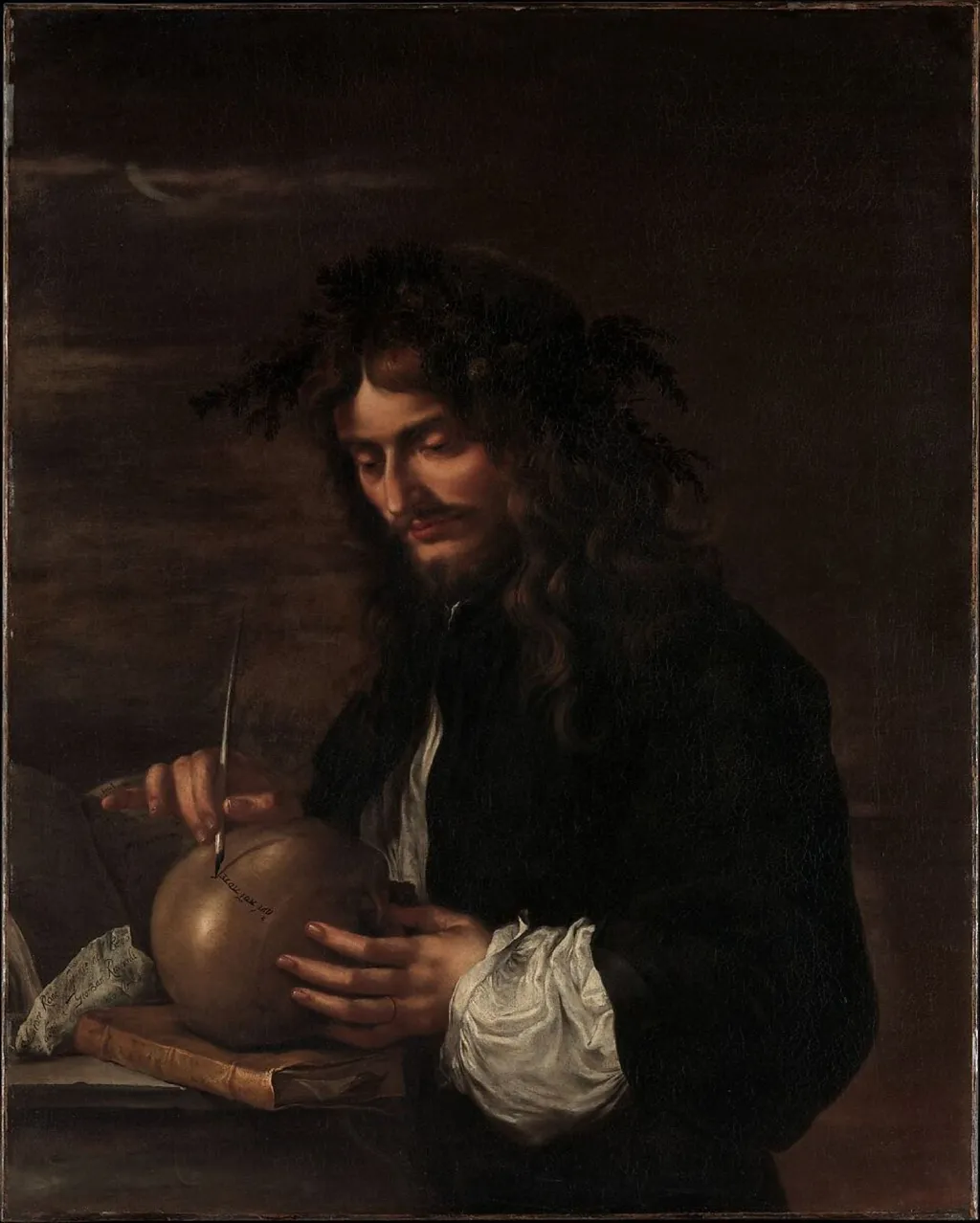
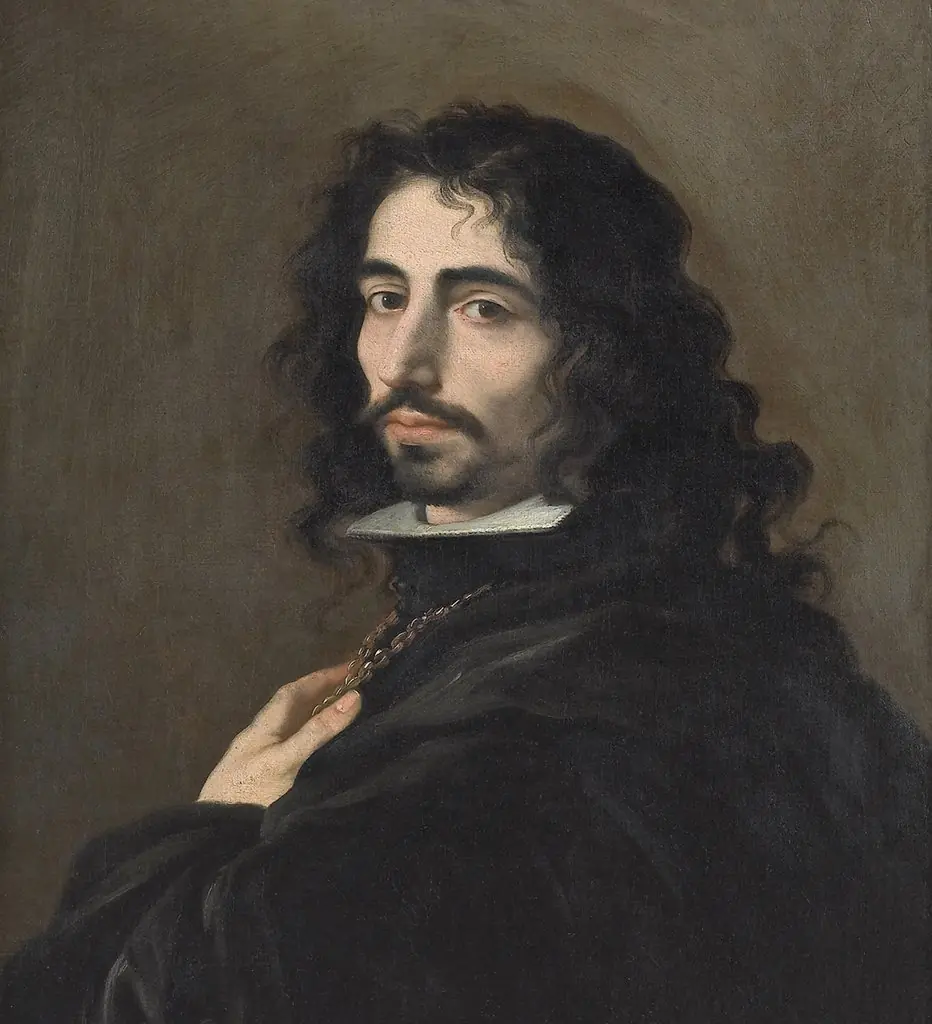
Self-portrait is an unspecified painting by the Early Baroque Italian artist Salvator Rosa. It dates from 1650 and is held in the collection of the University of Cyprus. The work presents a solitary figure in a dark coat, poised before a stone slab on which a skull rests.
About this work
Overview
The work presents a solitary figure in a dark coat, poised before a stone slab on which a skull rests. He holds a brush, his gaze directed outward, while Greek letters are being inscribed upon the skull. The surrounding space is dim, the composition dominated by a stark contrast of light and shadow that draws attention to the act of writing.
Subject & Meaning
The artist depicts himself engaged in the act of engraving a Greek phrase on the skull, a traditional memento mori symbol. The inscription, interpreted as “Behold: whither, sometime,” serves as a reminder of mortality and the fleeting nature of human life. By employing the language of antiquity, the painter aligns the scene with timeless philosophical reflection.
Technique & Style
The painting employs chiaroscuro, using pronounced light to illuminate the figure and the skull while the background recedes into darkness. This manipulation of illumination creates a dramatic focus on the act of writing. The brushwork is precise in the rendered letters, contrasting with the softer modeling of the surrounding shadows, reinforcing the intellectual versus the material.
Context
In portraying himself not as a courtly portraitist but as a contemplative scholar, the artist signals a self‑identification with intellectual rebellion. The choice of Greek underscores a connection to classical wisdom, suggesting a deliberate distancing from contemporary artistic conventions and an emphasis on enduring truth over personal fame.
Own this work as a print
Artist & collection
Artist
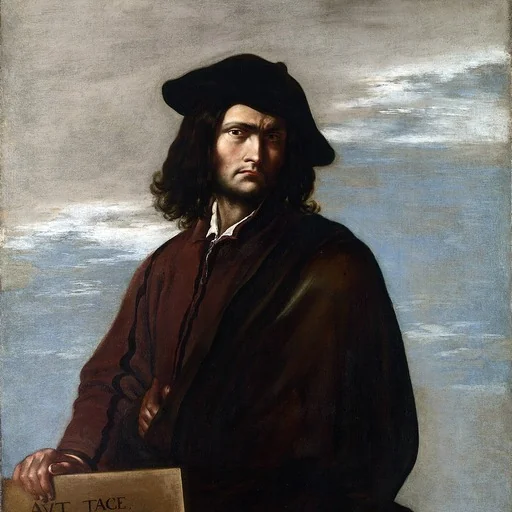
Salvator Rosa (1615 – 15 March 1673) is best known today as an Italian Baroque painter, whose romanticised landscapes and history paintings, often set in dark and untamed nature, exerted considerable influence from the 17th century into…
 Bildnis eines Gelehrten
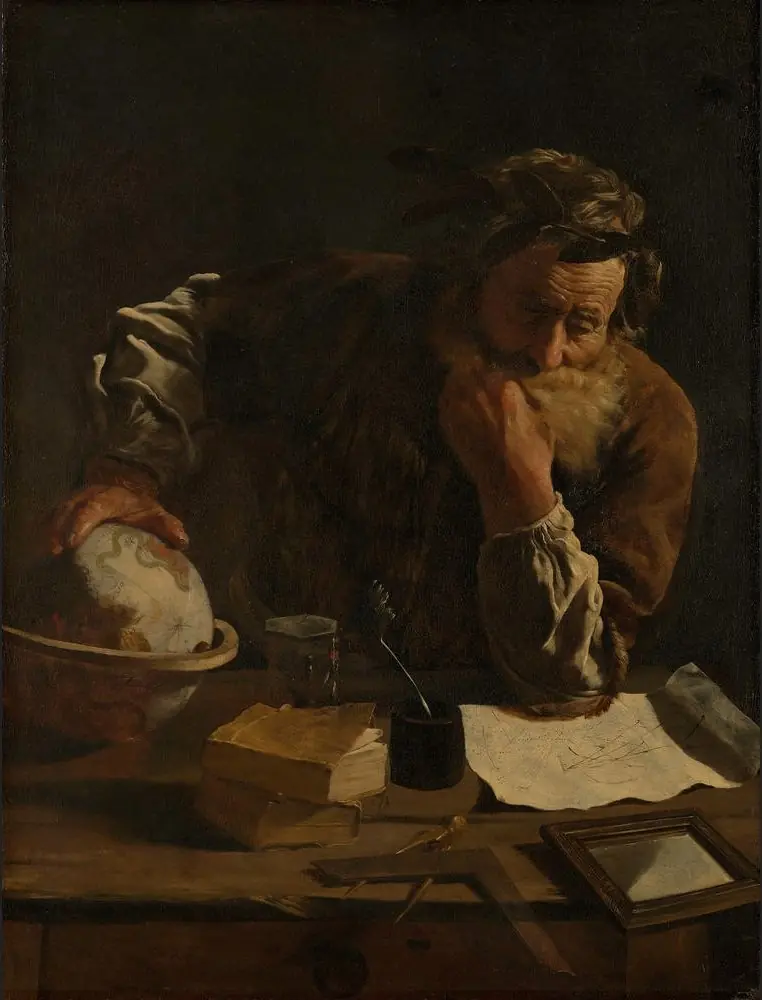 Portrait of a scholar (Archimedes?)
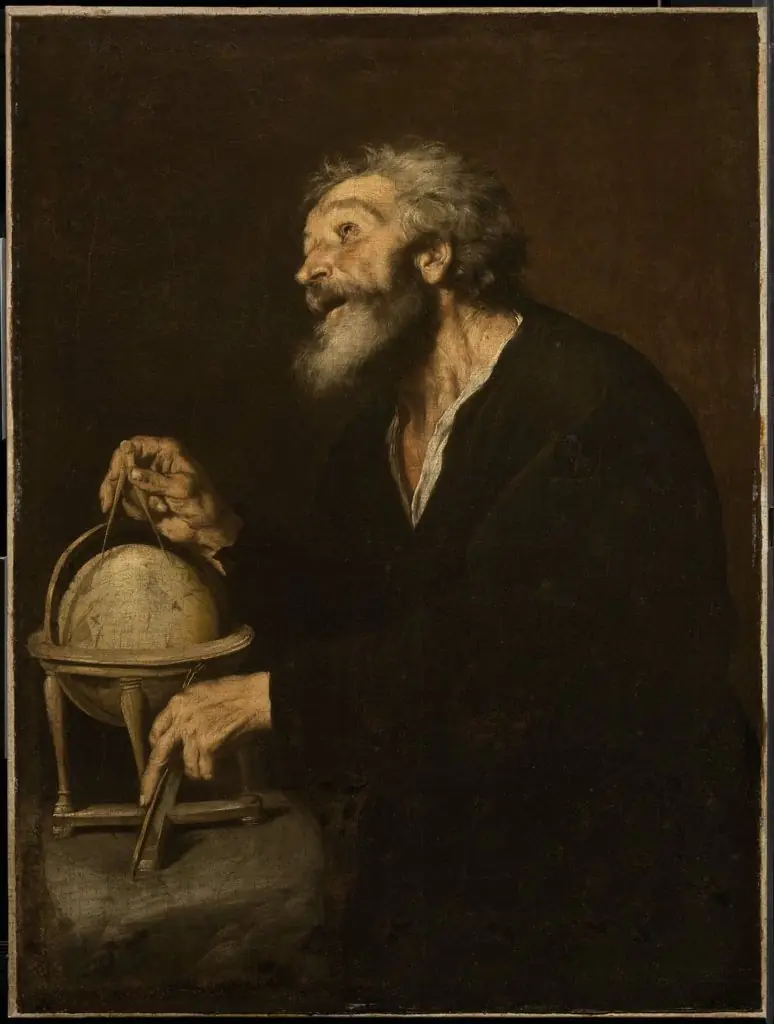 The Geographer
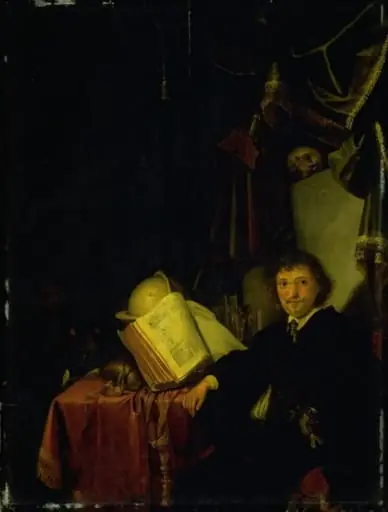 Portrait of a Man in an Interior
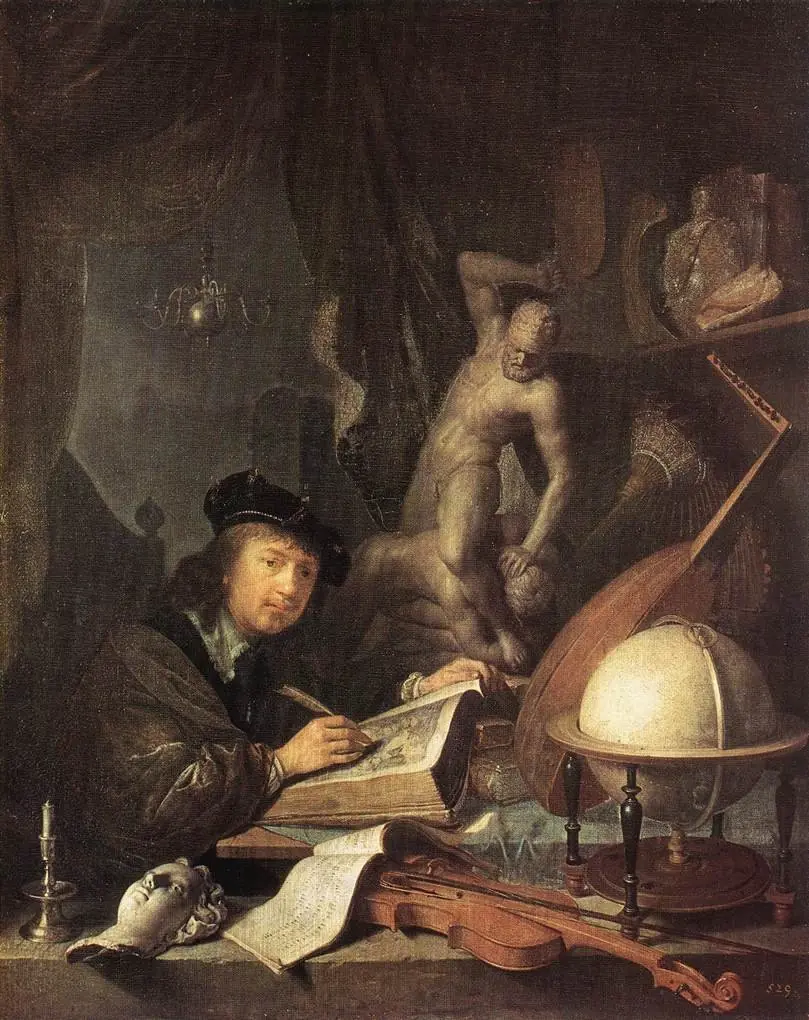 Painter in his Studio
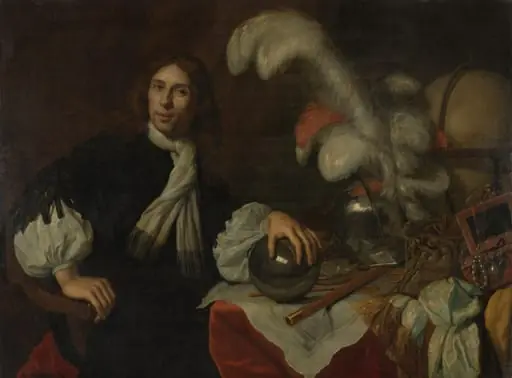 Posthumous Portrait of Aucke Stellingwerff, Admiral of Friesland, Killed in 1665 at Lowestoft by a Cannonball
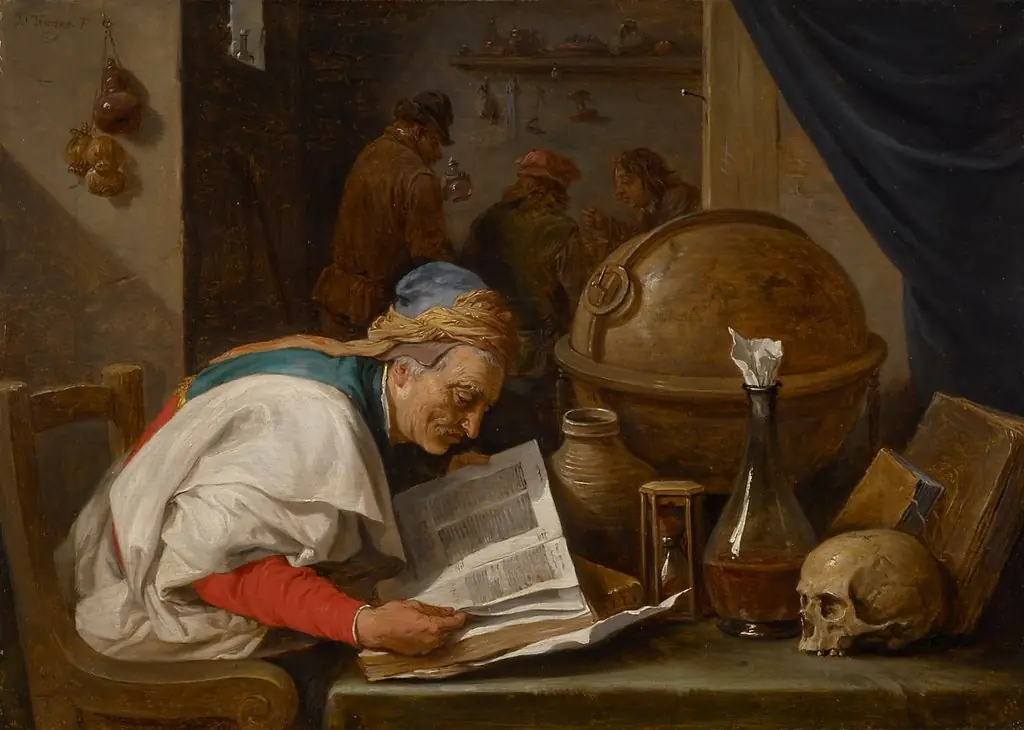 The Alchemist
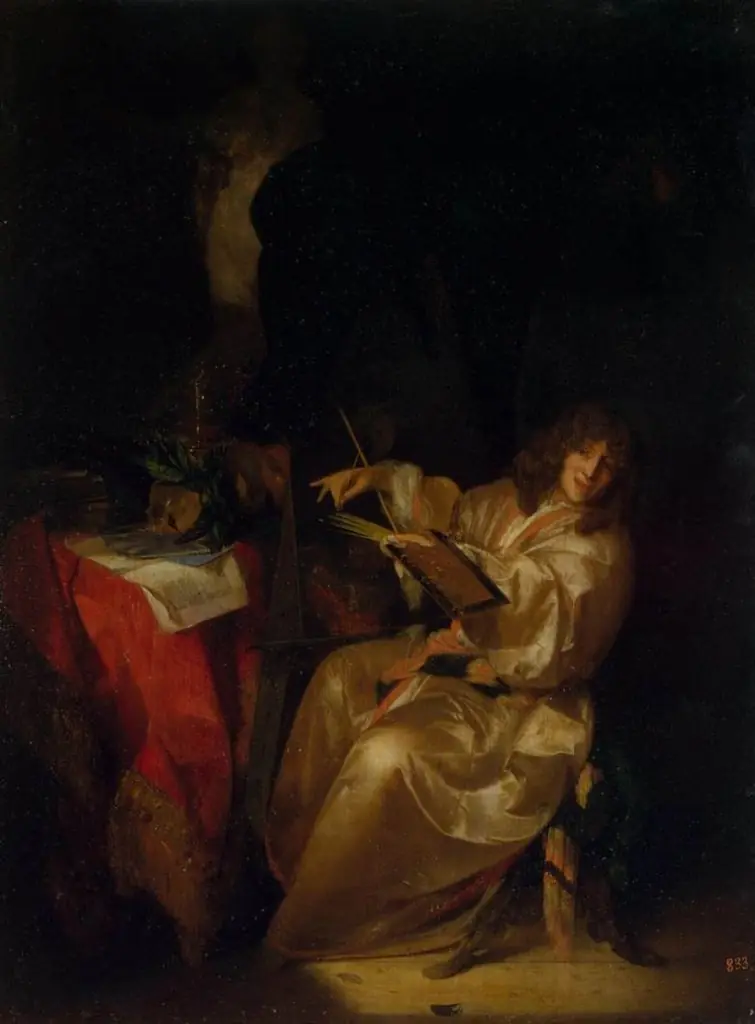 Self-Portrait
 Self-portrait
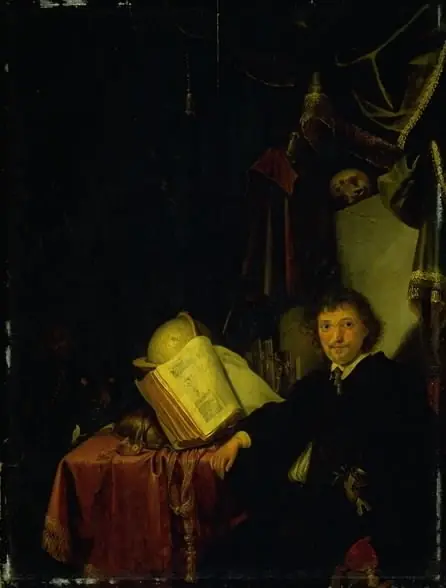 Portrait of a Man in an Interior
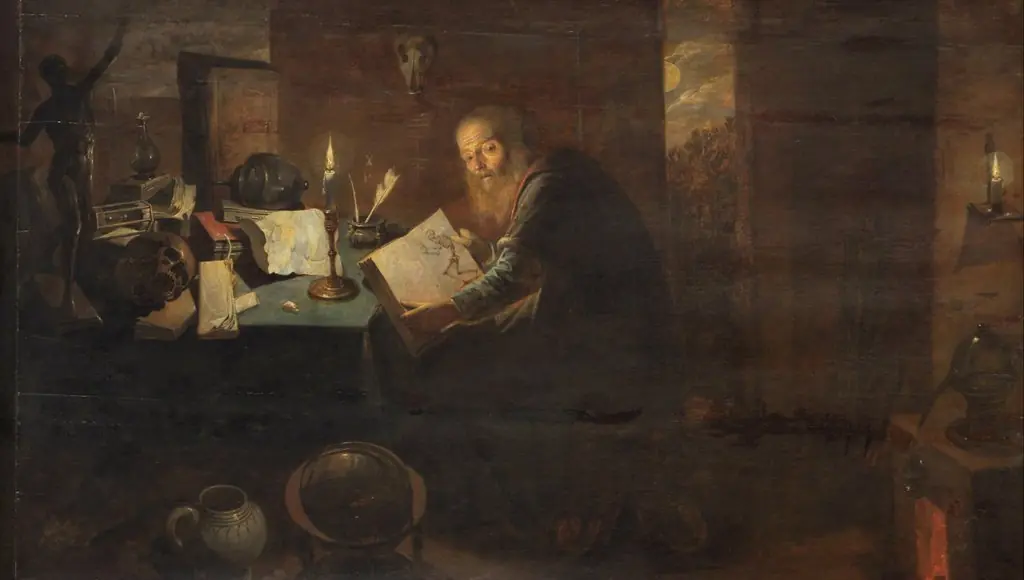 The alchimist