Artwork
Landscape with river and village
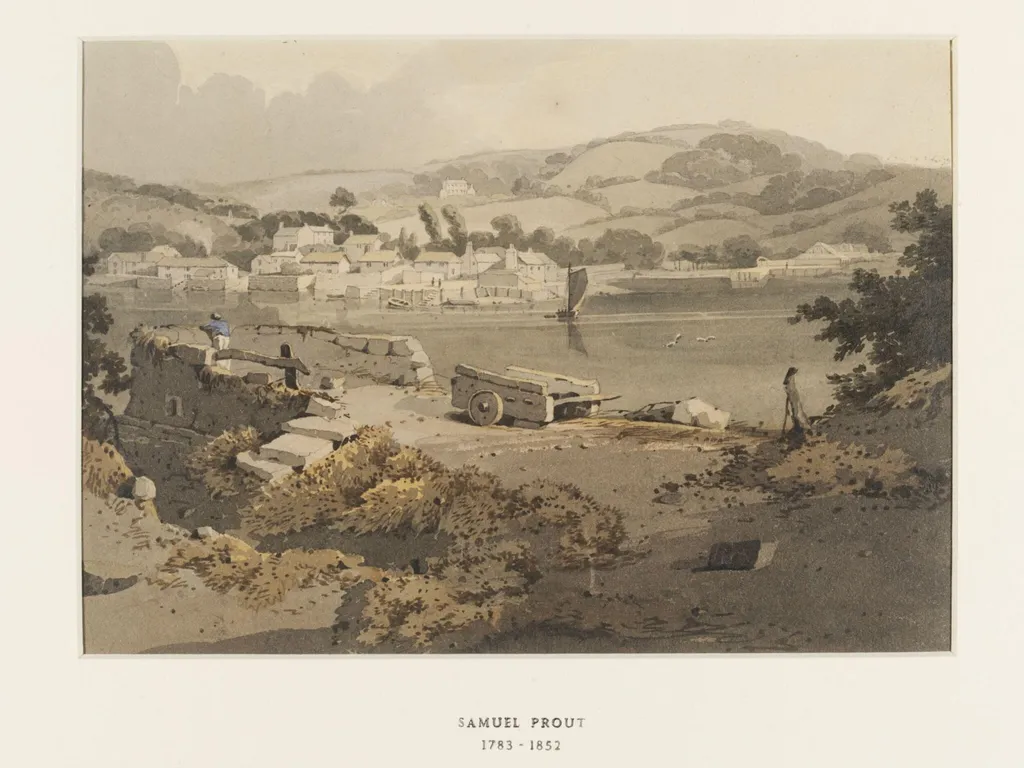
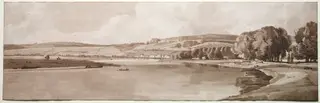
Landscape with river and village is a watercolor work on paper by the Romanticist artist Samuel Prout. It dates from 1800 and is held in the collection of the Victoria and Albert Museum.
About this work
Overview
This watercolour, attributed to Samuel Prout circa 1800, depicts a tranquil riverside village nestled among gentle hills.
This watercolour, attributed to Samuel Prout circa 1800, depicts a tranquil riverside village nestled among gentle hills. Executed in delicate washes, the composition captures a quiet moment in rural life, with minimal human activity and a subdued palette that emphasizes atmosphere over detail. The work exemplifies early 19th-century British watercolour practice, valuing mood and observation over dramatic effect.
Subject & Meaning
The scene centers on a modest settlement beside a winding river, with a small boat adrift and a cart resting near a weathered stone wall. Two figures near the water’s edge suggest daily routines, fishing or tending to equipment, without drawing attention to themselves. The absence of grandeur or narrative tension conveys an unembellished view of rural existence, where nature and human habitation coexist quietly.
Technique & Style
Prout employed transparent watercolour washes to build subtle gradations of light and shadow, avoiding sharp outlines in favor of soft transitions. The muted greens, greys, and earth tones unify the landscape, while fine brushwork defines distant buildings and the texture of the river’s surface. The technique prioritizes atmospheric harmony, creating a sense of stillness and timelessness.
History & Provenance
The work originates from Prout’s early period, when he focused on topographical scenes across Britain and continental Europe. Though its exact provenance before entering the Victoria and Albert Museum’s collection is undocumented, it aligns with his practice of sketching en plein air and refining compositions in the studio. Such works were often produced for private patrons interested in picturesque landscapes.
Context
In the early 1800s, watercolour was gaining recognition as a serious medium for landscape study, distinct from oil painting’s grandeur. Prout’s focus on humble, everyday scenes reflected a broader cultural interest in the picturesque and the vernacular. His work contributed to a shift in British art toward intimate, observational depictions of the natural and built environment.
Legacy
Prout’s watercolours influenced later generations of British landscape artists by demonstrating how modest subjects could evoke emotional resonance through careful tonal control. His approach to light and structure helped define the aesthetic of topographical watercolour, leaving a quiet but enduring mark on 19th-century British art practices.
Own this work as a print
Artist & collection
Artist
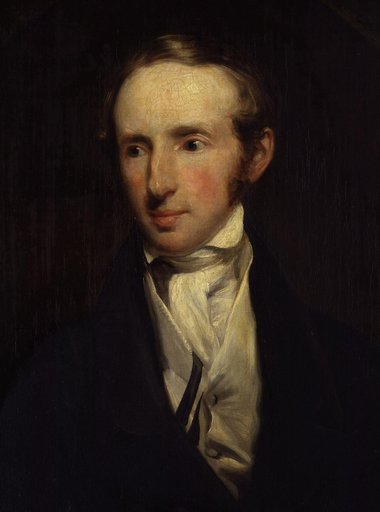
Samuel Prout was a British watercolourist, and one of the masters of watercolour architectural painting, who largely invented the genre of the grand steet scene in British watercolour painting, mostly with picturesque scenes from…

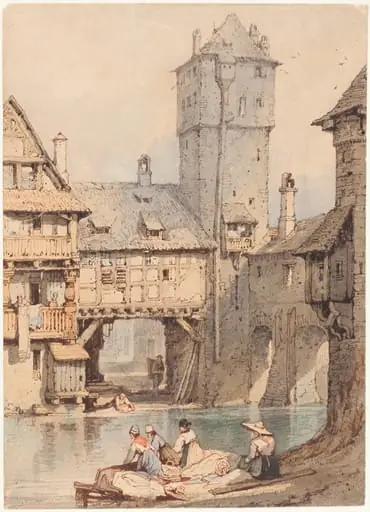
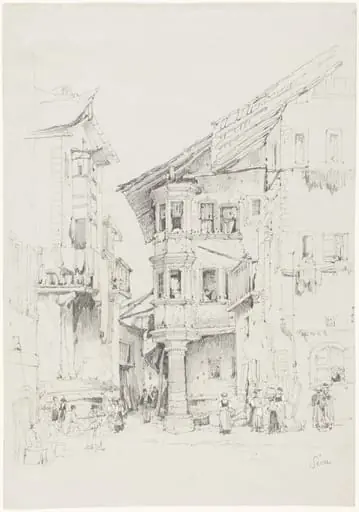
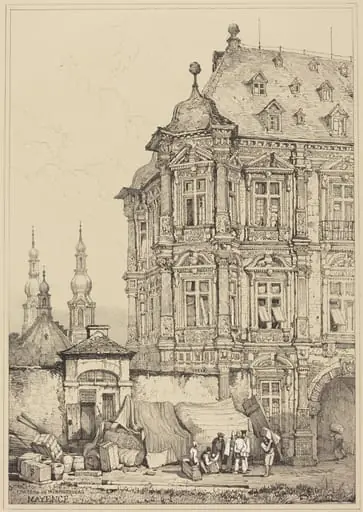
- A River Scene in Devonshire'
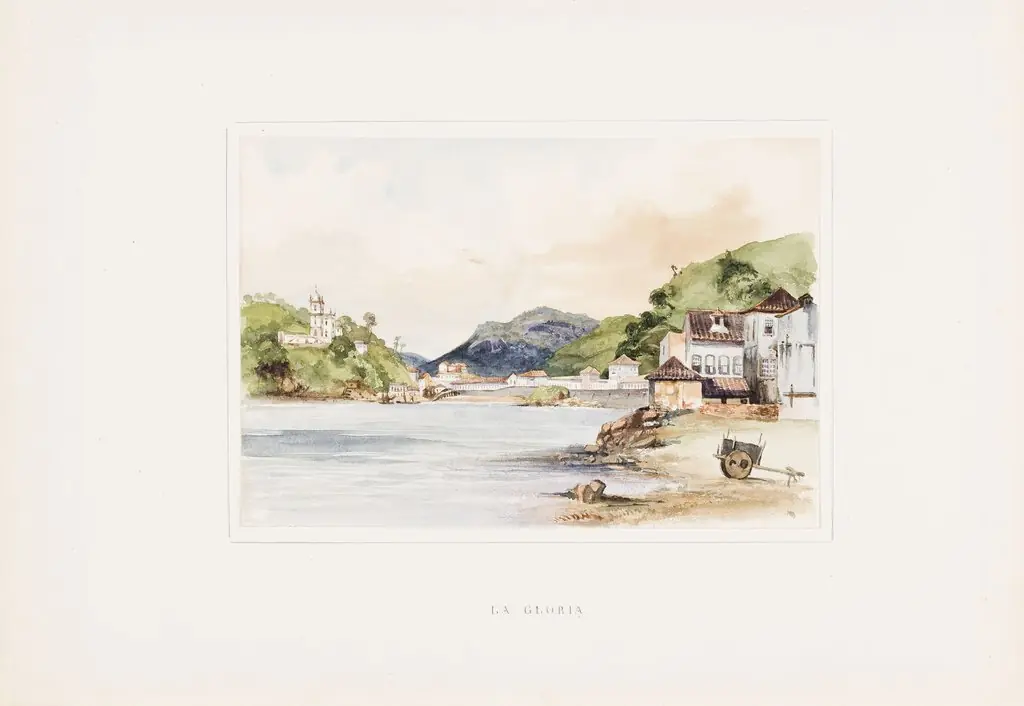 La Gloria
 A Selection of Twenty of the Most Picturesque Views in Paris: View of Belle Vue & Pont de Sêve
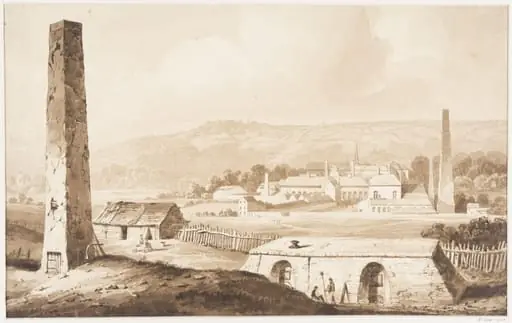 Landscape with factory buildings
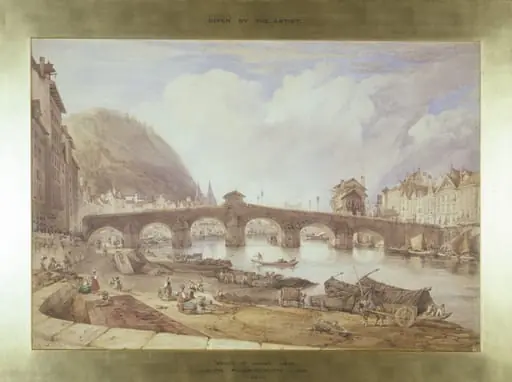 Liege: the Bridge of Arches
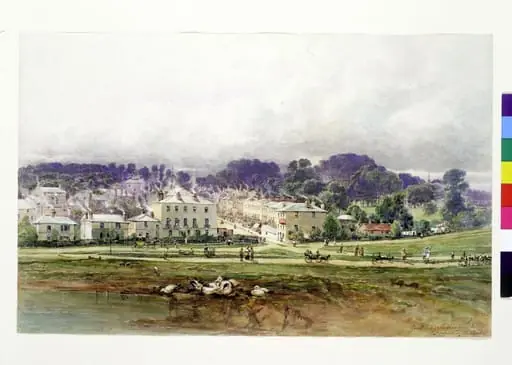 View on Hampstead Heath
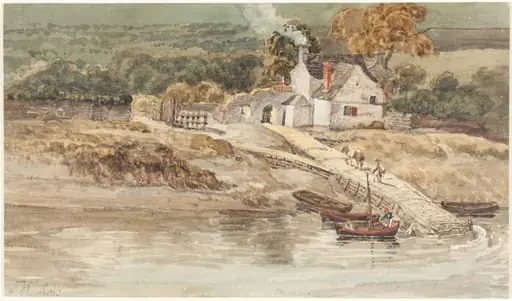 Landing Place near Tintern Abbey
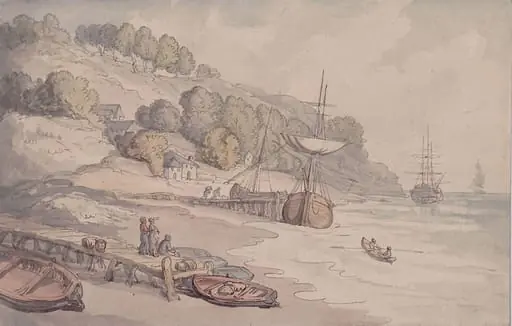 A Coast Scene
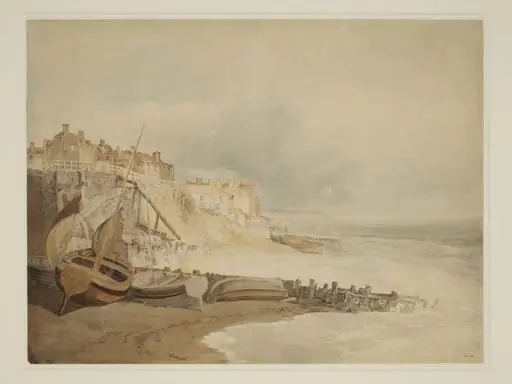 Brighthelmstone
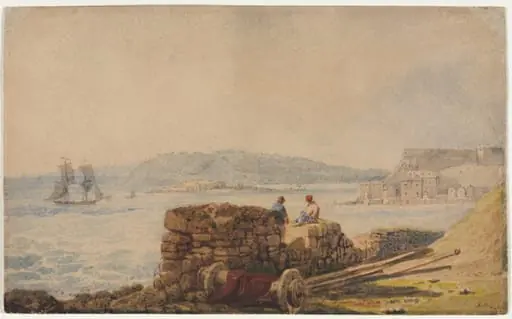 Drake's Island, Plymouth Sound
 Whistler's House, Old Chelsea
 Salcombe, Devonshire