Artwork
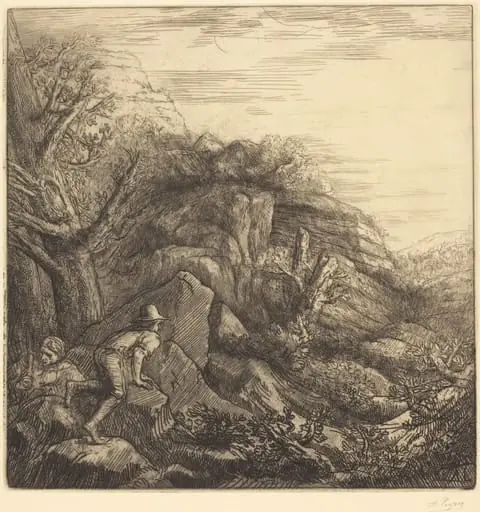
Rock Outcrop with Shepherds and Goats
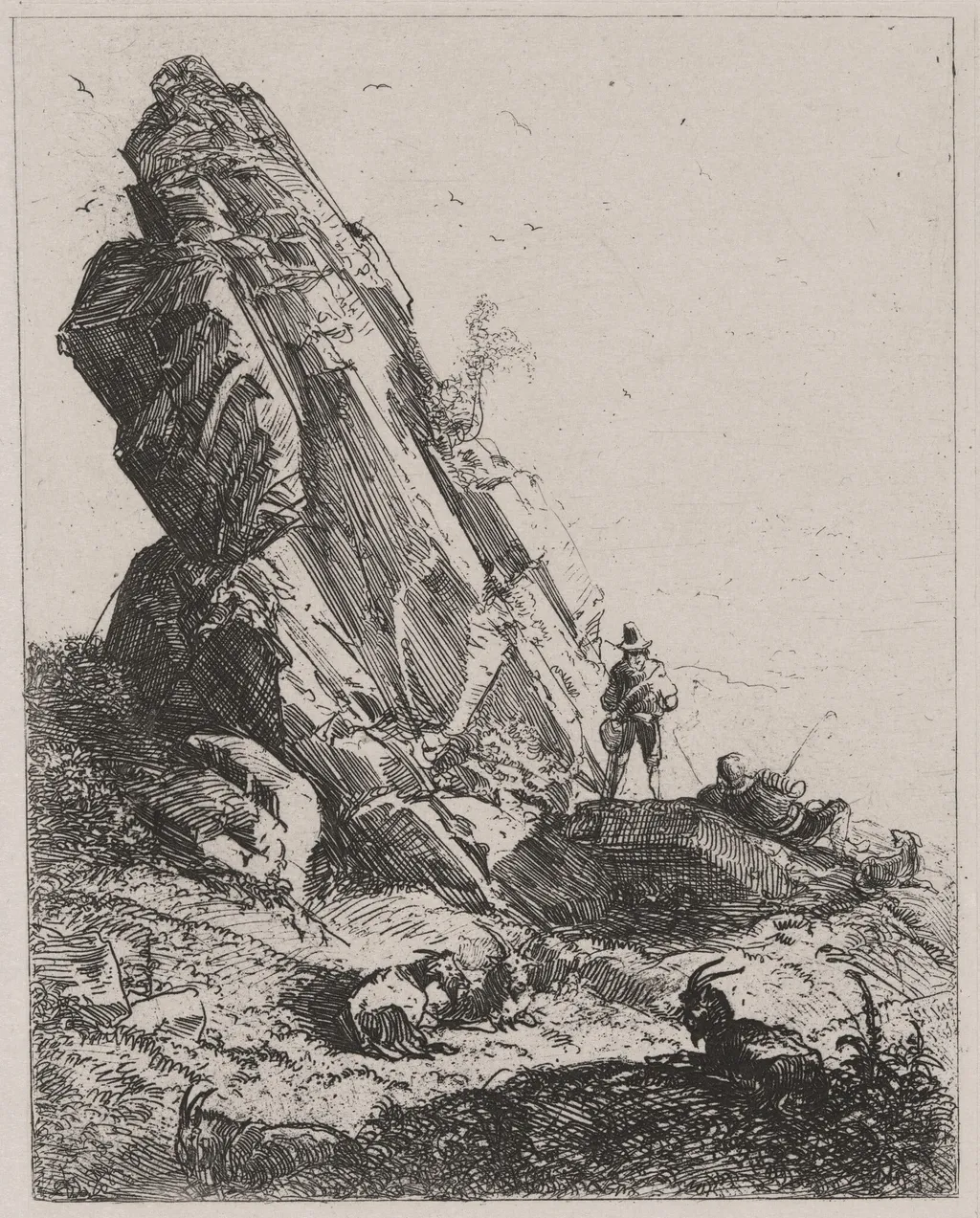
Rock Outcrop with Shepherds and Goats is an ink print by the Romanticist artist Caspar Johann Nepomuk Scheuren. It dates from 1842 and is held in the collection of the National Gallery of Art.
About this work
Overview
Caspar Johann Nepomuk Scheuren’s 1842 etching titled Rock Outcrop with Shepherds and Goats presents a compact landscape scene rendered in black ink on paper. The composition centers on a craggy hillside where two figures stand beside a modest wagon, while a herd of goats occupies the lower, uneven terrain. The work exemplifies the 19th‑century interest in rustic genre subjects.
Subject & Meaning
The image juxtaposes human activity with pastoral life, suggesting a harmonious yet rugged coexistence between shepherds and their livestock. The shepherds, one holding a staff and the other leaning on it, convey a sense of labor and vigilance, while the goats, scattered across the rocky ground, emphasize the untamed character of the landscape.
Technique & Style
Scheuren employed traditional etching methods, incising the design onto a copper plate and then drawing the image with acid‑resistant grounds. The resulting prints display a scratchy, layered line quality, with pronounced cross‑hatching that creates deep shadows and a textured surface. This approach, common among mid‑1800s printmakers, allows for fine detail and dramatic contrast.
History & Provenance
Created in 1842, the etching belongs to Scheuren’s early period, when he explored Germanic folk scenes and natural motifs. While specific ownership records are sparse, the work has appeared in several 19th‑century print collections and is now held by institutions that document German Romantic printmaking.
Own this work as a print
Artist & collection

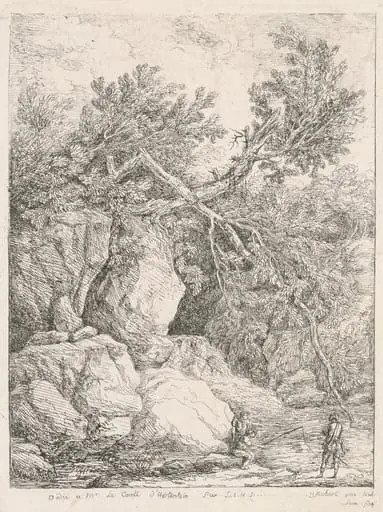 Landscape with a Fallen Tree (Paysage à l'arbre cassé)
 Sunrise (Un lever de soleil)
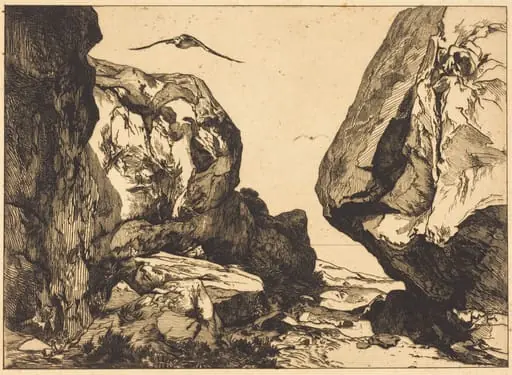 Gorge in the Rocks (Gorge dans les rochers)
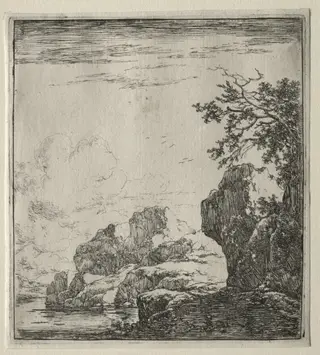 Le rocher couvert de buissons
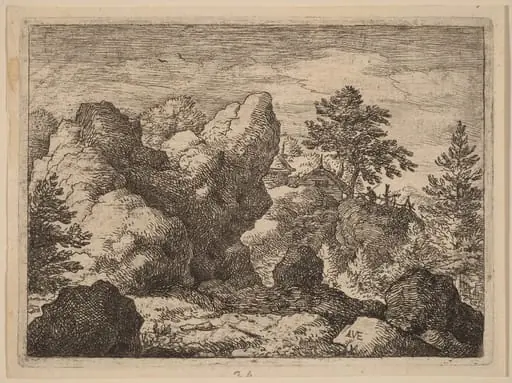 The Pointed Rock
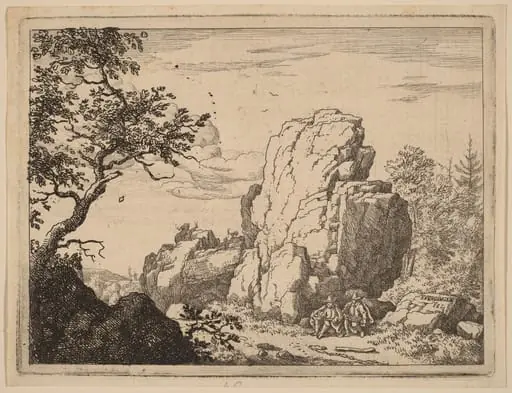 Two Men Seated at the Foot of a High Rock
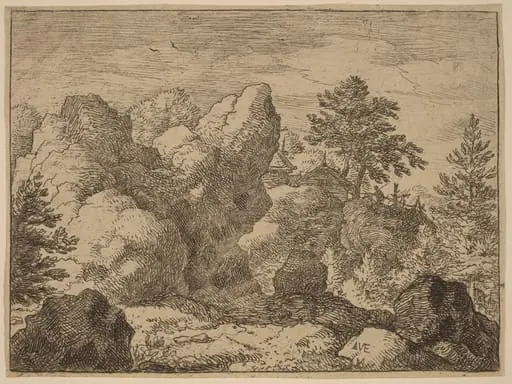 The Pointed Rock
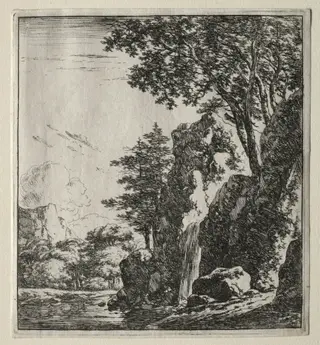 La chute d'eau
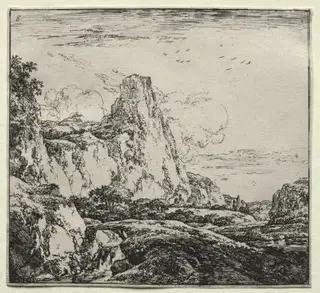 The Bridge near the Mountain
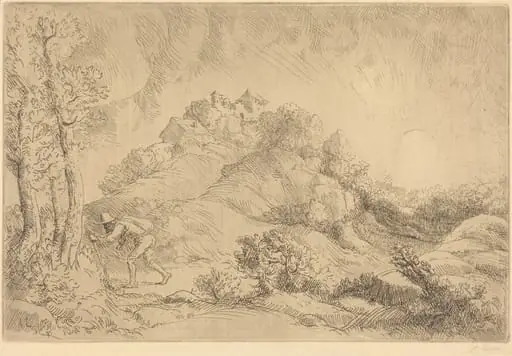 View of a Farm (La ferme de Beauchamp)
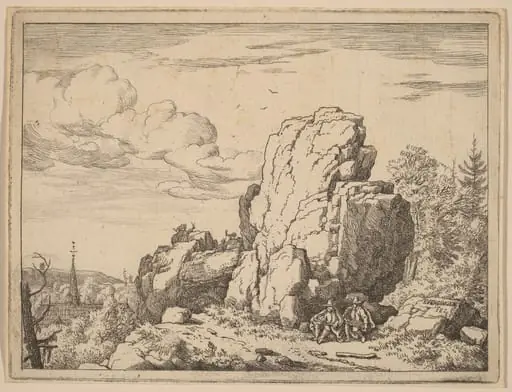 Two Men Seated at the Foot of a High Rock
- Boulder with a Shepherd and Goats