Artwork
Dragon and Tiger
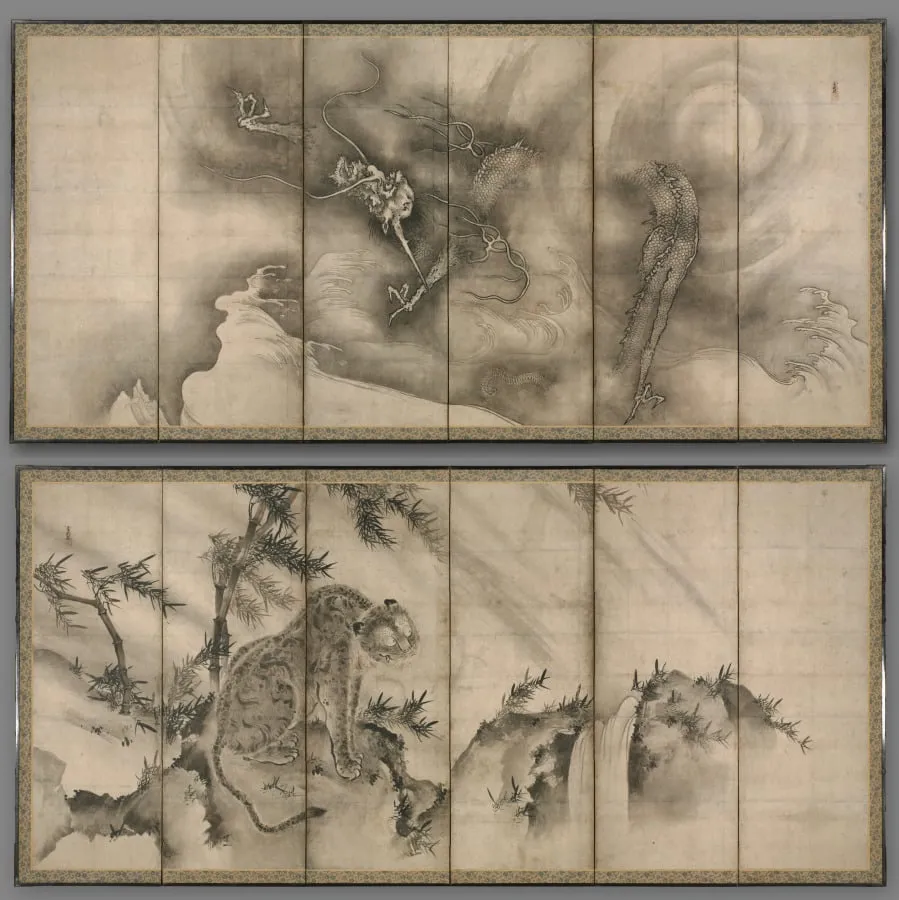
Dragon and Tiger is an unspecified painting by the Joseon dynasty painting artist Sesson Shūkei. It dates from 1551 and is held in the collection of the Cleveland Museum of Art.
- Accession no.
- 1959.136
- Credit line
- Purchase from the J. H. Wade Fund
About this work
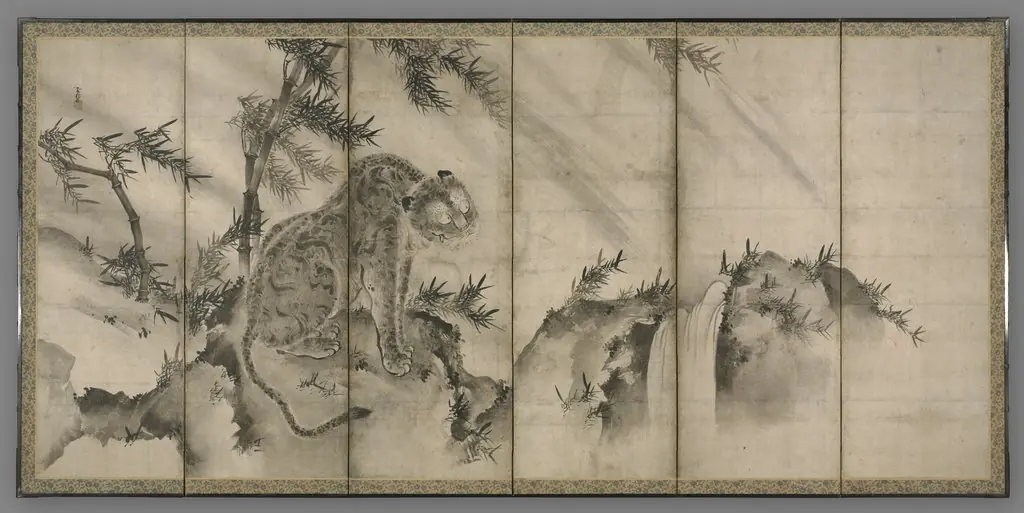
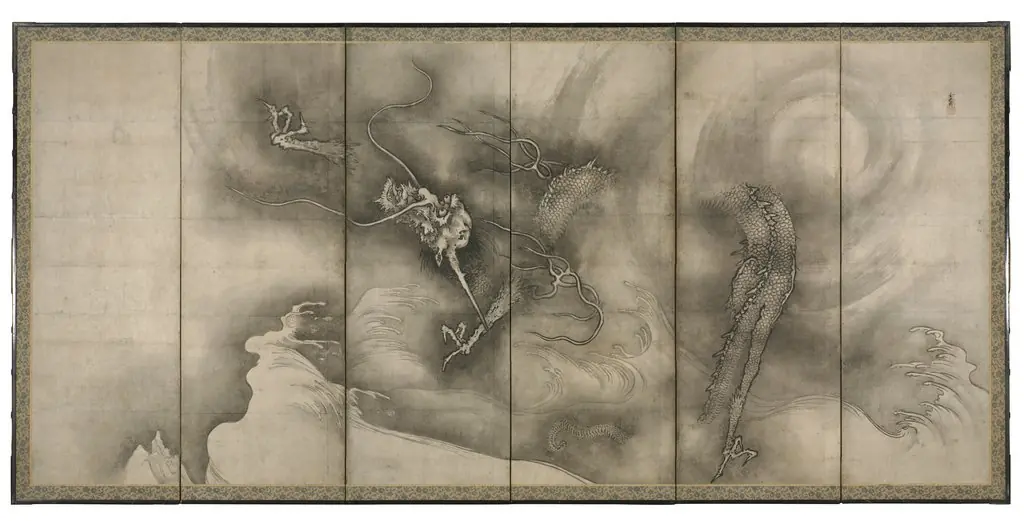
This painting shows two fierce animals in action: a tiger crouches low in a bamboo grove, wind whipping through the stalks, while a dragon claws through storm clouds above crashing waves.
The tiger and dragon weren’t just wild animals to the artist. He painted them as opposite but connected forces, yin and yang, balancing each other in the world.
Look up Sesson Shūkei (Japanese, c. 1492–c. 1577).
Overview
Dragon and Tiger is a painting depicting two powerful creatures in dynamic motion. A tiger is shown in a bamboo grove amidst strong winds, while a dragon is represented amidst stormy clouds and rough waves.
Subject & Meaning
The tiger and dragon symbolize the balancing forces of yin and yang, embodying the feminine and masculine aspects of the world. Their interaction is associated with the generation of natural phenomena, such as wind and clouds.
History & Provenance
Attributed to Sesson Shūkei, a Japanese artist active around the 16th century, the painting is believed to have been created during his lifetime (c. 1492–c. 1577).
Context
The artwork may have originally been intended to convey the fluctuating nature of the world, as understood through the practice of military divination based on the Yijing (Book of Changes).
Artist & collection