Artwork
Untitled
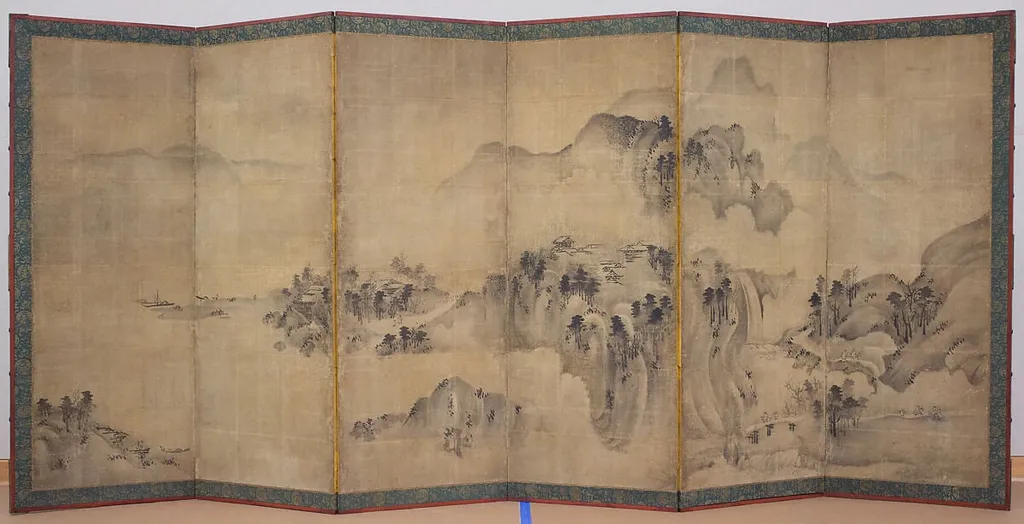
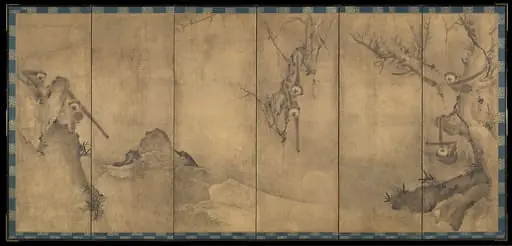
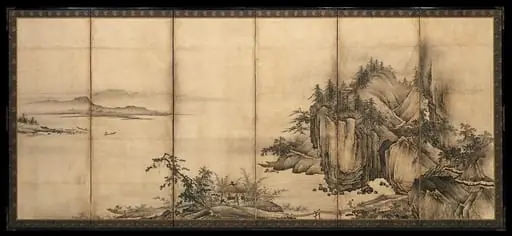
Untitled is an ink painting by the Nanga artist Sesson Shūkei. It dates from 1550 and is held in the collection of the Metropolitan Museum of Art.
About this work
Overview
The work is part of The Metropolitan Museum of Art’s collection, representing a key example of Muromachi-period ink painting.
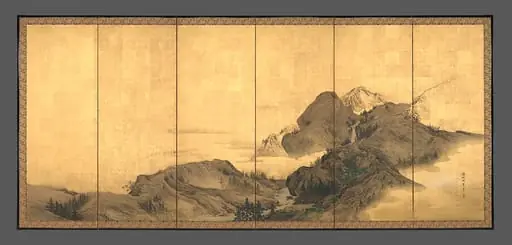
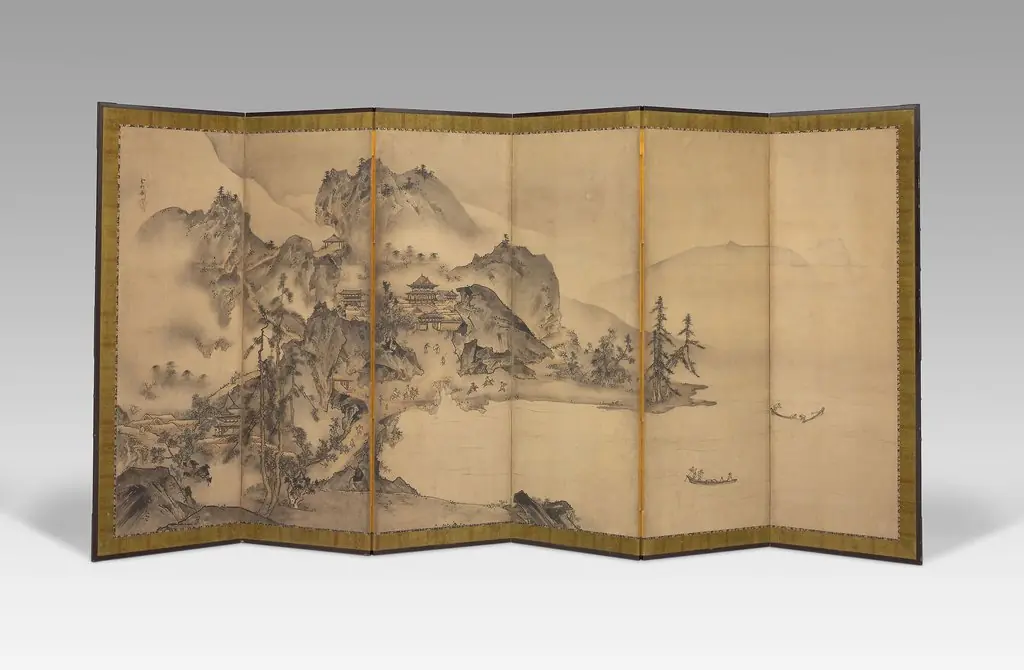
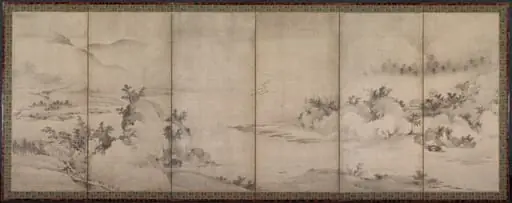
This six-panel folding screen, dated to around 1550, is a monochrome ink landscape by the Japanese artist Sesson Shūkei. Executed on paper, it presents a serene, expansive view of mountains and valleys, unified by a muted tonal range. The composition flows seamlessly across the panels, creating a continuous, immersive environment.
The work is part of The Metropolitan Museum of Art’s collection, representing a key example of Muromachi-period ink painting.
Subject & Meaning
The scene depicts a tranquil natural world, rolling hills, sparse trees, a quiet lake with a solitary boat, and distant peaks veiled in mist. There are no human figures or architectural elements, emphasizing solitude and the quiet rhythm of nature. The absence of color and detail invites contemplation rather than narrative, aligning with Zen-inspired ideals of simplicity and impermanence. The boat, barely visible, suggests passage without destination.
Technique & Style
Sesson employed fine, layered ink washes and delicate cross-hatching to model forms, avoiding bold outlines or vivid contrasts. The background is left largely pale, with shadows and textures built through subtle gradations of black ink. Trees and rocks emerge through repeated, thin strokes that suggest volume without definition. This restrained method prioritizes atmosphere over realism, reflecting the literati tradition’s preference for expressive abstraction.
History & Provenance
Created in mid-16th century Japan, the screen likely originated in a monastic or scholarly context, where ink painting was valued for its spiritual resonance. It entered The Metropolitan Museum of Art’s collection through documented acquisition, though its earlier ownership history remains partially obscure. Its preservation in near-original condition offers rare insight into the material practices of Muromachi-era ink artists.
Context
This work emerged during a period when Japanese artists adapted Chinese ink painting traditions to local aesthetics. Sesson, influenced by Southern Song dynasty masters, moved beyond strict imitation to develop a more personal, atmospheric style. The screen reflects the broader cultural shift toward introspective landscapes, favored by Zen monks and elite patrons seeking harmony with nature through art.
Legacy
Sesson’s restrained use of ink and emphasis on mood influenced later Japanese painters who valued suggestion over detail. This screen exemplifies a quiet, enduring approach to landscape that diverged from decorative trends of the time. Its preservation and display in a major Western institution have helped broaden global recognition of Japanese ink painting’s philosophical depth and technical subtlety.
Artist & collection

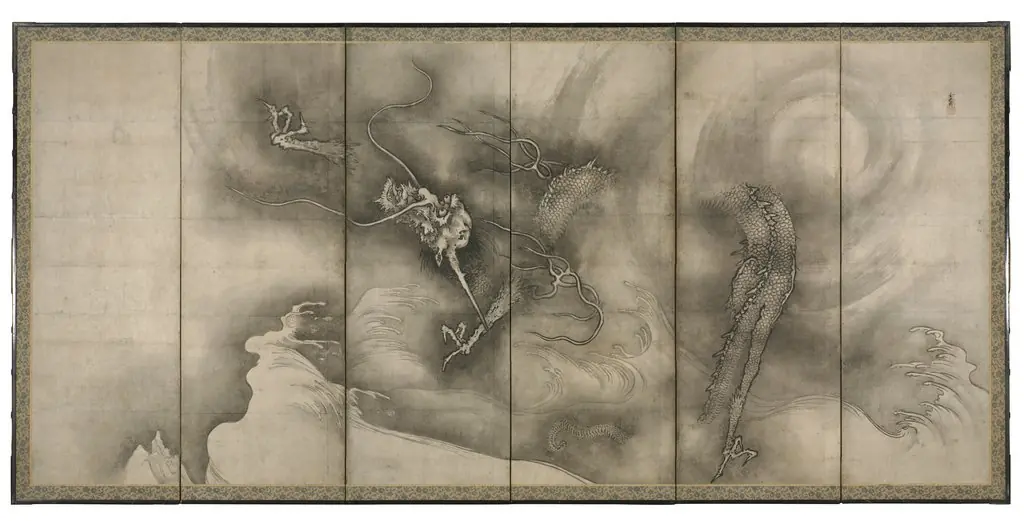
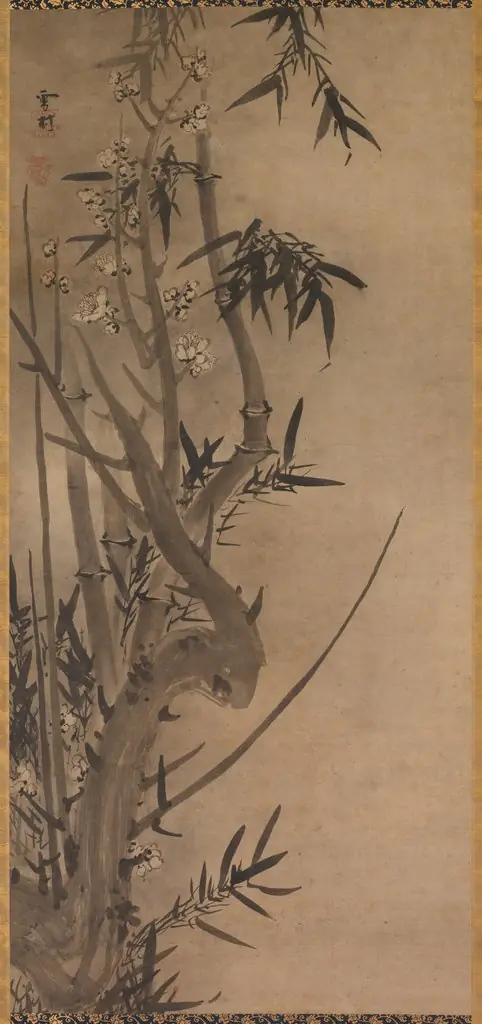
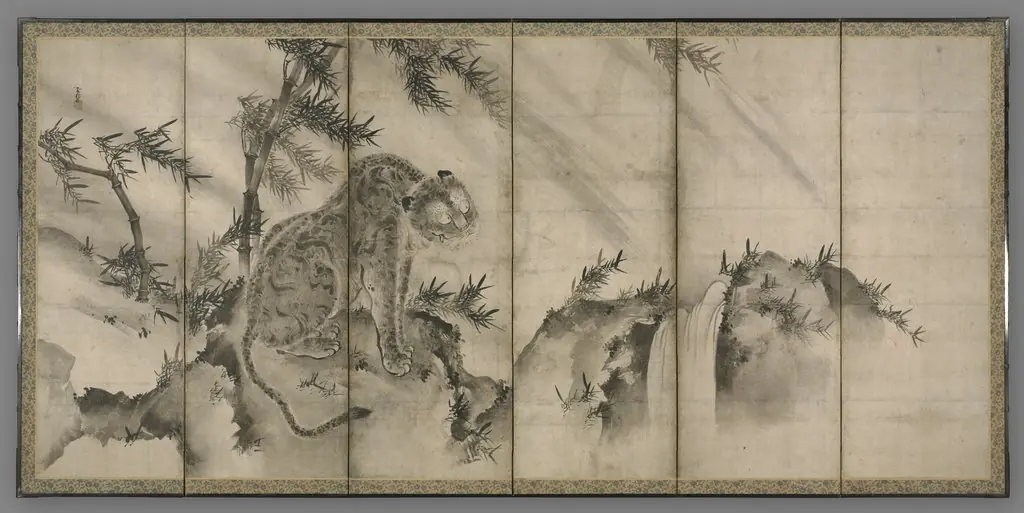
- 森周峰筆 楼閣山水図屏風|Landscape with Pavilion
 Landscape of the Four Seasons
 Landscape with Motifs from the Eight Views of Xiao-Xiang
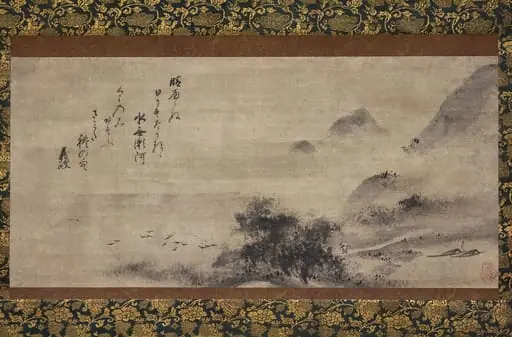 Untitled
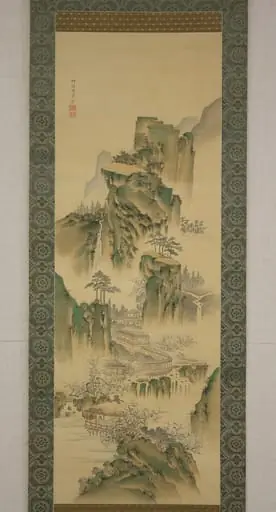 Untitled
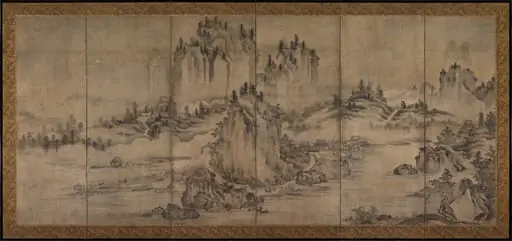 Landscape
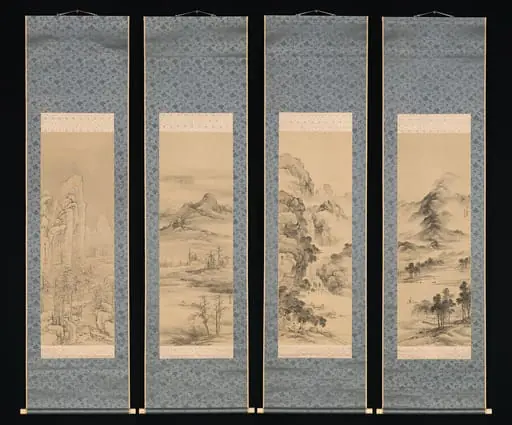 山本梅逸筆 四季山水図|Landscapes of the Four Seasons
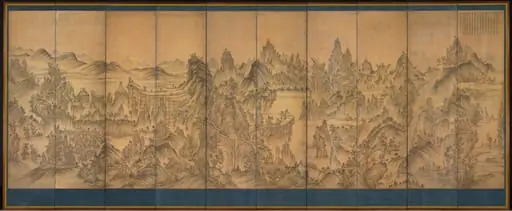 Seven Jeweled Mountain
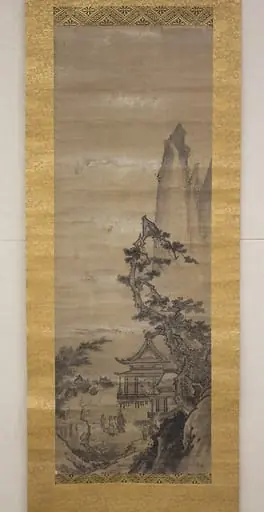 Untitled
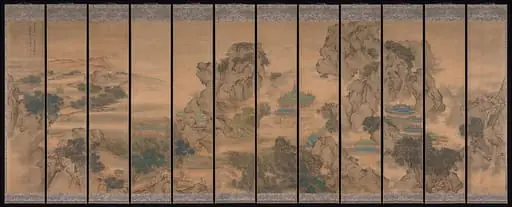 清 袁江 九成宮圖 屏|The Palace of Nine Perfections
 Untitled
 Eight Views of the Xiao and Xiang Rivers