Artwork
Haymakers at Montfermeil
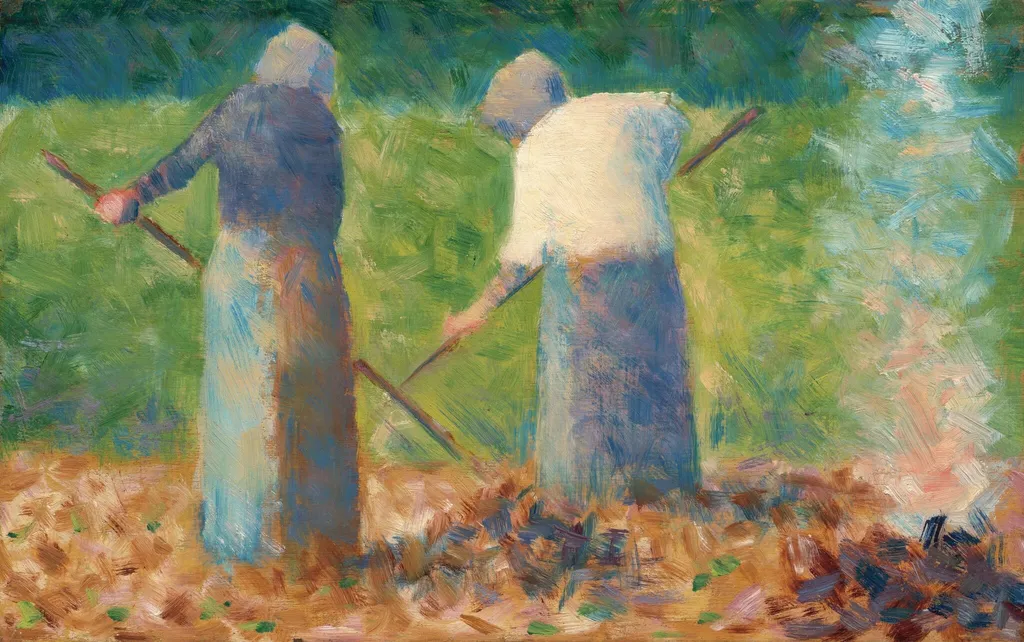
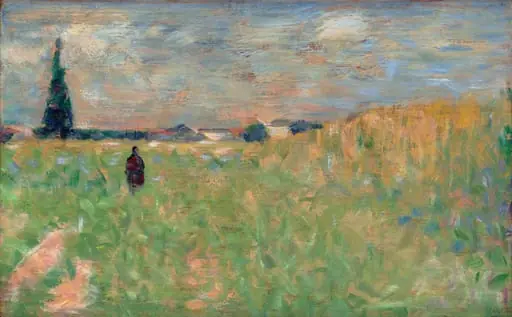
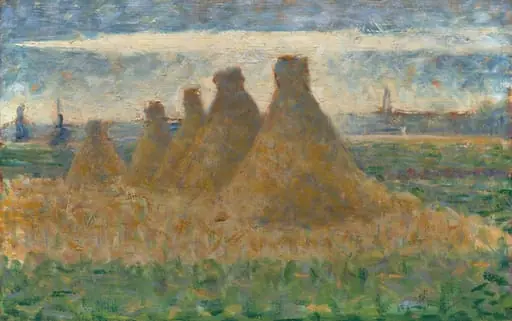
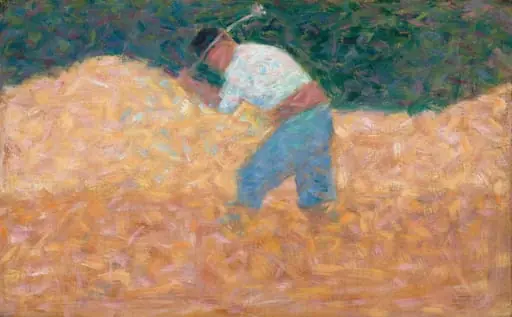
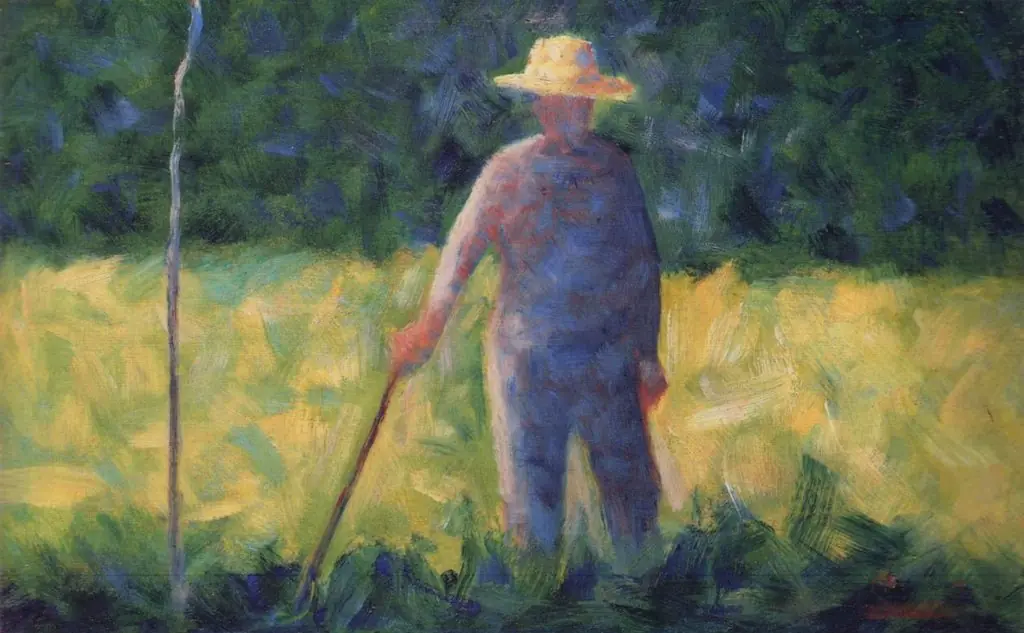
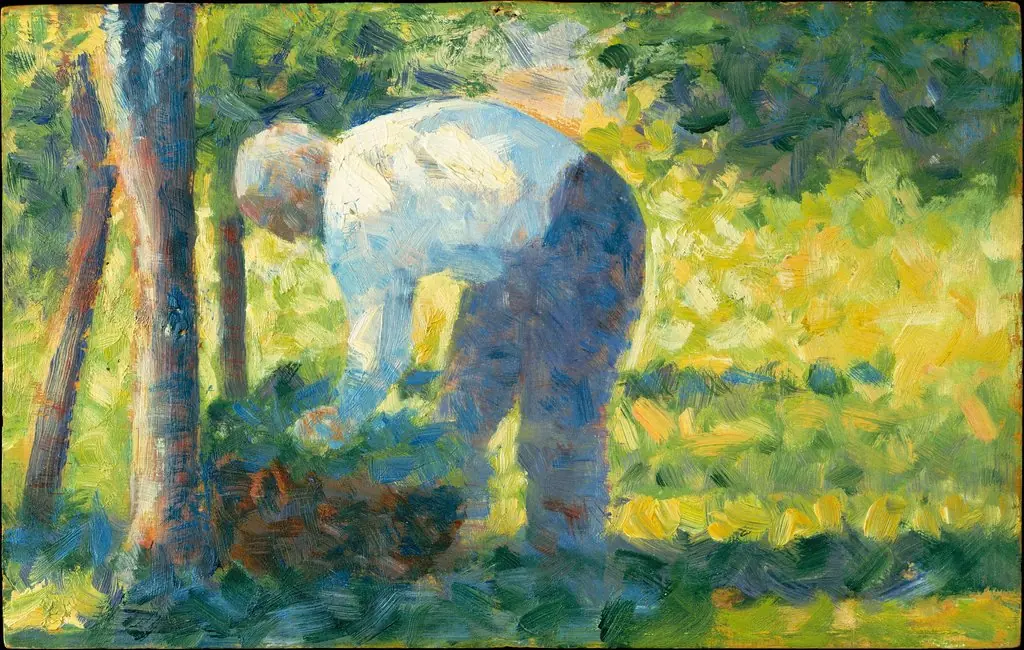
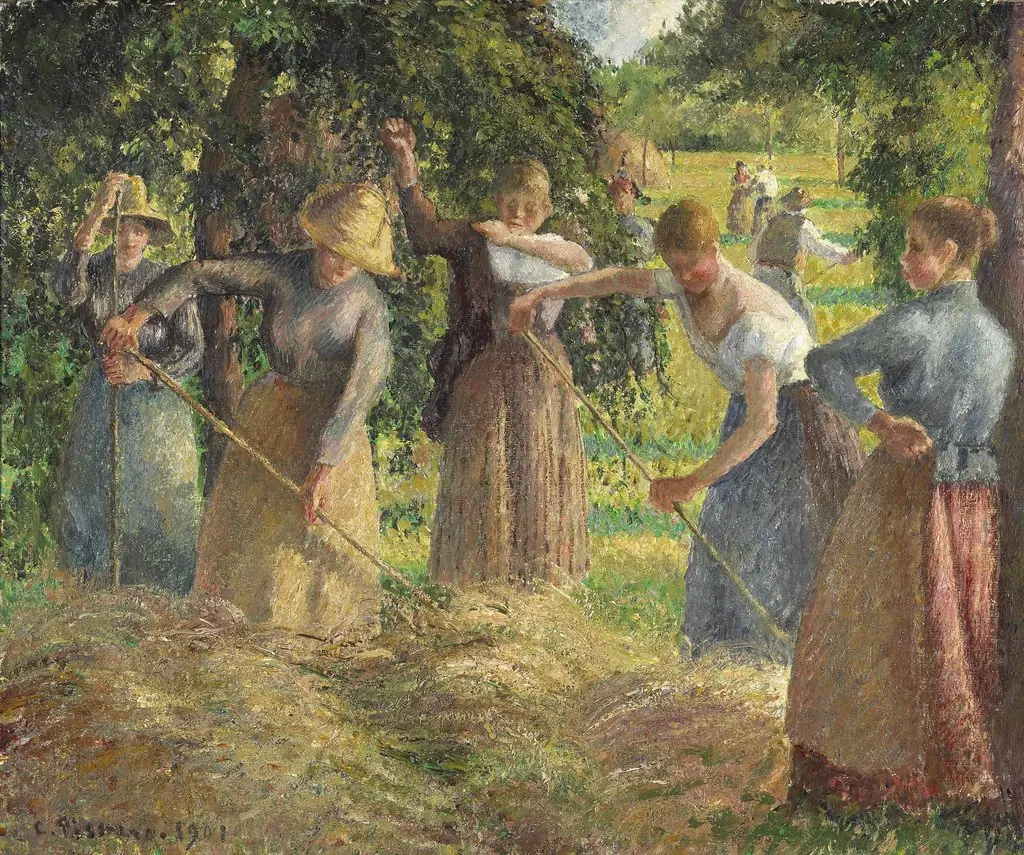
Haymakers at Montfermeil is an oil painting by the Impressionist artist Georges Seurat. It dates from 1882 and is held in the collection of the National Gallery of Art.
About this work
Subject & Meaning
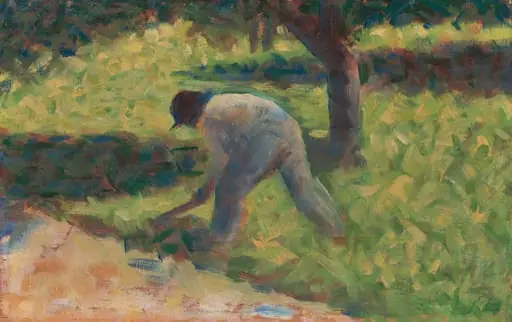
Haymakers at Montfermeil depicts a scene of rural labor in the Parisian suburb of Montfermeil, focusing on the seasonal task of haymaking.
Haymakers at Montfermeil depicts a scene of rural labor in the Parisian suburb of Montfermeil, focusing on the seasonal task of haymaking. The work belongs to Seurat’s early production and reflects his interest in contemporary, unidealized depictions of modern life. The subject aligns with the broader Impressionist and Post-Impressionist tradition of portraying everyday laborers and rural activities, yet it also anticipates Seurat’s later Pointillist techniques and thematic engagement with social observation.
The painting’s modest scale and focus on manual work suggest a quiet yet deliberate commentary on the dignity of labor and the rhythms of rural existence within the expanding modern metropolis.
History & Provenance
Georges Seurat executed 'Haymakers at Montfermeil' in 1882 as an oil painting on a wood panel. The work's documented ownership begins with the artist Odilon Redon in Paris, who passed it to his son, Ari Redon. By 1937, the painting belonged to Georges Lévy of Paris; it was subsequently exhibited at Galerie Jacques Seligmann in 1938, though specific sales records for the transaction remain undiscovered.
The piece resurfaced in a private Parisian collection by 1957, when it was lent to an exhibition at the Musée Jacquemart-André. Eventually, the American philanthropist Paul Mellon acquired the work. Upon his death in 1999, Mellon bequeathed the painting to the National Gallery of Art in Washington, D.C., having retained a life interest for his wife, Rachel Lambert Mellon, during his lifetime.
Haymakers at Montfermeil is presently in the collection of the National Gallery of Art in Washington, D.C. The painting entered the museum through the 1999 bequest of Paul Mellon, who had acquired it from a Parisian private collection in 1957. Its earlier ownership included the Paris dealer Georges Lévy, who offered it through the Seligmann gallery in 1938; no sales records have been located in the Seligmann archives. The work was also lent to the Musée Jacquemart‑Andre in Paris for the exhibition “Seurat” in 1957.
Context
The 1882 oil panel Haymakers at Montfermeil exemplifies Seurat’s mature divisionist technique and his fascination with contemporary labor, situating the work within his broader series of rural genre scenes that bridge Impressionism and Neo‑Impressionism. Its provenance, documented in private Paris collections and sold through dealer Jacques Seligmann in 1938, highlights a documented exhibition history that underscores its early 20th‑century visibility [1]. The National Gallery of Art’s catalogue entry records its acquisition and display, confirming its status as a representative example of Seurat’s synthesis of scientific color theory and everyday subject matter [2].
Scholarship emphasizes the painting’s role in illustrating the artist’s engagement with modern urban peripheries while retaining a pointillist technique that prefigures later avant‑garde developments.
Legacy
The painting Haymakers at Montfermeil (1882) entered the National Gallery of Art collection through the bequest of Paul Mellon in 1999, having previously been owned by Odilon Redon, his son Ari Redon, and the dealer Georges Lévy, who showed it at Seligmann’s Paris gallery in 1938 and lent it to the Musée Jacquemart‑Andre in 1957. Its inclusion in major exhibitions and subsequent scholarly attention has reinforced Seurat’s reputation as a pioneer of pointillism, and the work is frequently cited in studies of late‑19th‑century French rural genre scenes. The painting’s provenance and exhibition history are documented in archival records and the National Gallery’s collection database.
Overview
Georges Seurat's "Haymakers at Montfermeil," created around 1882, is an oil painting on wood. The artwork depicts a rural landscape near Montfermeil, focusing on two figures engaged in the labor of haymaking. This early work provides insight into Seurat's developing interest in capturing scenes of everyday life and exploring the effects of light within a natural setting, foreshadowing his later technical innovations.
Technique & Style
In "Haymakers at Montfermeil," Seurat began to experiment with a distinctive application of paint that would later define his signature style. Instead of blending colors on his palette, he applied small, discrete dots of pure pigment directly onto the wooden panel. This meticulous method, subsequently known as pointillism, aimed to allow the viewer's eye to optically blend the colors, creating a more vibrant and luminous visual experience than traditional mixing techniques.
Own this work as a print
Artist & collection
Artist
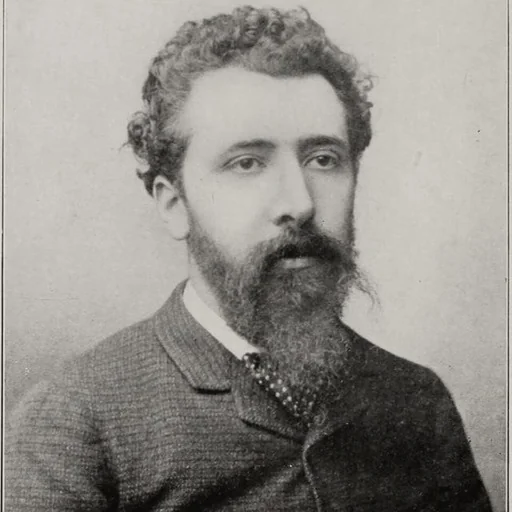
Georges Pierre Seurat (UK: SUR-ah, -ə, US: suu-RAH; French:; 2 December 1859 – 29 March 1891) was a French post-Impressionist artist.