Artwork
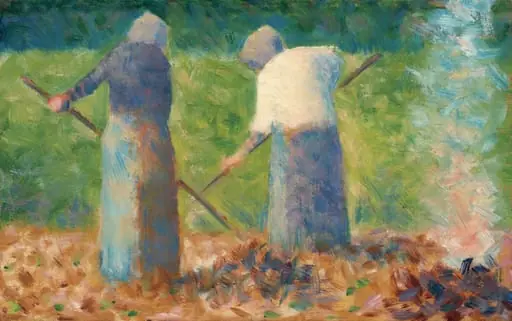
Peasant with a Hoe
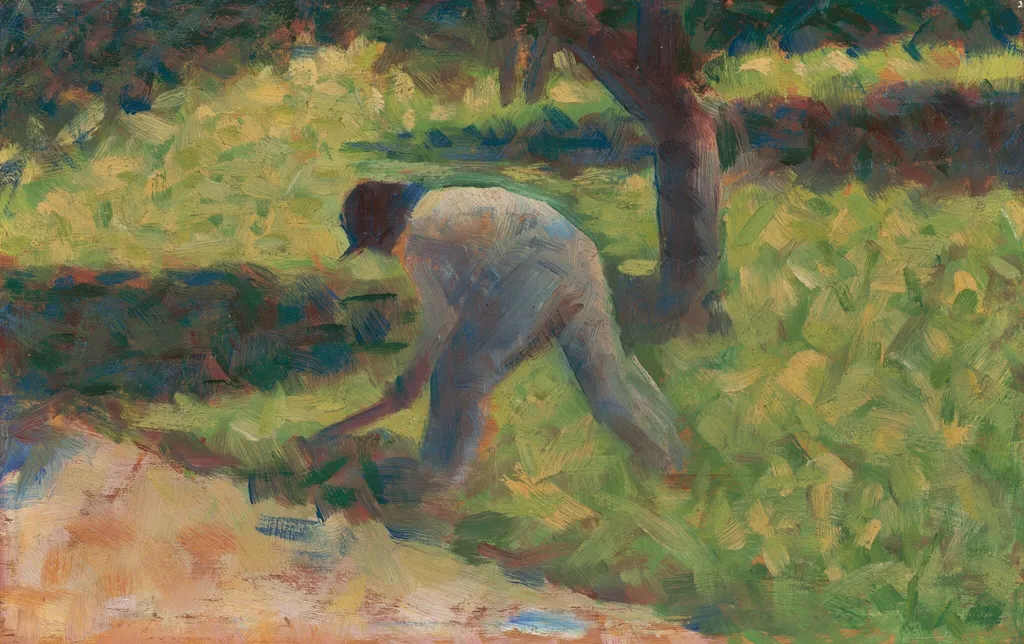
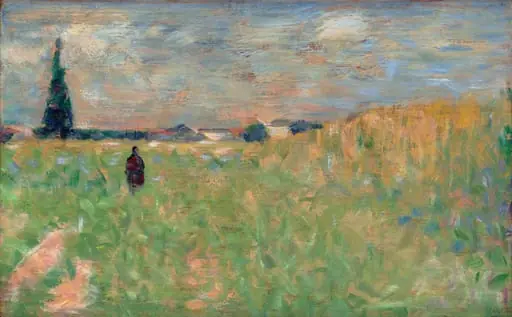
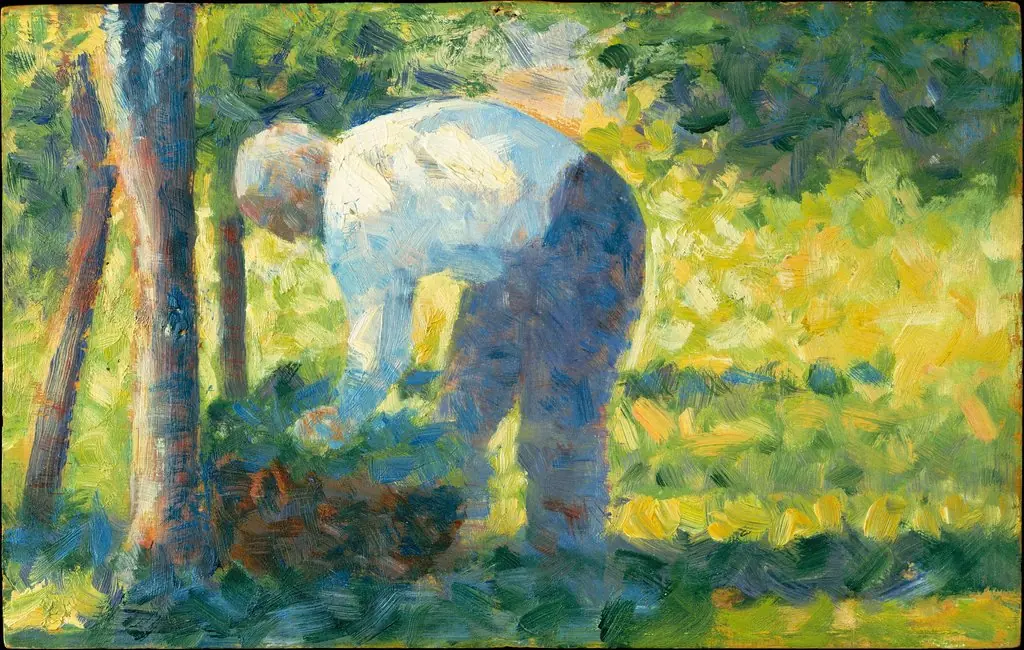
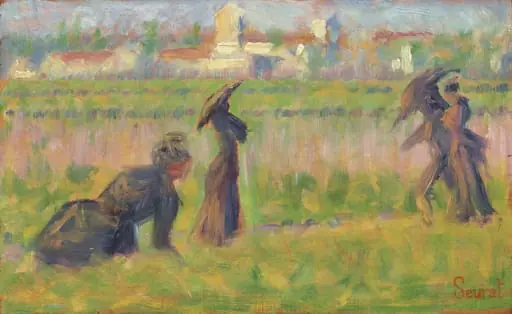
Peasant with a Hoe is an oil painting by the Impressionist artist Georges Seurat. It dates from 1882 and is held in the collection of the National Gallery of Art.
About this work
Technique & Style
The painting remained in the artist's possession until his death in 1891, where it was cataloged in the posthumous inventory as number 58.
Created in 1882, Peasant with a Hoe is an oil painting executed on a wood panel support. The work measures 14.61 cm in height and 24.13 cm in width. As a small-scale study, the piece reflects Seurat's early engagement with oil on rigid panels, a format he frequently utilized for his preparatory sketches and figure studies during this period.
The painting remained in the artist's possession until his death in 1891, where it was cataloged in the posthumous inventory as number 58.
History & Provenance
The work was created by Georges Seurat in 1882 as an oil on wood panel. After the artist’s death in 1891, it remained in his estate and was recorded in the posthumous inventory as number 58. By familial descent, it passed to Marie Puybonnieux, Seurat’s cousin, whose sons, Jacques and Pierre Puybonnieux, owned it in Paris until 1956.
The painting was then handled by Wildenstein, Paris, before entering the collection of Paul Mellon in Upperville, Virginia, by 1958. Mellon lent it to the 1958 traveling exhibition _Seurat Paintings and Drawings_, shown at The Art Institute of Chicago and The Museum of Modern Art, New York. Upon Mellon’s death in 1999, the work passed to the National Gallery of Art, Washington, D.C., as part of his bequest, with a life interest retained by his wife, Rachel Lambert Mellon, until her death in 2014.
The painting is held by the National Gallery of Art in Washington, D.C., with inventory number 1999.141.1. It entered the collection through the bequest of Paul Mellon in 1999, following his ownership from at least 1958. Previous owners include the artist until his death in 1891, Jacques and Pierre Puybonnieux in Paris until 1956, and the Wildenstein gallery in Paris.
The work was lent to the 1933 Paris exhibition _Seurat et Ses Amis_ and to the 1958 exhibition _Seurat Paintings and Drawings_ at the Art Institute of Chicago and the Museum of Modern Art, New York, listed there as _Peasant at Work_.
The National Gallery of Art website confirms its presence in the collection and provides provenance details spanning from the artist to the Mellon family. Exhibition records from 1933 and 1958 further document its public display history under variant titles.
Overview
Georges Seurat’s early work Peasant with a Hoe, executed in oil on wood around 1882, presents a solitary agricultural figure within a verdant landscape. The composition centers on a laborer bent over a furrow, his posture and tools emphasizing the physicality of field work. The painting’s modest dimensions and muted palette convey a restrained, observational tone.
Subject & Meaning
The canvas captures a rural laborer attired in plain, earth‑colored garments, engaged in the act of hoeing. By focusing on a single figure amid a lush setting, Seurat highlights the intimate relationship between human effort and the natural environment, inviting contemplation of everyday toil and its place within the broader landscape.
Context
Created during the early 1880s, the work predates Seurat’s more famous pointillist pieces and reflects his transitional phase from traditional academic training toward the systematic study of color and optics. The subject matter aligns with contemporary French interest in depicting rural life, while the technique anticipates the analytical approach that would define his later oeuvre.
Own this work as a print
Artist & collection
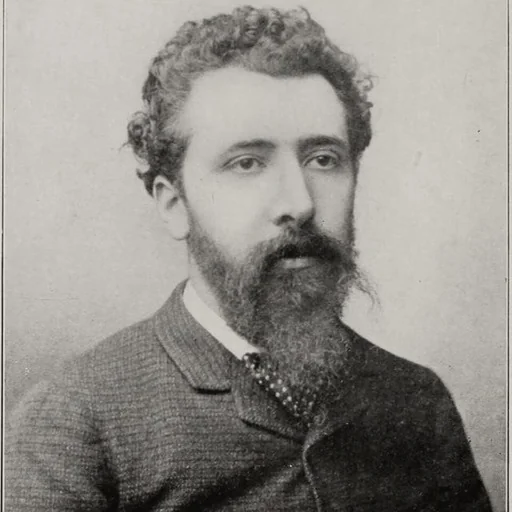
Artist
Georges Pierre Seurat (UK: SUR-ah, -ə, US: suu-RAH; French:; 2 December 1859 – 29 March 1891) was a French post-Impressionist artist.