Artwork
A Sunday Afternoon on the Island of La Grande Jatte
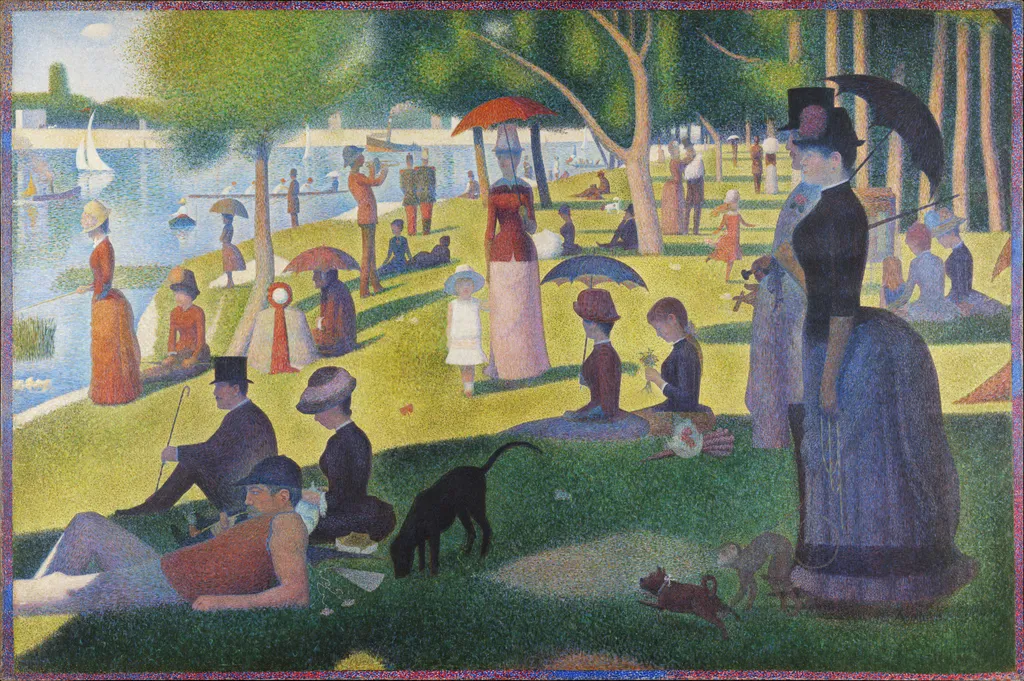
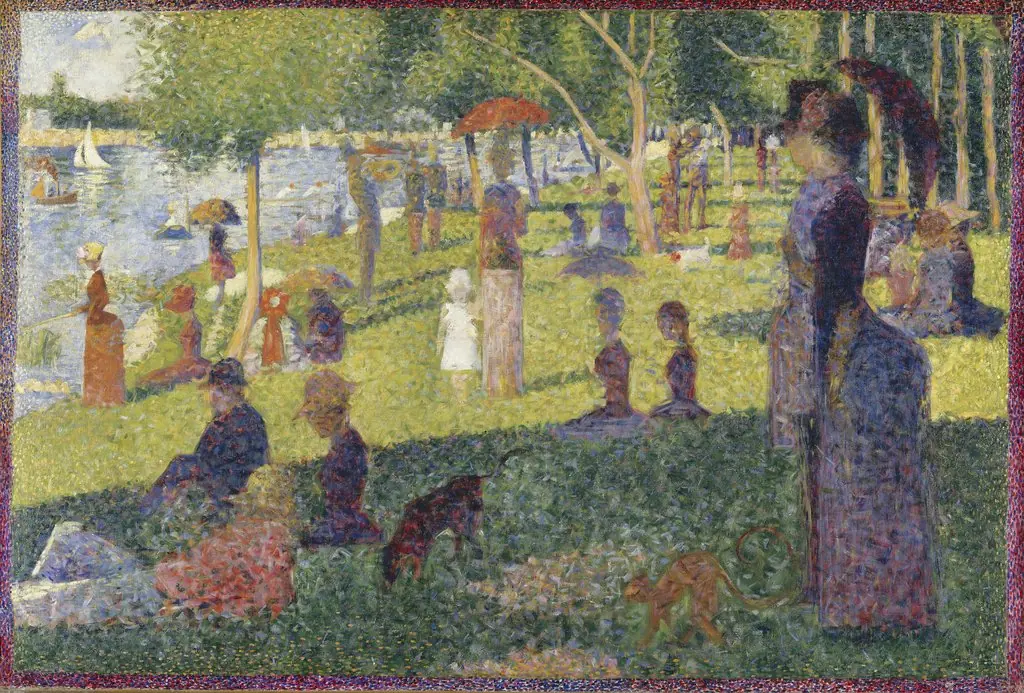
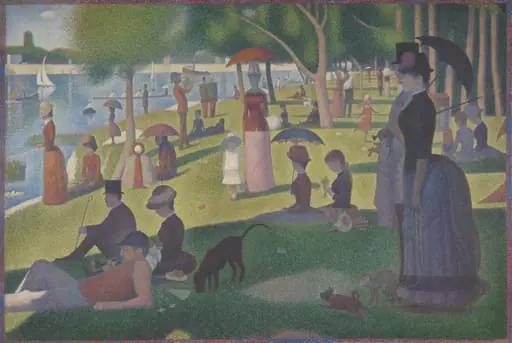
A Sunday Afternoon on the Island of La Grande Jatte is an oil painting by the Divisionist artist Georges Seurat. It is held in the collection of the Art Institute of Chicago.
About this work
Subject & Meaning
Yet Seurat himself described the work as a modern frieze of “ordinary people” and “moderns,” suggesting a democratic impulse beneath the stylized presentation.
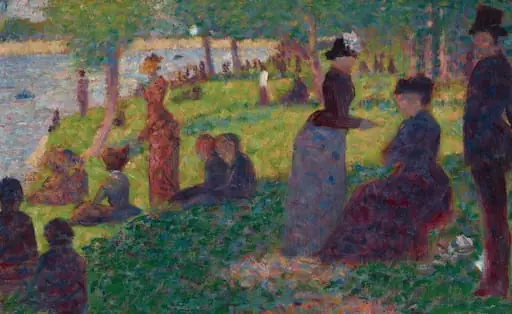
Seurat’s composition depicts a cross-section of Parisian society at leisure on a Sunday afternoon on the island of La Grande Jatte, a retreat then on the city’s western edge. The figures include bourgeois couples in top hats and crinolines, a woman with a pet monkey on a leash, another angling by the riverbank, a trumpeter attended by two soldiers, and a small girl in white who confronts the viewer. Critics have read coded references to prostitution in the “fishing” motif and the monkey, symbols that signal both the island’s reputation as a discreet rendezvous and broader anxieties about modernity’s moral codes.
Seurat’s rigid, silhouetted figures and flattened space were interpreted by later commentators as a commentary on the alienation and social fragmentation of Haussmann-era Paris. Ernst Bloch and others emphasized the mechanical stillness of the scene, aligning the painting’s geometry with a critical view of bourgeois etiquette and urban isolation. Yet Seurat himself described the work as a modern frieze of “ordinary people” and “moderns,” suggesting a democratic impulse beneath the stylized presentation.
Technique & Style
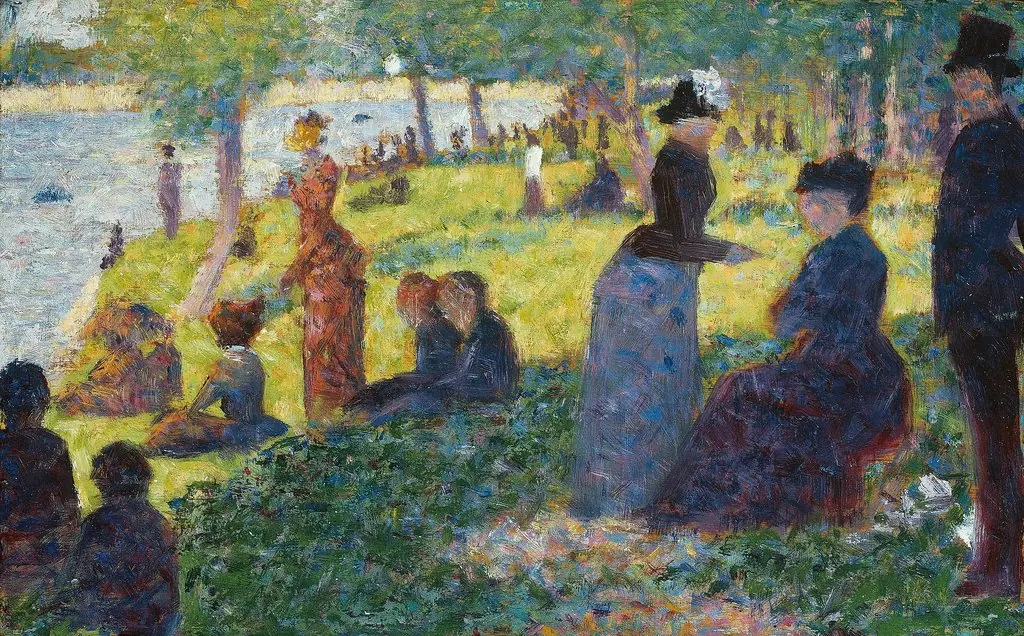
Executed in oil on canvas between 1884 and 1886, this large-scale work measures approximately 207.5 by 308.1 centimeters. It stands as the definitive example of Pointillism, a technique Seurat preferred to call Divisionism. The artist applied minute, uniform dots of pure, unmixed pigment directly onto the support, relying on optical mixing within the viewer's eye to generate luminous hues rather than blending colors on a palette.
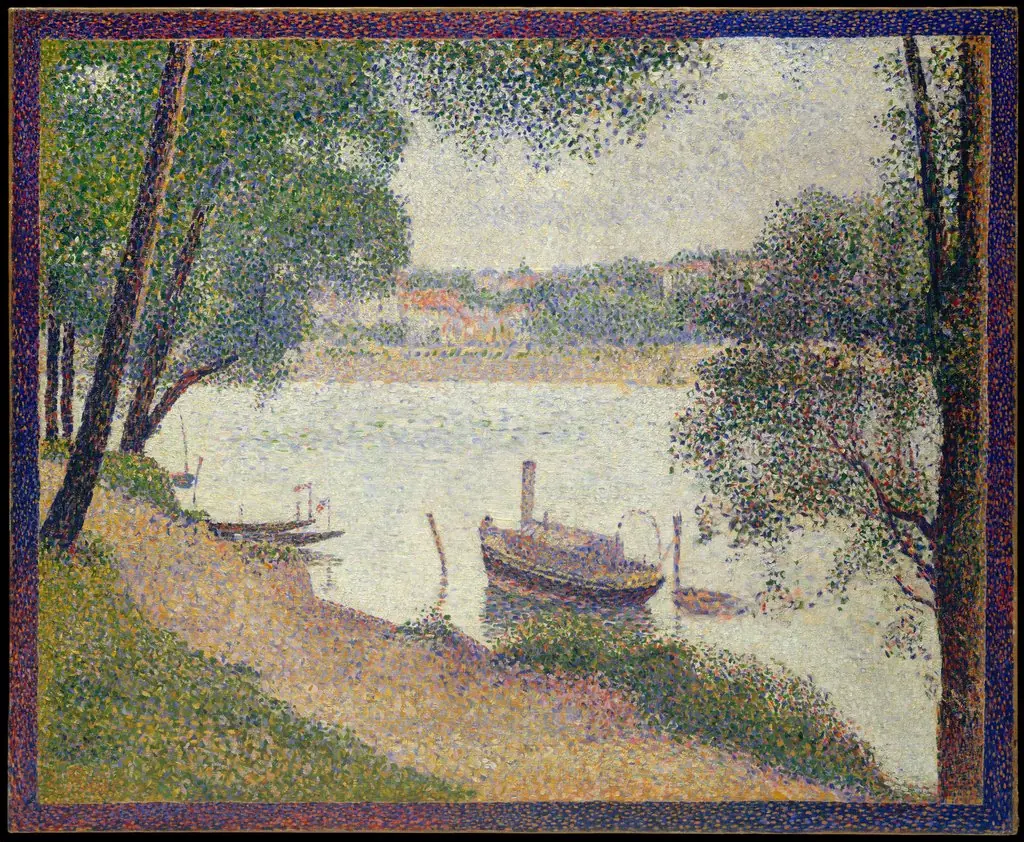
The composition is characterized by a rigid, static arrangement where figures appear as silhouettes with minimal overlap, creating a sense of formal stiffness devoid of spontaneity. To enhance the visual transition between the artwork and its surroundings, Seurat painted a border of colored dots around the canvas edges in 1889, originally intending to replace the traditional white frame used at its 1886 debut.
History & Provenance
Work on A Sunday Afternoon on the Island of La Grande Jatte began in May 1884 and culminated in the spring of 1886 after two distinct phases of execution.
Seurat first exhibited the painting at the eighth and final Impressionist exhibition in May 1886 and then at the second Salon of the Société des Artistes Indépendants in August 1886. Ownership passed from the artist’s mother, Ernestine Seurat, to Léon-Casimir Bru in 1900 for 800 francs, following her death in 1899. Bru’s daughter, the artist Lucie Cousturier, sold the work to the Paris gallery Charles Vildrac in 1924; Vildrac resold it the same year to Chicago collectors Frederic Clay and Helen Birch Bartlett.
In 1926 the Barttetts bequeathed the painting to the Art Institute of Chicago under a restriction allowing only one loan, honored in 1958 for a Seurat retrospective in New York.
The painting is held in the permanent collection of the Art Institute of Chicago. Its provenance traces from the artist's mother to Émile Seurat, who sold it in 1900 to Léon-Casimir Bru. After passing through Bru's daughter and the Charles Vildrac gallery, Frederic Clay and Helen Birch Bartlett acquired the work in 1924 and donated it to the museum two years later with a strict clause limiting external loans.
Regarding exhibition history, the work debuted at the eighth and final Impressionist exhibition in May 1886 and appeared at the Salon des Artistes Indépendants that August. It was subsequently shown at the Salon des XX in Brussels in 1887. The restrictive loan clause was waived only once for a 1958 Seurat retrospective co-organized by the Art Institute and the Museum of Modern Art in New York.
Overview
Georges Seurat's A Sunday Afternoon on the Island of La Grande Jatte, an oil painting completed between 1884 and 1886, stands as his most recognized creation. This monumental canvas is widely regarded as a seminal work of Neo-Impressionism and a prime illustration of the pointillist method. It captures a vibrant scene of Parisian leisure, meticulously constructed through an innovative application of color.
Own this work as a print
Artist & collection
Artist
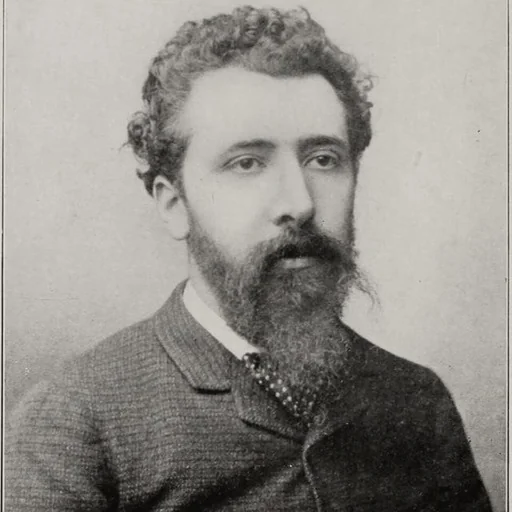
Georges Pierre Seurat (UK: SUR-ah, -ə, US: suu-RAH; French:; 2 December 1859 – 29 March 1891) was a French post-Impressionist artist.