Artwork
The Forest at Pontaubert
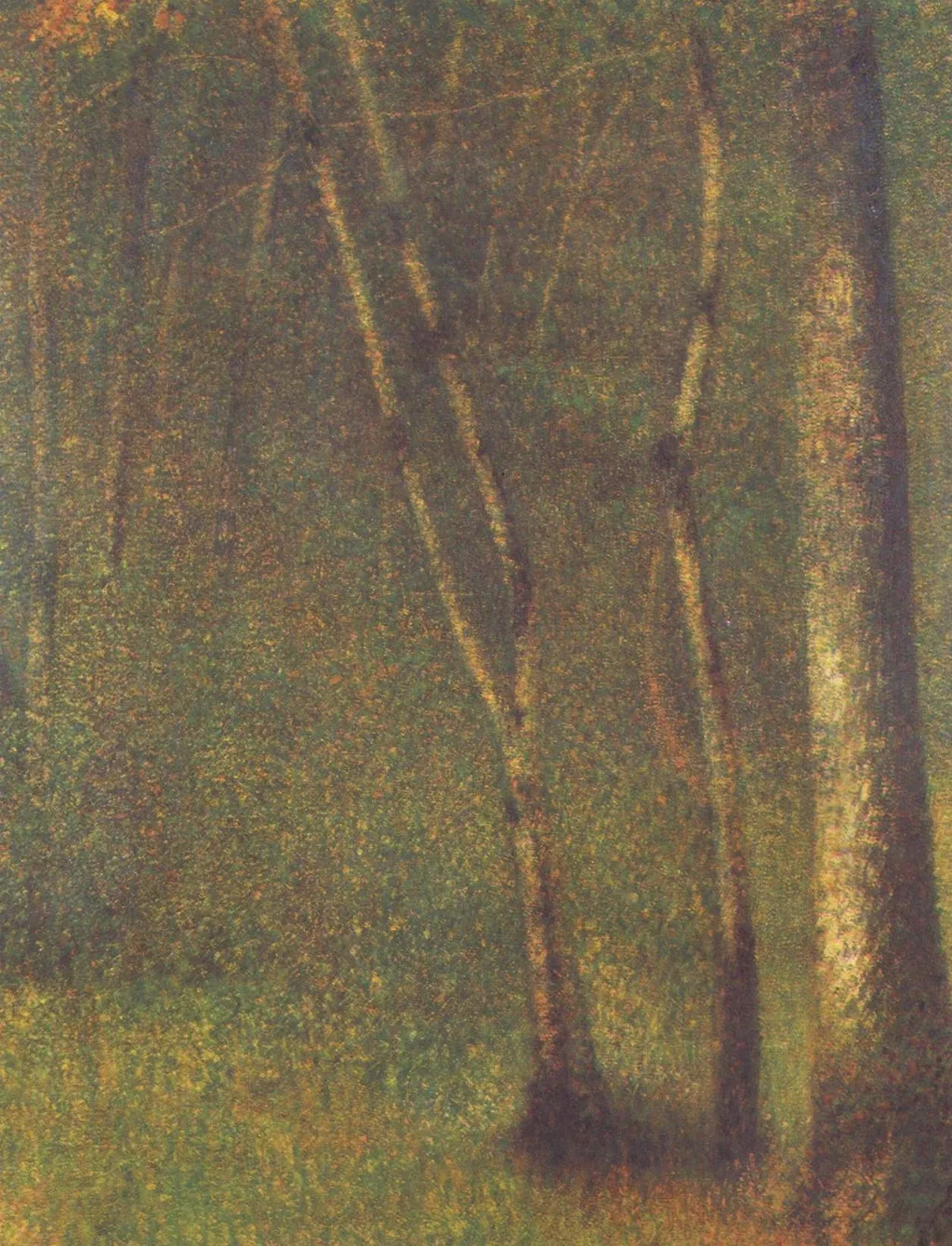
The Forest at Pontaubert is an oil painting by the Post-Impressionist artist Georges Seurat. It dates from 1891 and is held in the collection of the Metropolitan Museum of Art.
About this work
Subject & Meaning
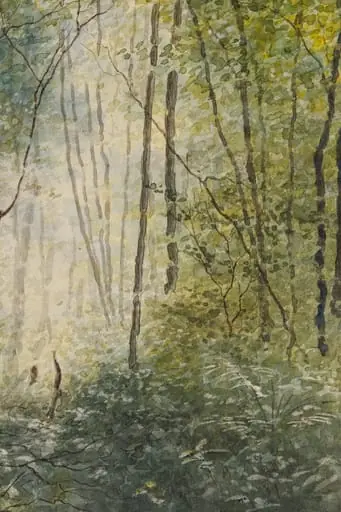
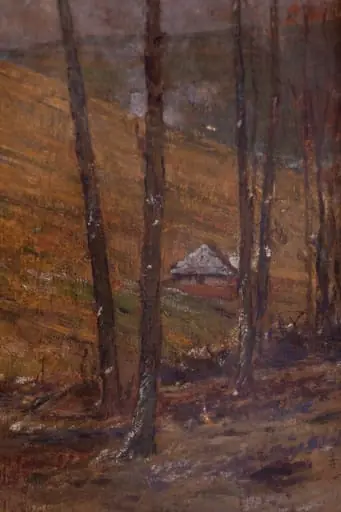
The Forest at Pontaubert depicts the understorey of a forest in the Morvan region, focusing on tree trunks and foliage near the village of Pontaubert.
The Forest at Pontaubert depicts the understorey of a forest in the Morvan region, focusing on tree trunks and foliage near the village of Pontaubert. The subject is the woodland itself, characterised by a vertical composition where slender foreground trunks contrast with elements in the background. Iconographically, the work synthesises the plein-air tradition of the Barbizon school, particularly the influence of Corot, with Seurat's emerging interest in colour contrast and the direction of light.
Diffuse lighting and a symphony of muted greens convey a profound sense of peace. Art historians view the piece as a transitional study in which Seurat refined his chromatic language, adding lighter touches to the bark in the studio that anticipate his later pointillist technique, bridging traditional landscape painting and his future style.
Technique & Style
The Forest at Pontaubert is an oil painting on canvas measuring approximately 79.1 × 62.5 cm, created by Georges Seurat around 1881–1882. Seurat began the work en plein air during a summer stay in Pontaubert, experimenting with colour contrasts, light effects and the direction of lines, and likely completed it later in his studio, adding lighter touches to the tree trunks. The handling shows a loose, impressionistic brushwork that already points toward his developing pointillist technique.
Stylistically, the painting reveals the influence of Corot and the Barbizon school in its treatment of foliage and landscape structure, featuring a vertical tree motif, muted greens, and a diffused light that creates a tranquil atmosphere. These qualities situate the work as an experimental step toward Seurat's mature style.
History & Provenance
The Forest at Pontaubert, painted by Georges Seurat in 1881–1882, was executed on location in the village of Pontaubert in the Morvan region during a summer visit, then finished in the artist's studio, which he shared with Edmond Aman-Jean, the following winter. The work, an oil on canvas measuring 79.1 × 62.5 cm, depicts a woodland interior and reflects Seurat's early exploration of colour contrast and plein-air technique before his systematic development of pointillism. No evidence of a formal commission exists; the work originated from the artist's personal engagement with the site.
It is now held in the collection of the Metropolitan Museum of Art in New York, which records no specific accession number or documented exhibition history in the available sources.
Context
Seurat's Sous-bois à Pontaubert is widely read as a transitional work between plein-air impressionism and the emergent pointillism of his later production. Painted during a stay in the Morvan village of Pontaubert, the canvas records outdoor studies of underbrush and vertical trunks while also bearing signs of studio completion, notably light highlights on bark that prefigure his later luminous palette. Critics note how the subdued greens and diffused light evoke Corot and the Barbizon tradition, yet the structured handling of foliage already signals Seurat's evolving chromatic language, a decisive step toward the methodical optical synthesis that would define his mature practice.
Legacy
The Forest at Pontaubert is frequently cited as an early experiment that foreshadowed Seurat's systematic pointillist approach. Held in the Metropolitan Museum of Art, the canvas has been referenced in scholarship as a bridge between plein-air landscape practice and the colour theory that defines Neo-Impressionism. Critics note that its handling of light and tree trunks anticipates the refined division of hue that Seurat later codified, positioning the painting as a reference point for the development of his mature style and for later artists who adopted pointillist techniques.
Overview
The Forest at Pontaubert is an oil painting depicting a dense woodland environment. The composition prominently features numerous tall, slender tree trunks in the foreground, rendered with a distinct tactile quality. The background recedes into softer, muted tones of green, subtly interspersed with touches of yellow and brown, establishing a serene yet atmospheric natural setting. This work exemplifies a direct engagement with landscape subjects.
Own this work as a print
Artist & collection
Artist
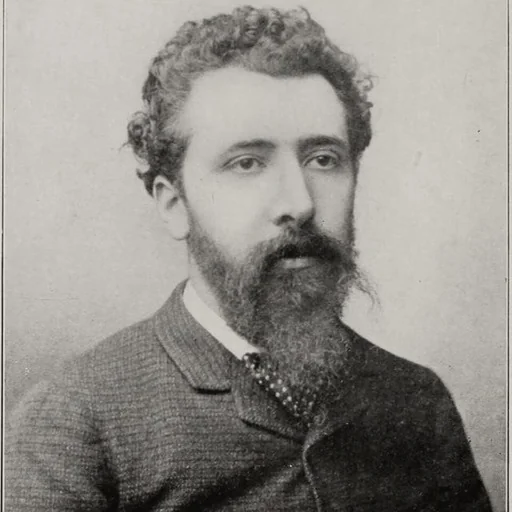
Georges Pierre Seurat (UK: SUR-ah, -ə, US: suu-RAH; French:; 2 December 1859 – 29 March 1891) was a French post-Impressionist artist.

 Compared in the Color & Light course