Artwork
Study for "La Grande Jatte"
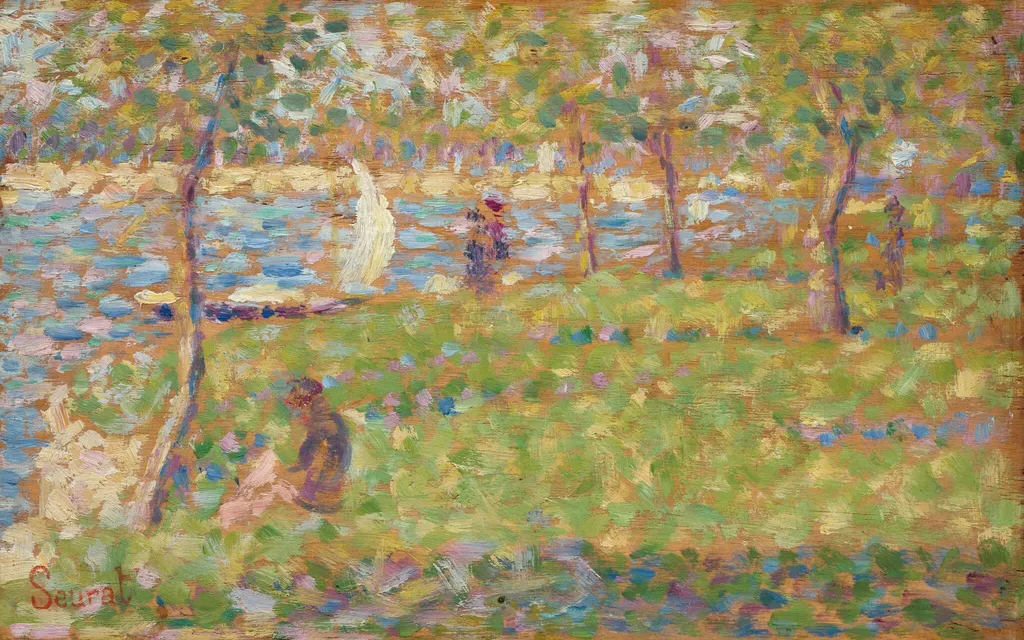
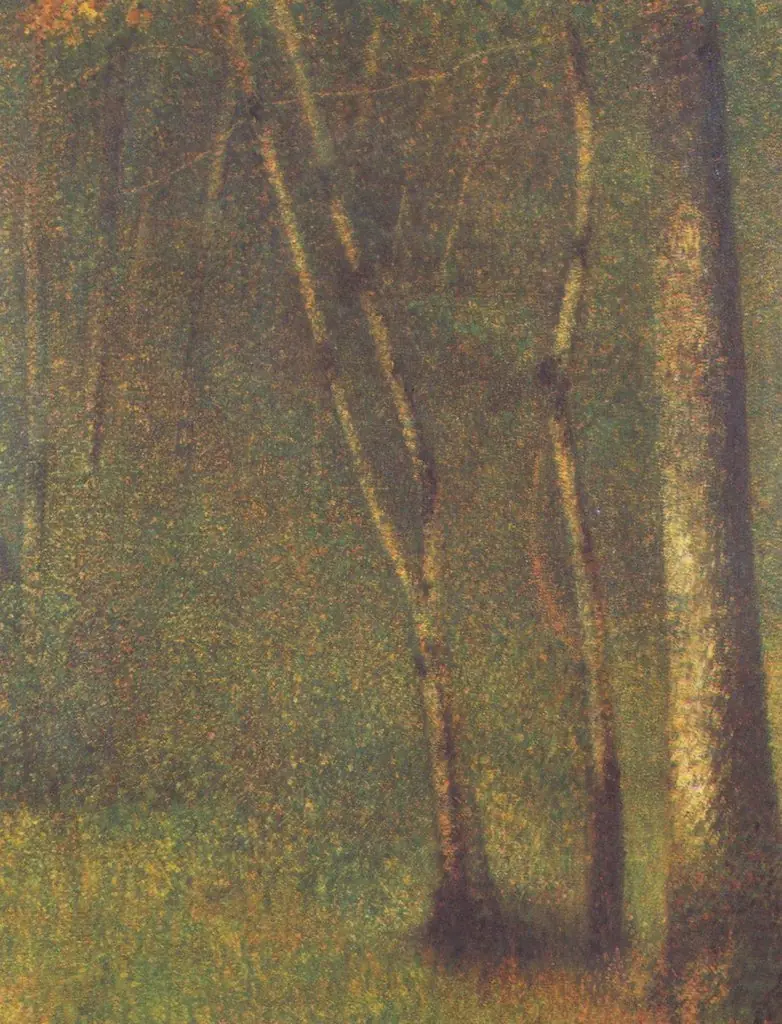
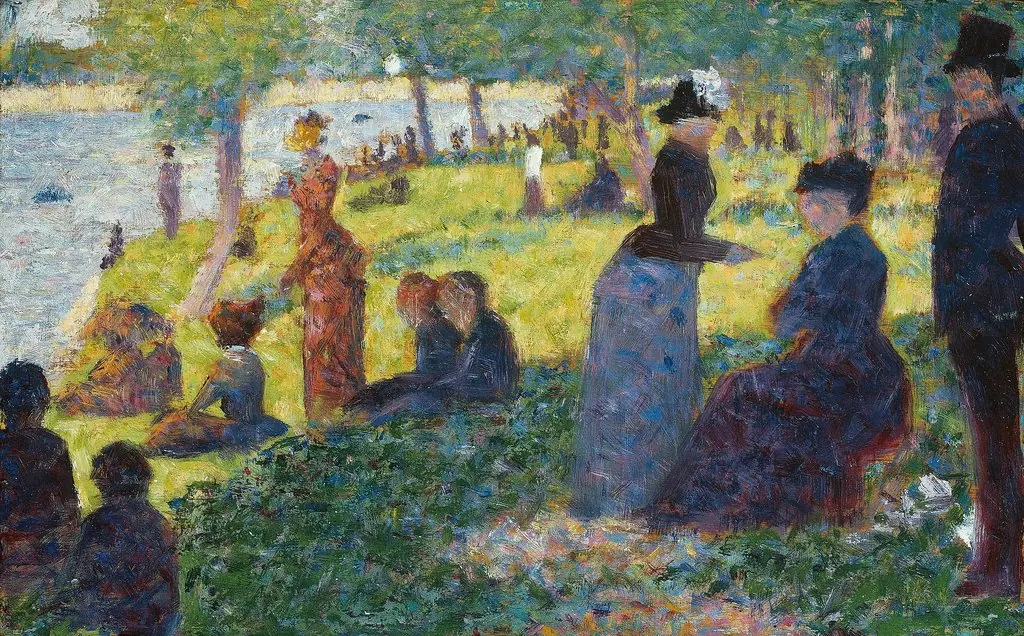
Study for "La Grande Jatte" is an oil painting by the Impressionist artist Georges Seurat. It dates from 1884 and is held in the collection of the National Gallery of Art.
- Inscription
- Inscribed:lower left with stamp: Seurat
About this work
Subject & Meaning
The work thus conveys a study of light and structure, emphasizing the tree’s role as both visual anchor and experimental subject.
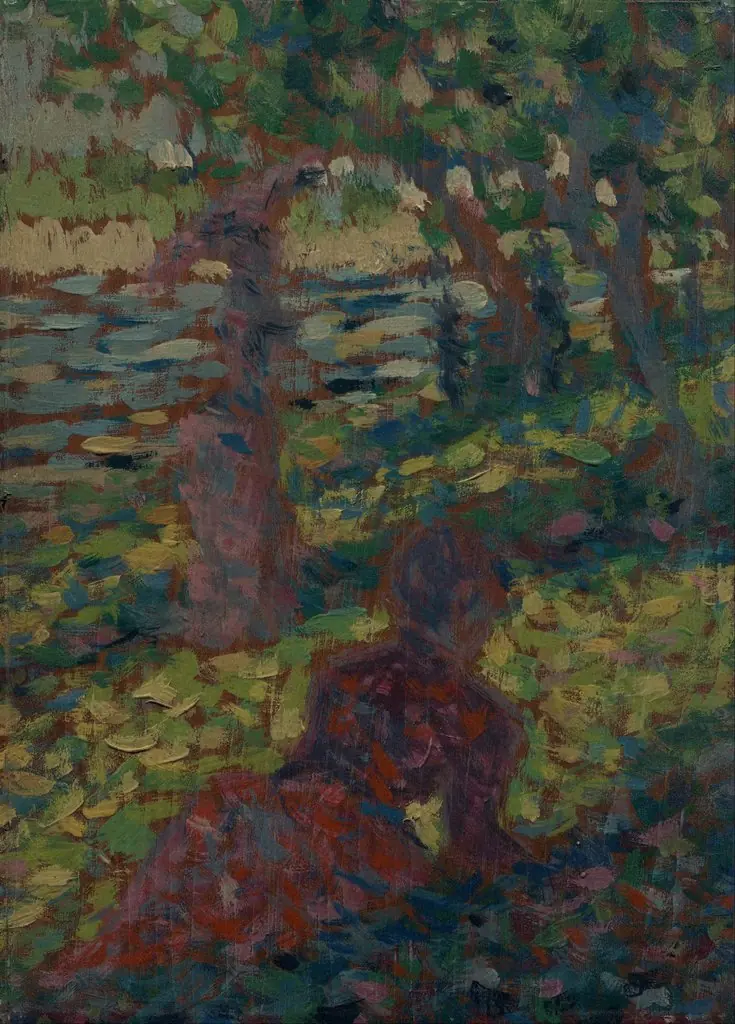
The preparatory study titled 'Study for "La Grande Jatte"' portrays a solitary tree rendered in oil on wood, serving as a compositional sketch for Seurat’s final masterpiece. The tree functions as a central motif that anchors the surrounding figures and points of light, reflecting the artist’s systematic investigation of natural forms through pointillist technique. By isolating the foliage, Seurat examines tonal variation and spatial relationships, preparing the element that later integrates into the larger scene of leisure on the Seine.
The work thus conveys a study of light and structure, emphasizing the tree’s role as both visual anchor and experimental subject.
Technique & Style
The study employs oil paint on a wooden panel support, measuring 15.9 × 25 cm. Handling is consistent with Seurat’s preparatory practice: fluid, layered brushwork builds up the scene with small, parallel strokes that modulate tone and contour. The composition centers on a single tree rendered through abbreviated, vertical hatchings that suggest foliage and trunk without descriptive detail. The palette is muted, relying on earth tones and greens to establish a calm, planar structure aligned with the later Grande Jatte’s chromatic and spatial logic.
History & Provenance
Georges Seurat created this oil study on wood panel in 1884. The work's early ownership history includes the Paris gallery Bernheim-Jeune and the Glasgow and London firm Alex Reid & Lefèvre, which handled several sketches of similar dimensions for the larger composition. By 1933, the painting was in the collection of Percy Moore Turner in London, who lent it to exhibitions in 1933 and 1937.
The piece subsequently passed through Wildenstein & Co. before being acquired by Captain Edward H. Molyneux, likely in 1943. On August 15, 1955, Molyneux sold the work to Ailsa Mellon Bruce of New York. Following her death, Bruce bequeathed the study to the National Gallery of Art in Washington, D.C., in 1970.
Study for "La Grande Jatte" is held by the National Gallery of Art in Washington, D.C. The work entered the museum through the 1970 bequest of Ailsa Mellon Bruce, who purchased it from Captain Edward H. Molyneux in 1955. Its provenance also includes earlier ownership by Bernheim‑Jeune, Alex Reid & Lefèvre, and Percy Moore Turner, who lent the sketch to London exhibitions in 1933 and 1937. The painting is catalogued in the National Gallery of Art collection.
Overview
This oil on wood panel, created by Georges Seurat in 1884, serves as a preparatory study for his monumental work, A Sunday on La Grande Jatte. It focuses on a single tree trunk, exploring the effects of light and shadow. The painting demonstrates Seurat's early experimentation with color application and form, laying foundational elements for his later, more developed compositions.
Context
This painting is one of many preliminary works Seurat executed in preparation for A Sunday on La Grande Jatte. In this particular study, his primary objective was to analyze and resolve the complex effects of light and shadow on the landscape elements, specifically the tree, before incorporating human figures into the final composition. Evidence of his working process, such as alterations to the tree's branch angles, remains visible.
Own this work as a print
Artist & collection
Artist
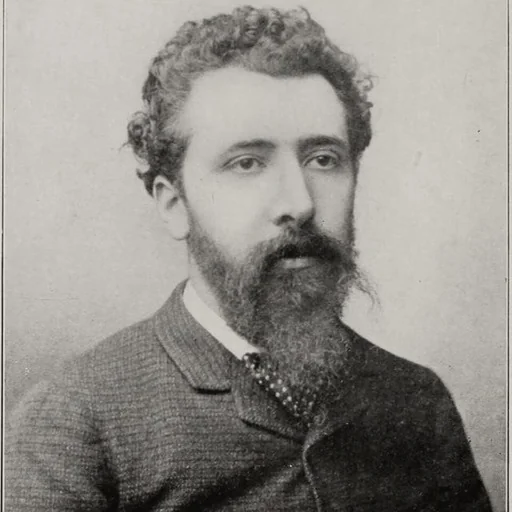
Georges Pierre Seurat (UK: SUR-ah, -ə, US: suu-RAH; French:; 2 December 1859 – 29 March 1891) was a French post-Impressionist artist.