Artwork
柴田是真筆筍図|Bamboo Shoots
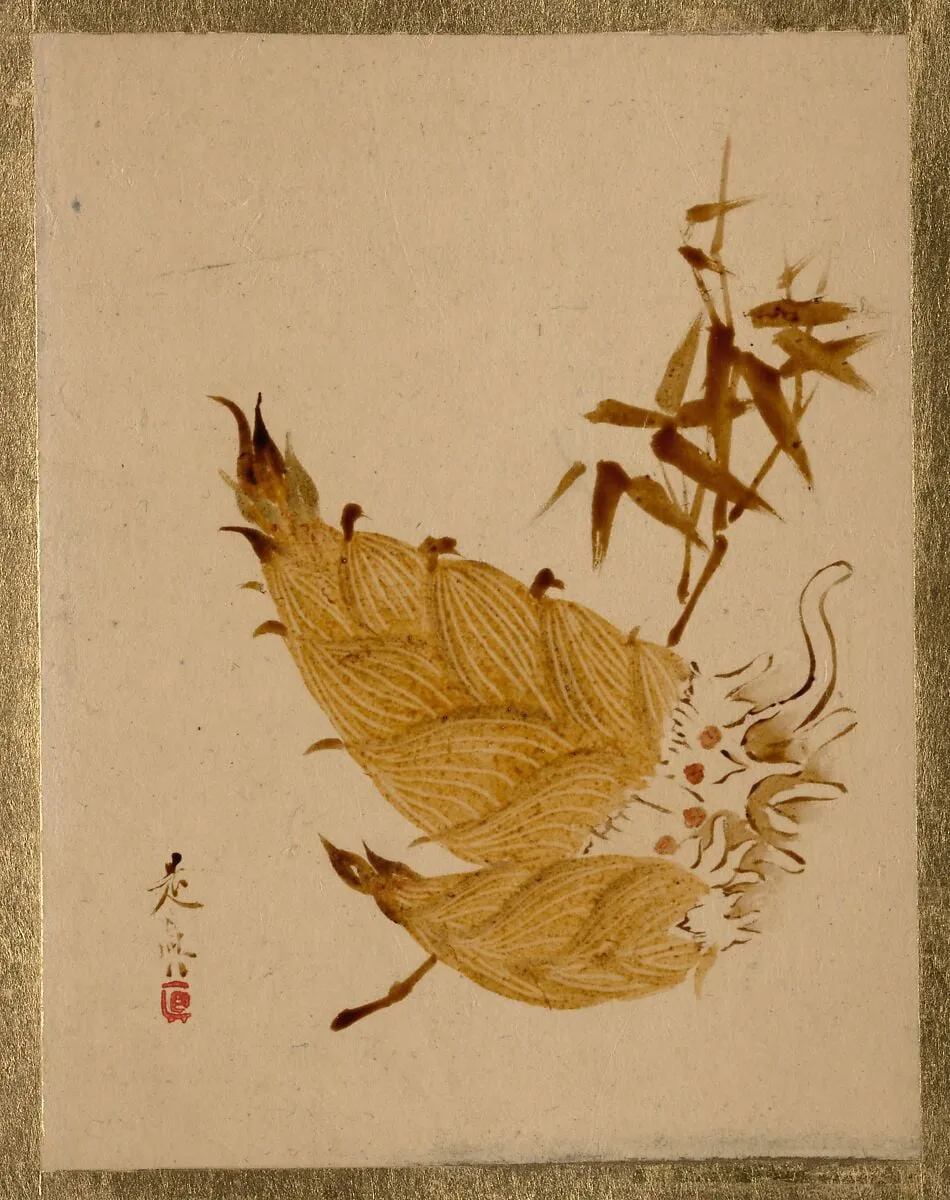
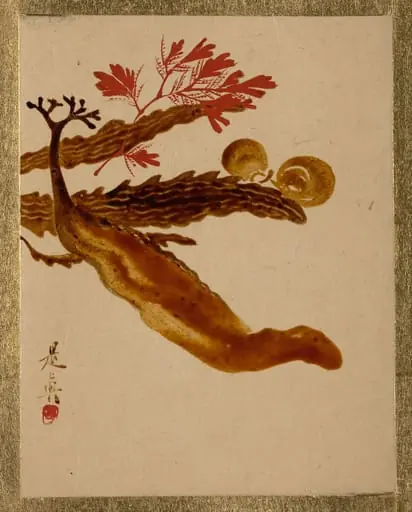
柴田是真筆筍図|Bamboo Shoots is an unspecified painting by the Impressionist artist Shibata Zeshin. It dates from 1884 and is held in the collection of the Metropolitan Museum of Art.
About this work
Subject & Meaning
Bamboo Shoots is a still-life depiction of Bambusoideae, the botanical subfamily encompassing bamboo and its young shoots.
Bamboo Shoots is a still-life depiction of Bambusoideae, the botanical subfamily encompassing bamboo and its young shoots. Rendered in lacquer on paper as an album leaf, the work isolates the bamboo shoot as its sole subject, presenting the natural form with the meticulous surface treatment characteristic of Shibata Zeshin's lacquer painting practice. The choice of bamboo shoots carries traditional East Asian symbolic resonance, as bamboo is associated with resilience, integrity, and renewal, while the emerging shoot specifically evokes spring, new growth, and latent vitality.
By translating this auspicious botanical motif into the medium of lacquer, an unconventional material for pictorial representation, Zeshin elevated a humble natural subject into a refined decorative image suited to the intimate format of the album leaf.
Technique & Style
The work, titled 柴田是真筆筍図 (Bamboo Shoots), is an album-leaf painting executed in lacquer on paper by Shibata Zeshin in 1884. The support is a thin paper sheet onto which lacquer has been brushed to create a smooth, slightly translucent surface that enhances the fine, calligraphic brushstrokes defining the bamboo shoots. Zeshin's handling emphasizes delicate line work and subtle tonal modulation, producing a composition that balances precise botanical detail with an elegant, almost abstract sense of space.
The formal qualities reflect a restrained palette and a compositional rhythm that guides the eye along the slender stems, embodying the still-life genre's focus on natural forms.
History & Provenance
Bamboo Shoots is a lacquer-on-paper album leaf created by Shibata Zeshin in 1884 in Japan. The work measures 11.4 cm in height and 8.9 cm in width. It is held in the collection of the Metropolitan Museum of Art, New York.
No earlier ownership chain, commissioning party, or intermediate provenance prior to its acquisition by the museum is documented in the available sources, and no dedicated accession number is provided in the cited source.
Overview
Created in 1884, 'Bamboo Shoots' is an album leaf by the Japanese artist Shibata Zeshin, depicting two bamboo shoots emerging from a bed of dry leaves. Executed in a still-life format, the work is notable for its unconventional medium: Zeshin applied real lacquer, the same durable resin used for coating wooden vessels, onto paper rather than traditional ink or paint. This technique imparts a distinct, glossy texture to the black forms of the shoots and leaves, while gold accents catch the light to suggest moisture and vitality.
The composition is intimate and focused, isolating the natural subjects against a minimal background to emphasize their organic forms and the tactile quality of the lacquer. Produced late in Zeshin's career, this piece exemplifies his mastery of lacquer as a fine art medium, bridging the gap between decorative craft and painting. The work reflects the artist's innovative approach to materials during the Meiji period, demonstrating his ability to elevate everyday subjects through technical virtuosity and a refined aesthetic sensibility.
Context
The depiction of bamboo holds a significant place within Japanese artistic traditions. Artists frequently explored this plant for its aesthetic qualities and symbolic associations, which include strength, purity, and growth. Zeshin's Bamboo Shoots contributes to this rich lineage, offering a distinct interpretation of a revered natural element through his innovative use of materials and keen observational skill.
Artist & collection