Artwork
Untitled
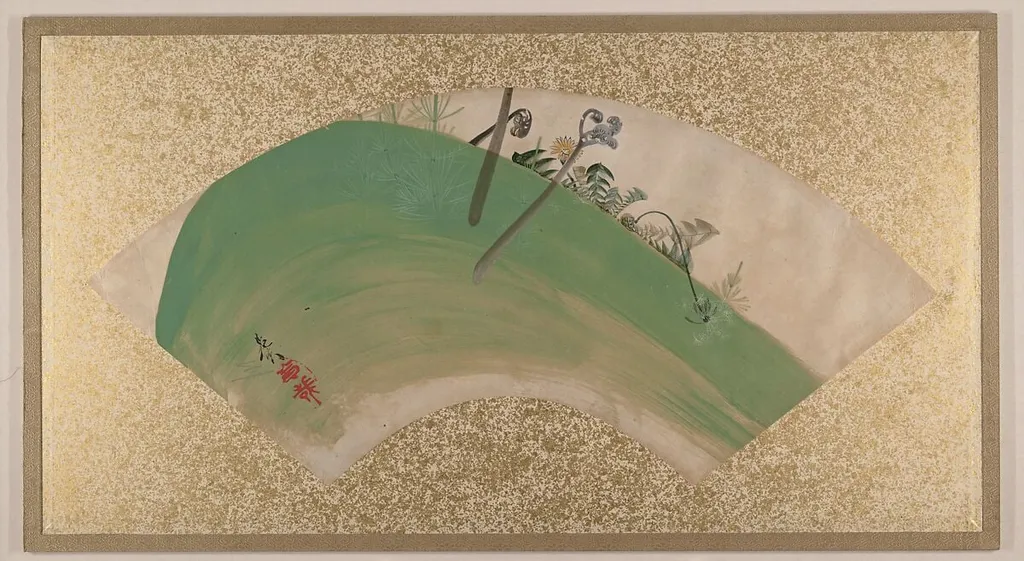
Untitled is a tempera painting by the Impressionist artist Shibata Zeshin. It dates from 1879 and is held in the collection of the Metropolitan Museum of Art.
About this work
Subject & Meaning
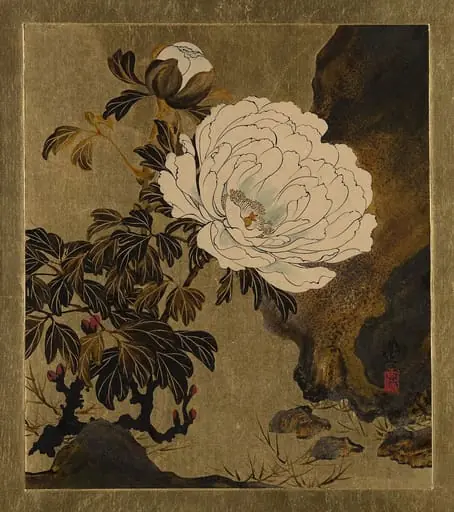
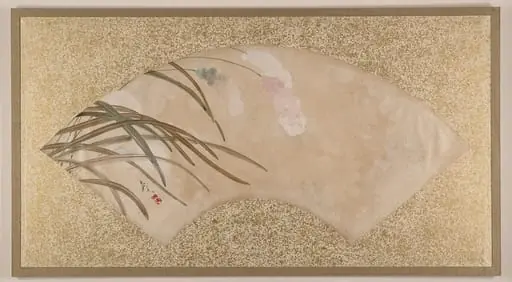
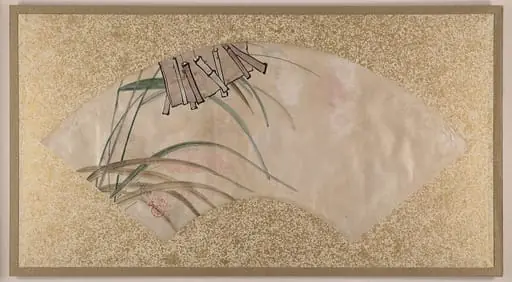
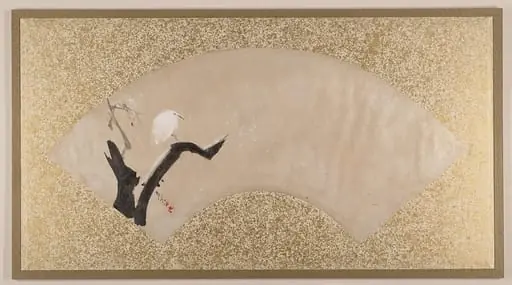
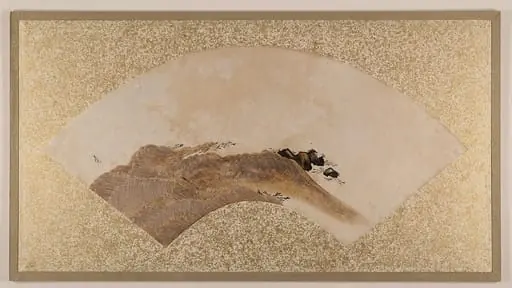
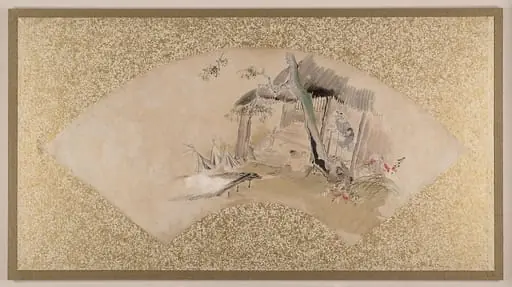
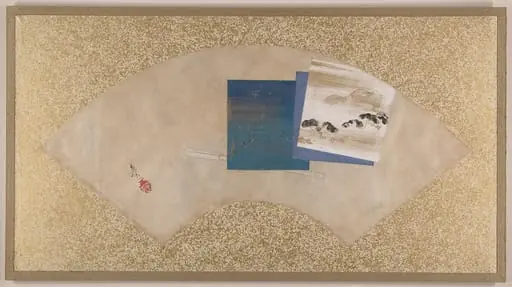
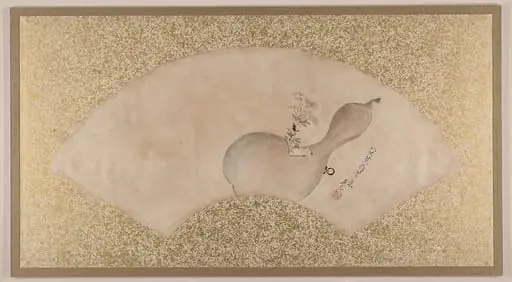
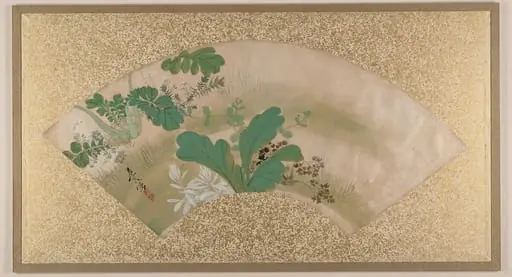
Shibata Zeshin's Untitled is classified as a still life and depicts a flower, rendered in tempera on paper as a fan painting mounted as an album leaf.
Shibata Zeshin's Untitled is classified as a still life and depicts a flower, rendered in tempera on paper as a fan painting mounted as an album leaf. The work belongs to the Japanese tradition of floral imagery, in which individual blossoms and arrangements are commonly used to evoke seasonal awareness, transience, and the quiet beauty of nature. By isolating a flower as the sole subject within the curved fan format, Zeshin draws attention to the delicate contours and surface qualities of the bloom, a hallmark of nineteenth-century Japanese decorative painting that prized refined observation of natural forms.
The 1879 dating situates the piece within the Meiji period, when Japanese artists were reinterpreting classical themes for new formats and audiences. The flower motif carries no explicit narrative content in the sources, but its presentation as an album leaf suggests a contemplative function, inviting close looking rather than storytelling.
Technique & Style
Untitled is a fan painting mounted as an album leaf, executed in tempera on paper. The work depicts a flower and is classified as a still life painting. Shibata Zeshin created it in Japan in 1879, and it is part of the Metropolitan Museum of Art collection.
History & Provenance
Untitled is a fan painting mounted as an album leaf created by Shibata Zeshin in 1879 in Japan, executed in tempera on paper and classified as a still life depicting a flower. The work is part of the Metropolitan Museum of Art collection in New York, where it has remained since its acquisition, reflecting a continuous ownership chain under the museum's stewardship. Its creation history is documented through its classification within the museum's catalog and corroborated by its presence in the museum's records, establishing its provenance from inception to current custodianship.
The work Untitled by Shibata Zeshin is held in the collection of the Metropolitan Museum of Art in New York. Created in Japan in 1879, this fan painting mounted as an album leaf depicts a flower and is classified as a still-life painting. The museum houses the piece as part of its permanent holdings of Japanese art.
Specific accession details such as an inventory number are not provided in the available sources. Similarly, no exhibition history or past display records are documented in the provided materials. The work remains part of the museum's collection without a listed public exhibition timeline.
Legacy
Shibata Zeshin's Untitled (1879) contributed to the evolution of Japanese decorative painting through its refined use of floral motifs and tempera technique. Though details of its early reception remain sparse, the work's compositional approach influenced later artists exploring the intersection of fine art and applied design, particularly within the broader context of Meiji-era experimentation. Its presence in the Metropolitan Museum of Art's collection has facilitated scholarly attention to Zeshin's role in bridging traditional craftsmanship with contemporary artistic practice, reinforcing his reputation as a master innovator in Japanese painting.
This legacy continues to inform studies of East Asian art's global transmission, especially in discussions of material innovation and aesthetic adaptation during periods of cultural exchange.
The painting's floral subject aligns with genre conventions while demonstrating Zeshin's technical virtuosity, as seen in his manipulation of tempera to achieve delicate textural effects. Its inclusion in major museum collections has enabled sustained academic engagement with Zeshin's body of work, though specific critical assessments of this piece's direct impact on subsequent generations remain limited in published literature.
The artwork's designation as a still_life within the Meiji-era corpus reflects both traditional Japanese artistic frameworks and emerging Western-influenced sensibilities, positioning it as a significant example of cross-cultural artistic dialogue in the late 19th century.
Overview
Created in 1879, this work by Shibata Zeshin is a fan painting mounted as an album leaf, executed in tempera on paper. The composition features a single pink peony drooping diagonally across a pale, unadorned background. Zeshin employs a technique involving glue and colored powder to render the petals with a soft, matte texture that contrasts with the smoothness of the paper support.
The flower's stem appears strained under the weight of the bloom, emphasizing naturalism within a minimalist framework. The absence of a detailed background isolates the subject, drawing the viewer's focus entirely to the botanical form and its delicate structure. This piece reflects Zeshin's mastery of lacquer and painting techniques, adapted here for a portable format intended for personal use or as a gift.
Produced late in the artist's career, during the Meiji period, the work exemplifies his ability to elevate everyday objects into refined art. It demonstrates his characteristic blend of Edo-period decorative sensibilities with a keen observation of nature, avoiding the heavy ornamentation typical of earlier lacquerware in favor of subtle elegance and spatial restraint.
Artist & collection