Artwork
芦葉達磨図 (Royō Daruma zu)|Bodhidharma Crossing the Yangzi River on a Reed
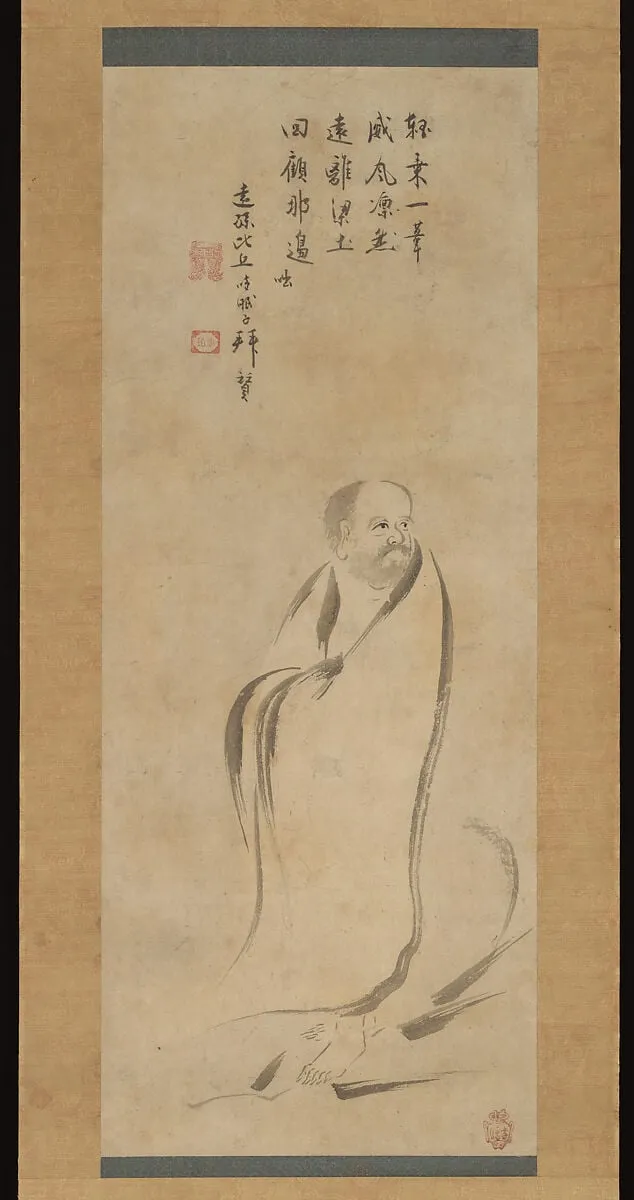
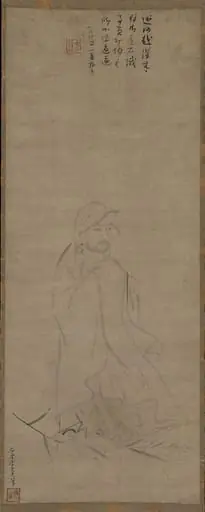
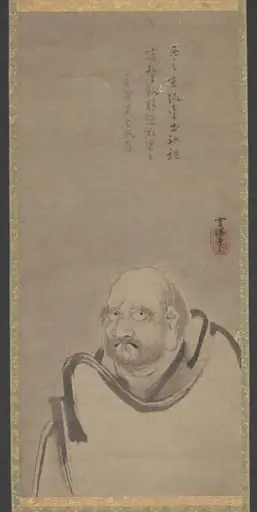
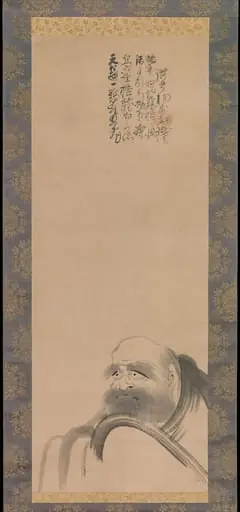
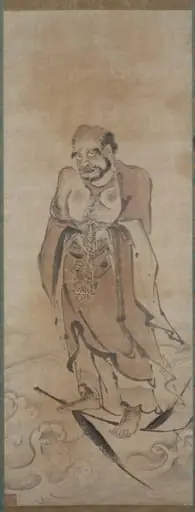
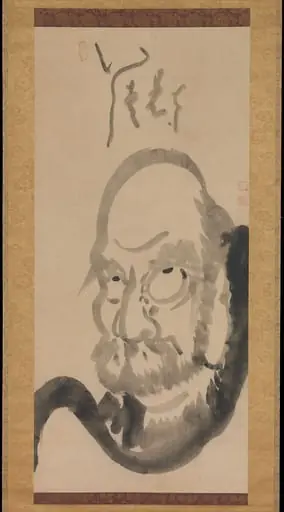
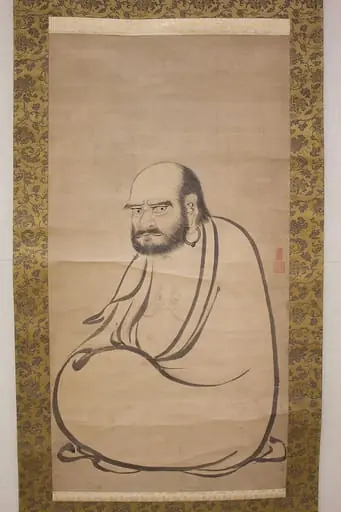
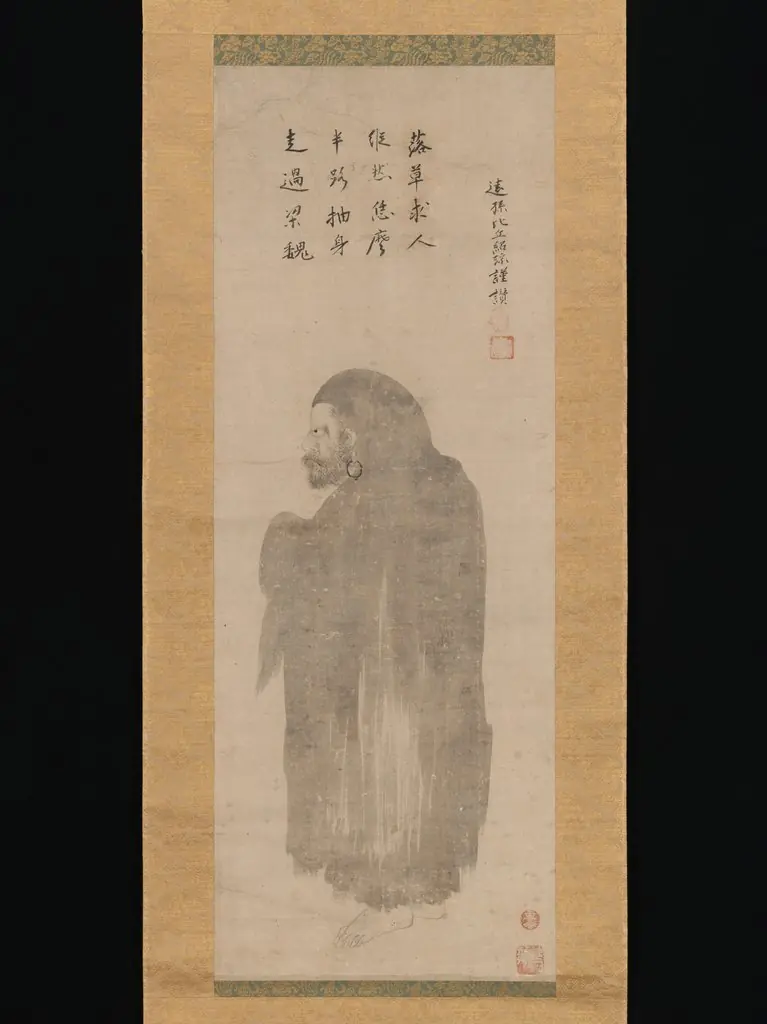
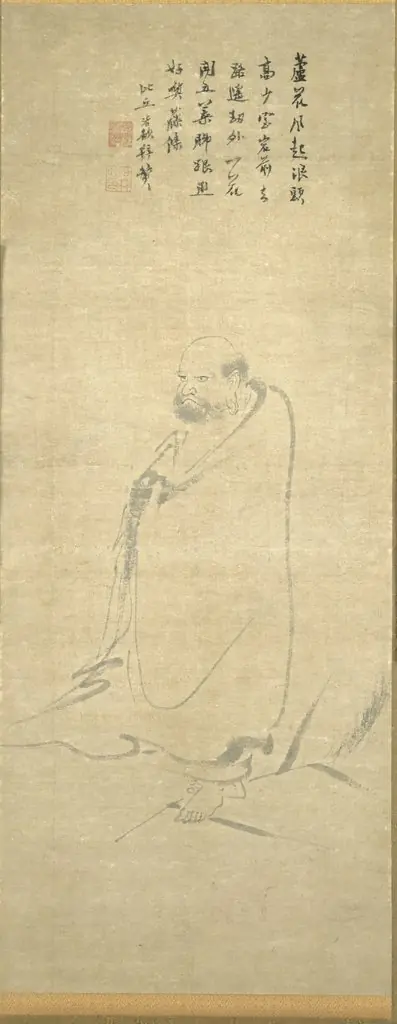
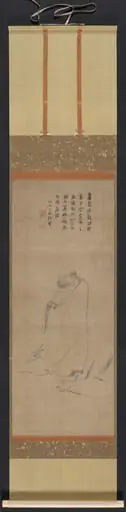
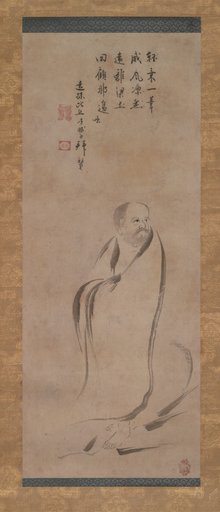
芦葉達磨図 (Royō Daruma zu)|Bodhidharma Crossing the Yangzi River on a Reed is an ink painting by the Baroque artist Kano Genshun 狩野元俊. It dates from 1641 and is held in the collection of the Metropolitan Museum of Art. This ink painting by Kano Genshun, created in 1641, depicts Bodhidharma, the legendary monk credited with introducing Zen Buddhism to China.
About this work
Technique & Style
The composition focuses on the figure of the man, rendered through monochromatic ink techniques characteristic of the period's Japanese religious art.
Executed in 1641, this hanging scroll utilizes ink on paper as its primary medium. The work is attributed to the artist Kano Genshun, also known by the monastic name Gyokushitsu Sōhaku. Stylistically, the painting belongs to the religious genre and depicts a monk, specifically illustrating the legend of Bodhidharma crossing the Yangzi River on a reed leaf.
The composition focuses on the figure of the man, rendered through monochromatic ink techniques characteristic of the period's Japanese religious art.
History & Provenance
The work titled 芦葉達磨図 (Royō Daruma zu) is a hanging scroll painted in ink on paper in 1641 in Japan. It portrays the monk Bodhidharma crossing a river on a reed and is classified as a religious painting. The piece is attributed to Kano Genshun, also known as Gyokushitsu Sōhaku, and is recorded in the collection of the Metropolitan Museum of Art in New York.
Context
Kano Genshun's Bodhidharma Crossing the Yangzi River on a Reed (1641) reflects the Kano school's enduring engagement with Zen Buddhist iconography during the early Edo period. The subject's dynamic, almost weightless depiction, rendered in swift, calligraphic brushstrokes, exemplifies the school's ability to balance technical precision with expressive spontaneity. The work's presence in the Metropolitan Museum of Art underscores its recognition as a representative example of Kano Genshun's (also known as Gyokushitsu Sōhaku) contributions to Japanese ink painting, bridging institutional patronage and the aesthetic demands of Zen monastic circles.
The scroll's minimalist composition, devoid of extraneous detail, aligns with Zen principles of direct transmission, while its execution demonstrates the Kano school's adaptation of Chinese models to Japanese visual culture.
Legacy
Kano Genshun's Bodhidharma Crossing the Yangzi River on a Reed (1641) stands as an example of Zen-inspired ink painting in Japan. Its minimalist evocation of the legendary founder of Chan Buddhism, depicted mid-journey on a single reed, epitomizes the early Edo-period aesthetic of spare brushwork.
The work entered the collection of the Metropolitan Museum of Art, where its display has reinforced its reputation as a canonical example of Kano-school religious painting. Scholars and curators frequently cite it in exhibitions exploring the intersection of Zen iconography and Japanese ink traditions.
Overview
This ink painting by Kano Genshun, created in 1641, depicts Bodhidharma, the legendary monk credited with introducing Zen Buddhism to China. Rendered on a hanging scroll, the work illustrates a pivotal moment in his journey: his miraculous crossing of the Yangzi River on a single reed. The composition emphasizes the spiritual power attributed to the figure through a minimalist approach.
Subject & Meaning
The painting portrays Bodhidharma, the patriarch revered for bringing Zen Buddhism to East Asia. He is shown precariously balanced on a solitary reed, an act symbolizing his extraordinary spiritual capabilities. This seemingly impossible feat highlights a core tenet of Zen: the potential for profound spiritual power to manifest through humble, everyday objects, transcending conventional limitations.
Artist & collection
Artist
Kano Genshun was a Japanese painter of the early Edo period and a member of the Kano school, the hereditary painting lineage that dominated Japanese art from the fifteenth to the nineteenth century.