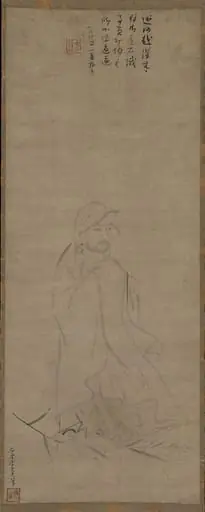
Artwork
達磨図 (Daruma zu)|Bodhidharma (Daruma)
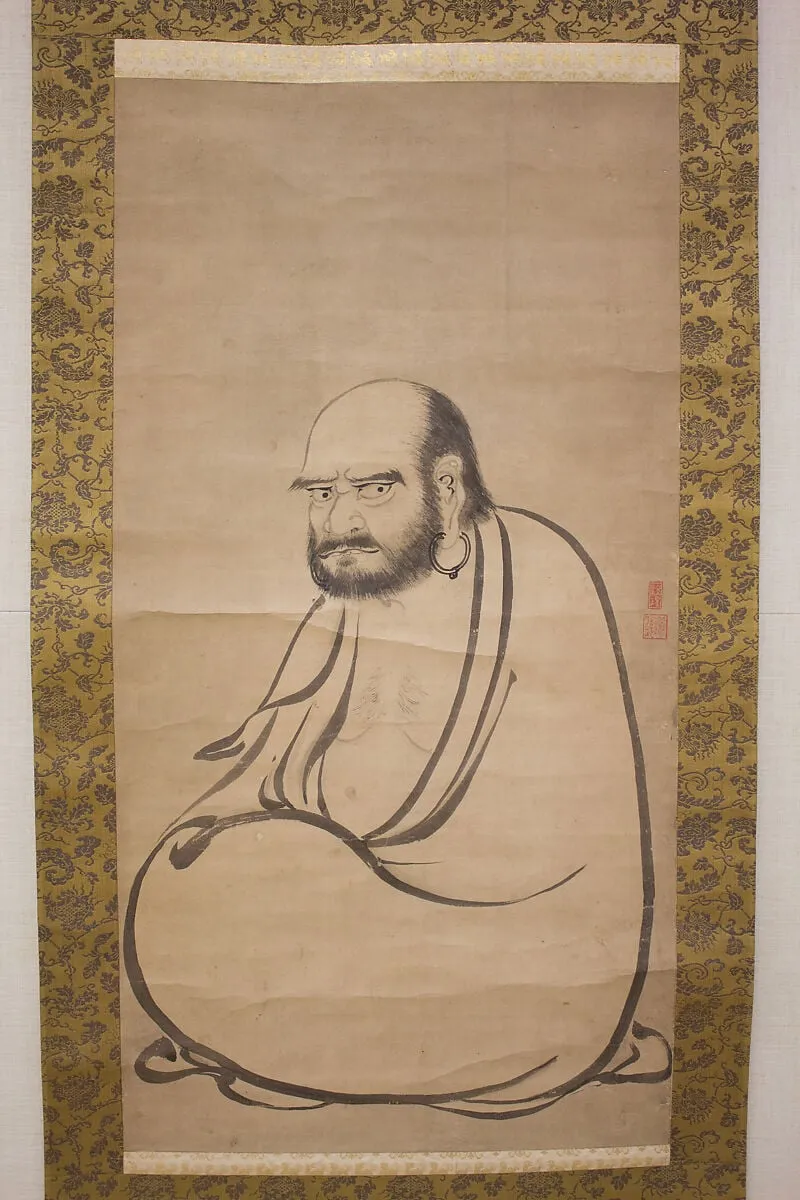
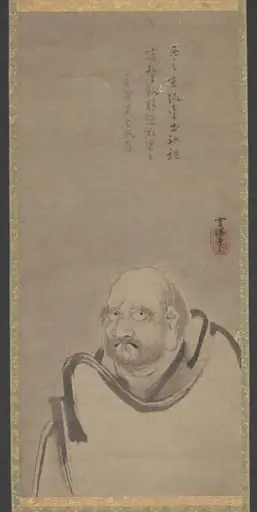
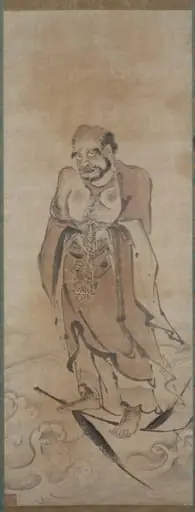
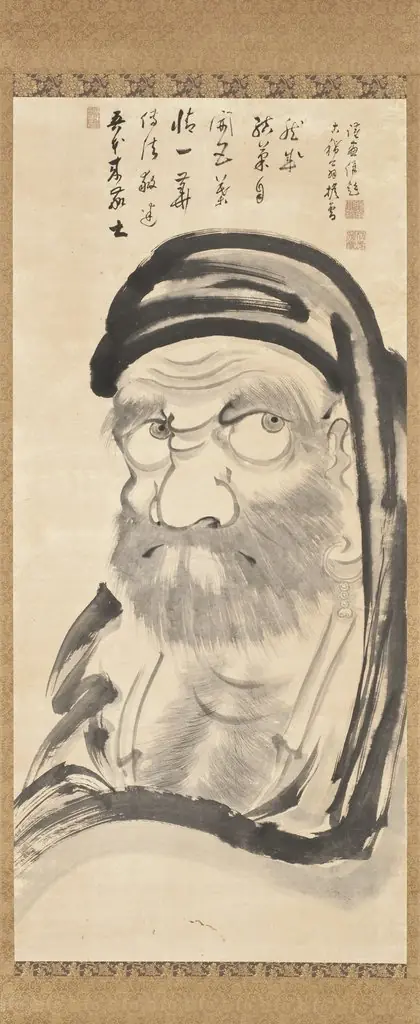
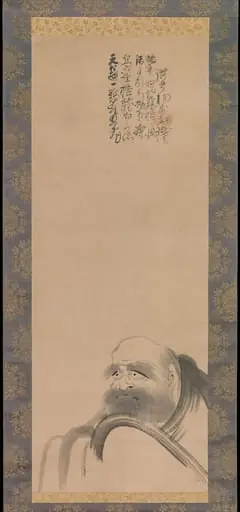
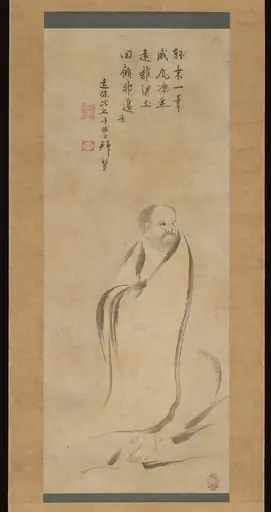
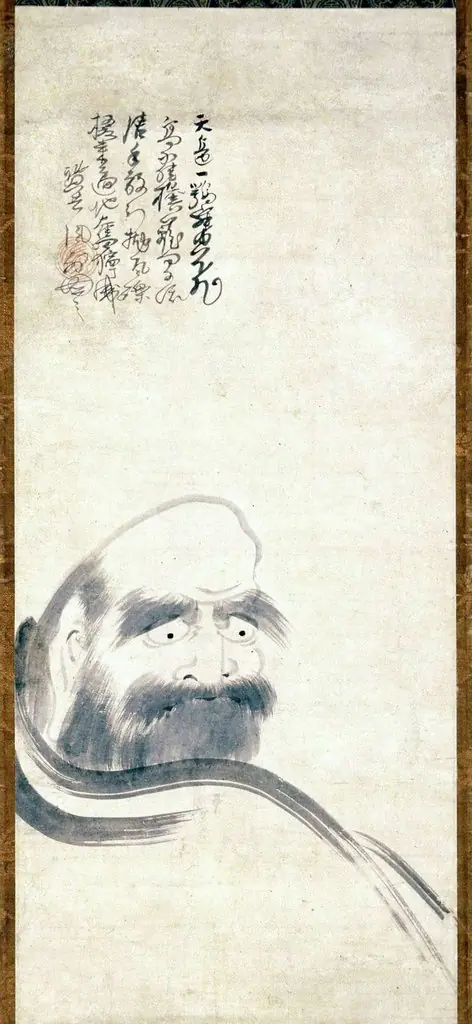
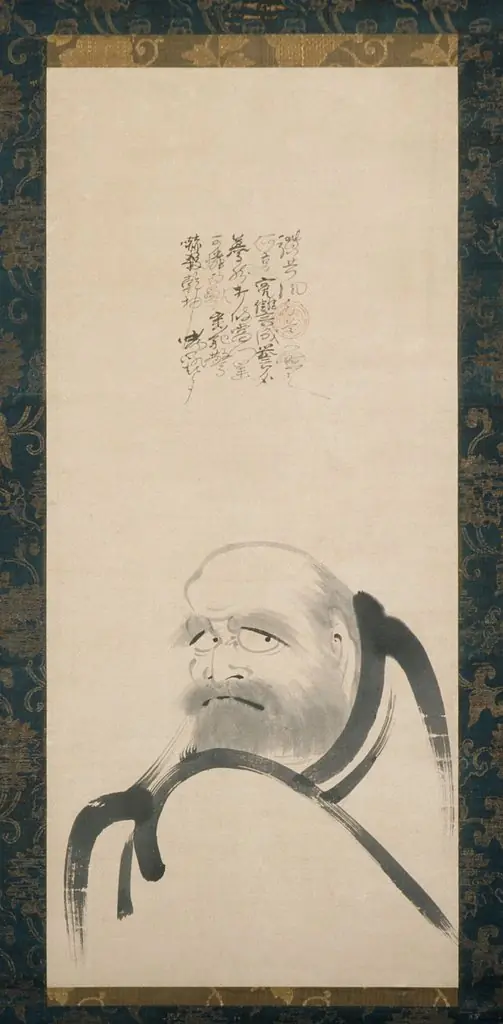
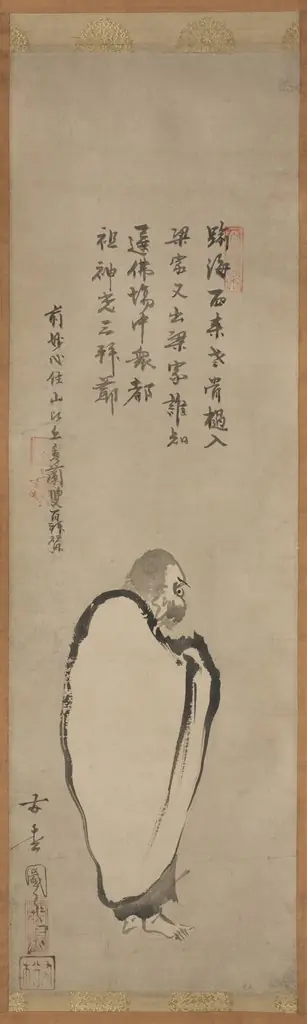
達磨図 (Daruma zu)|Bodhidharma (Daruma) is an ink painting by the Baroque artist Kanō Sanraku. It is held in the collection of the Metropolitan Museum of Art. Kano Sanraku's 1649 painting, Daruma zu (Bodhidharma), is an ink-on-paper hanging scroll.
About this work
Technique & Style
This work is a hanging scroll executed in ink on paper, a support and medium combination characteristic of the Kano school of Japanese painting.
This work is a hanging scroll executed in ink on paper, a support and medium combination characteristic of the Kano school of Japanese painting. The scroll measures 102.9 cm in height and 53.3 cm in width. Stylistically it falls within the religious genre, depicting the solitary figure of the monk Bodhidharma.
The handling of ink on the paper surface defines the form of the figure, following the conventions of Zen religious portraiture established in early Edo‑period Japan.
History & Provenance
This hanging scroll depicting Bodhidharma is attributed to the Japanese artist Kanō Sanraku, a leading figure of the Kano school, and was executed in ink on paper in Japan during the first half of the seventeenth century. While details of its original commission and early ownership are not recorded, the painting is held in the collection of the Metropolitan Museum of Art, New York, under accession number 14.76.29, having entered the collection in 1914. It measures approximately 102.9 by 53.3 centimetres and is classified as a religious genre work. No specific exhibition history is provided in the available sources.
Context
Kanō Sanraku (1559–1635), a leading master of the Kano school in early Edo Japan, is credited with this ink‑on‑paper hanging scroll of Bodhidharma (Daruma), a religious painting depicting the figure traditionally regarded as the founder of Zen Buddhism. Its composition and iconography reflect the Kano school's engagement with Zen themes and its tradition of rendering spiritual figures with bold brushwork. As part of the Metropolitan Museum of Art's collection, the piece is studied alongside other religious works of the period, illustrating how Kano artists integrated Buddhist subject matter into their repertoire. Its dimensions (approximately 103 by 53 centimetres) place it within seventeenth‑century Japanese painting practice.
Overview
Kano Sanraku's 1649 painting, Daruma zu (Bodhidharma), is an ink-on-paper hanging scroll. This religious work portrays the revered monk Bodhidharma, known as Daruma in Japan. The composition emphasizes his spiritual presence through a direct gaze and simplified form, characteristic of Zen Buddhist art.
It serves as a visual representation of the patriarch's profound meditative state and his foundational role in the tradition.
Subject & Meaning
The central figure is Bodhidharma, the legendary monk credited with bringing Zen Buddhism to China. His intense gaze, wild beard, and prominent eyebrows convey a powerful spiritual focus. The deliberate absence of his arms and legs in the depiction symbolizes the insignificance of the physical body during deep meditation, a core tenet of Zen practice. This artistic choice underscores the internal, spiritual journey over external form.
Artist & collection
Artist
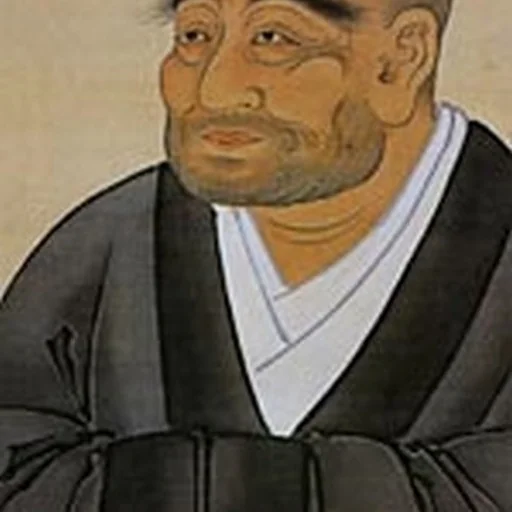
Kanō Sanraku (狩野 山楽; 1559 – September 30, 1635) was a Japanese painter also known as Kimura Heizō (his birth name), Shūri, Mitsuyori, and Sanraku.