Artwork
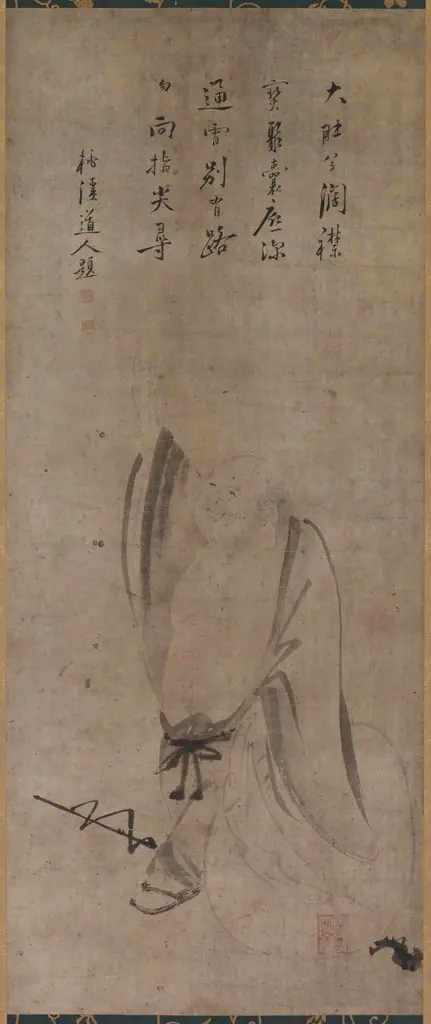
Hotei
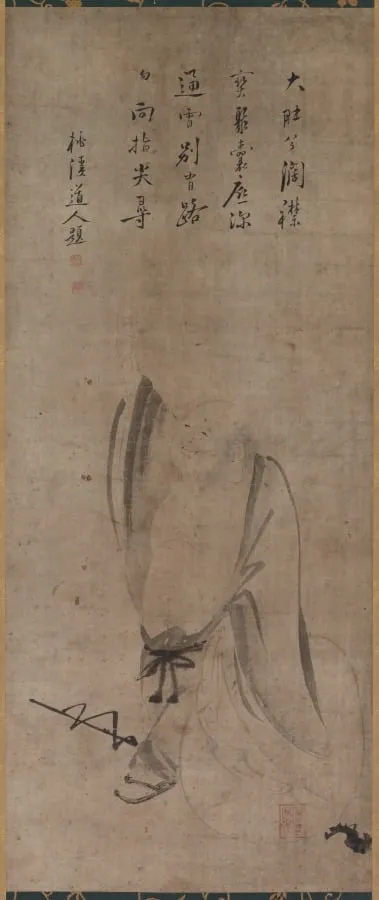
Hotei is an unspecified painting by the Joseon dynasty painting artist Yamada Dōan I (Juntei). It dates from 1504 and is held in the collection of the Cleveland Museum of Art.
- Accession no.
- 1978.48
- Credit line
- Mr. and Mrs. William H. Marlatt Fund
About this work
The painting’s inscription says enlightenment can’t be forced, it’s about letting go, not striving.
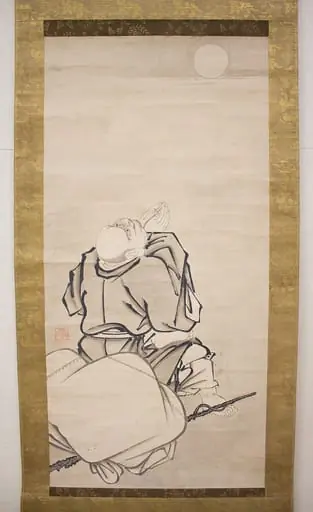
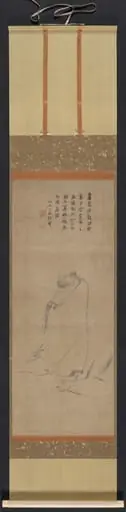
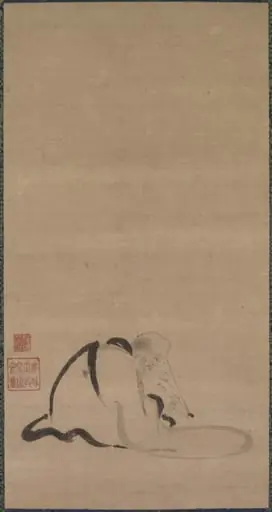
You see a chubby, laughing man in a loose robe, sitting on the ground with a big sack beside him.
This is Hotei, a Zen Buddhist figure who carried all his belongings in that sack. The painting’s inscription says enlightenment can’t be forced, it’s about letting go, not striving. The artist left the background empty, so your eye stays on Hotei’s easy smile and relaxed pose.
To see more works like this, look up Japan, Muromachi period (1392–1573).
Overview
The painting depicts Hotei, a legendary figure associated with early Japanese Zen Buddhism. Rendered as a rotund, smiling man in a loose robe, he sits on the ground beside a large sack that holds his possessions. The composition is minimalist, with an empty background that concentrates attention on his relaxed posture and benevolent expression.
Subject & Meaning
Hotei represents a non‑conformist path to spiritual insight, embodying a carefree attitude that contrasts with the disciplined practices of mainstream monastic life. An inscription accompanying the image advises against striving for enlightenment through effort, suggesting that true awakening arises from letting go rather than from deliberate pursuit.
Technique & Style
Executed in the brushwork typical of the Muromachi period, the figure is outlined with fluid strokes that convey both solidity and spontaneity. The sparse background and limited palette emphasize the figure’s presence, while the loose rendering of the robe and sack underscores the theme of simplicity and detachment.
Context
The character of Hotei entered Zen literature in the late ninth to early tenth centuries, becoming a popular subject in Japanese art during the Muromachi era (1392–1573). The painting reflects the period’s interest in portraying eccentric, enlightened figures who challenge conventional religious norms.
Legacy
Depictions of Hotei have continued to serve as visual reminders of the Zen principle that enlightenment cannot be forced. The image’s emphasis on ease and generosity has influenced subsequent representations of the figure in Japanese visual culture, reinforcing his role as a symbol of spontaneous compassion.
Artist & collection