Artwork
VEUË DU PONT DE REALTE DE VENIZE
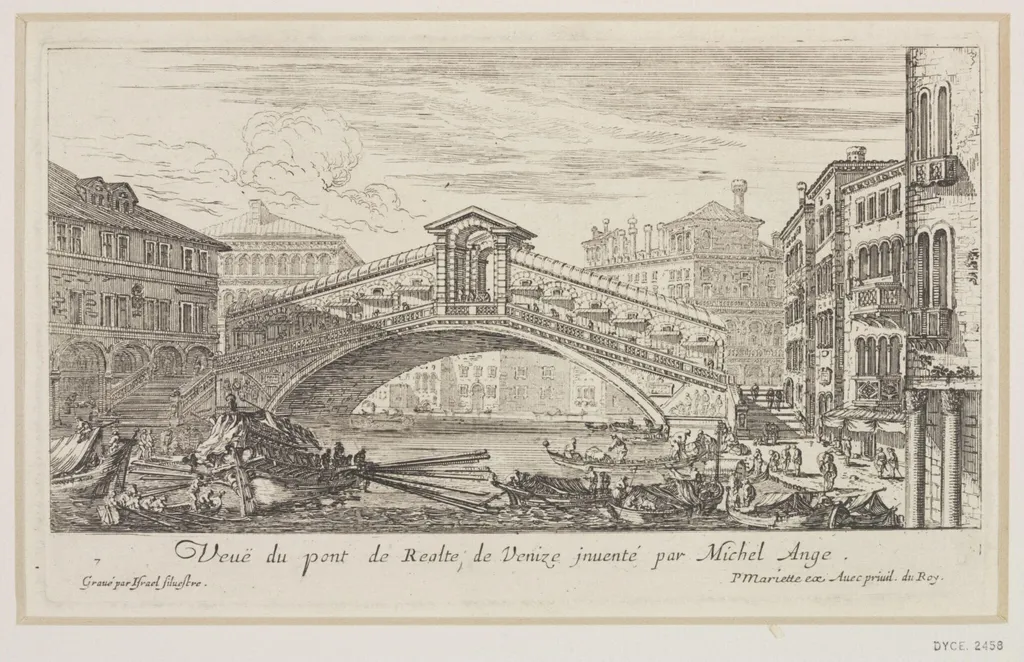
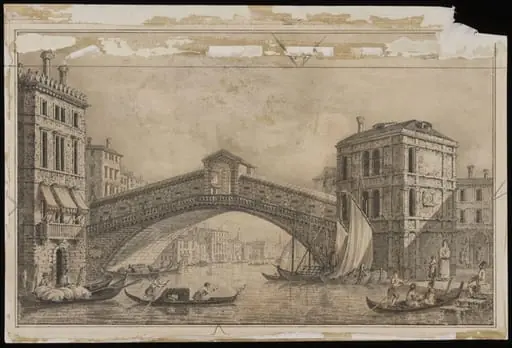
VEUË DU PONT DE REALTE DE VENIZE is a print by the Baroque artist Israël Silvestre. It dates from 1630 and is held in the collection of the Victoria and Albert Museum. This 1630 print, attributed to Israel Silvestre, presents a detailed topographical view of a Venetian bridge known as Ponte della Realta.
About this work
Overview
Rendered in ink on paper, it captures the urban fabric of Venice with precision, including architectural elements, figures, and watercraft.
This 1630 print, attributed to Israel Silvestre, presents a detailed topographical view of a Venetian bridge known as Ponte della Realta. Rendered in ink on paper, it captures the urban fabric of Venice with precision, including architectural elements, figures, and watercraft. The composition emphasizes spatial depth and structural clarity, typical of early modern topographical prints intended for documentation rather than pure decoration.
Subject & Meaning
The scene centers on a stone arched bridge with a small structure atop it, spanning a canal lined with closely packed buildings featuring numerous windows and balconies. Figures move along the bridge and in gondolas below, suggesting daily commerce and transit. The inclusion of stacked timber on the shore hints at the city’s reliance on maritime trade.
The inscription naming Michelangelo as designer reflects a common 17th-century practice of attributing notable structures to celebrated artists, though this is historically inaccurate.
Technique & Style
Silvestre employs fine linear engraving to render textures of stone, water, and wood with meticulous care. The use of hatching and cross-hatching creates subtle tonal variations, enhancing the illusion of volume and atmosphere. While the work lacks the dramatic chiaroscuro of high Baroque painting, its emphasis on detail, spatial organization, and observational accuracy aligns with the northern European tradition of topographical printmaking prevalent in the early 17th century.
History & Provenance
Attributed to Israel Silvestre, a French draftsman known for his architectural views, the print likely originated as part of a series documenting Italian cities. Its dating to 1630 places it within a period when travel and cartographic interest in Venice were growing among northern Europeans. The attribution to Michelangelo, though erroneous, reveals contemporary fascination with classical authority and the desire to elevate civic architecture through association with renowned masters.
Context
In early 17th-century Venice, the city’s bridges and canals were both functional infrastructure and symbols of civic pride. Prints like this circulated among travelers, scholars, and collectors as visual records of urban life. While Italian painters focused on grandeur and light, northern artists like Silvestre prioritized accuracy and architectural fidelity, reflecting a broader European trend toward empirical observation in the visual arts.
Legacy
This print contributes to a broader corpus of Venetian topographical imagery that informed later cartographic and architectural studies. Though not widely exhibited today, it remains a valuable artifact of how Venice was perceived and recorded by outsiders during the Baroque era. Its enduring interest lies not in artistic innovation but in its role as a historical document of urban form and public life.
Own this work as a print
Artist & collection
Artist
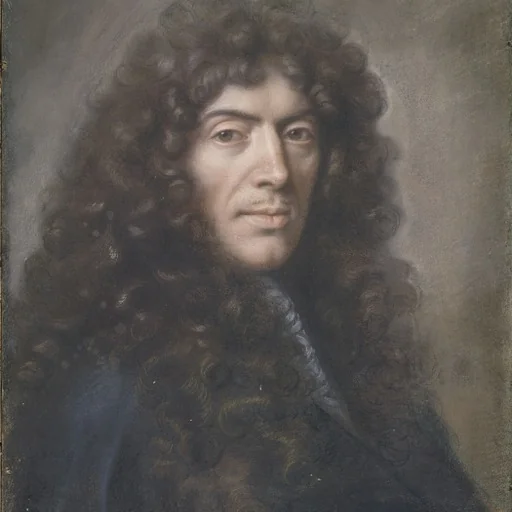
Israel Silvestre (13 August 1621 in Nancy – 11 October 1691 in Paris), called the Younger to distinguish him from his father, was a prolific French draftsman, etcher and print dealer who specialized in topographical views and perspectives…

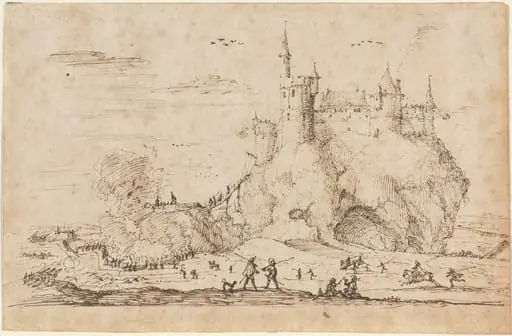 Castle under Siege
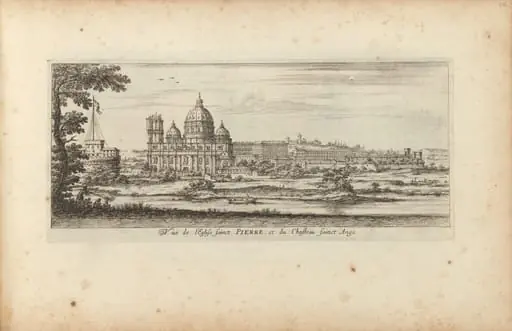 Vuë de l'Eglise sainct Pierre, et du Chasteau Sainct Ange
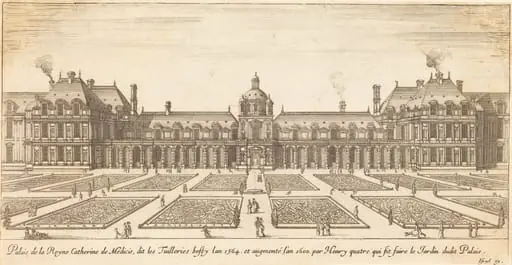 Palais de la Reyne Catherine de Medicis
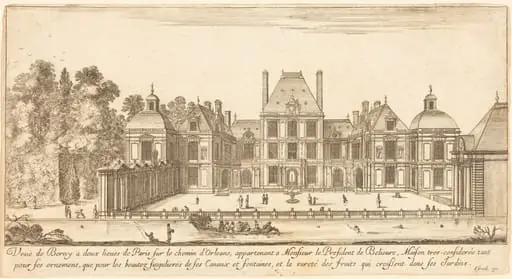 Veue de Berny a deux lieues de Paris sur le chemin d'Orléans
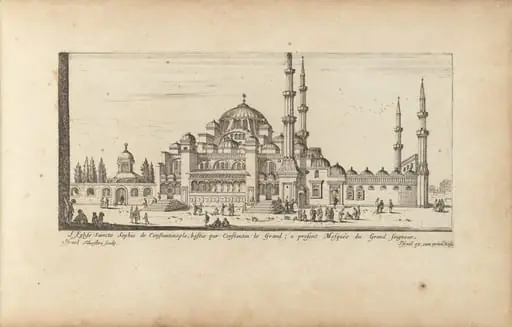 L'Eglise Saincte Sophie de Constantinople, bastie par Constantin le Grand; a present Mosquée du Grand seigneur
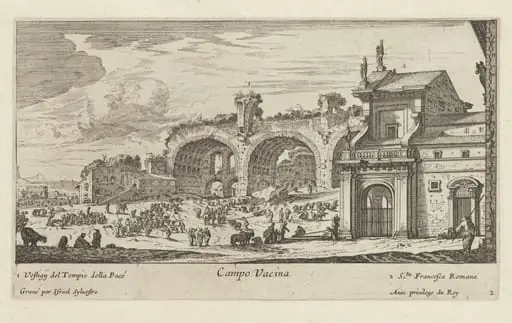 Campo Vacina
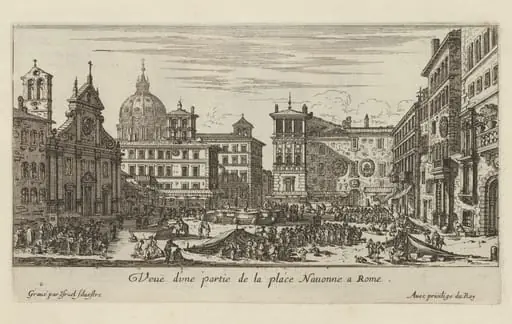 Veuë d'une partie de la place Navonne a Rome
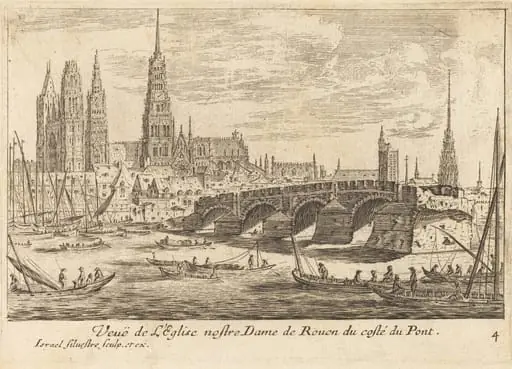 Veue de l'Eglise nostre Dame de Rouen
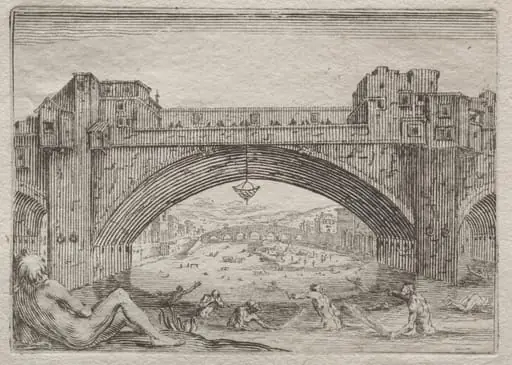
- The Ponte Vecchio, Florence
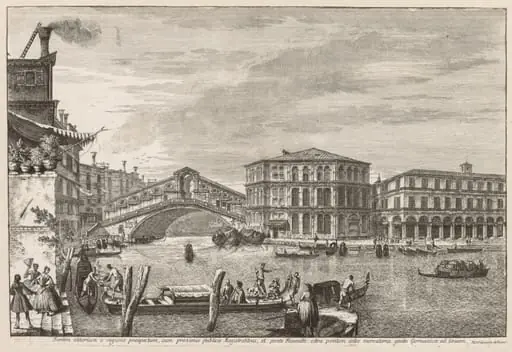 Views of Venice: The Bridge and Market of Rialto
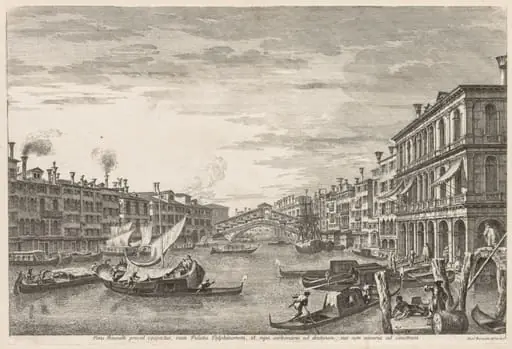 Views of Venice: Rialto
 Ponte di Rialto, Venice
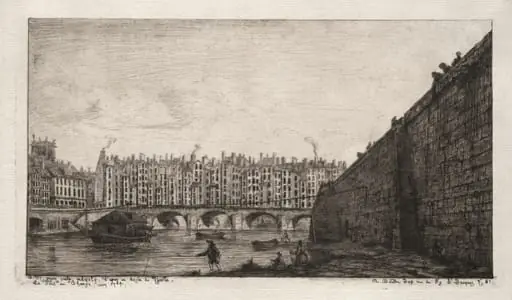 The Exchange Bridge, Paris, about 1784
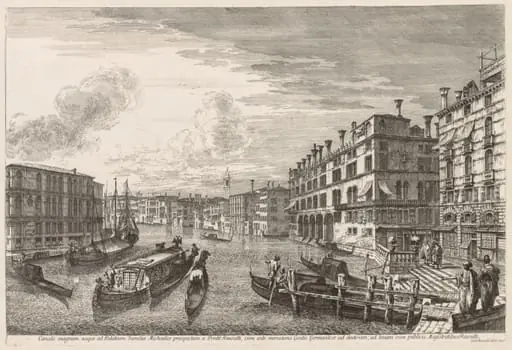 Views of Venice: Grand Canal
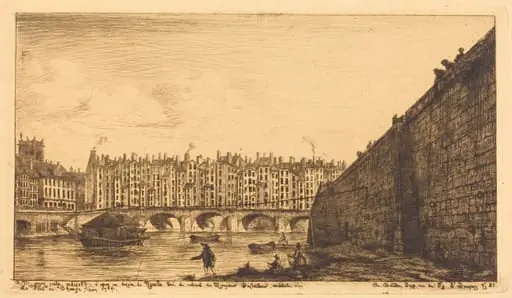 Le Pont-au-Change, Paris, vers 1784
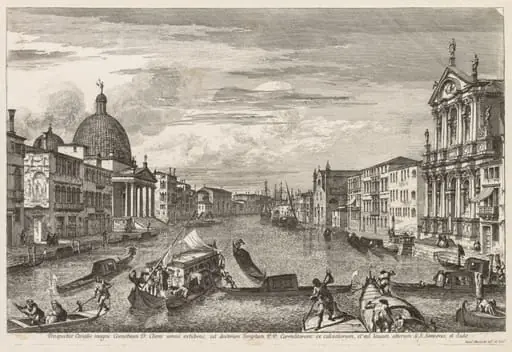 Views of Venice: Santa Chiara
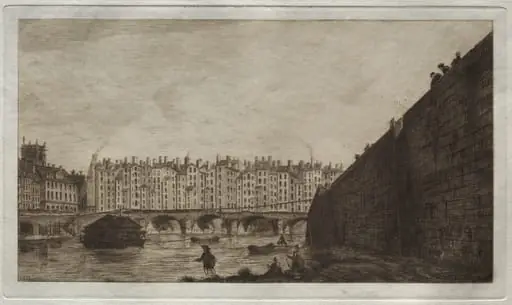 Le Pont-au-change, Paris, vers 1784
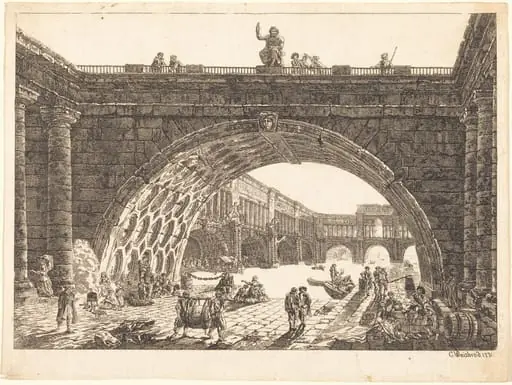 Architectural Fantasy of a Monumental Port
 Views of Venice: Palazzo Pesaro
 Untitled