Artwork
Virgin and Child
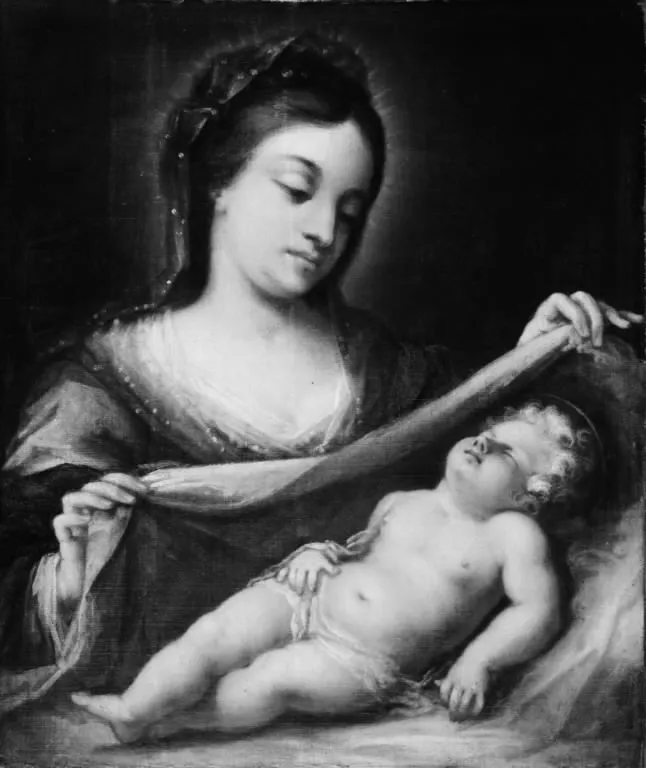
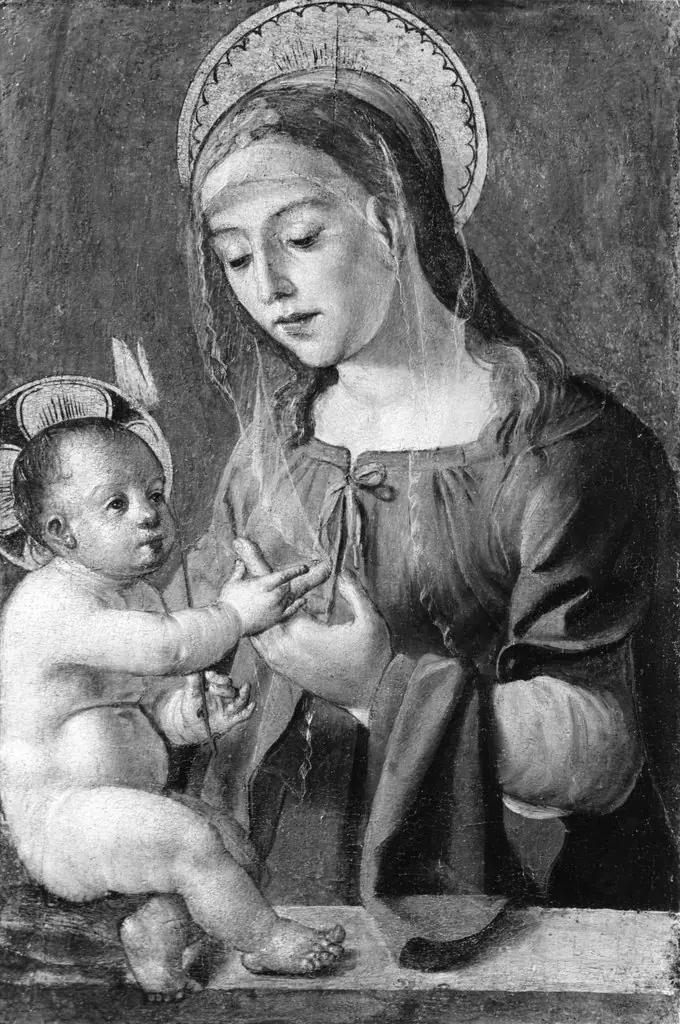
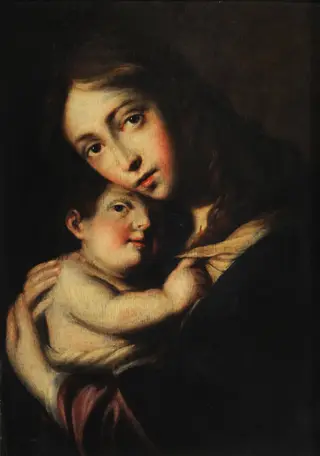
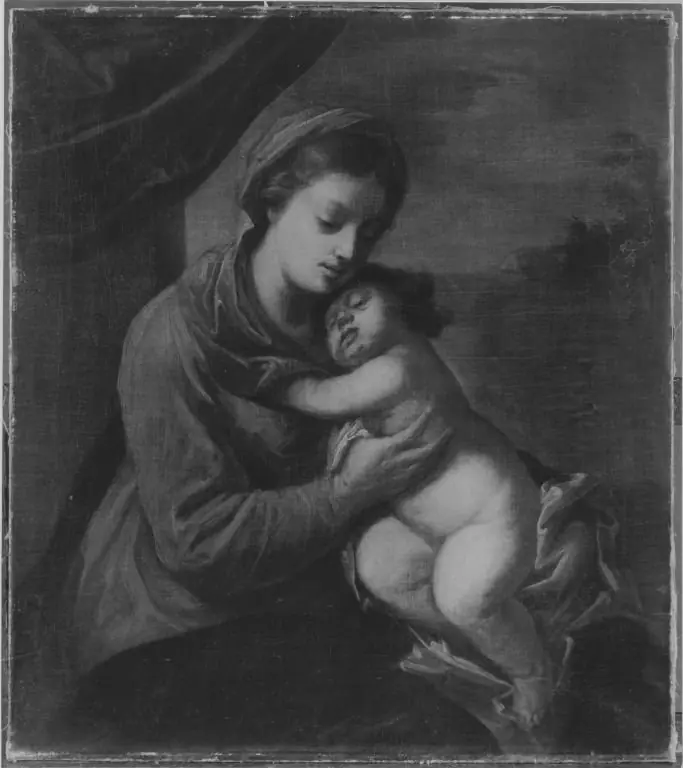
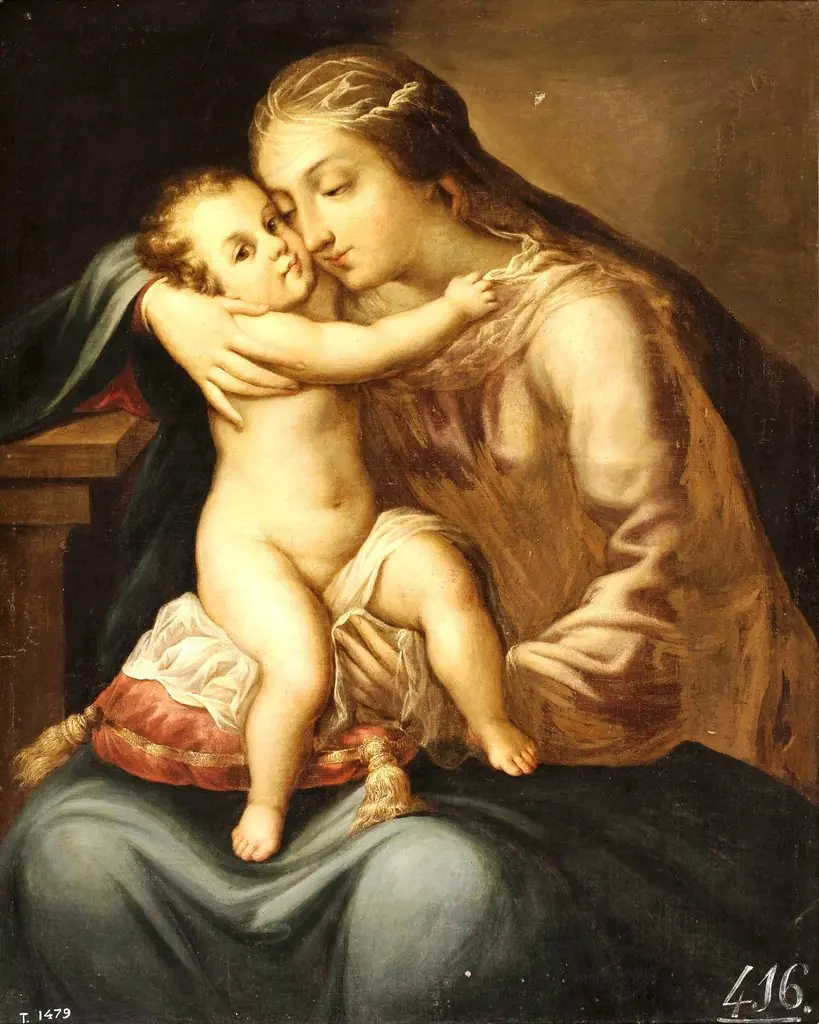
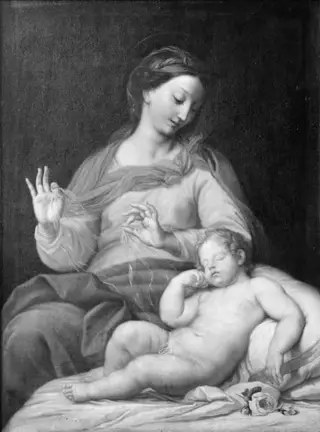
Virgin and Child is an oil painting by the Mannerist artist Sofonisba Anguissola. It dates from 1570 and is held in the collection of the Statens Museum for Kunst.
About this work
Subject & Meaning
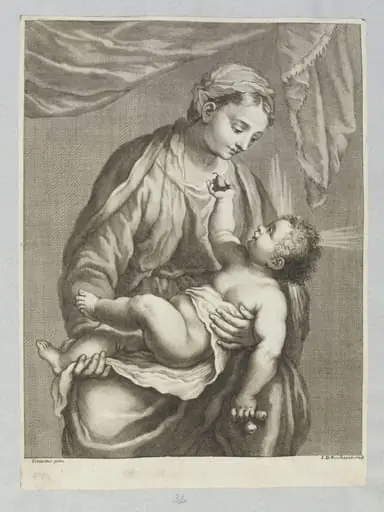
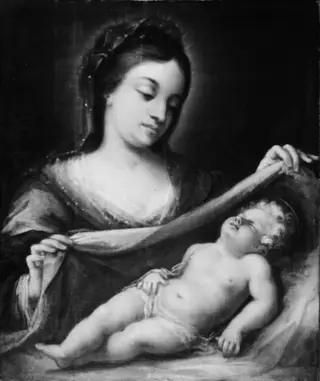
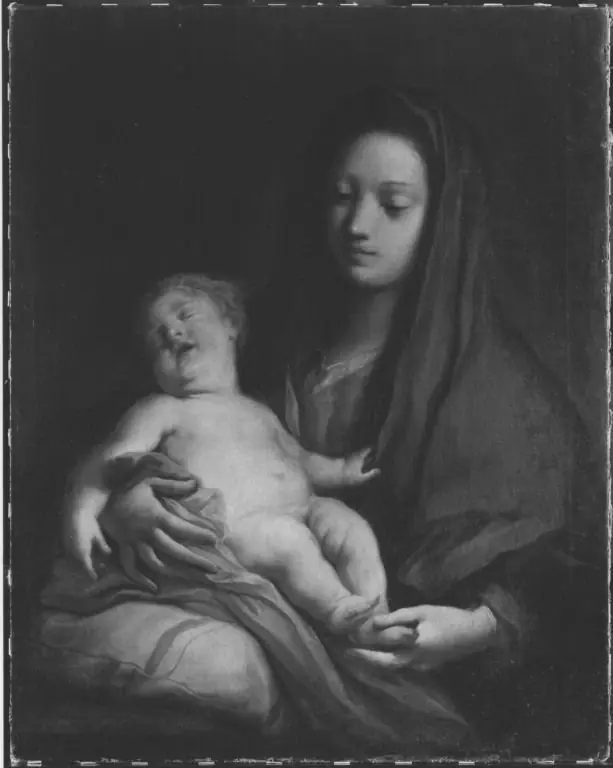
The painting depicts the Virgin Mary holding the Christ Child, a composition identified as the Madonna and Child. As a work of religious art, the subject centers on the intimate bond between the mother and the infant Jesus. This iconography represents the theological significance of the Incarnation within the Christian tradition, focusing on the human aspect of the divine figures.
Technique & Style
The composition centers on the Virgin seated with the Christ Child, arranged in a stable pyramid that directs attention to the figures’ quiet interaction.
Executed in oil on canvas in 1570, the work shows Anguissola’s careful handling of flesh tones and delicate modeling of drapery through nuanced glazing.
The composition centers on the Virgin seated with the Christ Child, arranged in a stable pyramid that directs attention to the figures’ quiet interaction. The Child’s pose and gesture, reaching toward his mother’s face, convey tenderness within a restrained, symmetrical arrangement. The palette is subdued, relying on earthy reds and browns in the drapery contrasted with cooler tones in the background.
History & Provenance
The Virgin and Child is an oil-on-canvas painting created by Sofonisba Anguissola in 1570. The work depicts the religious subjects of the Madonna and Christ Child. Currently, the painting is held in the collection of the Statens Museum for Kunst.
The available records confirm the date of inception and the artist but do not provide specific details regarding the original commission, the initial patron, or the intermediate steps of the ownership chain prior to its presence in the Copenhagen museum.
Sofonisba Anguissola's oil painting Virgin and Child, created in 1570, is held in the collection of the Statens Museum for Kunst. The work depicts the Madonna and Child and is executed on canvas. While the specific inventory or accession number is not provided in the available records, the museum's location confirms its current institutional home. No exhibition history for this specific piece is documented in the provided sources.
Context
Sofonisba Anguissola's 'Virgin and Child' (1570) occupied a significant position within the religious painting genre of the Italian Renaissance, reflecting both devotional conventions and the artist's pioneering role as a female professional. Art historical scholarship situates this work within Anguissola's broader context of challenging gender limitations in art, demonstrating how her intimate domestic subjects, like the 'Virgin and Child', subverted typical gendered expectations of the period. The painting's composition and emotional resonance contributed to evolving Renaissance approaches to sacred imagery, reinforcing her reputation as a master portraitist beyond mere imitation.
Its creation during her mature period aligns with her established presence in the art world, influencing subsequent interpretations of female artists' contributions to religious art.
Scholarship emphasizes its importance as an example of Counter-Reformation devotional art, where intimate domestic scenes gained prominence. The work's technical execution in oil on canvas, measuring 562 cm by 497 cm, showcases Anguissola's refined skill within the religious genre, distinct from male contemporaries who often focused on grander narratives.
Overview
Created in 1570, Virgin and Child is an oil painting by the Italian artist Sofonisba Anguissola. Executed during the late Renaissance Mannerist phase, the work presents a quiet devotional scene that now belongs to the collection of the Statens Museum for Kunst in Copenhagen.
Artist & collection
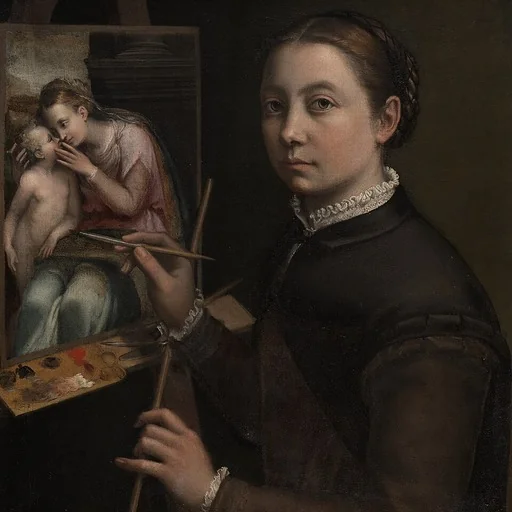
Artist
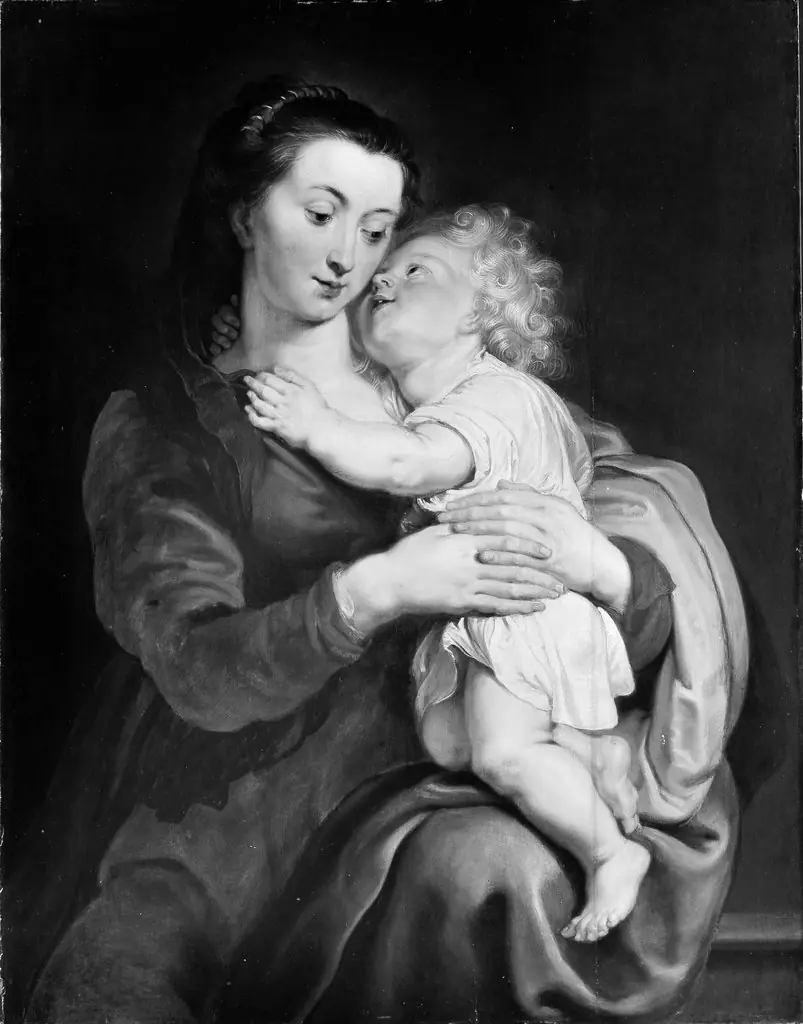
Sofonisba Anguissola (also Sophonisba Angussola or Anguisciola; c. 1532 – 16 November 1629) was an Italian Renaissance painter born in Cremona to a relatively poor noble family. She received a well-rounded education…