Artwork
Portrait of Anna of Austria (1549-1580)
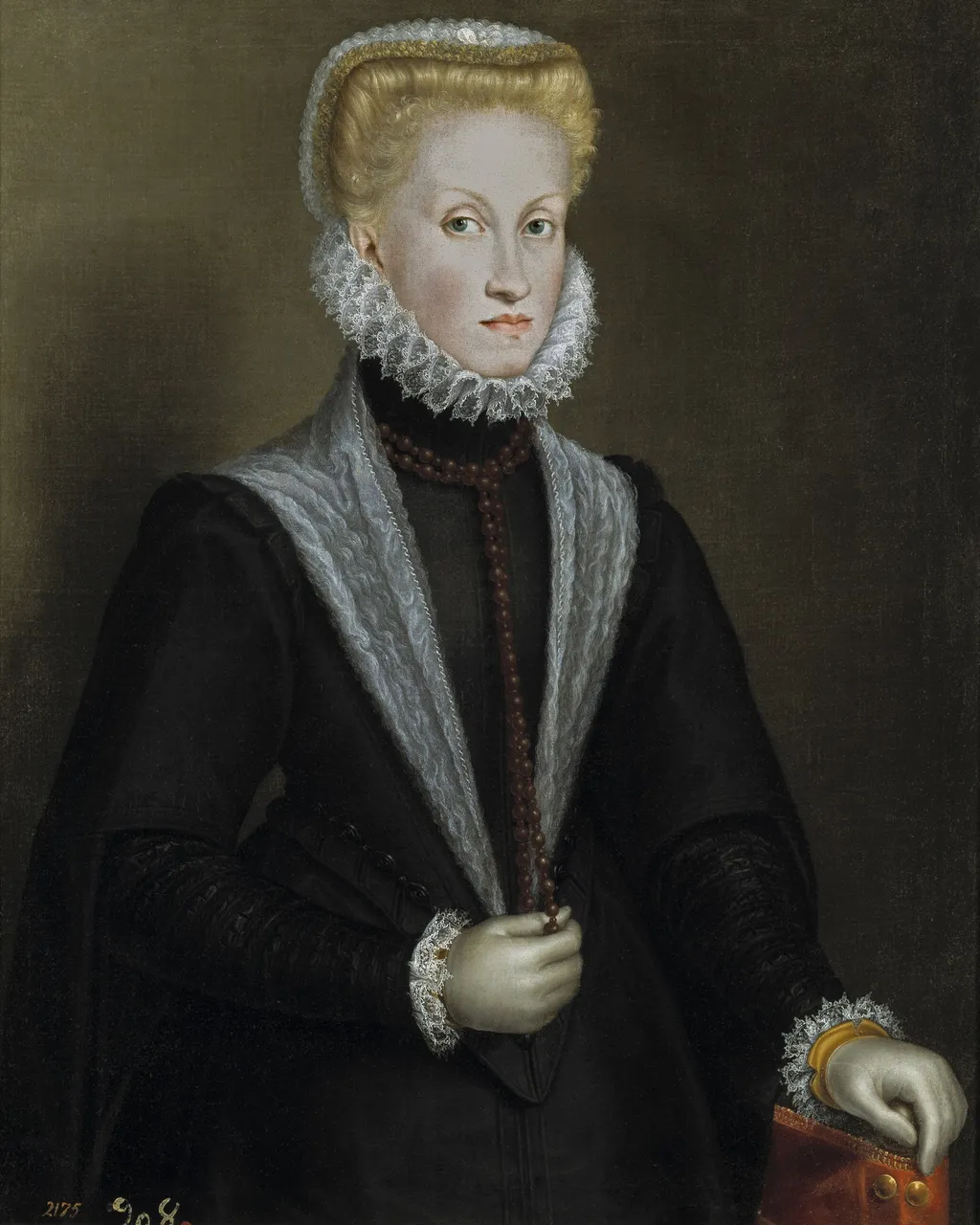
Portrait of Anna of Austria (1549-1580) is an oil painting by the Mannerist artist Sofonisba Anguissola. It dates from 1573 and is held in the collection of the Museo del Prado.
About this work
Subject & Meaning
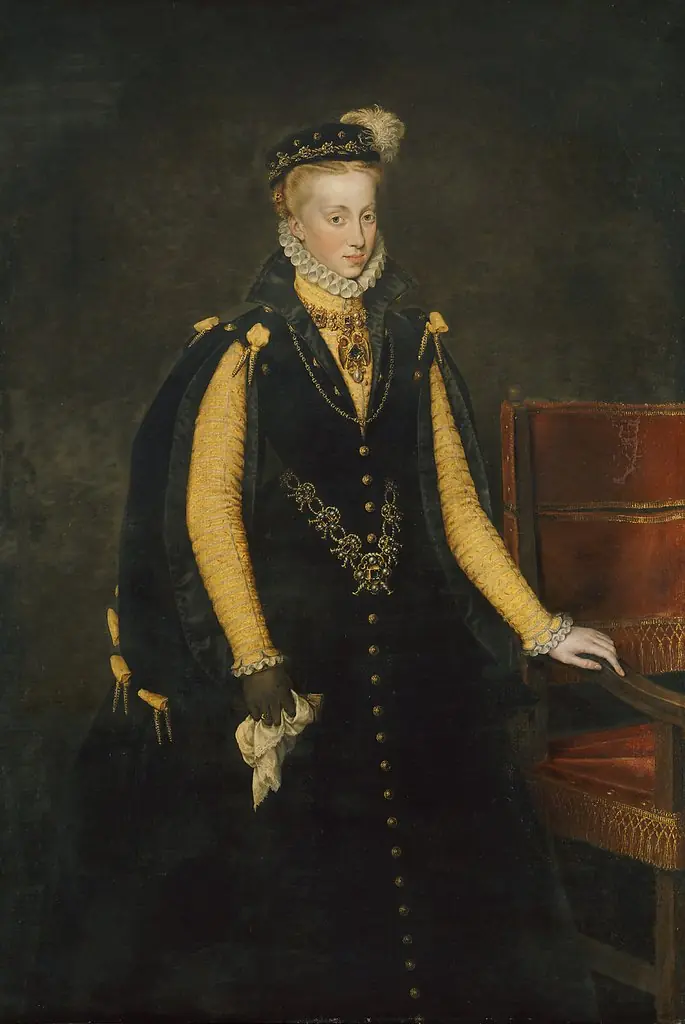
The portrait depicts Anna of Austria, Queen of Spain, in 1573, pregnant with her second child, the Infante Don Carlos Lorenzo.
The portrait depicts Anna of Austria, Queen of Spain, in 1573, pregnant with her second child, the Infante Don Carlos Lorenzo. She is shown in a black court dress with a white mantilla and high collar, following the established Habsburg portrait tradition exemplified by earlier effigies of Queen Consort Juana of Portugal. The attire and setting reflect the somber mood of the royal family that year, as the court began transferring remains to the Escorial, underscoring the queen’s public role and dynastic continuity during a period of mourning.
The pairing of this portrait with Sofonisba Anguissola’s contemporaneous image of Philip II reinforces the Habsburg lineage and the ceremonial function of such images within the Spanish court.
Technique & Style
Created in 1573, the Portrait of Anna of Austria is executed in oil paint on a canvas support, measuring 86 cm in height and 67.5 cm in width. The work is characterized by a delicate and soft pictorial style, featuring precise and meticulous brushwork that distinguishes it from the workshop productions of contemporaries like Alonso Sánchez Coello. The composition emphasizes a stark contrast between the queen's black royal dress and the white of her mantle and high collar.
Formal handling includes the depiction of light on the subject's hands, which are covered by fine gloves, serving as points of illumination against a dark, gray-toned background that provides depth. The treatment of the subject's blonde hair is subtle, visible only through a delicate headdress of curled thread, adhering to the traditional aesthetic of Habsburg portraiture.
History & Provenance
Created in 1573 by Sofonisba Anguissola, this oil-on-canvas portrait depicts Anna of Austria, Queen of Spain. The work was likely painted shortly before the artist's return to Italy that same year. Initially attributed to the workshop of Alonso Sánchez Coello, the painting was later re-evaluated and correctly assigned to Anguissola based on its delicate style, precise brushwork, and handling of light.
The portrait pairs with a 1565 depiction of Philip II, also by Anguissola, and reflects traditional Habsburg royal imagery. It is currently held in the collection of the Museo del Prado in Madrid.
The Portrait of Anna of Austria is held in the collection of the Museo del Prado in Madrid, Spain. While the provided sources do not list a specific inventory or accession number, the work was created in 1573 and depicts the queen in oil on canvas. The painting began appearing in exhibitions during the 1990s as its attribution to Sofonisba Anguissola gained wider recognition.
Notable showings include the itinerant exhibition "Sofonisba Anguissola e la sue sorelle," which traveled to Cremona, Vienna, and Washington D. C., as well as group shows such as "Realismo y Espiritualidad" in Alaquás and "La estética de la Edad Moderna en femenino" in Málaga. Most recently, the work was featured in the Museo del Prado's 2019 exhibition titled "Historia de dos pintoras: Sofonisba Anguissola y Lavinia Fontana."
Context
The portrait of Anna of Austria, commissioned by her husband King Philip II, was painted by Sofonisba Anguissola around 1573 shortly before her return to Italy. Contemporary accounts suggest the queen’s attire reflects the mourning rituals following the transfer of royal family members to the Monastery of San Lorenzo de El Escorial that year, linking the work to broader Habsburg dynastic traditions. Art historians have long debated its authorship; early 20th-century scholarship misattributed it to Alonso Sánchez Coello, but stylistic analysis, particularly the delicate modeling of light, precise brushwork, and nuanced rendering of fabric, established Anguissola’s hand by the 1990s.
The painting, housed at the Museo del Prado since its creation, formed part of a pair with Philip II’s portrait and was later displayed in major exhibitions, including the 2019 Prado retrospective on Anguissola and Lavinia Fontana, underscoring its significance in the development of court portraiture and female agency in Renaissance art.
The work depicts Anna of Austria, Queen of Spain, pregnant with her second child, dressed in black with a white mantle and lace collar, her gloved hands illuminated against a dark background. Anguissola’s composition draws on earlier royal portraiture, echoing representations of Juana of Portugal, while her technical choices, such as the rendering of the sitter’s blonde hair beneath a curled thread veil, highlight both realism and symbolic depth. The painting’s exhibition history, from 1990s retrospectives to its inclusion in the 2019 Prado exhibition, reflects a sustained scholarly reevaluation of Anguissola’s role in shaping elite visual culture in the sixteenth century.
Legacy
Initially misattributed to the court painter Alonso Sánchez Coello, the work's reputation was transformed in the late 20th century when its delicate style and precise brushwork led scholars to correctly attribute it to Sofonisba Anguissola. Since the 1990s, the portrait has been recognized as a significant piece, featuring in numerous exhibitions that highlight the artist's contribution to early modern aesthetics. Notable displays include the itinerant show "Sofonisba Anguissola e la sue sorelle" across Cremona, Vienna, and Washington D. C., as well as collective exhibitions in Valencia and Málaga.
The painting culminated in its prominent inclusion in the Museo del Prado's 2019 exhibition "Historia de dos pintoras: Sofonisba Anguissola y Lavinia Fontana," cementing its legacy as a key work by a female master of the Spanish court.
Overview
Created in 1573, this oil painting by Sofonisba Anguissola portrays Anna of Austria, who later became queen consort of Spain. Executed in the Mannerist style, the work is housed in the Museo del Prado in Madrid. The composition focuses on the sitter’s upper body, set against a uniform dark brown backdrop, emphasizing her attire and accessories.
Own this work as a print
Artist & collection
Artist
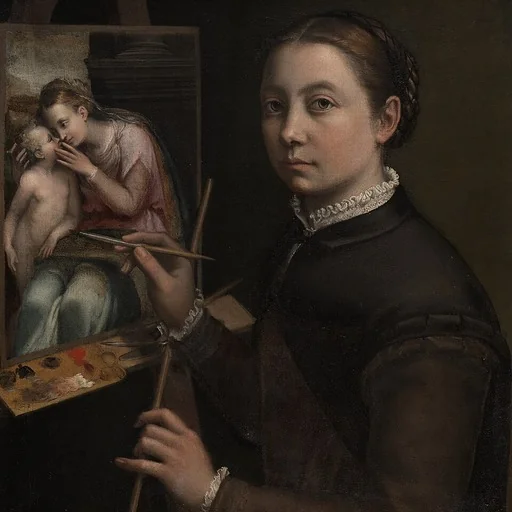
Sofonisba Anguissola (also Sophonisba Angussola or Anguisciola; c. 1532 – 16 November 1629) was an Italian Renaissance painter born in Cremona to a relatively poor noble family. She received a well-rounded education…


 Anna von Österreich, Königin von Spanien
 Portrait of a Court Lady
 Portrait of a Lady
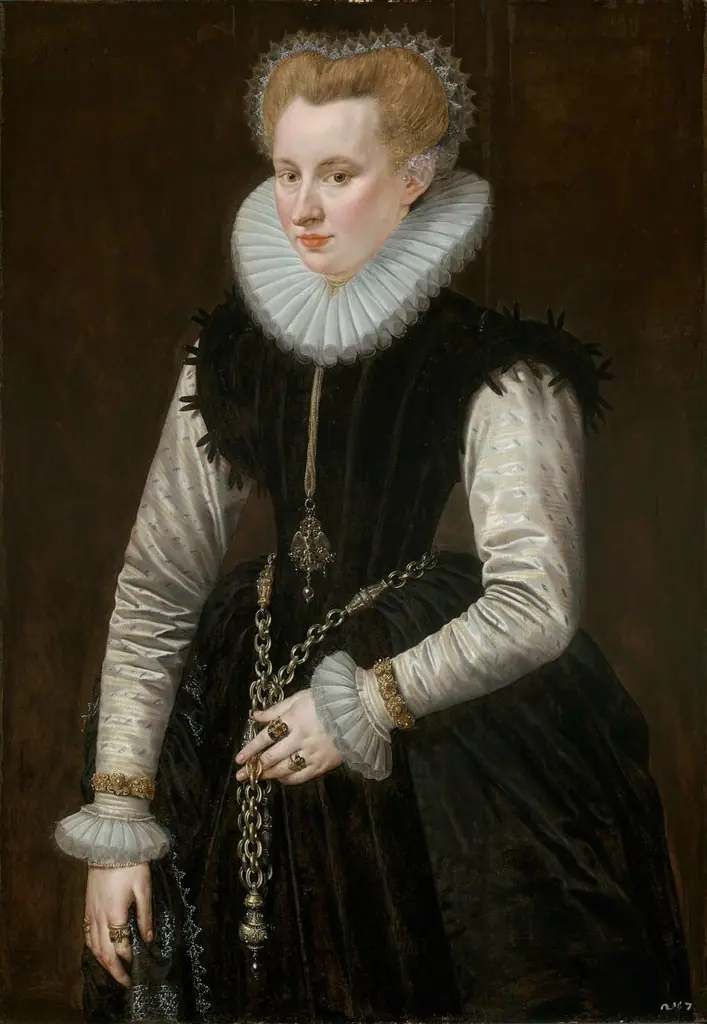 Portrait of a Woman
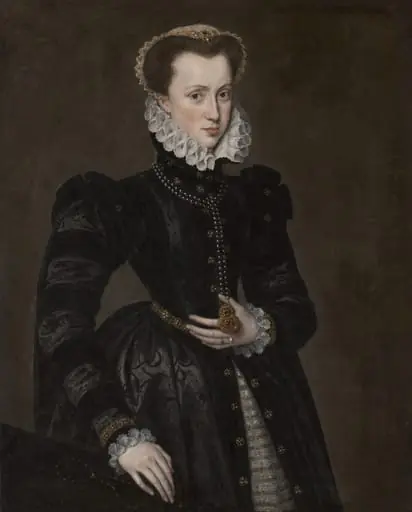 Portrait of a Court Lady
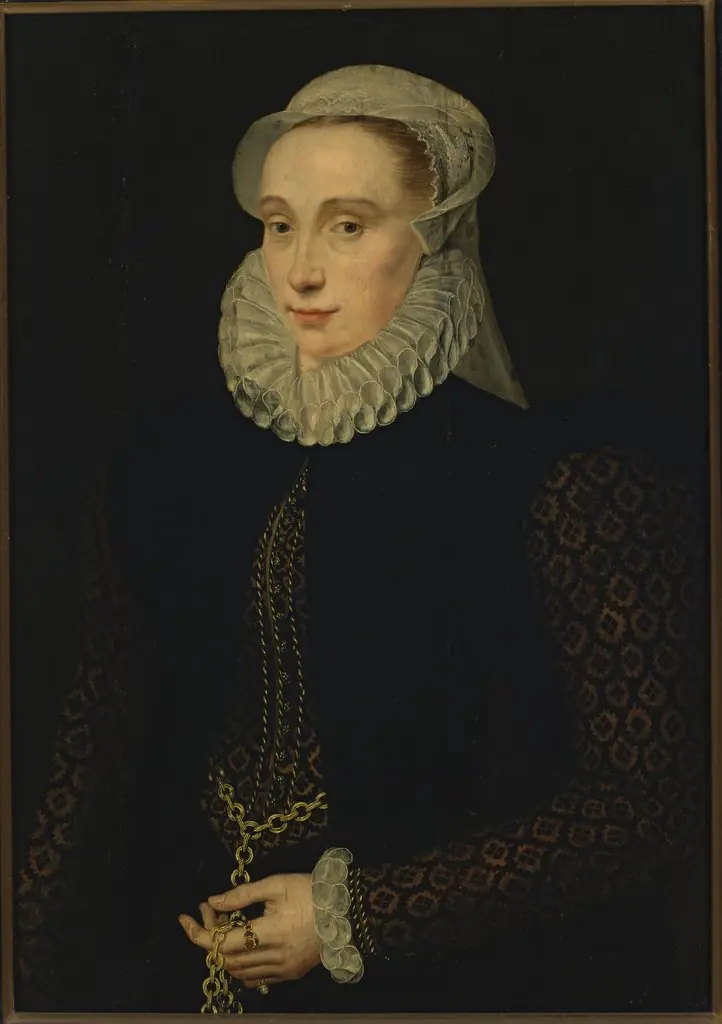 Portrait of a lady
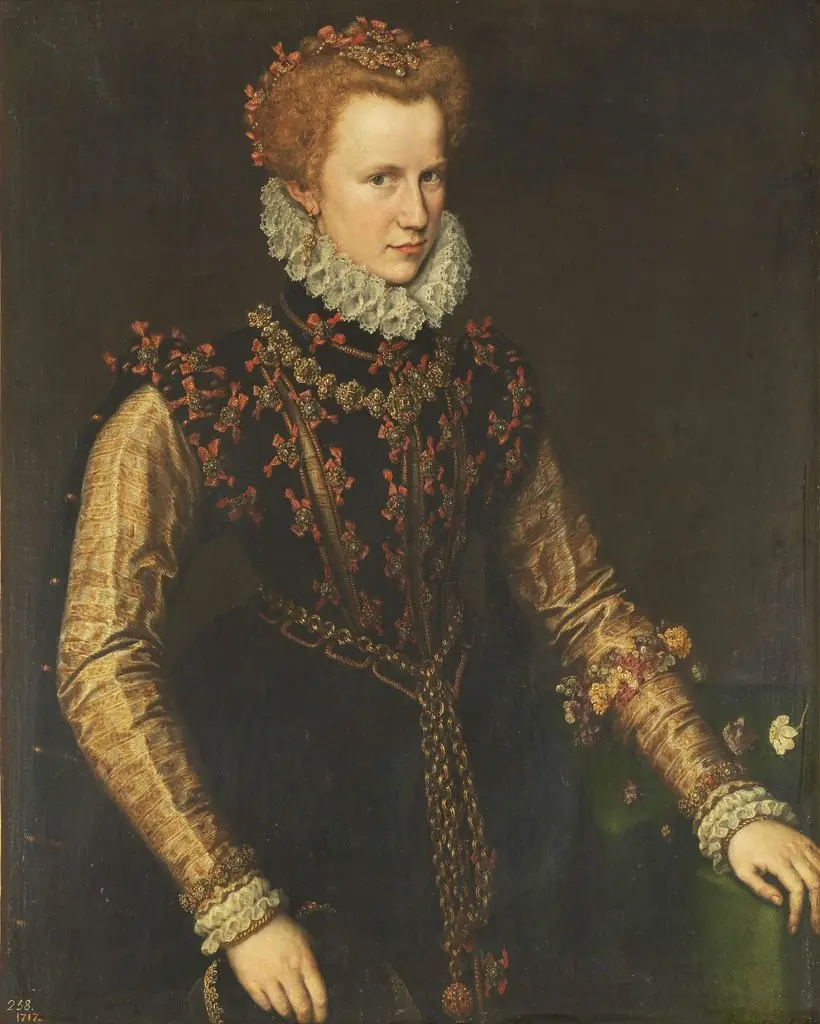 Jane Dormer, Duchess of Feria (?)
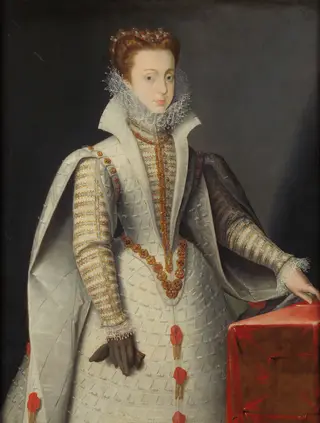 Herzogin Margarete von Joyeuse (1564-1625), Dreiviertelbildnis
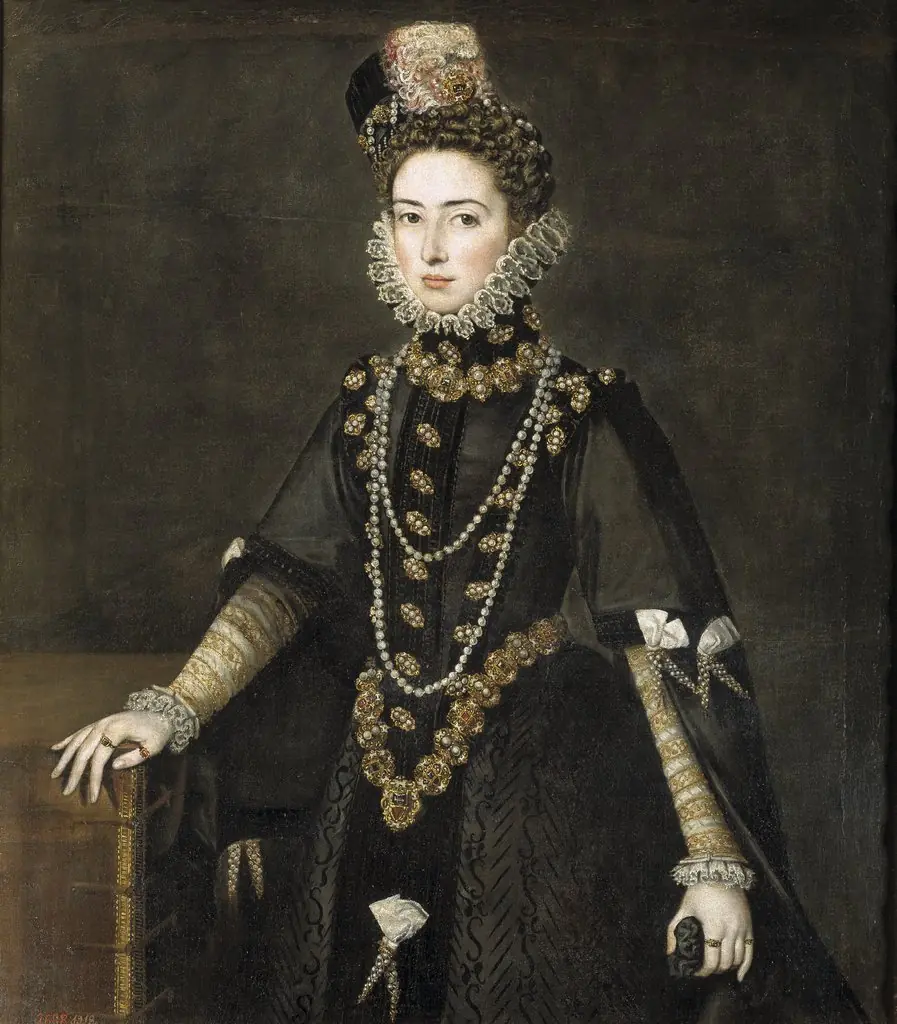 Catalina Micaela de Austria, Duchess of Savoy
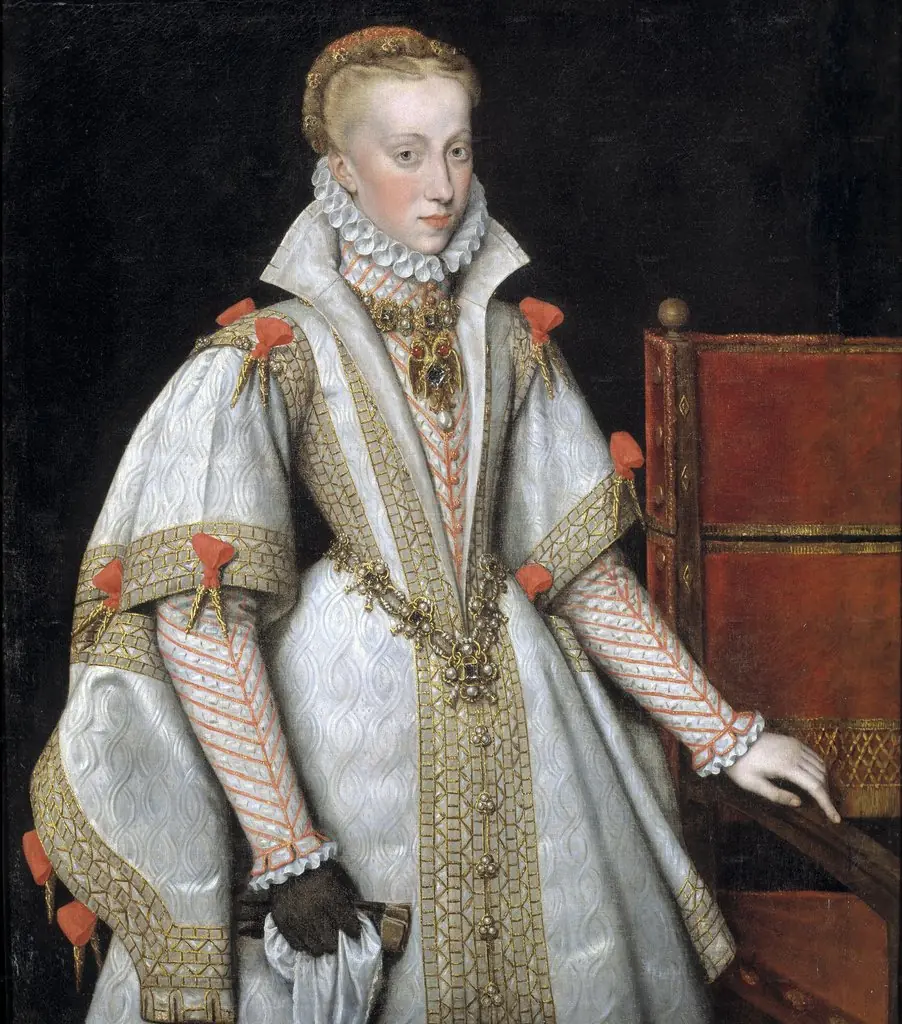 Queen Anne of Austria, fourth Wife of Philip II
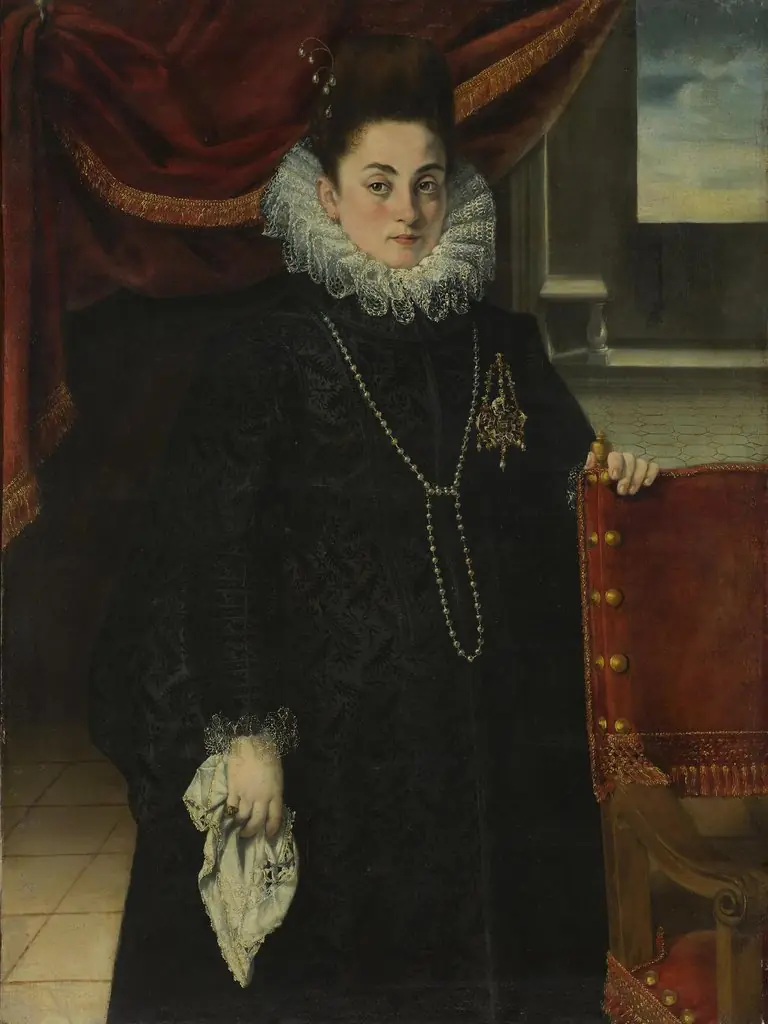 Female Portrait
- Portrait of Anne of Austria, Queen of Poland (1573-1598)