Artwork
Portrait of Elisabeth of Valois
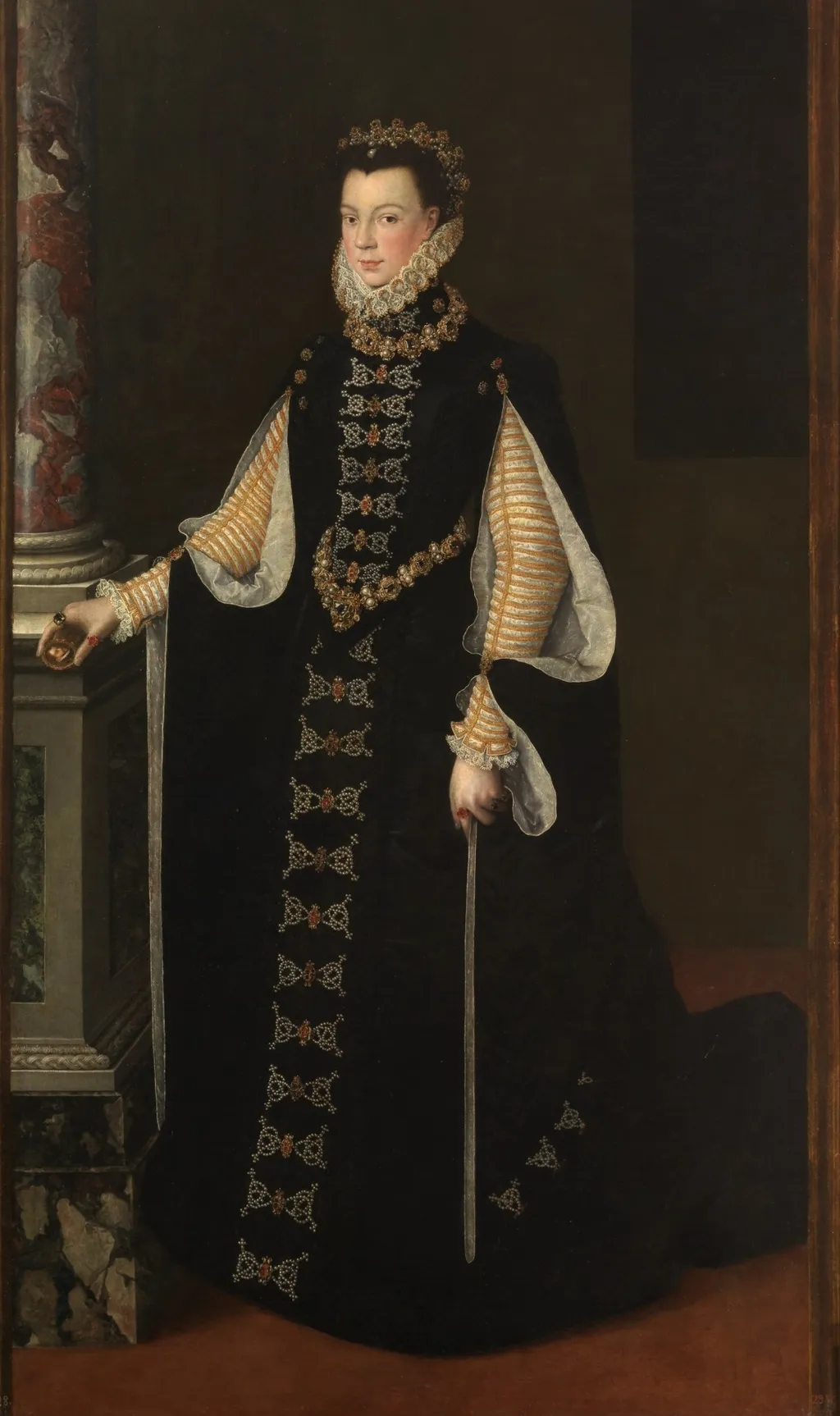
Portrait of Elisabeth of Valois is an oil painting by the Early Baroque Italian artist Sofonisba Anguissola. It dates from 1561 and is held in the collection of the Museo del Prado.
About this work
Subject & Meaning
The work's iconography directly derives from Titian's portrait of Philip's mother, Elizabeth of Portugal, establishing a visual lineage of royal consorts.
The painting depicts Elisabeth of Valois, the third wife of Philip II of Spain, presented in full-length formal attire. Her black gown, featuring wide sleeves and delicate pearl embroidery resembling the French fleur-de-lis, reflects the strict austerity characteristic of the Spanish court while subtly referencing her French heritage. The work's iconography directly derives from Titian's portrait of Philip's mother, Elizabeth of Portugal, establishing a visual lineage of royal consorts.
In her right hand, Elisabeth holds a miniature portrait of her husband, a precious Renaissance object symbolizing marital devotion and serving as an inseparable companion for young brides. This imagery underscores her political role in strengthening peace between Spain and France through their union. The composition radiates a sense of youthful strength and security, capturing the Queen's psychological presence alongside her opulent jewelry and official dress.
Technique & Style
The painting is executed in oil on canvas, measuring 206 cm in height and 123 cm in width. Its composition centers on a full-length, life-size figure of Elisabeth of Valois, who holds a miniature portrait of Philip II in her right hand. The queen wears a black gown with voluminous sleeves fastened at the wrists by jeweled clasps, a gold-and-gemstone belt, and a matching necklace, all rendered with meticulous attention to the luxurious fabrics and accessories of the Spanish court.
The dark costume, punctuated by delicate pearl embroidery that suggests the fleurs-de-lis of her French heritage, underscores the austerity prescribed by Philip II. Radiographic examination reveals pentimenti in the placement of the miniature and the base of a column, indicating adjustments during execution. The handling balances precise detail with psychological penetration, characteristic of Anguissola's portrait style.
History & Provenance
The Portrait of Elisabeth of Valois is an oil-on-canvas painting executed by Sofonisba Anguissola, generally dated between 1561 and 1565. The work entered the Spanish royal collection shortly after its creation; by 1598, following the death of King Philip II, it was recorded in the jewelry cabinet of the Royal Alcázar of Madrid, where it was protected by a blue taffeta curtain. During the court's relocation to Valladolid under Philip III, the portrait was displayed in the garden gallery of the Royal Palace.
In 1636, it was selected for the decoration of the Palace of the Buen Retiro, where it remained until after the reign of Charles III. Although the painting was restored in the nineteenth century, its attribution was historically contested; in June 1606, Bartolomé Carducho assigned the work to Alonso Sánchez Coello, and modern analysis of the lead white ground preparation ultimately re-attributed the piece to Anguissola. It entered the Museo Real de Pinturas (later the Museo del Prado) in 1857.
The work is held in the Museo del Prado, Madrid, and measures 206 by 123 centimetres.
Context
The portrait of Elisabeth of Valois, painted by Sofonisba Anguissola around 1561–1565, is housed in the Museo del Prado and exemplifies the artist's rise from court trainee to official court painter under Philip II. Art historians highlight its psychological realism and meticulous rendering of court dress as evidence of Anguissola's sophisticated portraiture, underscored by contemporary descriptions of her role as lady-in-waiting and art tutor to the queen. Comparative analysis with Titian's Portrait of Elizabeth of Portugal reveals a deliberate iconographic homage that reinforces the queen's political significance as a French dynastic link.
Technical studies confirm the attribution to Anguissola and document later restorations, cementing the work's place in Renaissance portraiture and in the broader narrative of female artists navigating elite patronage.
Legacy
The portrait, painted c.1561–1565 by Sofonisba Anguissola, established a model for court portraiture that later artists referenced when depicting Spanish royal women. Its iconography, drawing on Titian's portrait of Elizabeth of Portugal, signaled diplomatic prestige and influenced subsequent images of French princesses in foreign courts. The work's psychological depth and meticulous rendering of fabric and jewelry set a standard for court painters, contributing to Anguissola's lasting reputation as a pioneer of female artists in the Renaissance.
The painting's place in the Museo del Prado and repeated scholarly attention have kept its legacy visible in art history narratives.
Overview
Sofonisba Anguissola's Portrait of Elisabeth of Valois, an oil painting created between approximately 1561 and 1565, captures the likeness of the Spanish queen. This significant work by the Italian artist is presently housed in the Museo del Prado in Madrid, offering a glimpse into the royal court of the period through its detailed depiction.
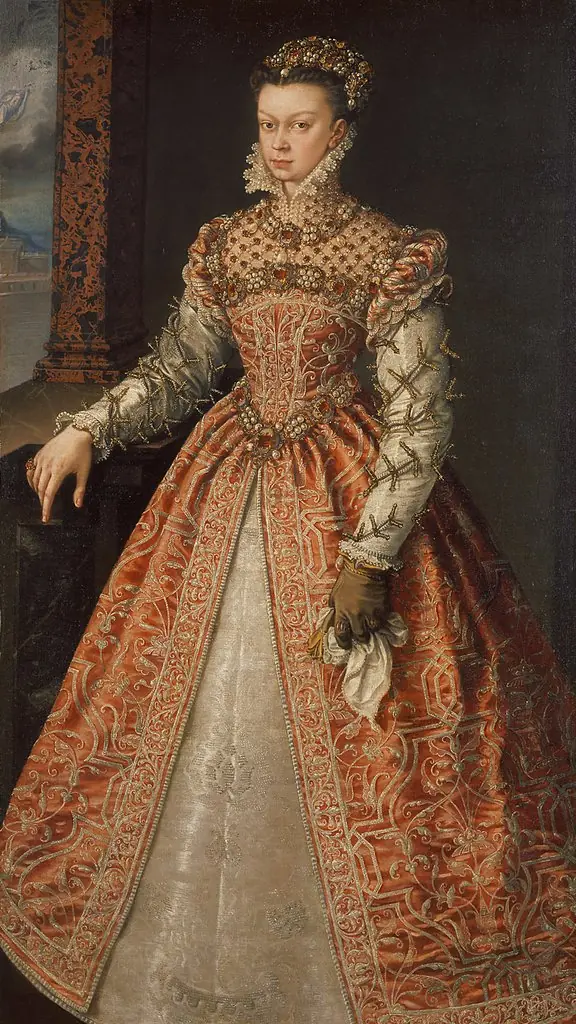
Artist & collection
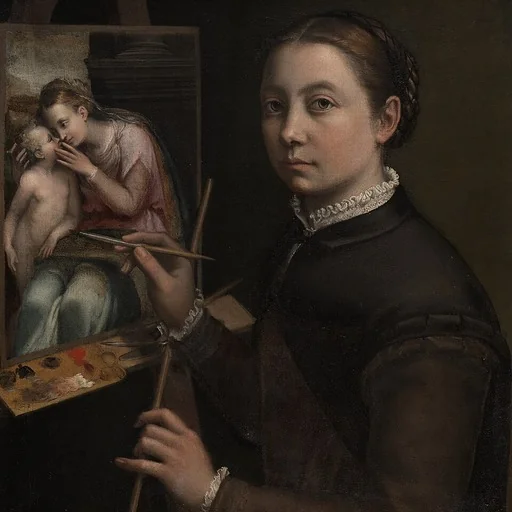
Artist
Sofonisba Anguissola (also Sophonisba Angussola or Anguisciola; c. 1532 – 16 November 1629) was an Italian Renaissance painter born in Cremona to a relatively poor noble family. She received a well-rounded education…

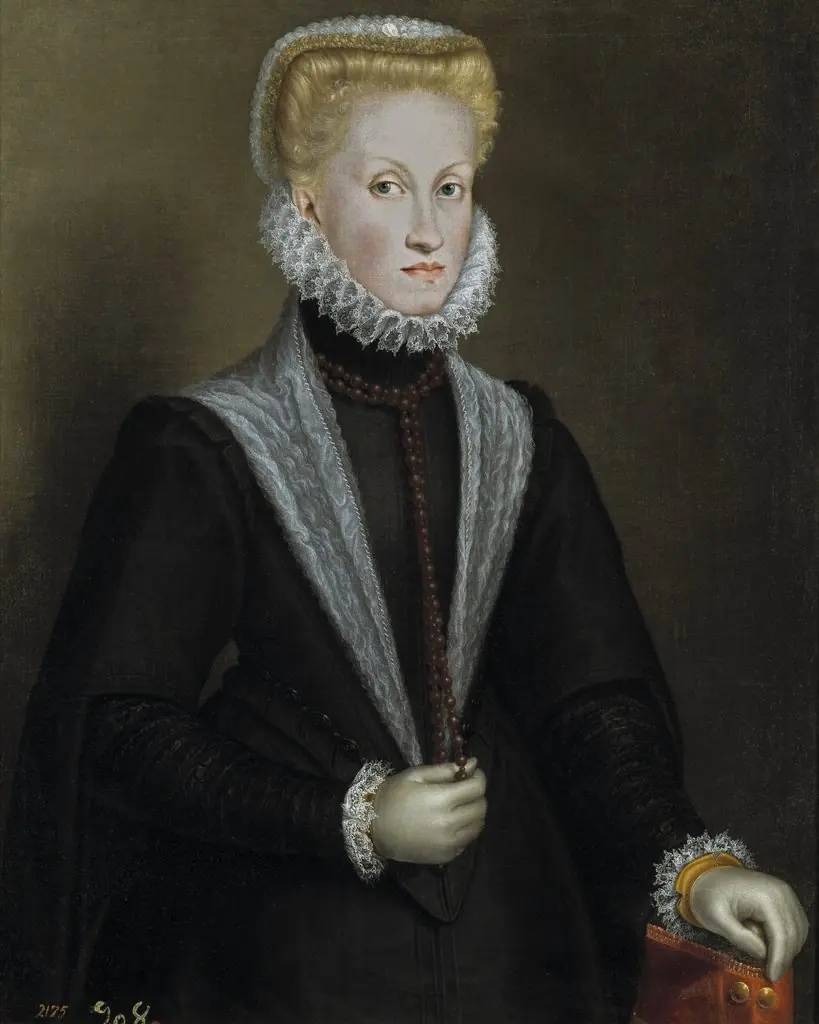
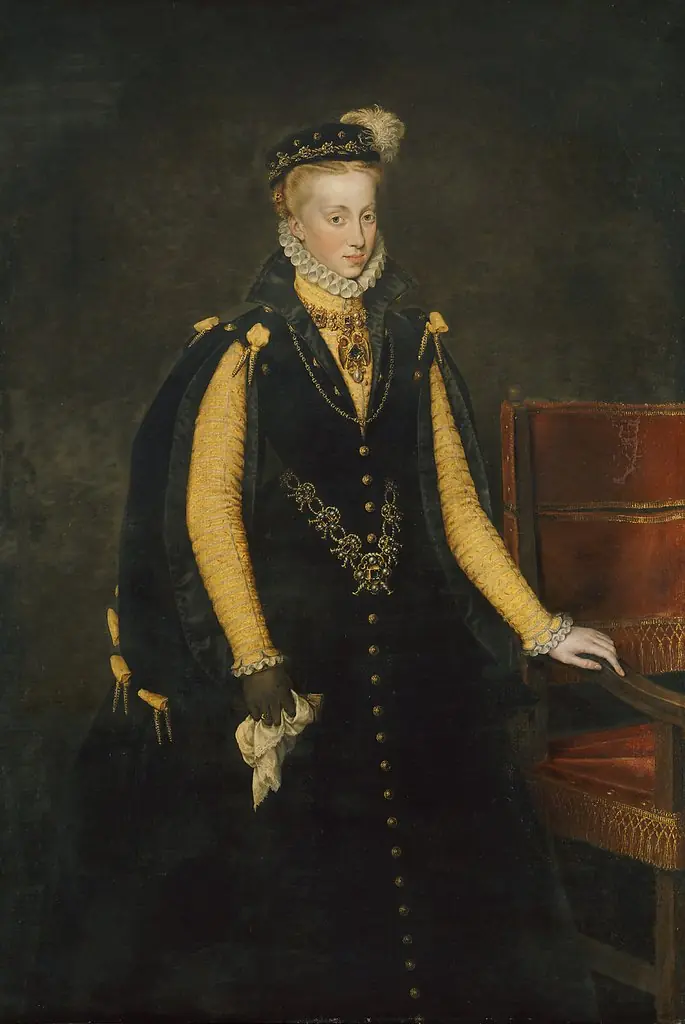 Anna von Österreich, Königin von Spanien
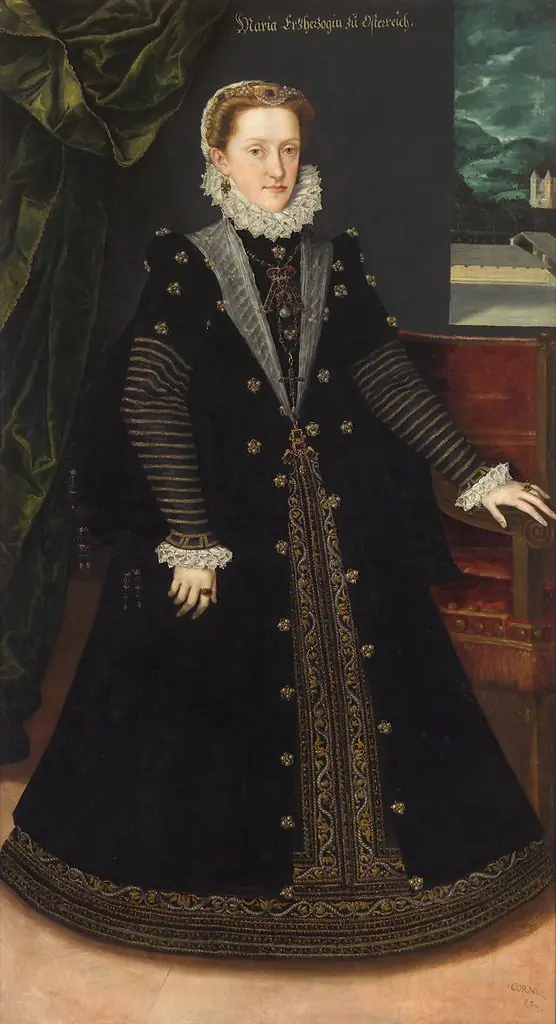 Portrait of Archduchess Mary Anna of Bavaria
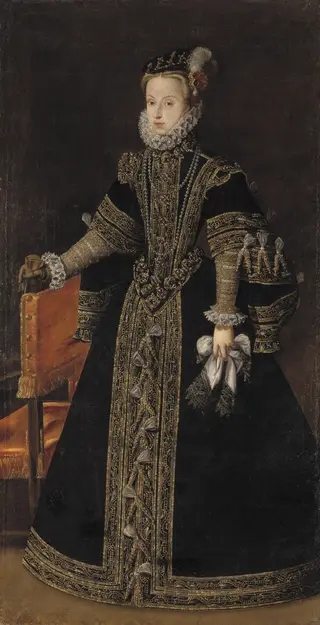 Anna Maria, 1549-1580, ärkehertiginna
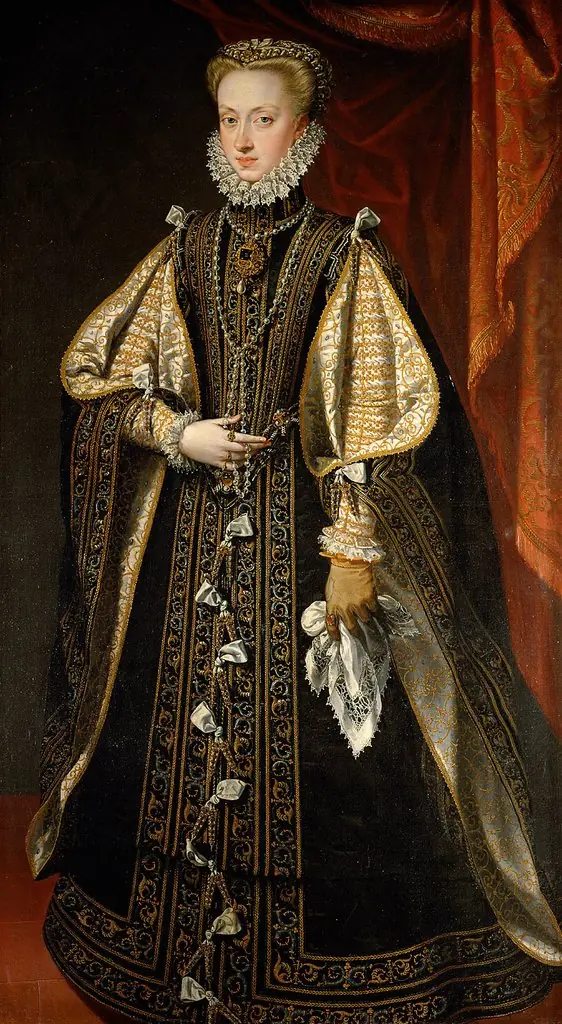 Anna of Austria, Queen of Spain (1549-1580)
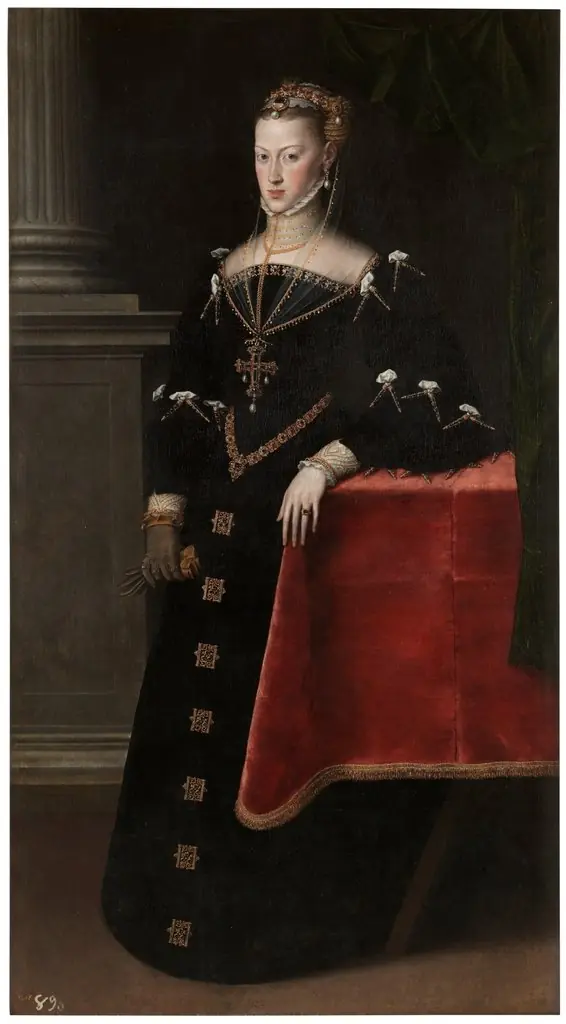 Empress Maria of Austria, Wife of Maximilian II
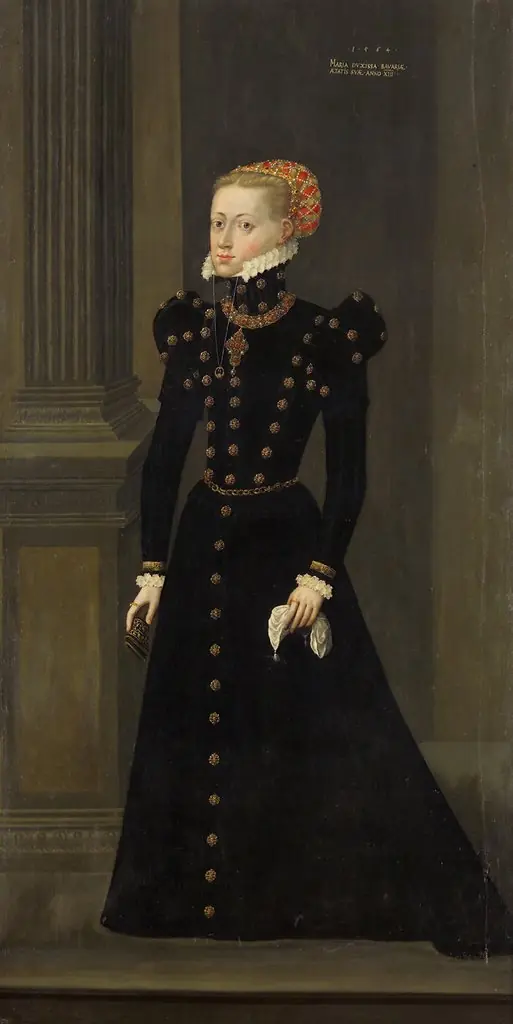 Maria (1551-1608), Herzogin in Bayern, Erzherzogin, im Alter von 13 Jahren
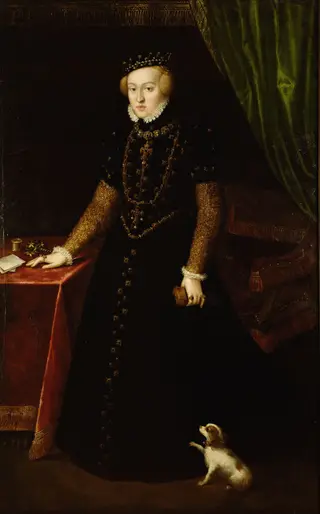 Erzherzogin Eleonore (1534-1594), Herzogin von Mantua in ganzer Figur
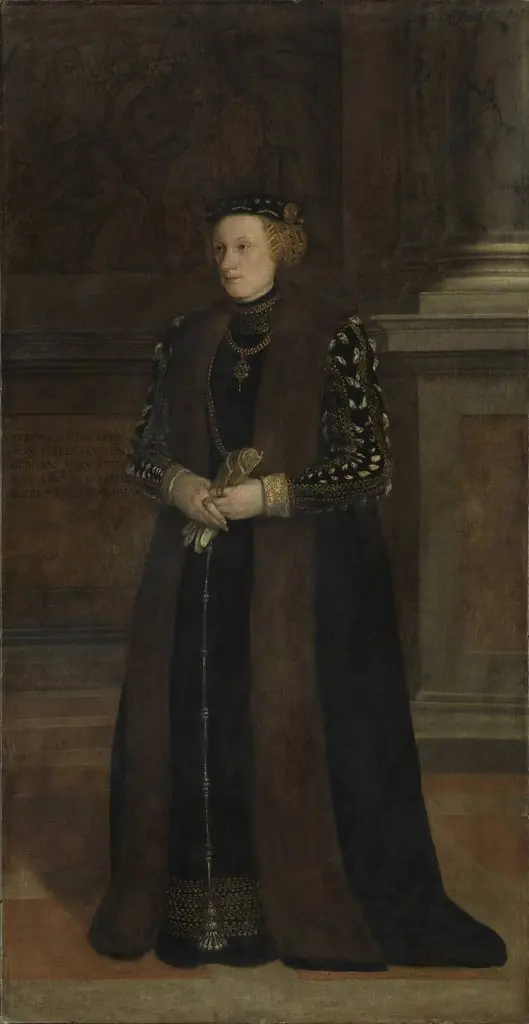 Veronika Vöhlin, geb. von Freyberg zum Eisenberg, Hallenwang und Neidlingen (1523-1582)
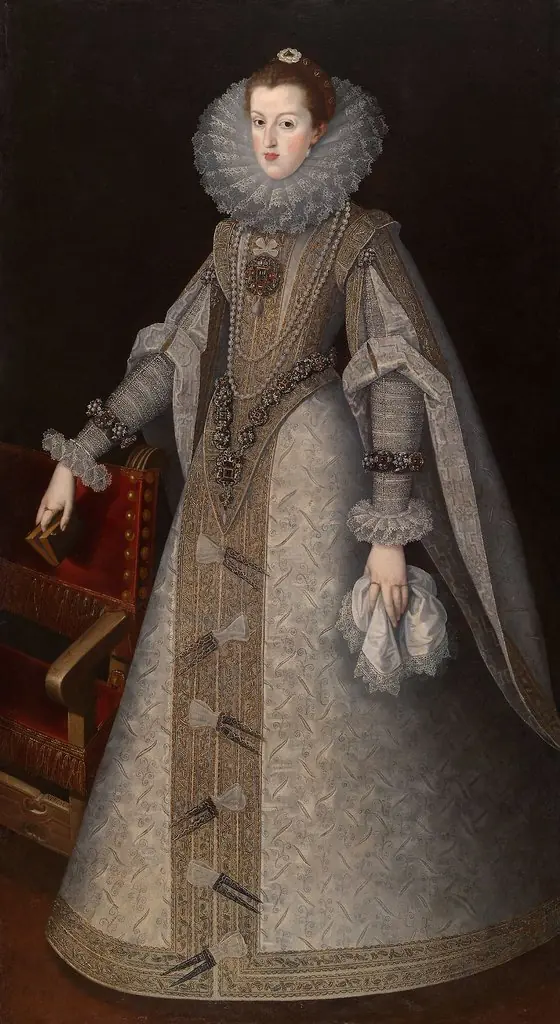 Queen Margaret of Spain
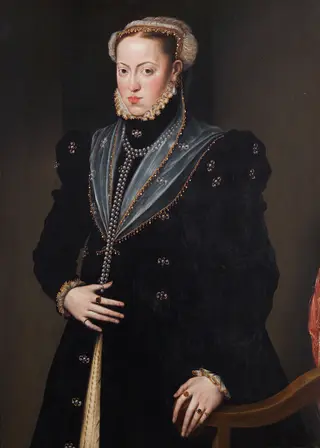 Infantin Maria (1528-1603), Kaiserin, Bildnis in halber Figur
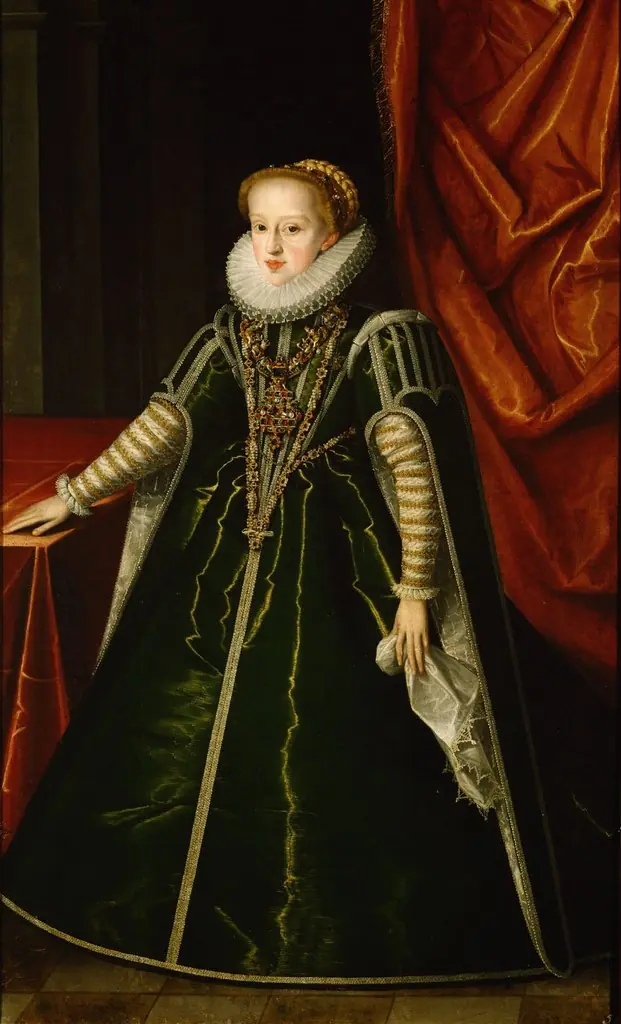 Erzherzogin Gregoria Maximiliane (1581-1597), Tochter von Karl II. von Innerösterreich, im Alter von 11 bis 12 Jahren in ganzer Figur
- Portrait of Elisabeth of Valois (1545-1568), Queen of Spain