Artwork
Tethered Hawks
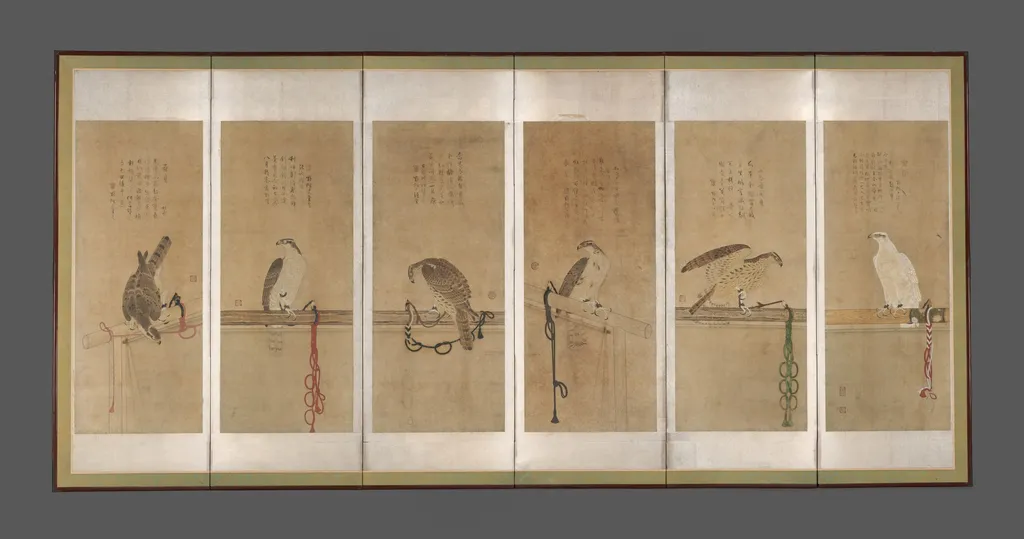
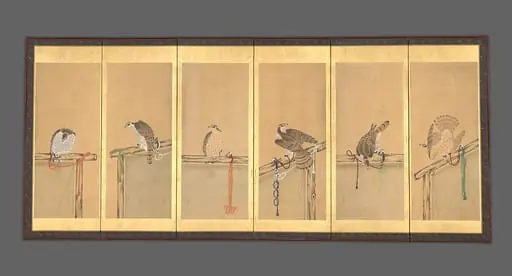
Tethered Hawks is an unspecified painting by the Kanō school artist Soga Chokuan. It dates from 1600 and is held in the collection of the Metropolitan Museum of Art.
About this work
Subject & Meaning
This symbolic pairing reflects the broader cultural fascination with avian subjects as emblems of vigilance and strategic alliance in the Soga school's oeuvre.
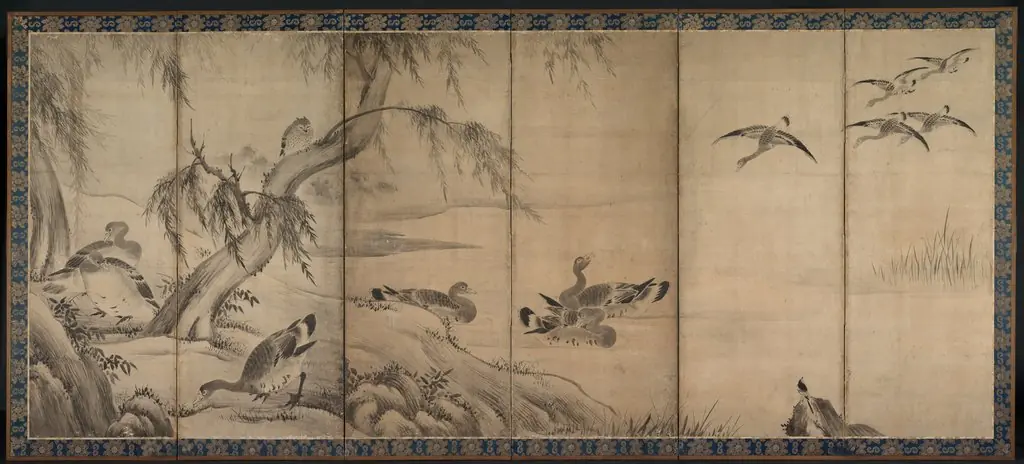
The painting depicts two hawks bound together by a thin rope, a motif that in early Edo-period Japanese art often signified mastery over nature and the harmonious balance between predator and prey. The restrained posture of the birds conveys both tension and unity, suggesting themes of control and partnership within the natural world. This symbolic pairing reflects the broader cultural fascination with avian subjects as emblems of vigilance and strategic alliance in the Soga school's oeuvre.
The work is housed in the Metropolitan Museum of Art, where it is catalogued as part of the museum's collection of Japanese paintings from the early 17th century.
History & Provenance
The painting Tethered Hawks by Soga Chokuan is held in the collection of the Metropolitan Museum of Art in New York. The work was created in Japan around the year 1600. While the museum's ownership is established, specific inventory or accession numbers are not provided in the available records. Furthermore, no details regarding the exhibition history of this piece are currently documented in the source material.
Overview
Tethered Hawks, painted by Soga Chokuan around the year 1600, is an ink and color work on paper now in the collection of the Metropolitan Museum of Art. The composition presents six hawks arranged along a wooden beam, each restrained by a rope tied to its leg, set against a muted, light‑brown background that isolates the birds.
Technique & Style
Chokuan renders the feathers with meticulous brushwork, differentiating texture through fine lines and subtle shading. The wooden beam’s grain is delineated with precise strokes, while the ropes display visible knots and twists, adding tactile realism. A restrained chiaroscuro model gives the birds a sense of volume, allowing light to fall across their forms and create depth against the flat background.
Context
Soga Chokuan was known for his realistic depictions of wildlife, particularly birds of prey, which were popular motifs among samurai and aristocratic patrons. The depiction of tethered hawks aligns with contemporary practices of falconry, a status symbol that combined martial skill with aesthetic appreciation, situating the painting within both artistic and cultural traditions of early modern Japan.
Artist & collection
Artist
Soga Chokuan spent his life in Japan’s Muromachi and early Edo periods. He worked as a painter for powerful warrior families, blending art with diplomacy. His best-known paintings show birds perched on flowering…