Artwork
Wild Geese
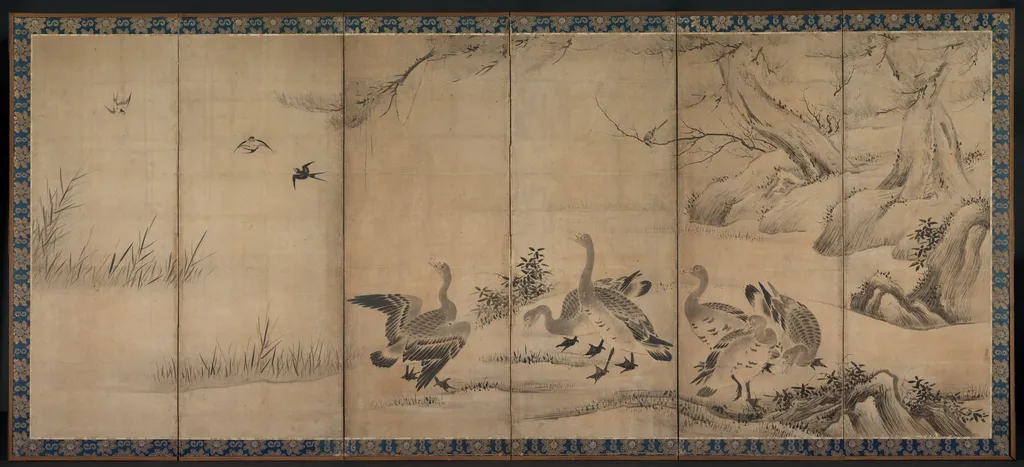
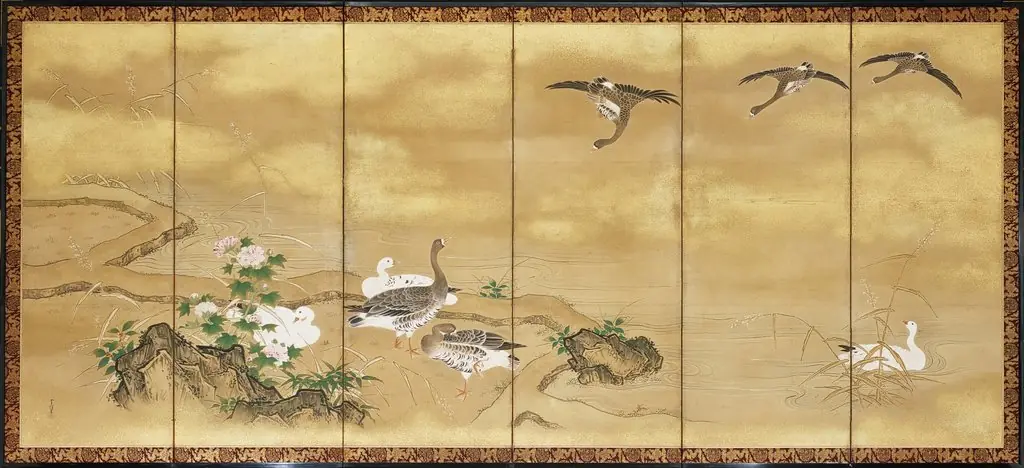
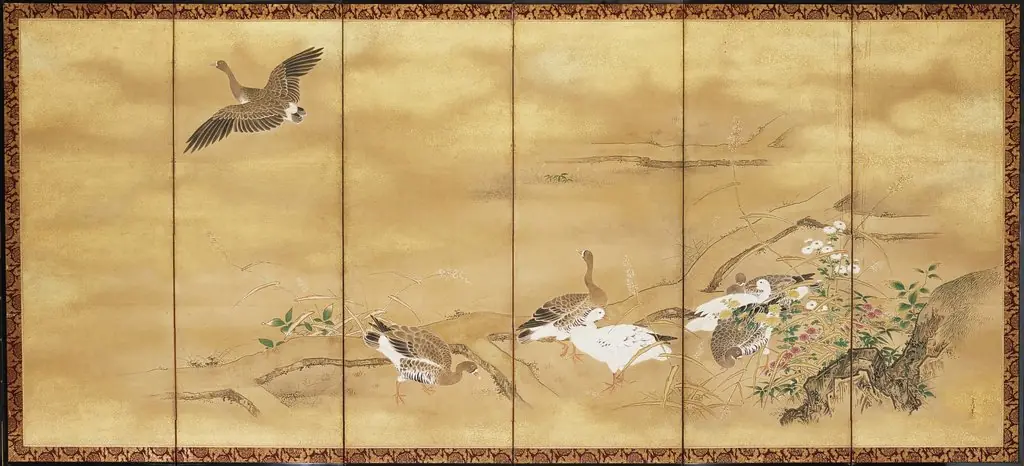
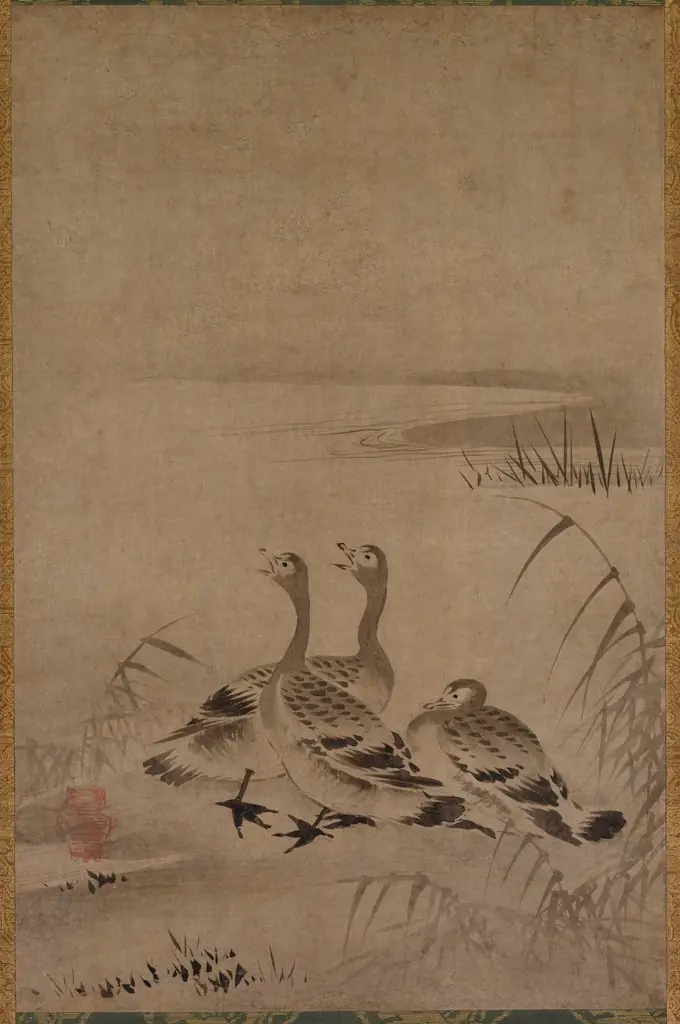
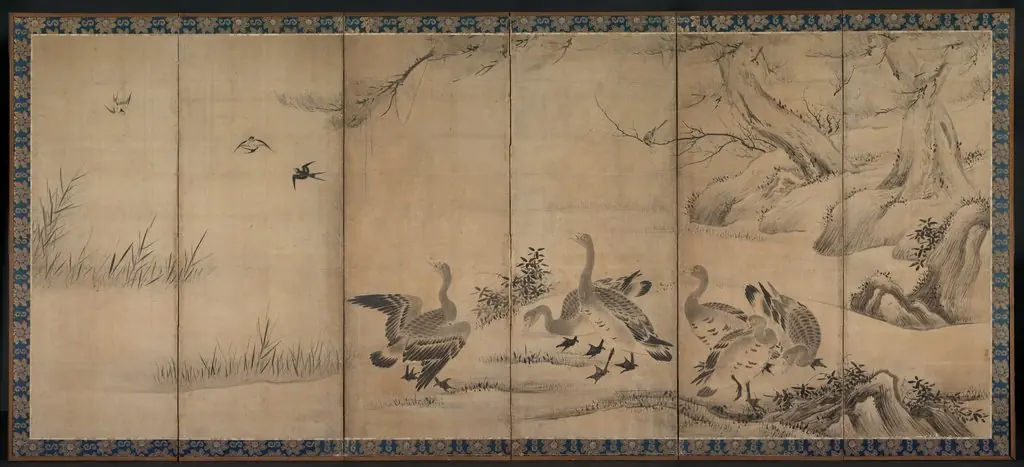
Wild Geese is an unspecified painting by the Kanō school artist Kanō Sanraku. It dates from 1607 and is held in the collection of the Cleveland Museum of Art.
About this work
History & Provenance
It was produced in Japan and is held in the collection of the Cleveland Museum of Art, which it entered in 1987 under the accession number 1987.
The painting Wild Geese was created by the Japanese artist Kanō Sanraku in 1607. It was produced in Japan and is held in the collection of the Cleveland Museum of Art, which it entered in 1987 under the accession number 1987.9. The piece is classified as a painting from the early seventeenth century.
The available records confirm its location and cataloging details but do not list specific past exhibitions or loan history.
Legacy
Wild Geese by Kanō Sanraku, painted in 1607, has influenced subsequent Japanese bird-and-flower imagery through its dynamic composition and rendering of avian subjects. The work's presence in the Cleveland Museum of Art has enabled scholarly study of Kanō Sanraku's role in early Edo-period painting, reinforcing his reputation as a master of the kachō-ga genre. Its legacy persists in modern interpretations of seasonal bird motifs in Japanese art.
Overview
Created in 1607 by Kanō Sanraku, a sixth‑generation painter of the Kanō lineage, Wild Geese is an ink and color work now owned by the Cleveland Museum of Art. The composition presents six geese in varied poses across a modest landscape, framed by a decorative border of blue and gold motifs.
Subject & Meaning
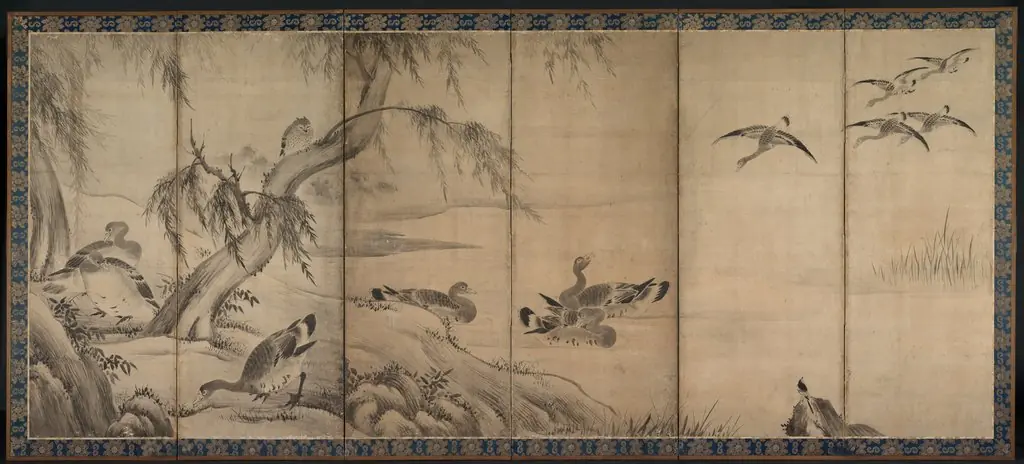
The painting depicts geese in motion, some perched on grass, others wading in water, and a few taking flight, capturing the natural vitality of the birds. The sparse trees, rolling hills, and distant avian silhouettes provide a tranquil setting that emphasizes the creatures’ interaction with their environment.
Technique & Style
Sanraku employs smooth, precise brushwork to outline the birds, while subtle shading conveys feather texture and depth. The use of restrained color alongside ink reflects a synthesis of the bold Momoyama aesthetic and the more subdued, refined sensibility that emerged in early Edo painting.
Context
Wild Geese belongs to the broader Kanō school movement, which dominated official painting for Japanese shoguns from the 15th to 19th centuries. The piece illustrates the school’s adaptation to changing tastes, merging the energetic compositions of the late 16th century with the calmer, nature‑focused approach favored by early Edo patrons.
Artist & collection
Artist
Kanō Sanraku (狩野 山楽; 1559 – September 30, 1635) was a Japanese painter also known as Kimura Heizō (his birth name), Shūri, Mitsuyori, and Sanraku.