Artwork
Wild Geese
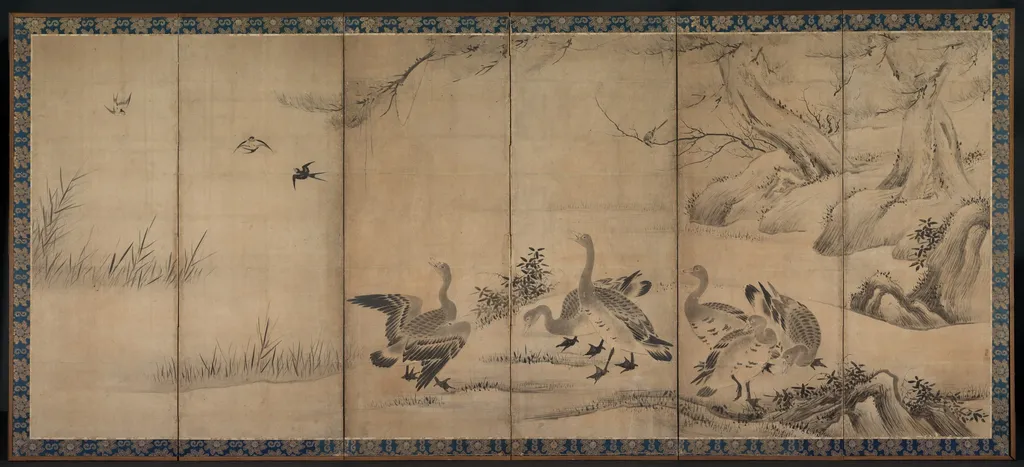
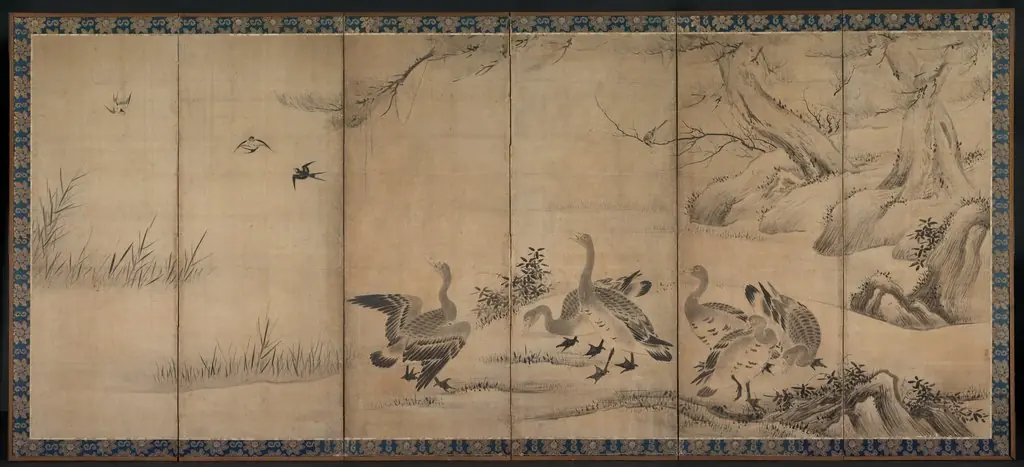
Wild Geese is an unspecified painting by the Kanō school artist Kanō Sanraku. It dates from 1607 and is held in the collection of the Cleveland Museum of Art.
About this work
Overview
Created in 1607, Wild Geese is a hanging scroll painted by Kanō Sanraku, a sixth‑generation member of the Kanō family who served the shogunate. The work is part of the Cleveland Museum of Art’s collection and exemplifies Sanraku’s mature period within the Kanō school.
Subject & Meaning
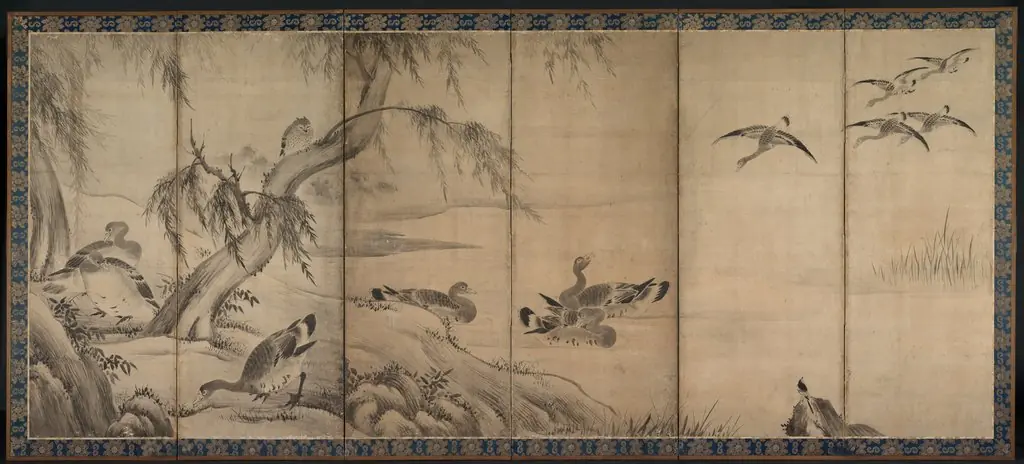
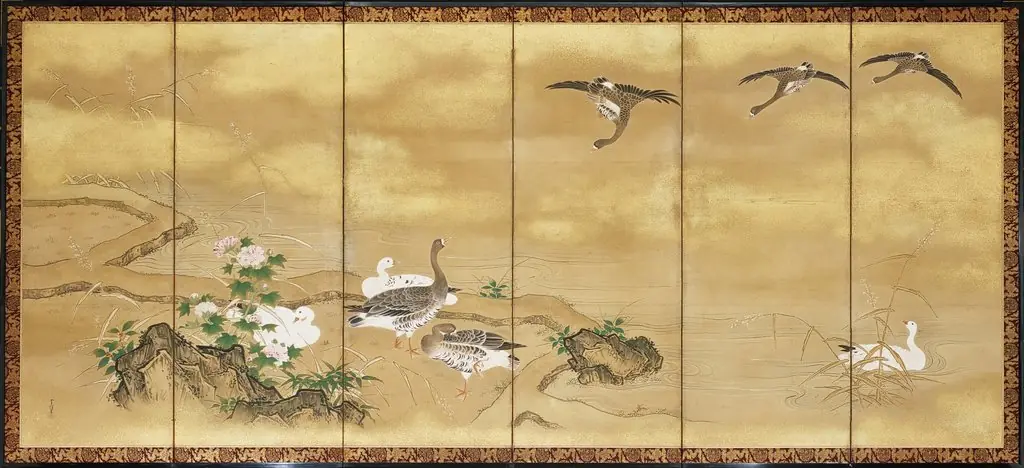
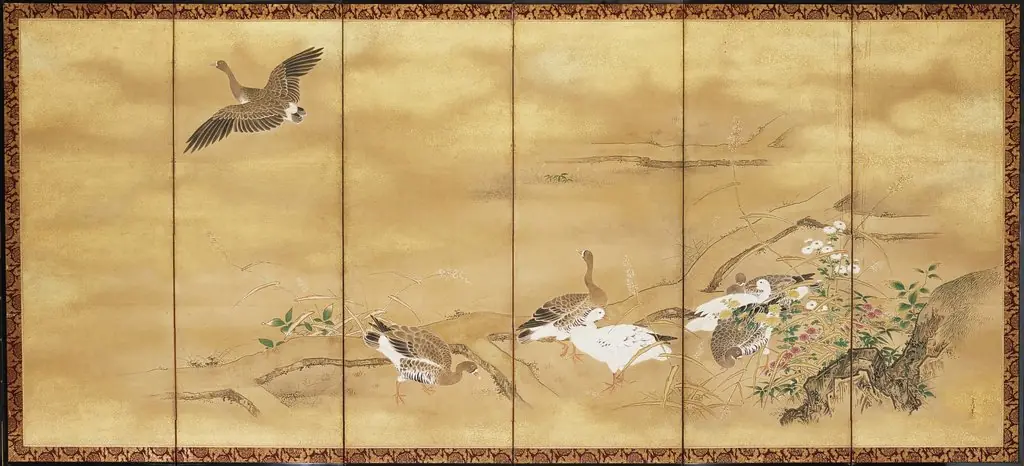
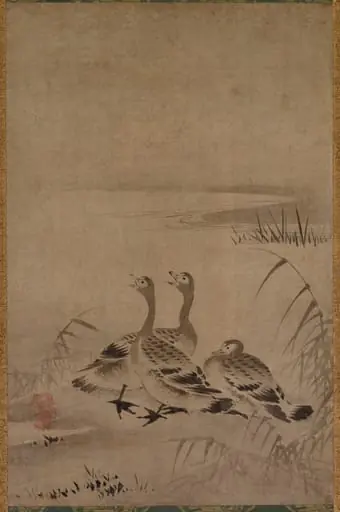
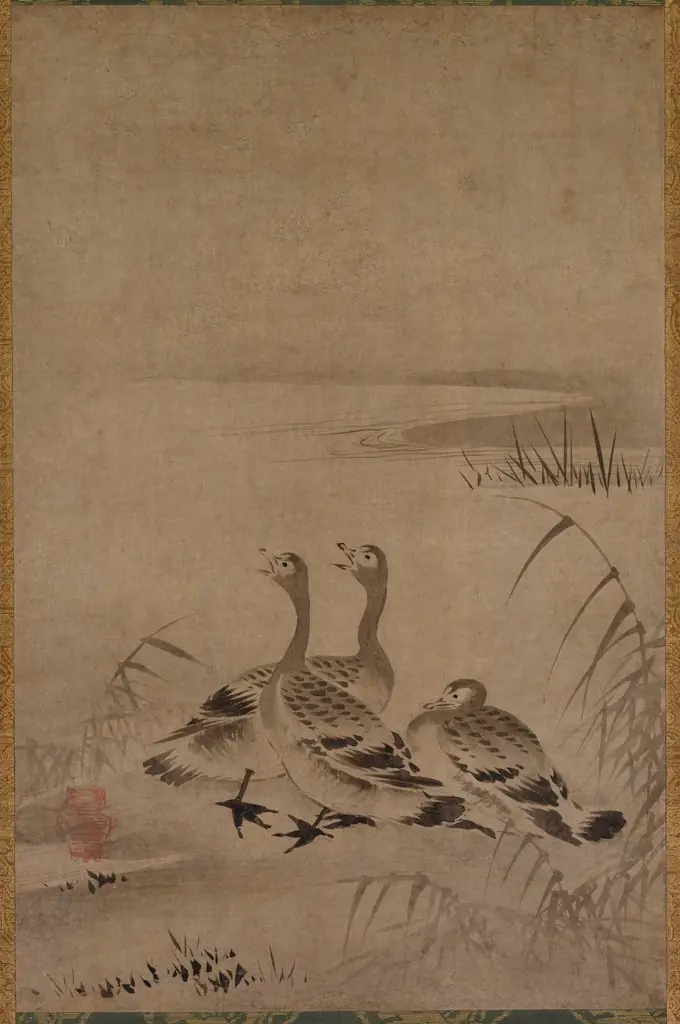
The composition depicts a flock of wild geese rendered in various poses, some in flight, others standing or walking, against a tranquil landscape of trees, grass and a still water surface. The naturalistic treatment of the birds emphasizes their movement and feather detail, reflecting a contemplative observation of wildlife.
Technique & Style
Sanraku combines the vigorous brushwork associated with the Momoyama period with the restrained, serene palette that became typical of early Edo painting. Soft browns and grays dominate the scene, while darker ink lines define form. A decorative border of blue and gold patterns frames the image, adding a subtle ornamental touch.
History & Provenance
The painting was produced during the later phase of Sanraku’s career, when he was consolidating the Kanō school’s aesthetic for official patrons. It entered the Cleveland Museum of Art’s holdings through acquisition in the 20th century, though the exact chain of ownership prior to the museum is not extensively documented.
Context
Wild Geese illustrates the Kanō school’s role in bridging the bold, decorative sensibilities of the Momoyama era with the more subdued, scholarly approach of the Edo period. The work reflects the school’s function as the official artistic arm of the shogunate, providing decorative yet refined images for elite settings.
Artist & collection
Artist
Kanō Sanraku (狩野 山楽; 1559 – September 30, 1635) was a Japanese painter also known as Kimura Heizō (his birth name), Shūri, Mitsuyori, and Sanraku.