Artwork
Hexi
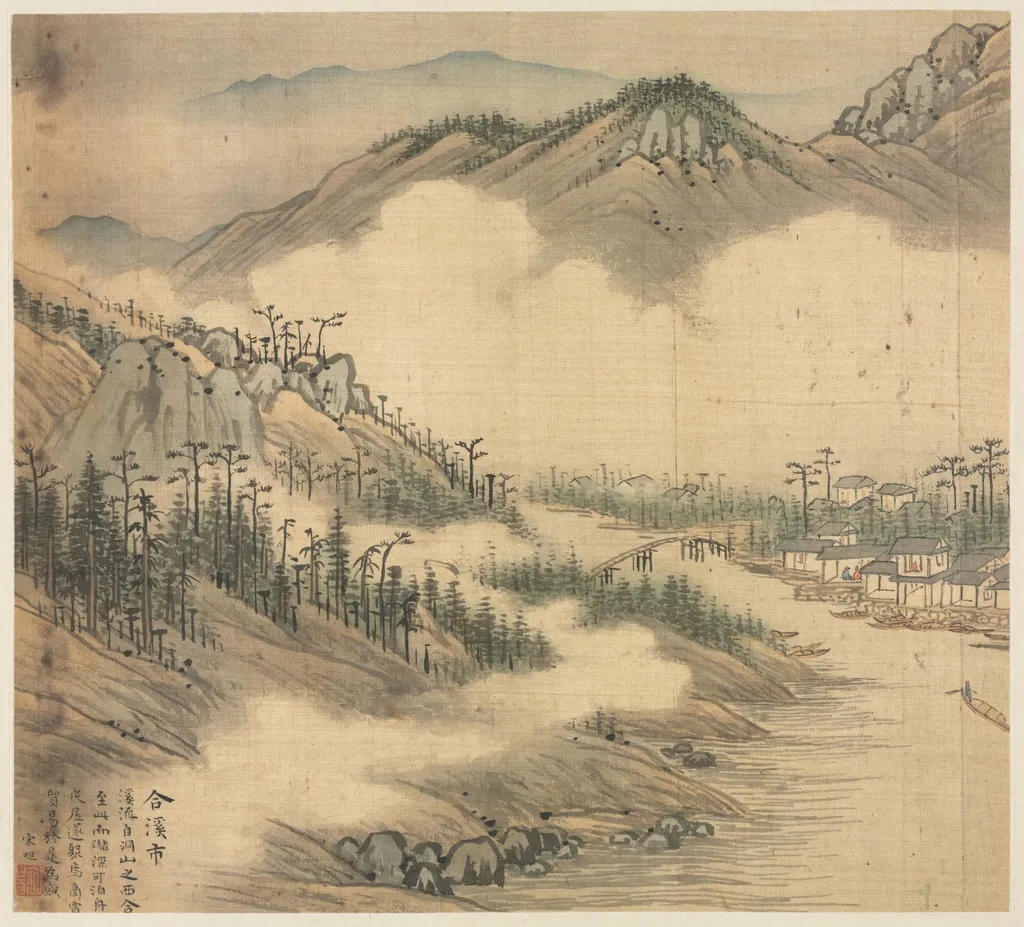
Hexi is an unspecified painting by the Renaissance artist Song Xu. It dates from 1588 and is held in the collection of the Cleveland Museum of Art.
- Accession no.
- 1998.78.9
About this work
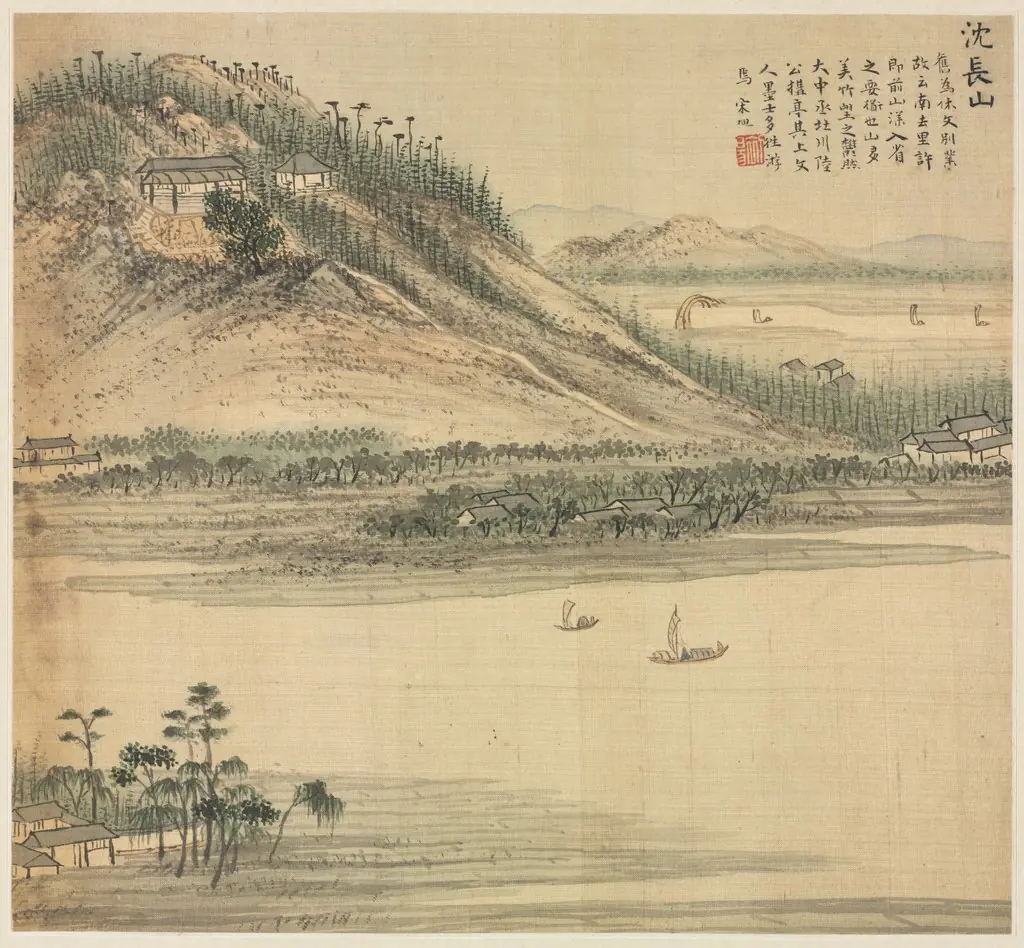
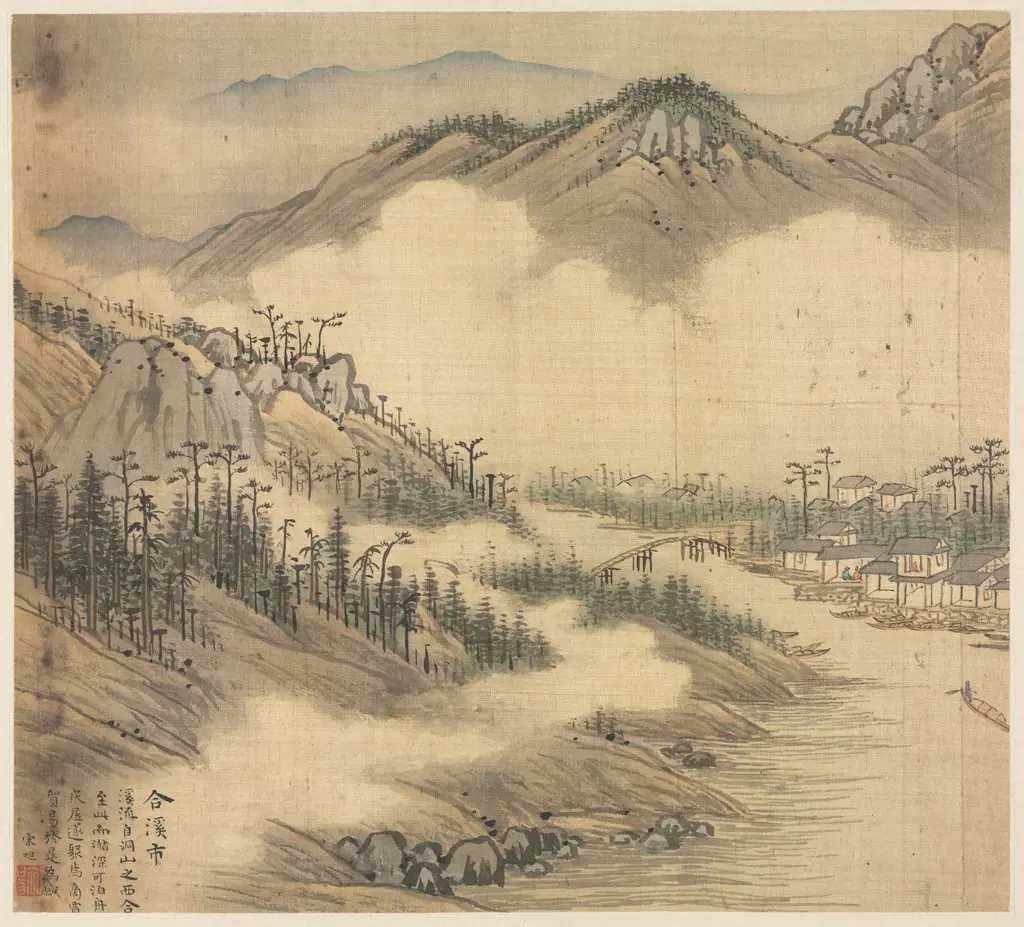
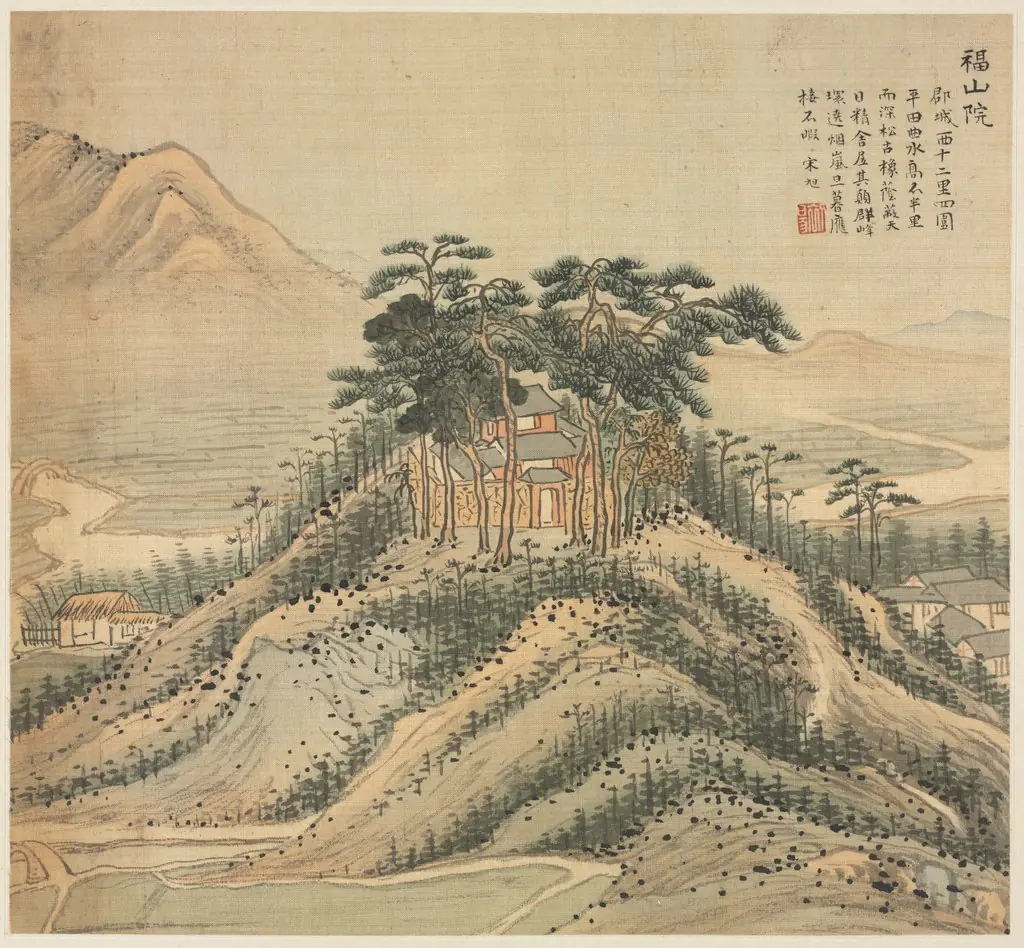
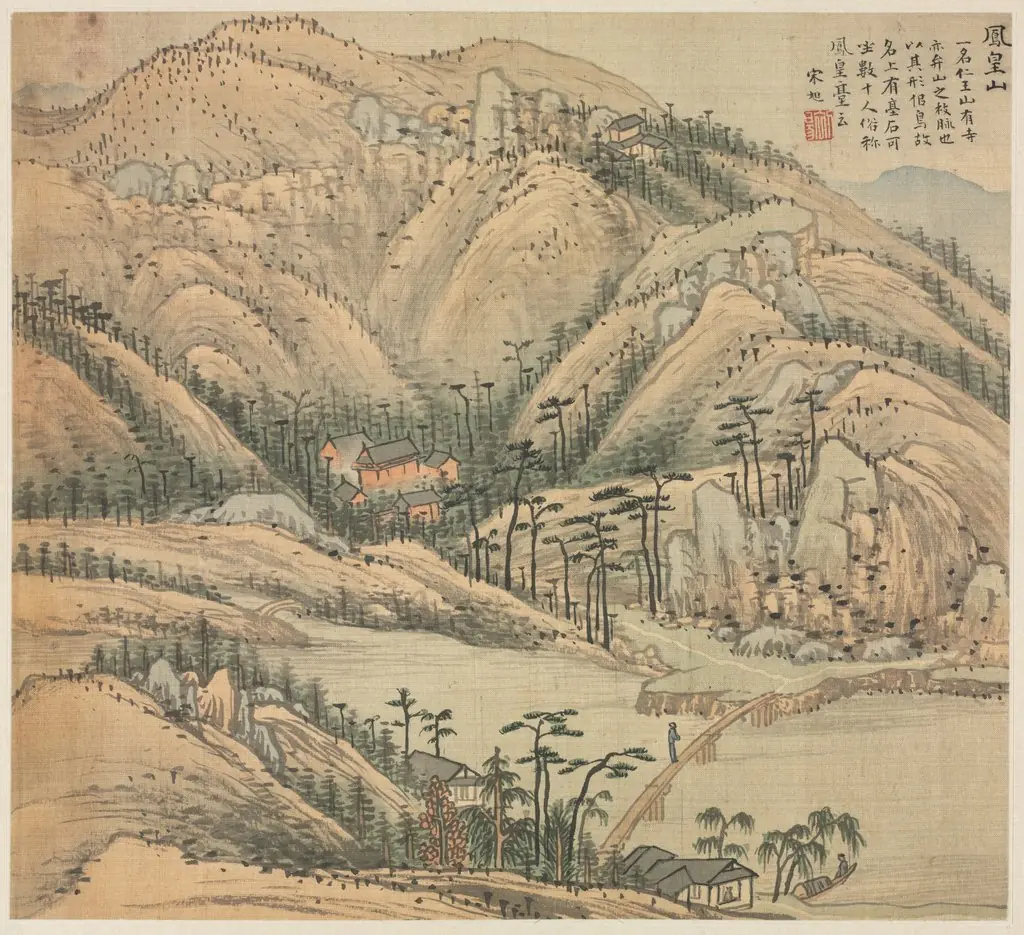
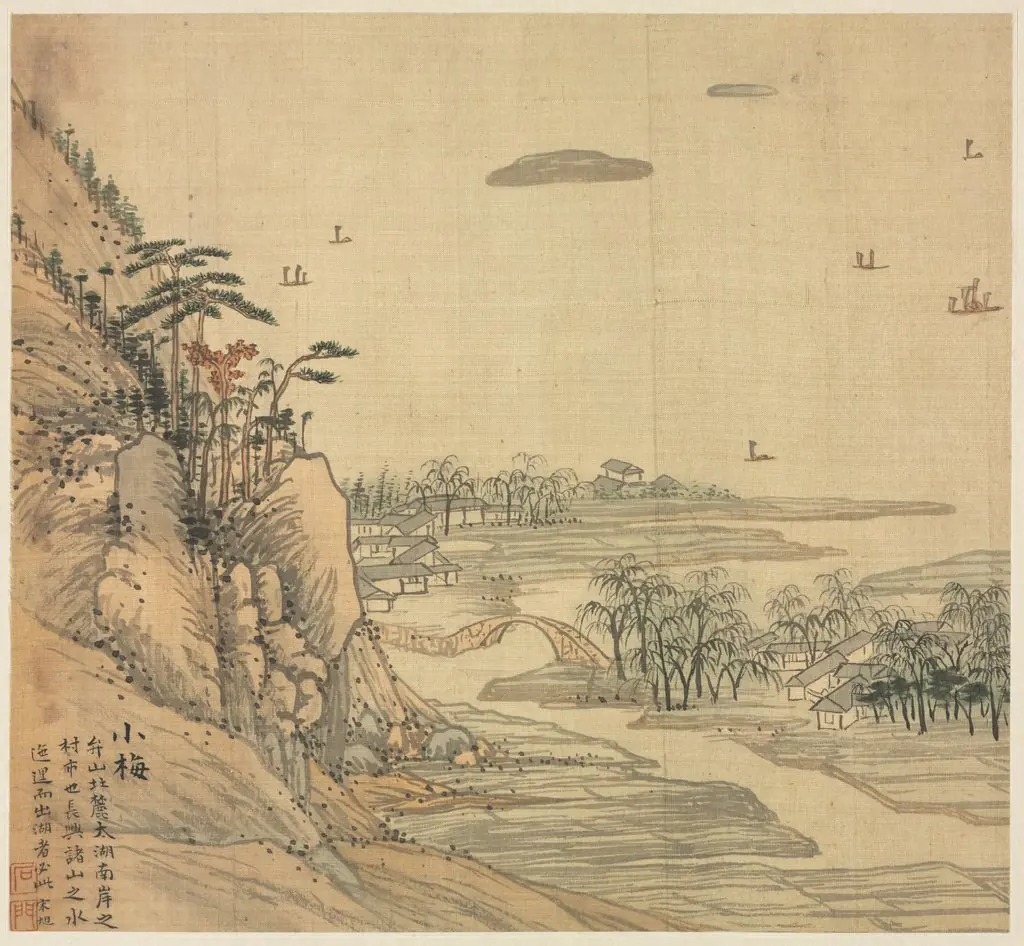
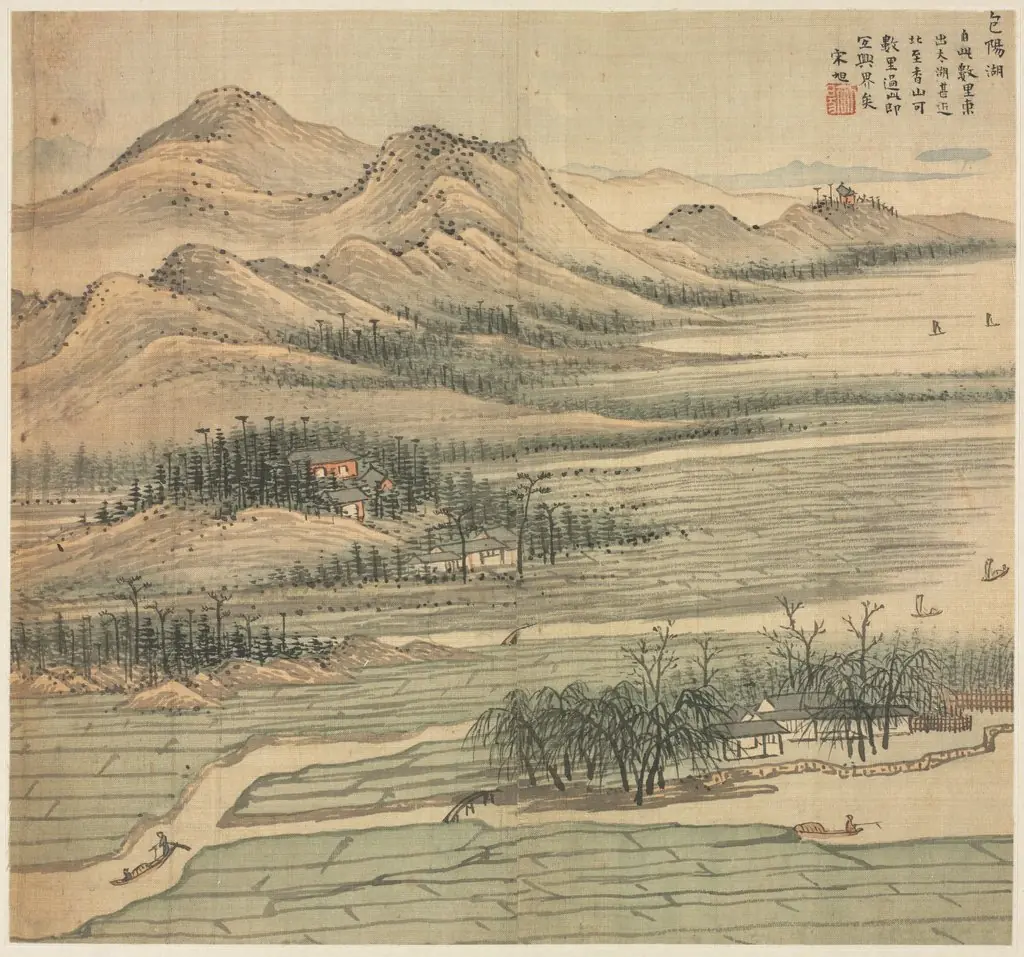
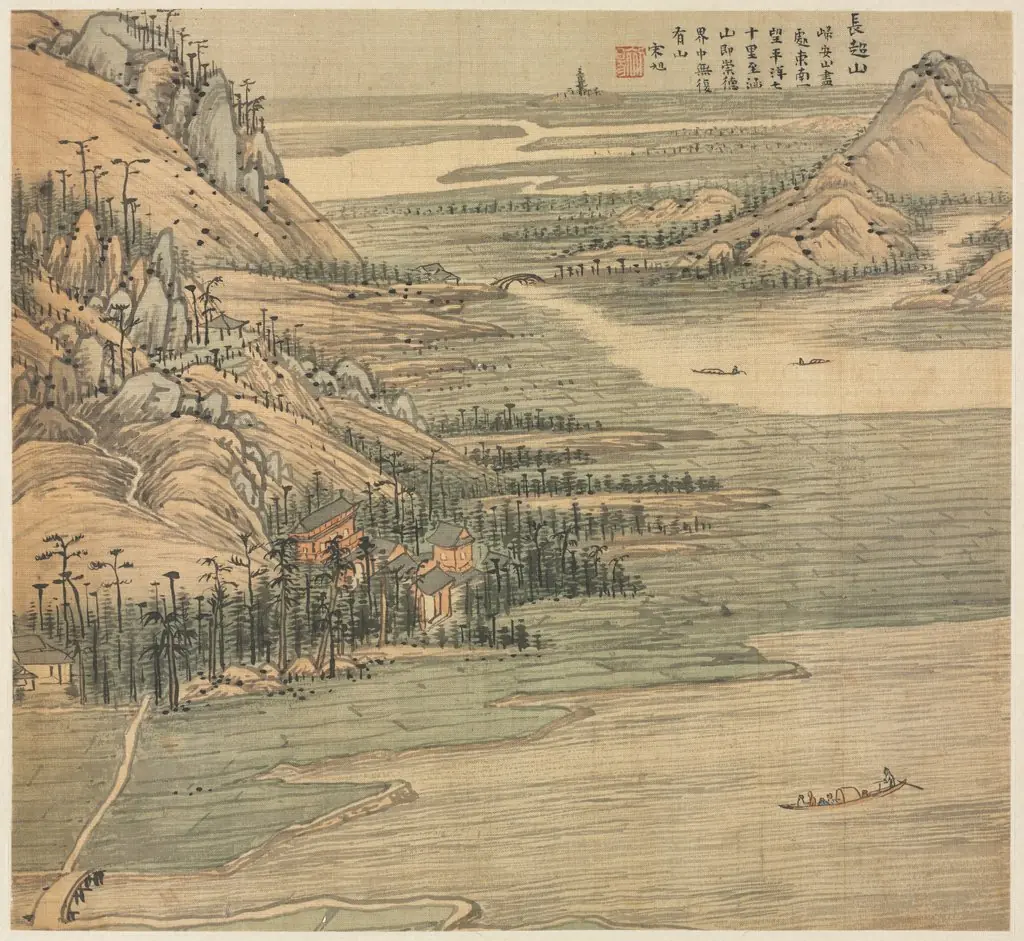
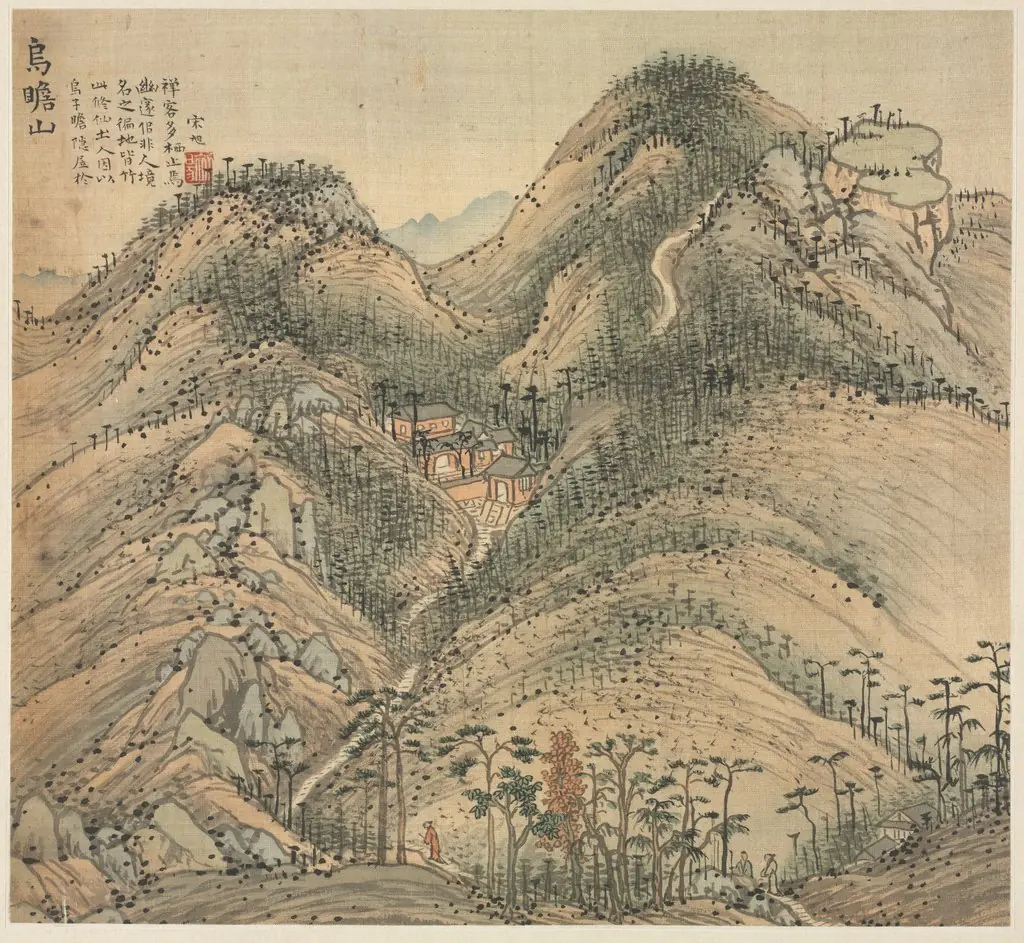
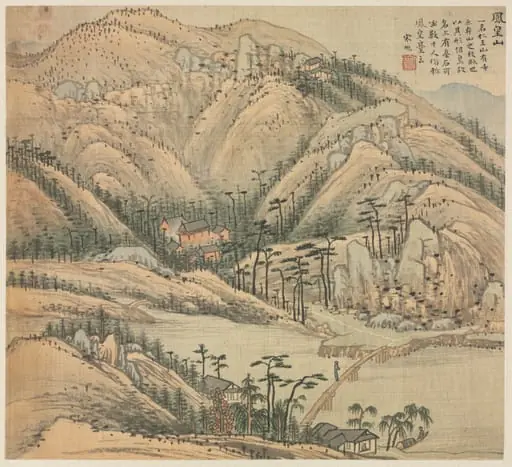
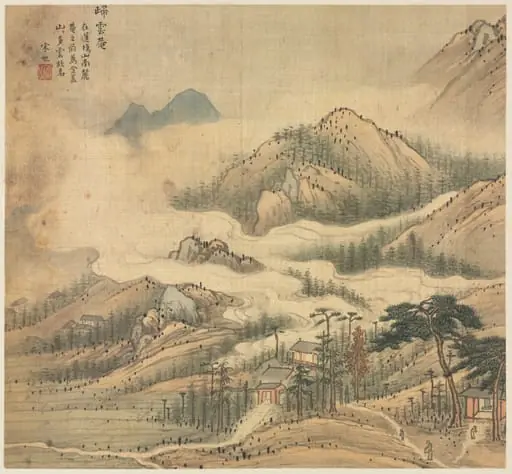
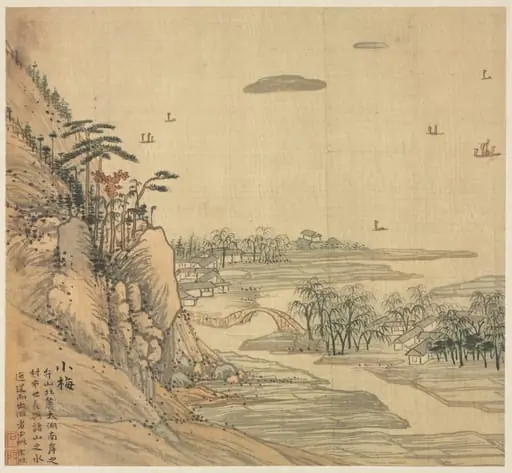
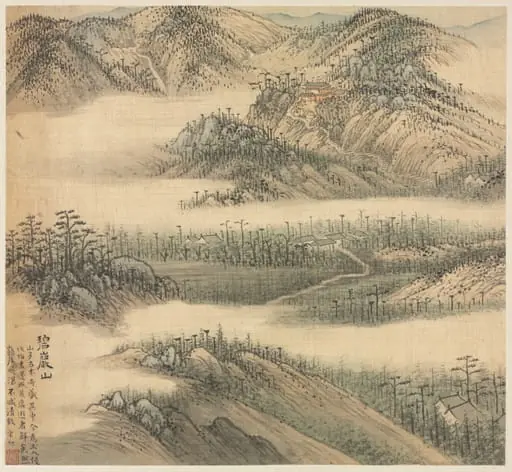
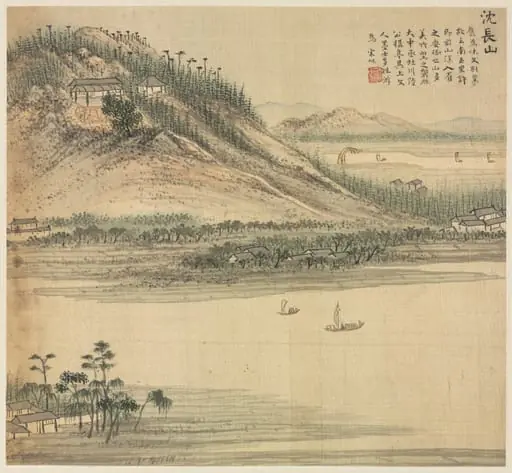
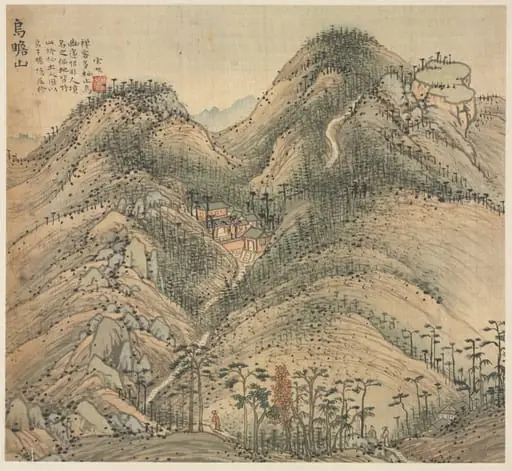
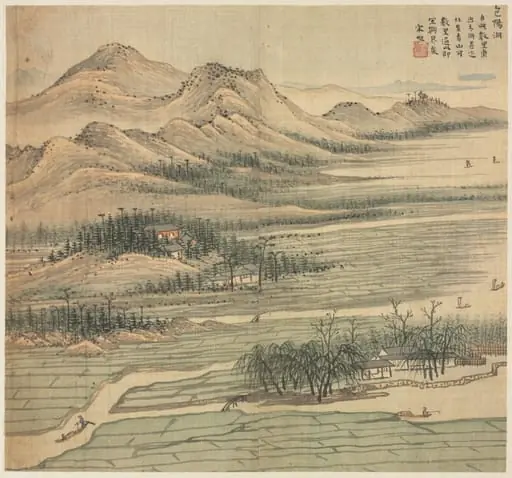
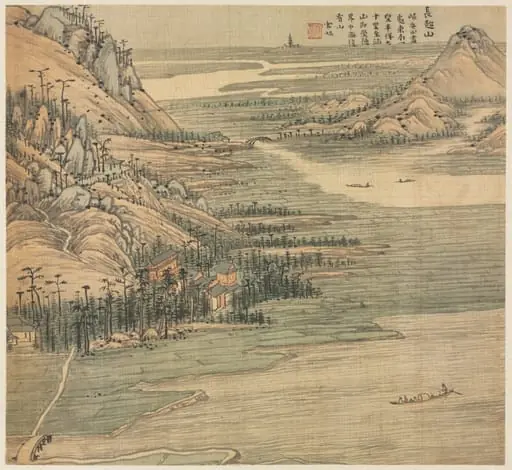
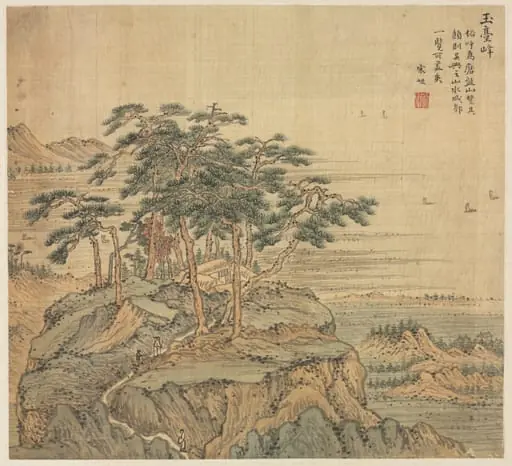
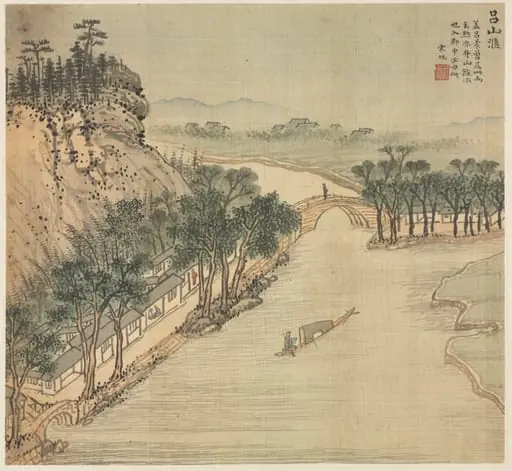
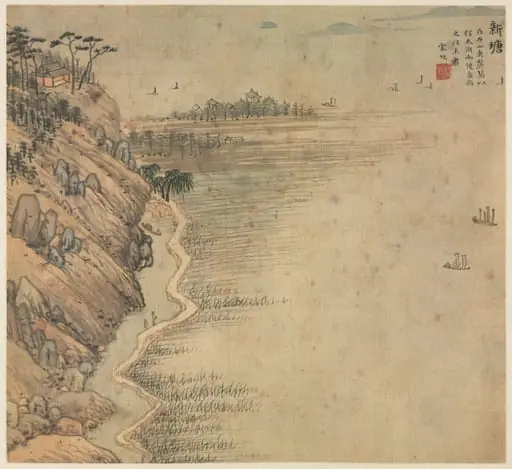
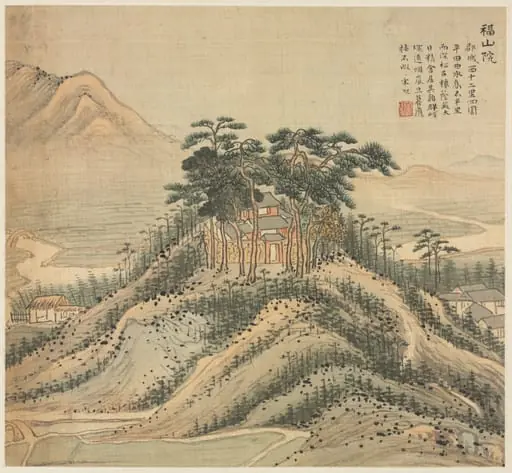
You see a painted album leaf showing a lake view with boats, buildings, and distant mountains. The brushwork is loose and light, with no hard edges. The artist added short notes about the scenery in the corner.
These images were made for printed travel books. They show real places, not just fancy scenes.
Look up the artist Song Xu (Chinese, 1525-c. 1606).
Overview
The work titled “Hexi” is a single leaf from a painted album that records a lakeside landscape in the lower Yangzi delta. Rendered with a light, unstructured brushstroke, the scene presents boats, modest structures, and distant mountains, accompanied by brief textual notes in the corner that identify the depicted locations.
Subject & Meaning
The image captures a specific stretch of water near Lake Tai, focusing on the environs of the historic counties of Changxing and Wuxing (today part of Huzhou). The accompanying annotations function like a gazetteer, offering viewers a factual reference to the place rather than an imagined vista, thereby encouraging a form of mental travel through documented scenery.
Technique & Style
Executed with loose, flowing brushwork, the painting avoids sharp outlines, favoring a soft, atmospheric quality that suggests depth and distance. The artist integrates ink and light washes to delineate water, architecture, and distant peaks, while the marginal script provides a concise descriptive layer, merging visual and textual documentation.
History & Provenance
Created in the mid‑16th century, the leaf belongs to a series of illustrated travel books that proliferated as interest grew in visiting historic and scenic sites along the lower Yangzi. The painter, Song Xu (c.1525–c.1606), who spent time in Jiaxing and Songjiang, likely traversed the area by boat, informing his accurate rendering of the locale.
Context
During the 1500s, the rise of printed travel literature spurred a demand for realistic topographical images that could serve both as guides for actual travelers and as visual souvenirs for those who experienced the sites only through reading. This album leaf exemplifies that dual purpose, bridging cartographic precision with artistic expression.
Legacy
Works like “Hexi” illustrate the early modern Chinese practice of combining art with geographic documentation, a tradition that informed later landscape painting and travel publishing. The piece remains a valuable reference for scholars studying the visual culture of Ming‑era travel and the regional geography of Lake Tai.
Own this work as a print
Artist & collection