Artwork
The Seconda Macchina for the Chinea of 1744: Aeneas and Cumaean Sibyl
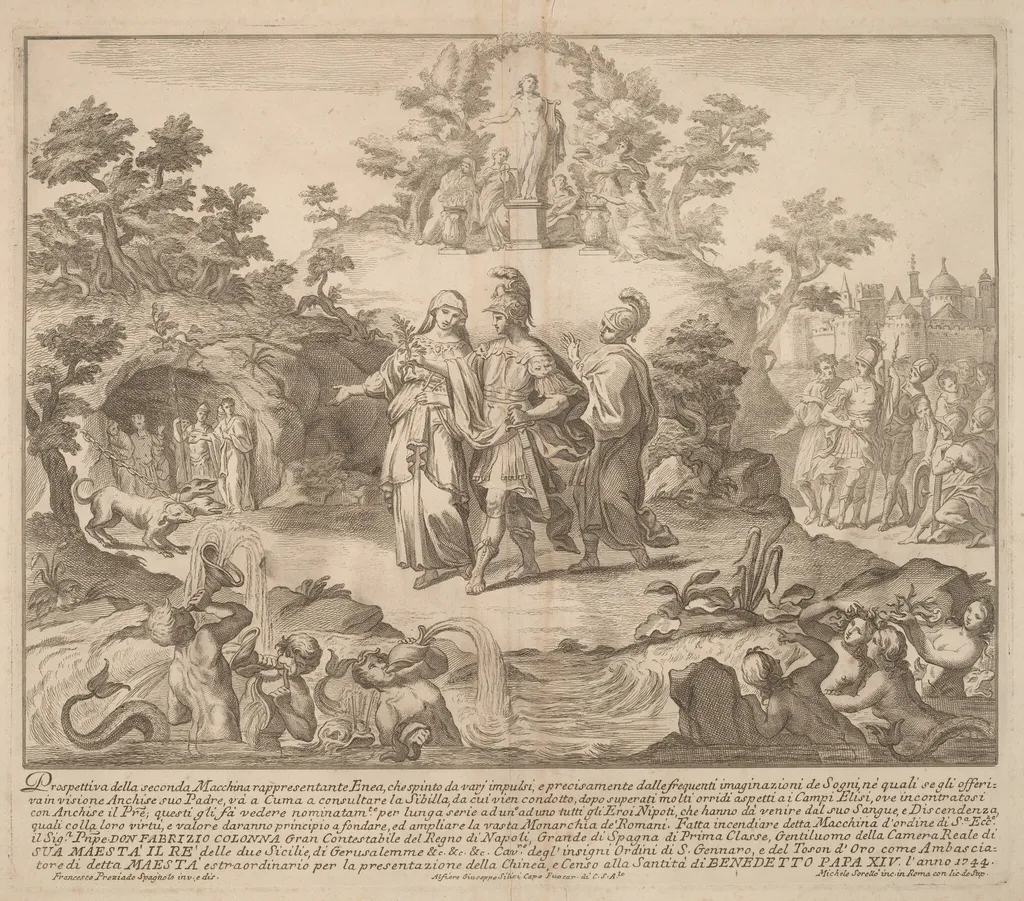
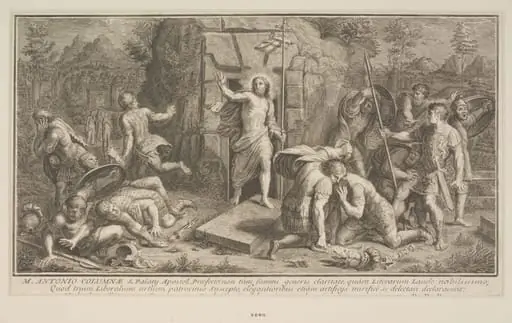
The Seconda Macchina for the Chinea of 1744: Aeneas and Cumaean Sibyl is an ink print by the Baroque artist Miguel de Sorellò. It dates from 1744 and is held in the collection of the National Gallery of Art.
- Inscription
- Inscribed:across bottom in plate: Prospettiva della seconda Macchina rappresentante Enea, che spinto da varj impulsi, e precisamente dalle frequenti imaginazioni de Sogni, nè quali se gli offeri= / va in visione Anchise suo Padre, và a Cuma a consultare la Sibilla, da cui vien condotto, dopo superati molti orridi aspetti a i Campi Elisi, ove incontratosi / con Anchise il Pre; questi gli fà vedere nominatam.te per lunga serie ad un.o ad uno tutti gli Eroi Nipoti, che hanno dà venire dal suo Sangue, e Discendenza, ... per la presentazione della Chinea, e Censo alla Santità di BENEDETTO PAPA XIV. l'anno 1744. / Francesco Preziado Spagnolo inv. e dis. / Alfiere Giuseppe Sicili Capo Fuocar. di C.S.A.lo / Michele Sorellò inc. in Roma con lic. de Sup.
About this work
Overview
The Seconda Macchina for the Chinea of 1744: Aeneas and Cumaean Sibyl is a print created by Miguel de Sorellò in 1744 using etching and engraving techniques on laid paper.
Technique & Style
The print showcases intricate details, such as textures and facial expressions, achieved through the use of etching and engraving. The resulting black and white scene is characterized by depth and nuance.
Subject & Meaning
The image depicts a scene with multiple figures, animals, and trees, with two central figures standing out. The scene is likely related to the story of Aeneas and the Cumaean Sibyl, as suggested by the title.
Context
The print is associated with the Baroque movement, known for its dramatic and emotionally charged works.
Own this work as a print
Artist & collection


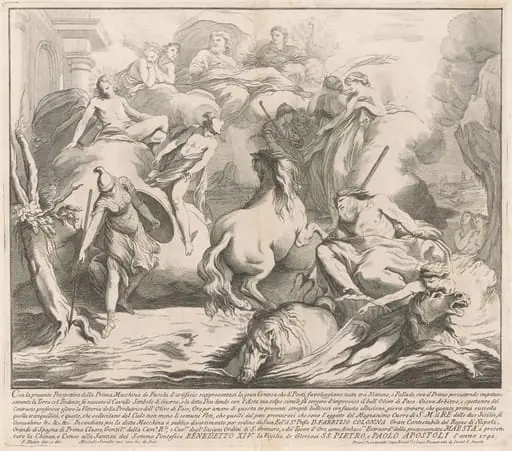 The Prima Macchina for the Chinea of 1742: The Contest of Neptune and Minerva
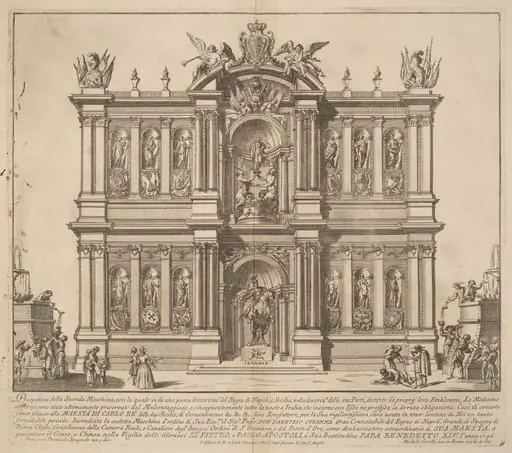 The Seconda Macchina for the Chinea of 1746: The Territories of the Kingdom of Naples
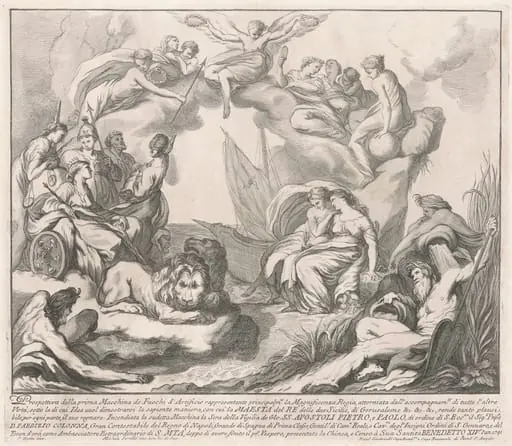 The Prima Macchina for the Chinea of 1741: Allegory of Regal Magnificence
- The Seconda Macchina for the Chinea of 1738: The Triumph of Bacchus and Ceres
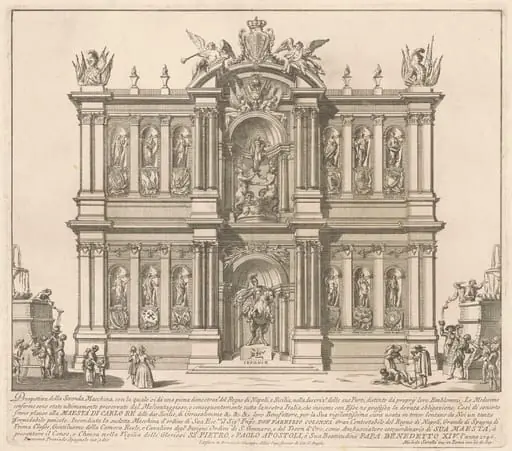 The Seconda Macchina for the Chinea of 1746: The Territories of the Kingdom of Naples
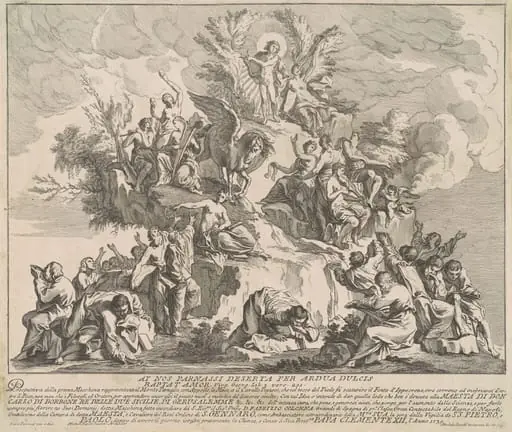 The Prima Macchina for the Chinea of 1739: Mount Parnassus with Apollo, the Muses, and Pegasus
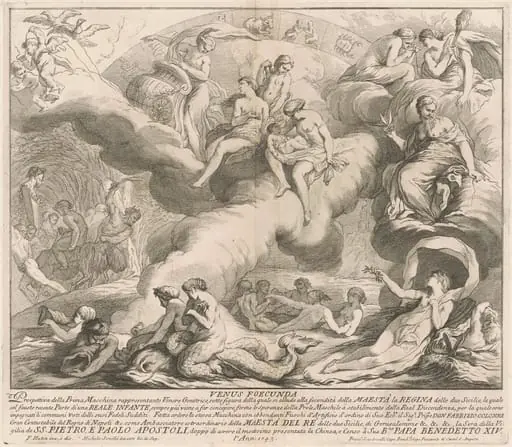 The Prima Macchina for the Chinea of 1743: Venus Genetrix
 Tapestries in the Vatican, after designs by Raphael