Artwork
View on the Seine, Paris
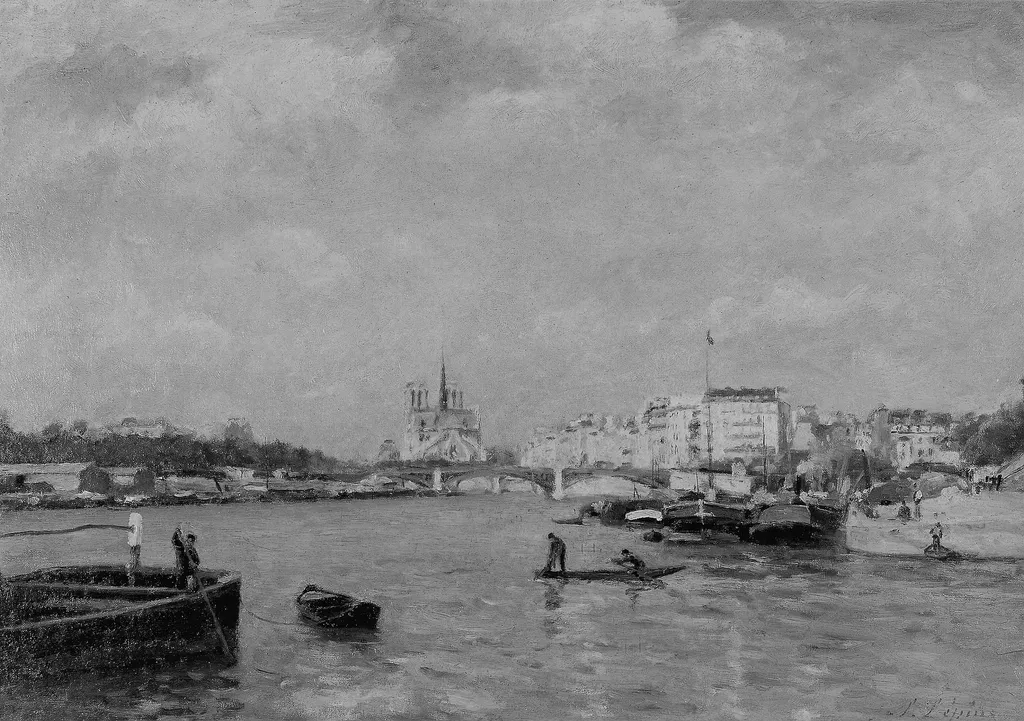
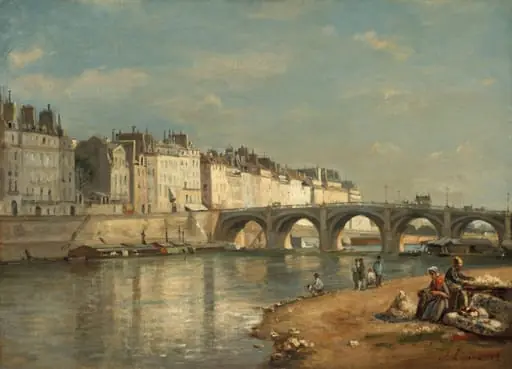
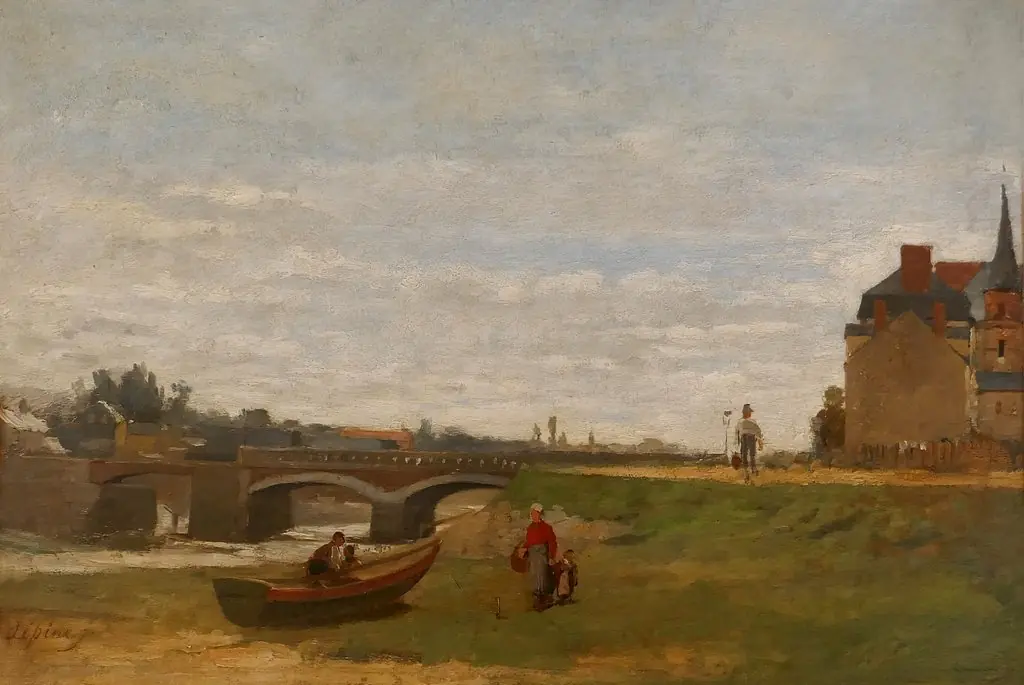
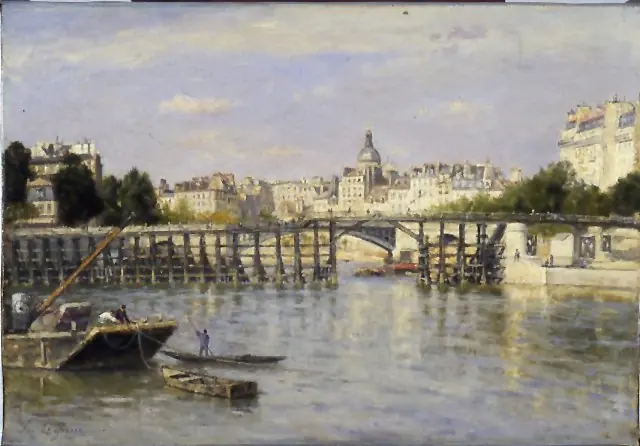
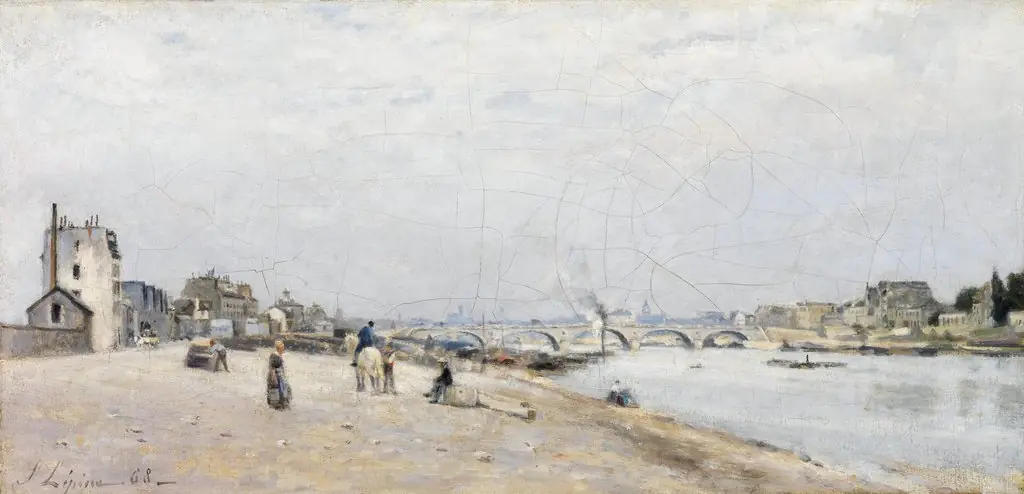
View on the Seine, Paris is an oil painting by the Impressionist artist Stanislas Lépine. It dates from 1872 and is held in the collection of the Art Institute of Chicago.
About this work
Overview
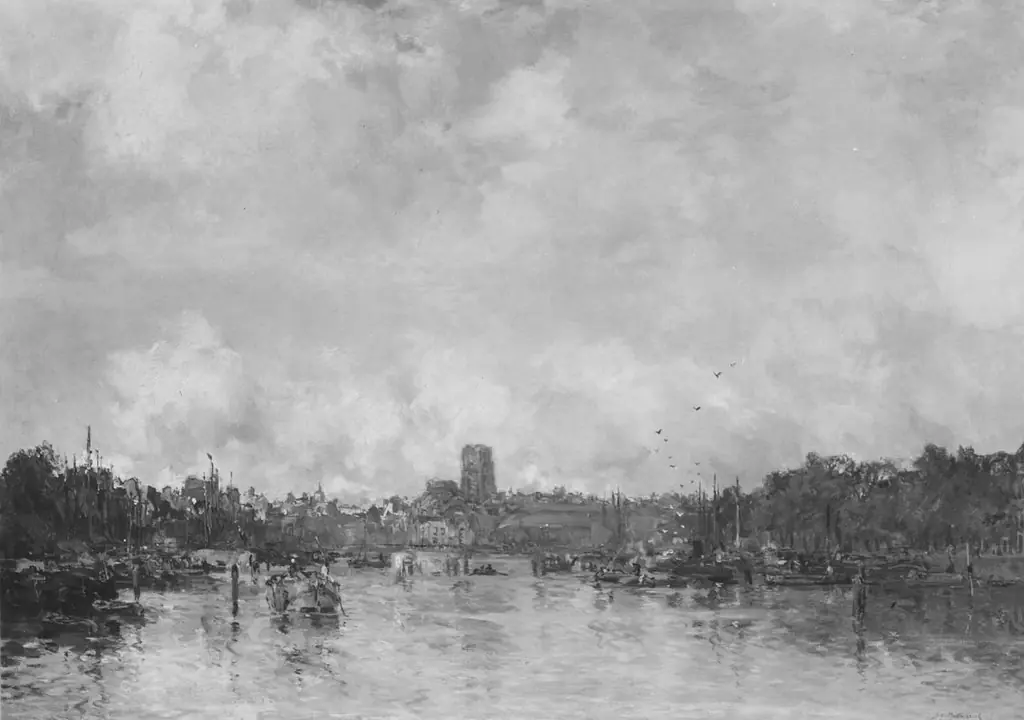
In the distance, the cityscape unfolds with a rhythmic arrangement of buildings and bridges, punctuated by a prominent church steeple that draws the eye upward.
Painted in 1872, View on the Seine, Paris by Stanislas Lépine captures a tranquil riverside scene characteristic of the artist's mature style. The composition is anchored by the broad expanse of the Seine in the foreground, where small boats and figures animate the water and banks without disrupting the overall calm. Lépine employs a restrained palette and delicate brushwork to render the atmospheric effects of the Parisian sky, which fills the upper portion of the canvas with soft, clouded light.
In the distance, the cityscape unfolds with a rhythmic arrangement of buildings and bridges, punctuated by a prominent church steeple that draws the eye upward. This work exemplifies Lépine's contribution to the transition between Realism and Impressionism, focusing on the quiet, everyday beauty of the urban landscape rather than grand historical narratives. Created during a period when the artist was establishing his reputation for precise yet poetic depictions of Paris, the painting reflects a shift toward capturing the specific light and mood of the city's waterways.
It stands as a significant example of mid-19th-century French landscape painting, bridging the detailed observation of the earlier tradition with the emerging interest in atmospheric perception.
Subject & Meaning
The canvas captures a stretch of the Seine where water dominates the lower register, dotted with small boats and pedestrians along the banks. Distant Parisian architecture, including a notable church spire, rises above the rooftops, while a lightly clouded sky adds a tranquil atmosphere.
Technique & Style
Lépine employs a restrained palette of blues and muted earth tones to render the river’s surface, emphasizing the subtle reflections that suggest gentle movement. Loose, fluid brushwork conveys the atmospheric haze, and the delicate handling of light creates a sense of depth without overt detail.
History & Provenance
Painted shortly after the Franco‑Prussian War, the work reflects Lépine’s ongoing interest in Parisian waterways. It entered the Art Institute of Chicago’s collection in the early 20th century, where it has remained on view as an example of 19th‑century French landscape painting.
Context
Lépine was associated with the Barbizon school’s focus on natural light and plein‑air observation, yet he applied these principles to urban subjects. This painting situates the Seine as both a commercial artery and a scenic backdrop, echoing contemporary interest in modern city life.
Own this work as a print
Artist & collection

Artist
Stanislas Victor Edouard Lépine was a French painter who specialized in landscapes, especially views of the Seine.