Artwork
Three Goddesses: Minerva, Juno and Venus
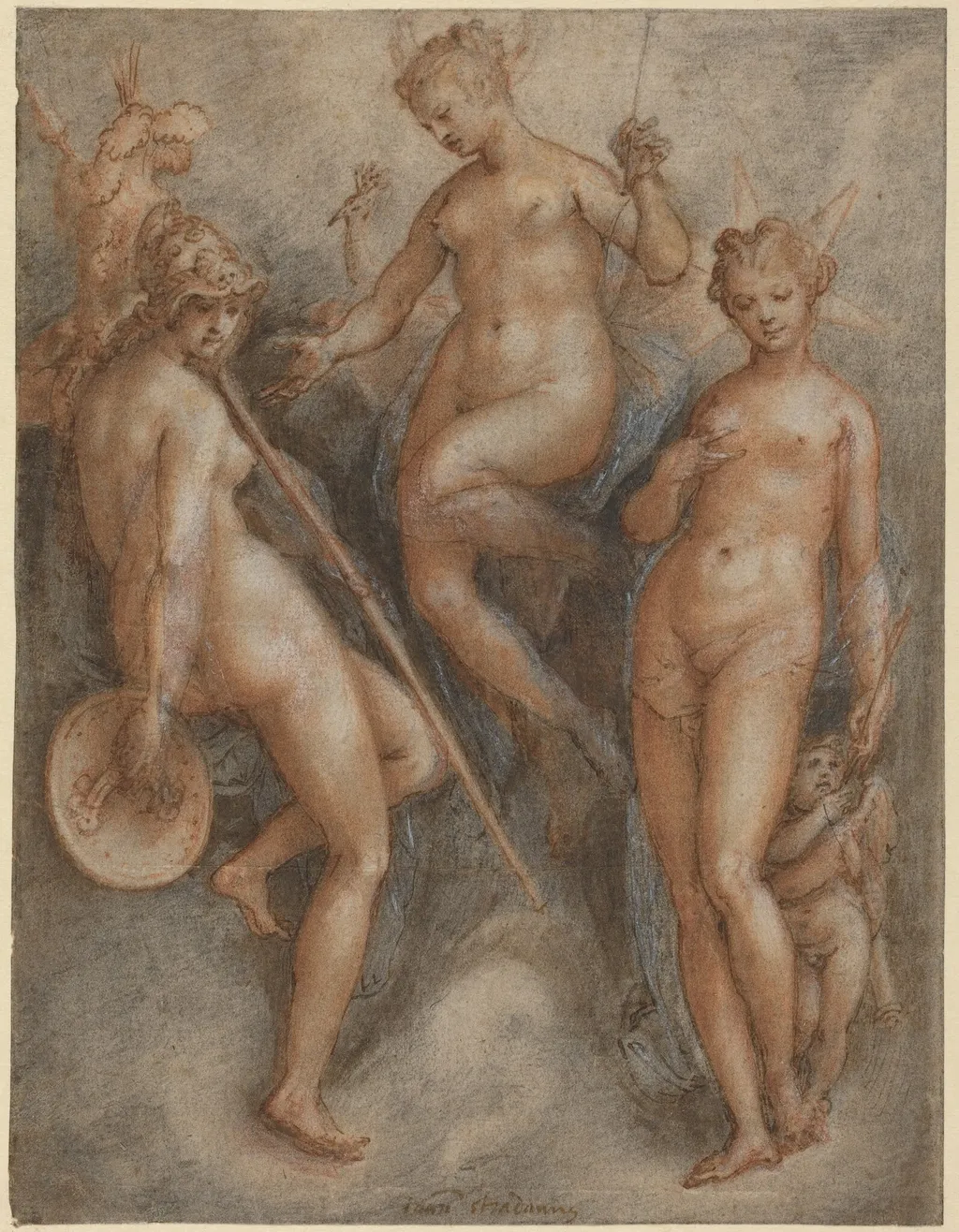
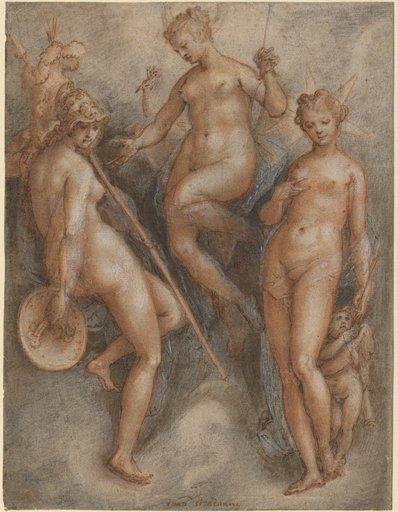
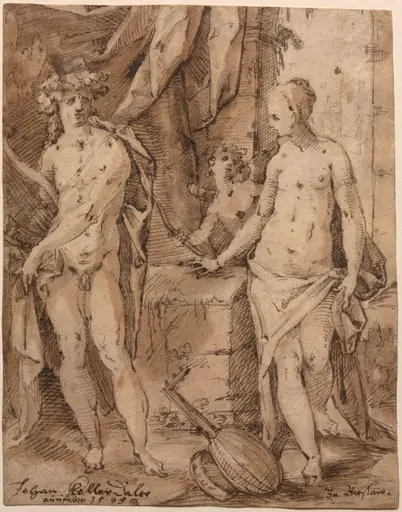
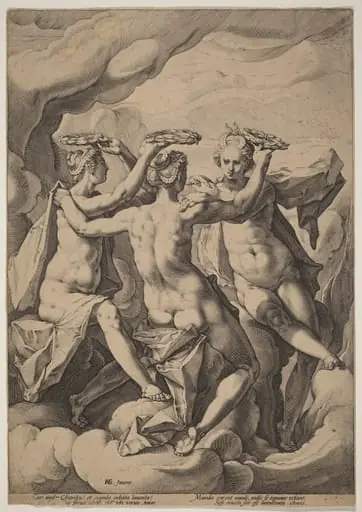
Three Goddesses: Minerva, Juno and Venus is an ink drawing by the Renaissance artist Jan van der Straet. It dates from 1587 and is held in the collection of the National Gallery of Art.
- Inscription
- Inscribed:lower center in brown ink: Joan Stradanus; in later hand, lower right verso in graphite: D 297
About this work
Overview
Jan van der Straet’s drawing Three Goddesses: Minerva, Juno and Venus, executed around 1587, presents a mythological grouping of three female deities on a sheet of laid paper. The work combines pen work with brown ink, black and red chalk, and white highlights, creating a nuanced tonal range that emphasizes form and space.
Subject & Meaning
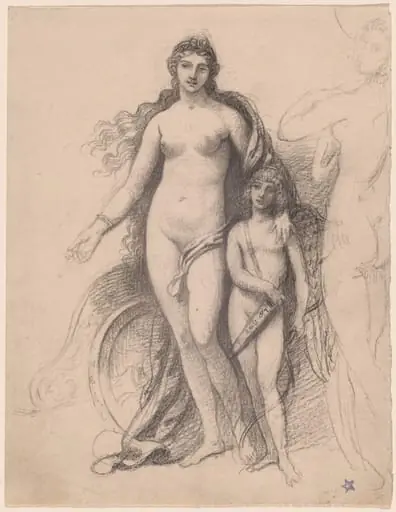
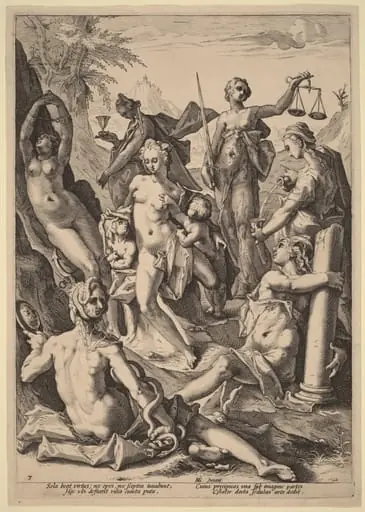
The leftmost figure, identifiable as Minerva, bears a shield and spear, symbols of war and wisdom. Central is Juno, grasping a scepter that denotes her role as queen of the gods. On the right, Venus is accompanied by a small cherubic figure holding a bow and arrow, alluding to love’s playful power.
Technique & Style
Van der Straet employs a layered approach: fine pen lines define contours, while brown ink and colored chalk build volume through subtle gradations. White accents heighten the contrast, and the overall chiaroscuro effect produces a three‑dimensional presence despite the drawing’s two‑dimensional surface.
History & Provenance
Created in the late sixteenth century, the drawing reflects the Northern Renaissance interest in classical mythology. It is catalogued as a work by Jan van der Straet, also known as Stradanus, an artist active in the Flemish and Italian courts, though its later ownership trail remains undocumented in the available sources.
Context
The composition aligns with contemporary humanist trends that revived antiquarian subjects for decorative and intellectual purposes. By grouping the three goddesses, van der Straet juxtaposes martial, regal, and erotic virtues, a theme common in courtly art of the period.
Legacy
While not as widely reproduced as van der Straet’s large-scale prints, this drawing illustrates his adept handling of line and tone, offering insight into the artist’s workshop practices and the broader diffusion of classical iconography in late‑Renaissance drawing.
Own this work as a print
Artist & collection