Artwork
George Washington (Vaughan portrait)
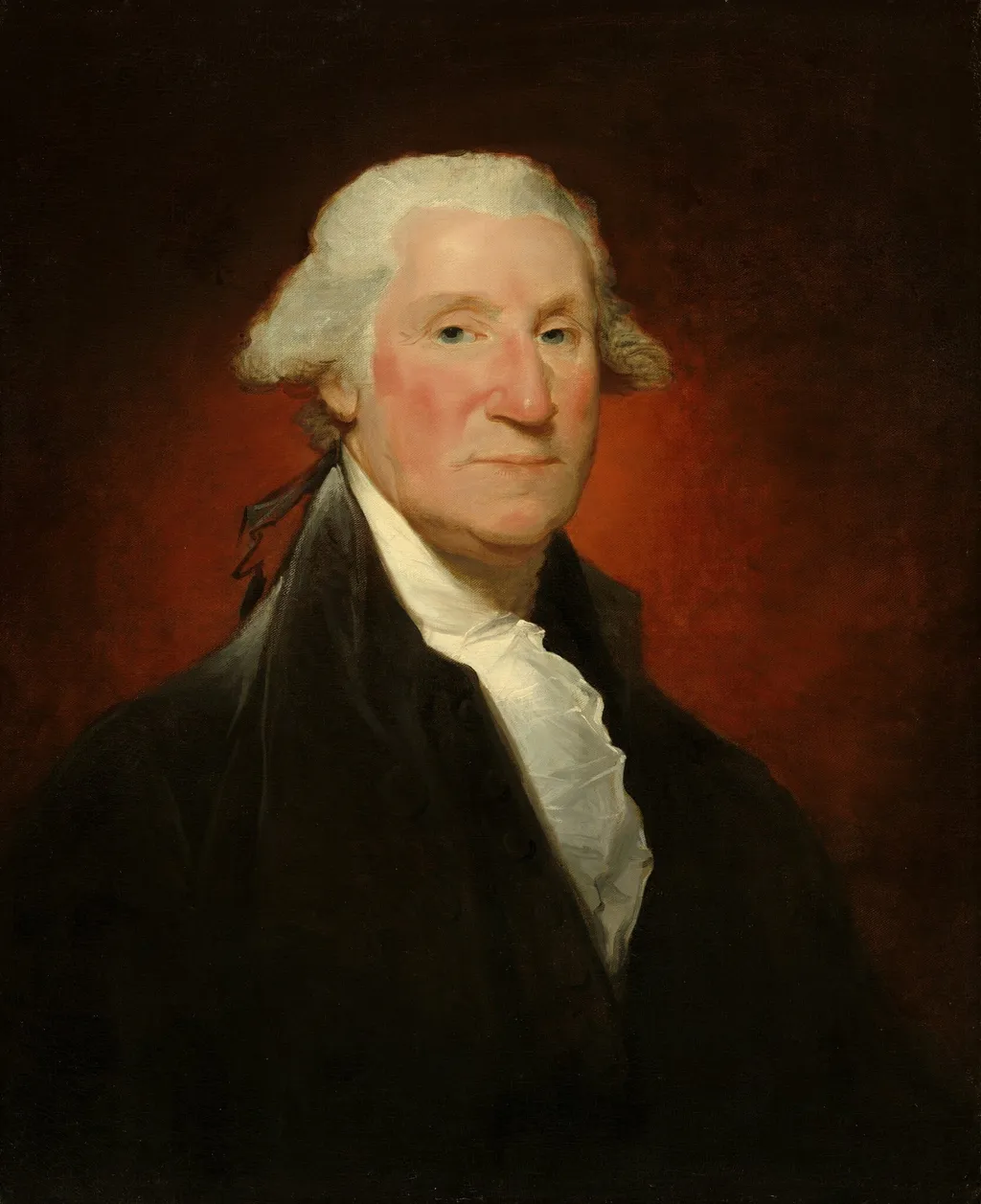
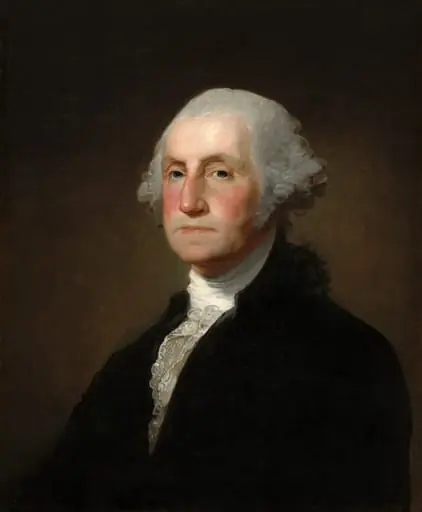
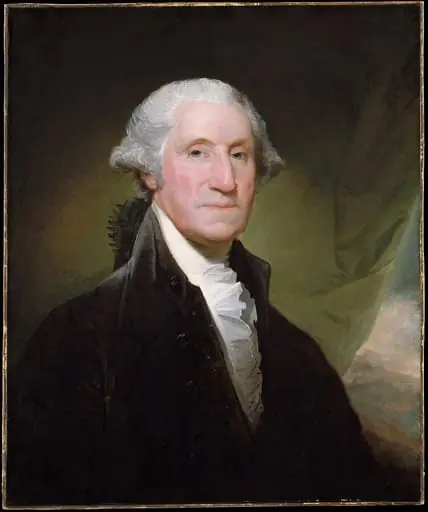
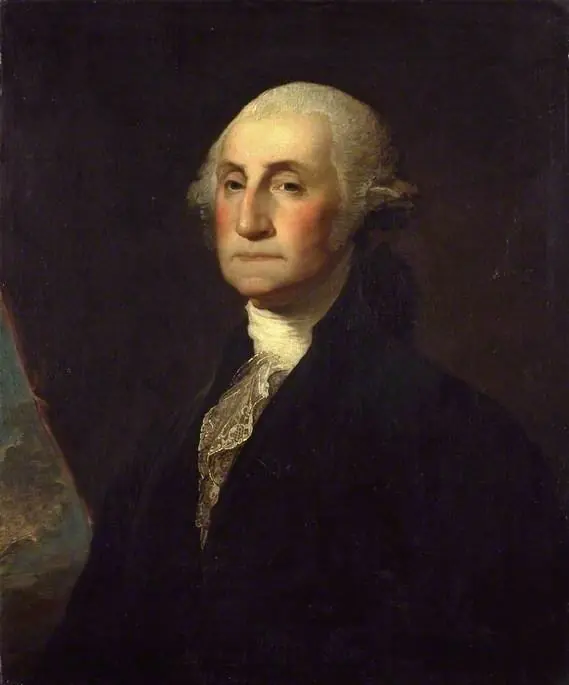
George Washington (Vaughan portrait) is an oil painting by the American Impressionist artist Gilbert Stuart. It dates from 1795 and is held in the collection of the National Gallery of Art.
- Inscription
- Inscribed:on reverse of the original canvas, in a contemporary or slightly later hand (now covered by the lining canvas): "General Washington By Mr. Stuart. 1795
About this work
George Washington sits in a chair, serious in a dark suit, with the folds of his clothes and the books on the table rendered in close detail to suggest a thoughtful man. Gilbert Stuart painted him in 1795, during his presidency, a major commission for any artist of the day.
Subject & Meaning
The subject is shown with his body turned slightly to the viewer's right while his gaze faces directly forward, engaging the observer.
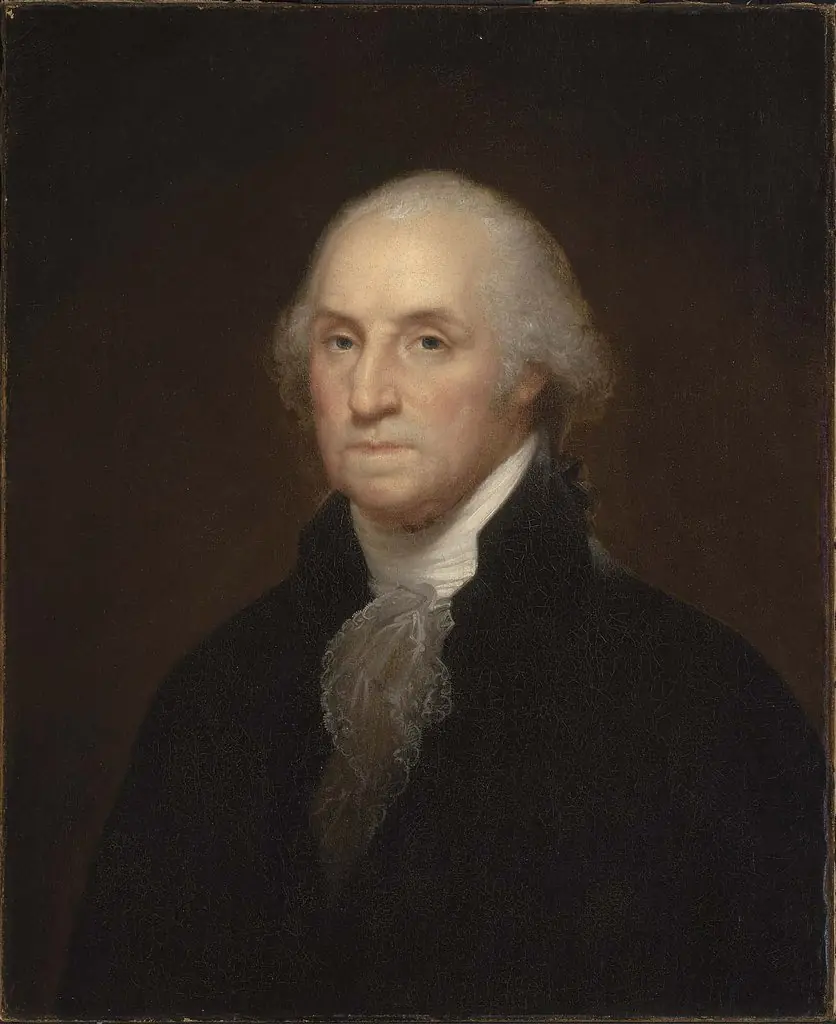
The Vaughan Portrait depicts George Washington, the first President of the United States, captured from the chest up against a deep red wine background that fades from brightness near the face to darker tones at the corners. Painted in 1795, this work marks Gilbert Stuart's first portrait of Washington from life. The subject is shown with his body turned slightly to the viewer's right while his gaze faces directly forward, engaging the observer.
He is characterized by pale skin, gray eyes, flushed cheeks, a hooked nose, and white hair tied back with a ribbon. His attire consists of a high-collared black coat and a cream-white ruffled cravat. As Stuart's initial life study of the president, the painting establishes the visual foundation for the artist's subsequent, more famous depictions of the nation's leader.
Technique & Style
Gilbert Stuart executed the Vaughan portrait in 1795 using oil paint on a canvas support. The composition presents Washington from the chest up against a deep red wine background that transitions from brighter tones around the face to darker hues near the corners. Stuart depicted the sitter with pale skin, gray eyes, and flushed cheeks, contrasting these features with a hooked nose and white hair styled to point outward at the sides before being tied back with a ribbon.
Washington is shown with his body turned slightly to the viewer's right while his gaze addresses the viewer directly. His attire consists of a high-collared black coat paired with a cream-white ruffled cravat. The work measures 73 centimeters in height and 60.5 centimeters in width.
History & Provenance
Gilbert Stuart painted the Vaughan portrait of George Washington in 1795; it was the first life portrait Stuart created of the president. John Vaughan of Philadelphia purchased the work for his father, Samuel Vaughan, in London. Ownership passed to Samuel's son, William Vaughan, also in London.
Around 1851, Joseph Harrison, Jr., of Philadelphia acquired the painting from the Vaughan family. Following Harrison's death, his widow, Sarah Poulterer Harrison, owned the work. It was sold at M. Thomas and Sons in March 1912 to Thomas B. Clarke of New York.
After Clarke's estate, the portrait was sold via M. Knoedler & Co. on January 29, 1936, to the A. W. Mellon Educational and Charitable Trust in Pittsburgh, which gifted it to the National Gallery of Art in 1942.
The Vaughan portrait is held by the National Gallery of Art, Washington, D.C., accessioned as 1942.1.1 and part of the A. W. Mellon Educational and Charitable Trust gift of 1942. It was exhibited as part of the Thomas B. Clarke collection sale in New York on 29 January 1936 before entering the Gallery's holdings.
Context
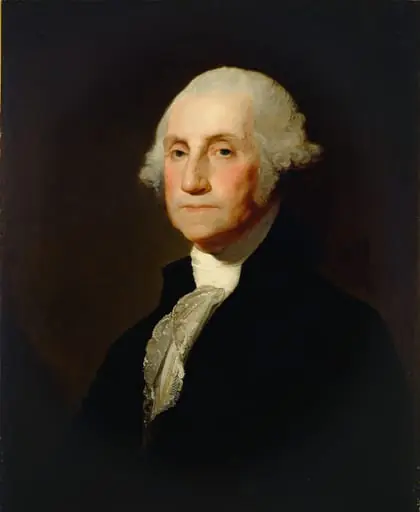
Painted in 1795, the Vaughan portrait holds a distinct position in art history as Gilbert Stuart's inaugural life portrait of George Washington. This work established the artist's approach to depicting the president, preceding his more widely reproduced Athenaeum and Lansdowne portraits created the following year. While the original remains a singular masterpiece in the National Gallery of Art, its significance is amplified by the existence of numerous copies produced by other painters, indicating its immediate influence on the visual canon of Washington.
Early scholarship, including works by Frederic Fairchild Sherman and John Hill Morgan, has specifically analyzed this piece to trace Stuart's initial methods in capturing the first president's likeness, distinguishing it from later iterations in the artist's oeuvre.
Overview
Gilbert Stuart's 1795 oil on canvas, titled George Washington and also known as the Vaughan portrait, depicts the first U.S. president. This work holds significance as Stuart's initial portrayal of Washington, a subject he would revisit multiple times throughout his career. The painting is named in recognition of Samuel Vaughan, an early owner. It currently resides in the collection of the National Gallery of Art in Washington, D.C.
Legacy
The Vaughan portrait served as a foundational image for subsequent depictions of George Washington. Its composition and portrayal of the president were influential, leading other artists to create numerous copies of the original work. This proliferation of reproductions underscores the painting's importance in establishing a visual representation of Washington that resonated widely and contributed to his public image.
Own this work as a print
Artist & collection

Artist
Gilbert Stuart (né Stewart; December 3, 1755 – July 9, 1828) was an American painter born in the Rhode Island Colony who is widely considered one of America's foremost portraitists.