Artwork
George Washington (Vaughan-Sinclair portrait)
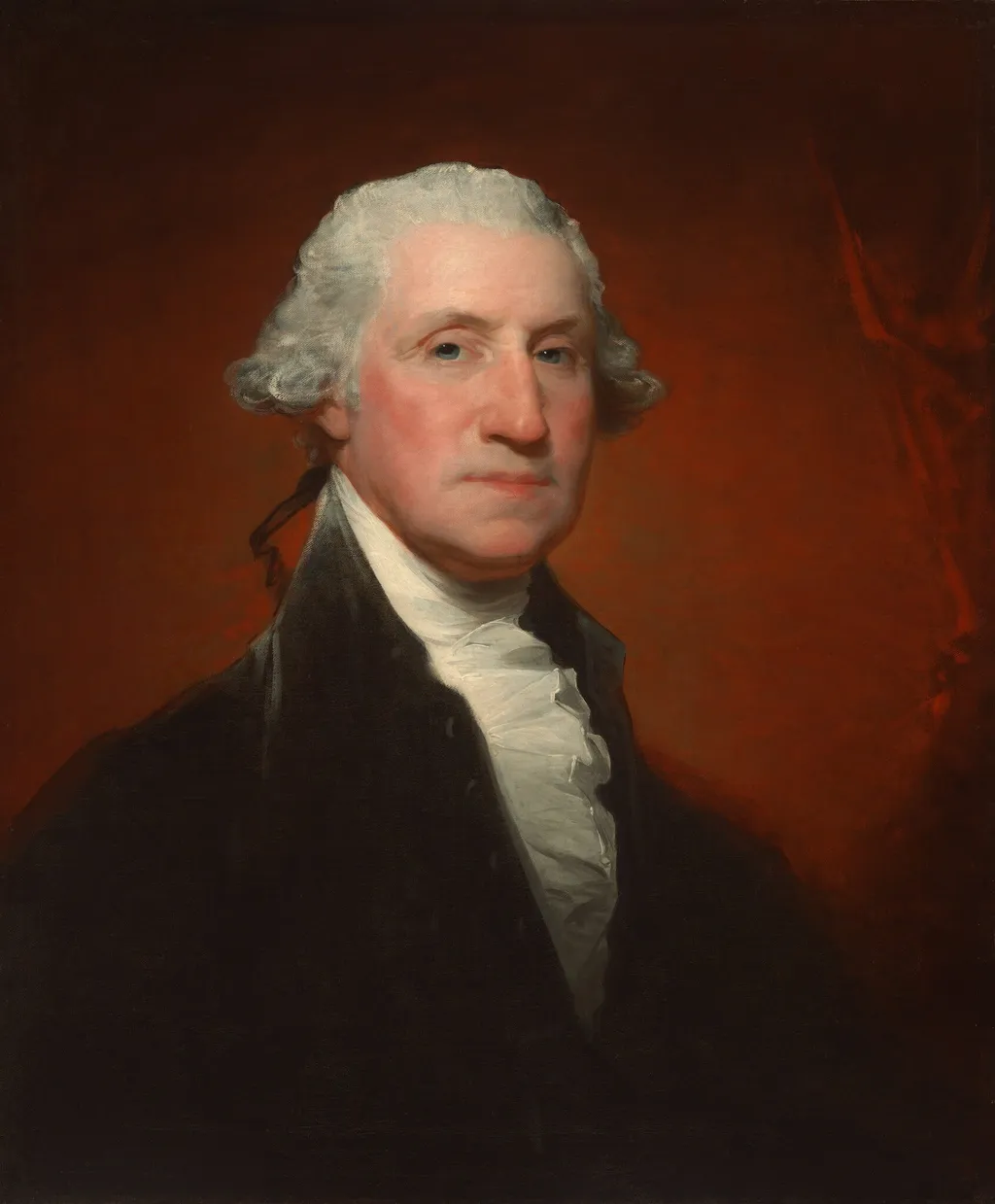
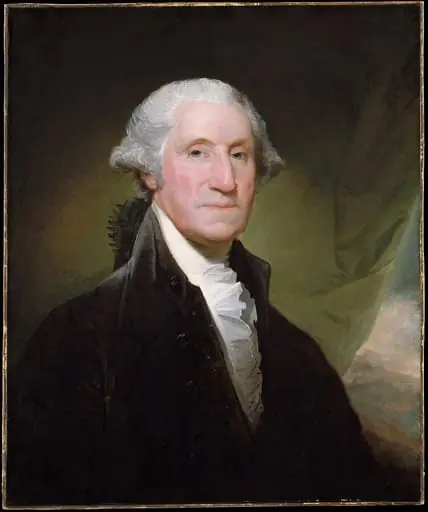
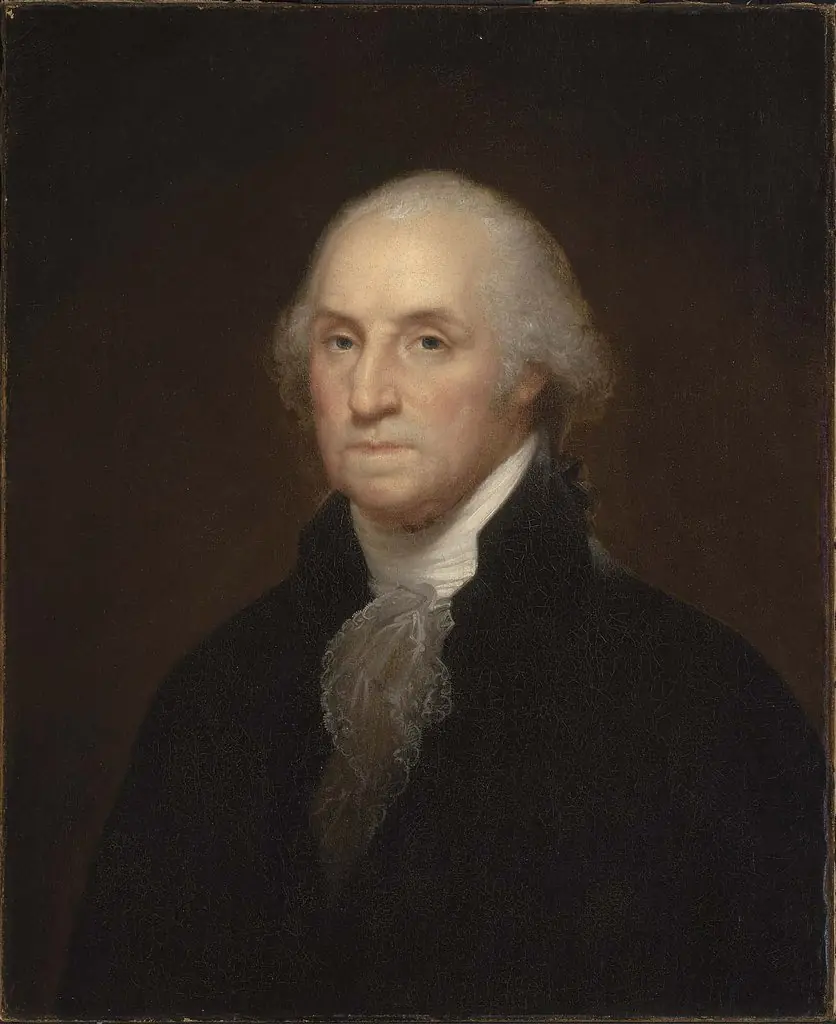
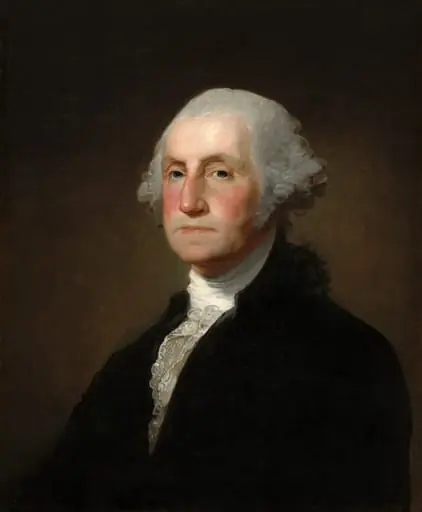
George Washington (Vaughan-Sinclair portrait) is an oil painting by the American Impressionist artist Gilbert Stuart. It dates from 1795 and is held in the collection of the National Gallery of Art.
About this work
George Washington stands in a formal pose, suited and serious, the folds of his clothes rendered with close attention. The calm, dignified treatment mattered to the new American government, helping fix his reputation as a leader. Gilbert Stuart painted it in oil in 1795.
Technique & Style
As an oil on canvas painting from the late eighteenth century, it reflects the standard material practices of Stuart's portraiture output from that period.
Gilbert Stuart executed the Vaughan-Sinclair portrait of George Washington in 1795 using oil paint on a canvas support. The artwork is a portrait measuring 73.8 by 61.1 centimeters. As an oil on canvas painting from the late eighteenth century, it reflects the standard material practices of Stuart's portraiture output from that period.
A historical label formerly attached to the painting's stretcher provides insight into its early physical history and condition tracking, having been preserved alongside the work through its extended provenance across Ireland and England before its acquisition by the National Gallery of Art.
History & Provenance
The portrait was executed in 1795 by Gilbert Stuart, originally intended for a public building in New York and presented to William Sinclair of Belfast; Sinclair's daughter Elizabeth Sinclair May inherited it, passing it to her son George Augustus Chichester May and then to his son Sir Edward Sinclair May, who held it at Rockbeare Court. In 1919 the work passed through the London dealers Colnaghi and Obach, then to M. Knoedler & Co. in New York before being sold to Andrew W. Mellon in November of that year. Mellon later deeded the painting to his educational trust in 1934, and it was gifted to the National Gallery of Art in 1940.
Overview
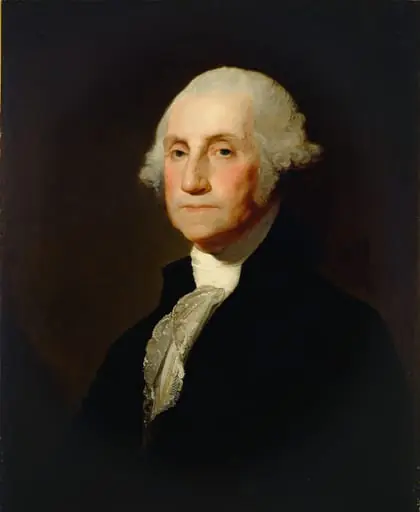
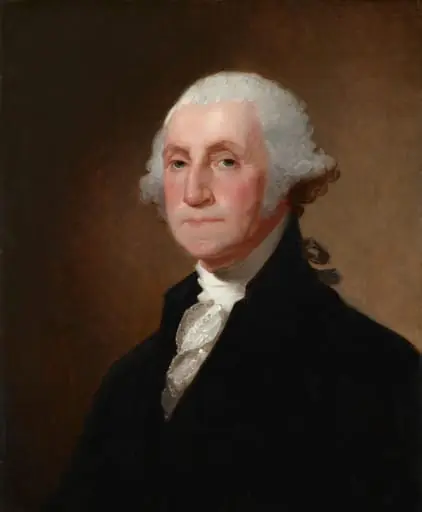
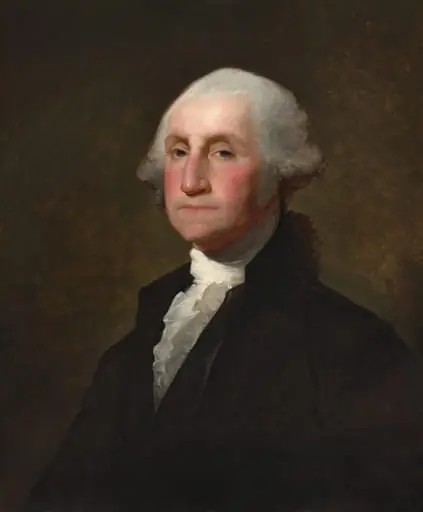
Gilbert Stuart's 1795 oil on canvas, known as the Vaughan-Sinclair portrait, depicts George Washington in a formal, three-quarter length pose. The sitter faces slightly left, wearing a black suit with a white cravat, his expression composed and dignified. Stuart employs a restrained palette dominated by dark tones, which contrast with the illuminated face and hands, drawing the viewer's focus to the President's features.
The brushwork is precise in rendering the texture of the fabric and the subtle modeling of the face, reflecting Stuart's mastery of portraiture. Created during a period when Stuart was establishing his reputation in the United States, this work is one of several versions derived from his famous Athenaeum portrait. It served to solidify the visual iconography of the first president, presenting him as a figure of calm authority essential to the young nation's identity.
The painting remains a significant example of early American portraiture, illustrating Stuart's ability to capture both the physical likeness and the character of his subject.
Subject & Meaning
The portrait presents George Washington in a formal pose, attired in a suit and bearing a serious expression. This composed and dignified portrayal held considerable significance for the nascent American government. By emphasizing Washington's calm demeanor and leadership qualities, the artwork played a role in solidifying his public image and reinforcing his authority as the nation's inaugural president.
Context
Created during the early years of the United States, this portrait served a vital function in shaping public perception of its leader. The image of a composed and authoritative George Washington was crucial for projecting stability and legitimacy for the new government. Such portrayals helped to instill confidence in the fledgling republic and its leadership during a formative period.
Own this work as a print
Artist & collection

Artist
Gilbert Stuart (né Stewart; December 3, 1755 – July 9, 1828) was an American painter born in the Rhode Island Colony who is widely considered one of America's foremost portraitists.