Artwork
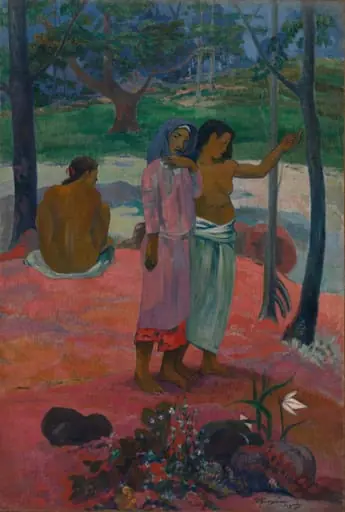
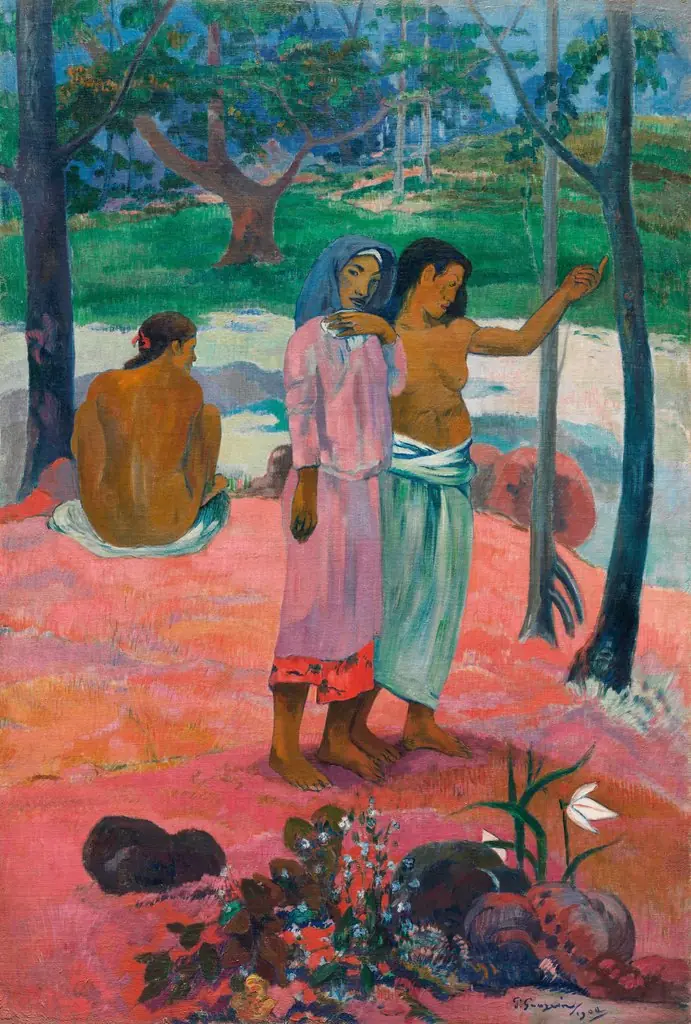
The Invocation
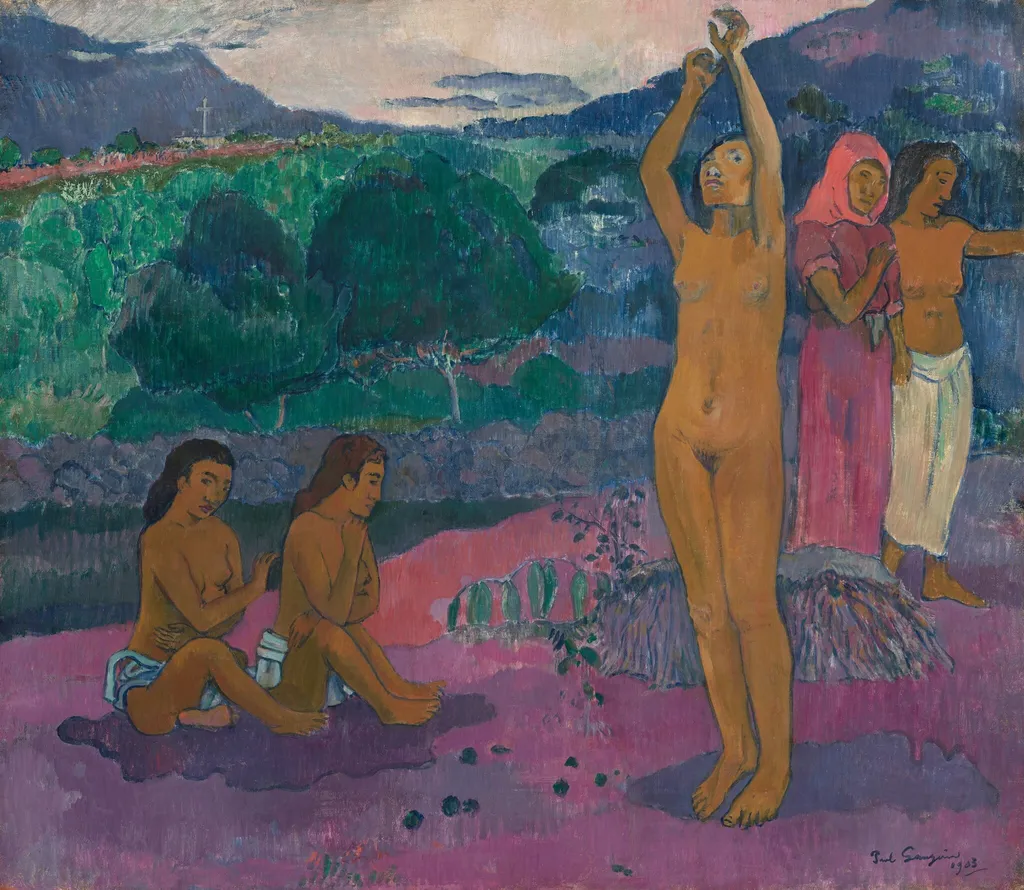
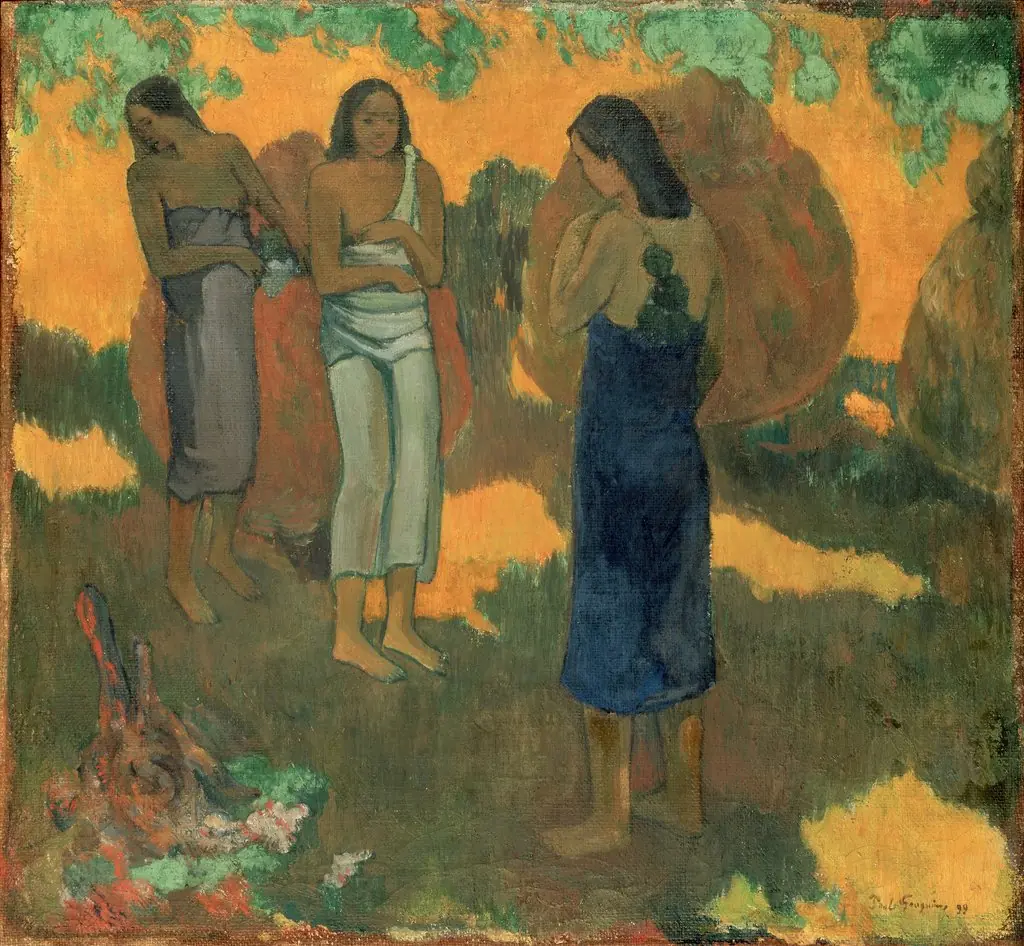
The Invocation is an oil painting by the Post-Impressionist artist Paul Gauguin. It dates from 1903 and is held in the collection of the National Gallery of Art.
- Inscription
- Inscribed:lower right: Paul Gauguin / 1903
About this work
Subject & Meaning
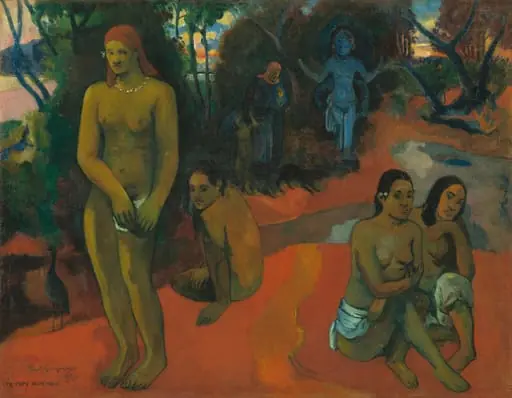
The painting shows a woman raising her arms in prayer, a gesture that conveys invocation of the divine.
The painting shows a woman raising her arms in prayer, a gesture that conveys invocation of the divine. The figure is set against a flattened background of patterned textiles and stylized foliage, symbols often used to suggest spiritual awakening and the presence of unseen forces. Gauguin combines Christian iconography with Tahitian motifs, creating a hybrid visual language that represents a personal quest for transcendence beyond European religious conventions.
Technique & Style
The Invocation is an oil painting executed on canvas in 1903. The work measures 65.5 cm in height by 75.6 cm in width and was created using oil paint applied to a canvas support. Its subject matter belongs to the religious genre, reflecting the symbolic and spiritual themes characteristic of Gauguin's mature period.
The painting's formal composition and stylistic elements align with the expressive use of color and flattened perspective seen in Gauguin's post-impressionist approach. Currently, the artwork resides in the collection of the National Gallery of Art in Washington, D.C.
History & Provenance
Gauguin's The Invocation is dated 1903. It was acquired on 26 October 1908 by Bernheim-Jeune, Paris, and sold there on 7 November 1908 to Elsa Tischner-von Durant of Freising. By about 1924 the work was handled by Galerie Druet, Paris, and later by Galerie Thannhauser, Lucerne.
In 1927 it entered the collection of Ralph Harman Booth and Mary Batterman Booth in Detroit, who lent it to a Detroit exhibition that year; it had earlier been shown at the Internationale Kunstausstellung in Cologne in 1912. The painting remained with the Booth family until 1976, when a partial and promised gift was made to the National Gallery of Art, Washington; the gift was completed in 1981, and the work remains there.
Context
Paul Gauguin painted The Invocation in 1903 as an oil on canvas work within his religious genre, reflecting his synthetist approach to symbolist spirituality during a period when he sought to merge personal mythologies with broader artistic movements. The painting entered the collection of Elsa Tischner-von Durant before passing to the Booth family of Detroit by 1927 and was later gifted to the National Gallery of Art in 1981 after a partial promise in 1976, illustrating its journey through European avant-garde circles and into American institutional stewardship. Its exhibition history includes a 1912 showing at the Internationale Kunstausstellung in Cologne and a 1927 Detroit display, underscoring its role in early 20th-century cross-continental art discourse.
Gauguin's synthesis of religious symbolism and post-impressionist form positioned this work at a pivotal moment in modern art's evolution toward expressive abstraction.
Legacy
The Invocation has been part of the National Gallery of Art's collection since 1981, when a partial and promised gift from the Booth family of Detroit, begun in 1976, was completed. The painting remains a documented example of Gauguin's religious-themed output from 1903, his final year, and is held in Washington, D.C.
Overview
Created in 1903, The Invocation is an oil painting on canvas by Paul Gauguin, produced during the final year of his life. It belongs to his later period, when he was exploring religious and symbolic subjects within a post‑impressionist framework.
Own this work as a print
Artist & collection
Artist
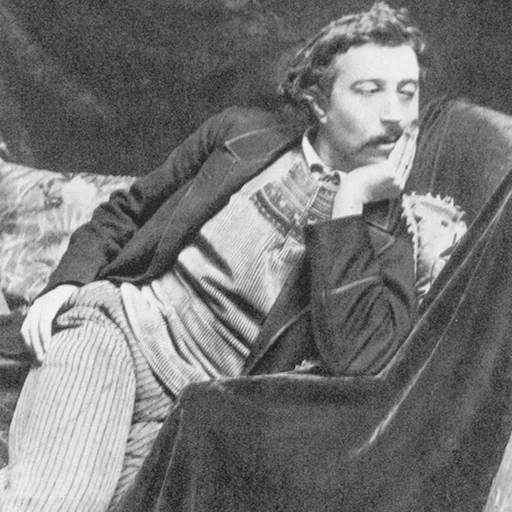
Eugène Henri Paul Gauguin (; French:; 7 June 1848 – 8 May 1903) was a French painter, sculptor, printmaker, ceramist, and writer, whose work has been primarily associated with the Post-Impressionist and Symbolist movements.