Artwork
Untitled
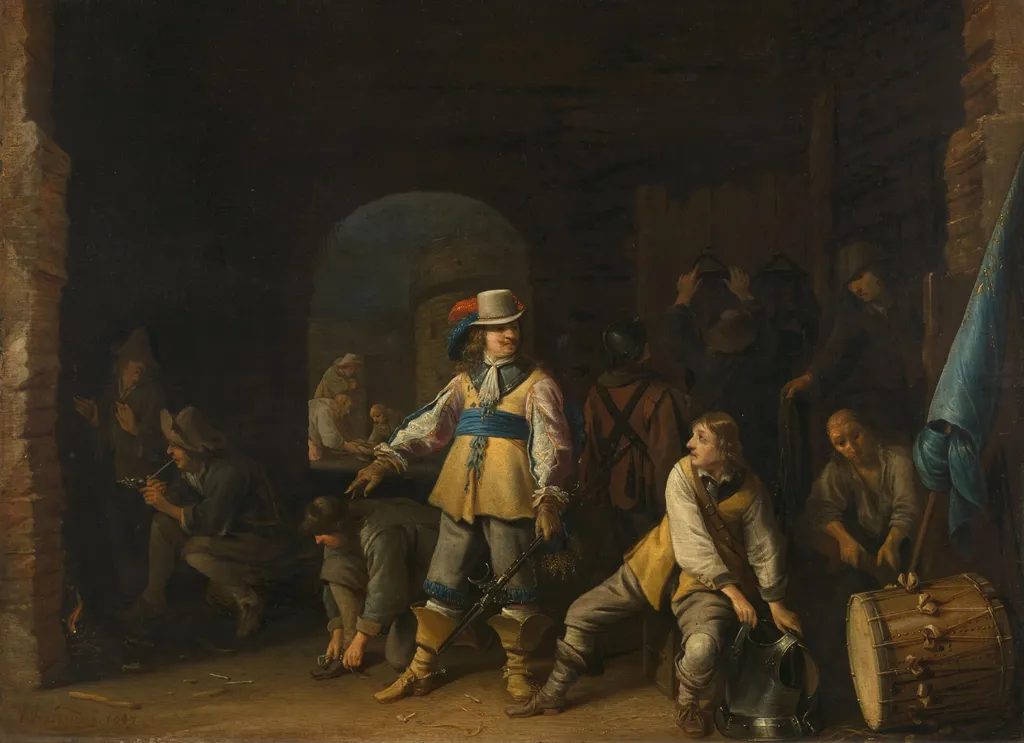
Untitled is an unspecified painting by the Dutch Golden Age artist Anthonie Palamedesz. It dates from 1647 and is held in the collection of the Rijksmuseum.
About this work
Technique & Style
Stylistically, the work aligns with his known practice of creating portraits and genre scenes that emphasize social interaction and detailed observation.
The 1647 work Untitled by Anthonie Palamedesz. is classified as a painting within the portrait genre. While specific material details for this individual canvas are not enumerated in the provided records, the artist’s broader oeuvre from this period demonstrates a consistent reliance on oil paint applied to wooden panels or canvas supports. His handling of the medium is characterized by a refined realism typical of the Dutch Golden Age, particularly in his depiction of elegant figures and interior scenes.
Stylistically, the work aligns with his known practice of creating portraits and genre scenes that emphasize social interaction and detailed observation. In his guardroom scenes, a genre he helped define, Palamedesz. achieved a sense of monumentality and elegance, often featuring large halls with fireplaces and central officer figures, though the specific formal composition of this 1647 piece remains described only by its classification.
History & Provenance
Anthonie Palamedesz painted Untitled in 1647, a work classified as a portrait within the portrait genre. The painting's creation history is tied to his broader genre and portrait practice in the Dutch Republic, where he specialized in merry company scenes and guardroom compositions featuring elegant figures engaged in play, music, and conversation. His guardroom scenes, which he painted into the 1660s, typically depicted large interior spaces such as ruins or castles with a central officer, reflecting the evolution of the genre from rowdy post-war soldier leisure to refined middle-class interaction.
The work was produced during his mature period in Delft, where he was an active member of the Guild of St. Luke and influenced by painters like Michiel Jansz. van Mierevelt and Hans Jordaens. The painting's dating aligns with the 1647 date recorded in source material, situating it in the phase of guardroom scenes characterized by civility and domestic pacification of masculinity.
Context
Anthonie Palamedesz. (1602–1673) was a Dutch portrait and genre painter who played a major role in the development of genre painting in Delft during the mid-17th century. Trained under the leading portraitist Michiel Jansz. van Mierevelt and the history and genre painter Hans Jordaens, he entered the Delft Guild of St. Luke in 1621 and served multiple terms as deacon.
He is best known for his merry company paintings depicting elegant figures engaged in play, music, and conversation, and for his guardroom scenes showing soldiers at rest, a genre he helped shape alongside contemporaries such as Pieter Codde, Willem Duyster, and Jacob Duck.
Palamedesz. also painted individual and group portraits, vanitas still lifes, and staffage in church interiors. His guardroom scenes, produced well into the 1660s, evolved in tandem with broader Dutch cultural shifts toward greater civility, and he uniquely incorporated women in maternal rather than courtesan roles. His pupils included his brother Palamedes Palamedesz.
I and Ludolf de Jongh, and his precise depictions of daily life have been regarded as an important source for cultural history.
Legacy
Anthonie Palamedesz.' guardroom scenes, particularly from the 1640s onward, redefined the genre by replacing chaotic soldierly revelry with refined domestic tranquility, reflecting broader 17th-century Dutch societal shifts toward civility and maternal influence. His unique inclusion of mothers as central figures within masculine guardroom settings embodied a cultural transition toward pacified masculinity, directly influencing later genre painters who depicted orderly, middle-class interactions. This evolution cemented his legacy as a pivotal figure in the development of Dutch genre painting, especially noted for his technical precision and thematic innovation in works like 'Soldiers in a Guardroom' (1647).
Overview
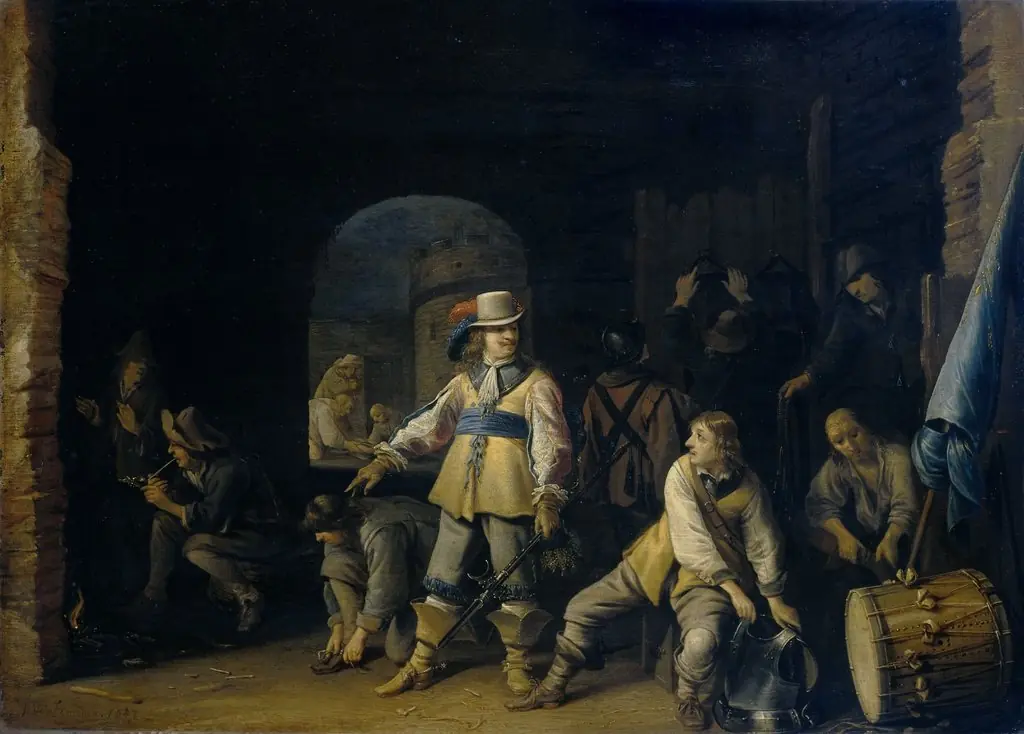
Anthonie Palamedesz’s 1647 painting, catalogued without a formal title, presents a small ensemble gathered within a dim interior. The central figure, distinguished by an elaborate hat and a brightly patterned coat, holds a sword, while companions occupy the surrounding space, some with musical instruments, a flag, and a drum. The composition is anchored by a stark illumination of the main sitter’s face against the surrounding gloom.
Subject & Meaning
The work depicts a likely informal gathering of musicians and attendants, suggesting a celebratory or ceremonial occasion. The central man’s sword and the presence of a flag imply a martial or civic affiliation, while the inclusion of instruments points to a festive atmosphere. The arrangement invites viewers to consider the interplay of social roles within a seventeenth‑century Dutch milieu.
Own this work as a print
Artist & collection
Artist
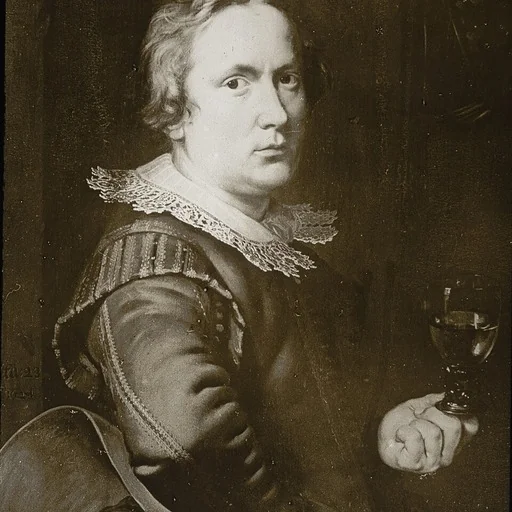
Anthonie Palamedesz., also Antonie Palamedesz, birth name Antonius Stevens, was a Dutch portrait and genre painter.

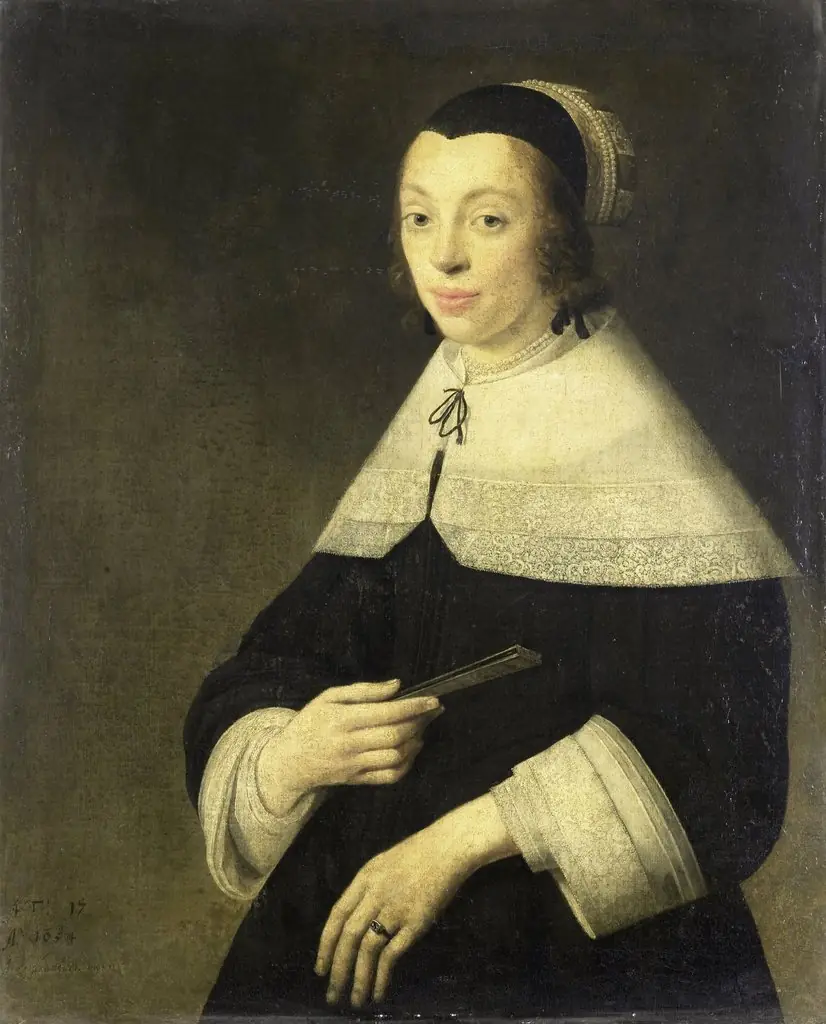
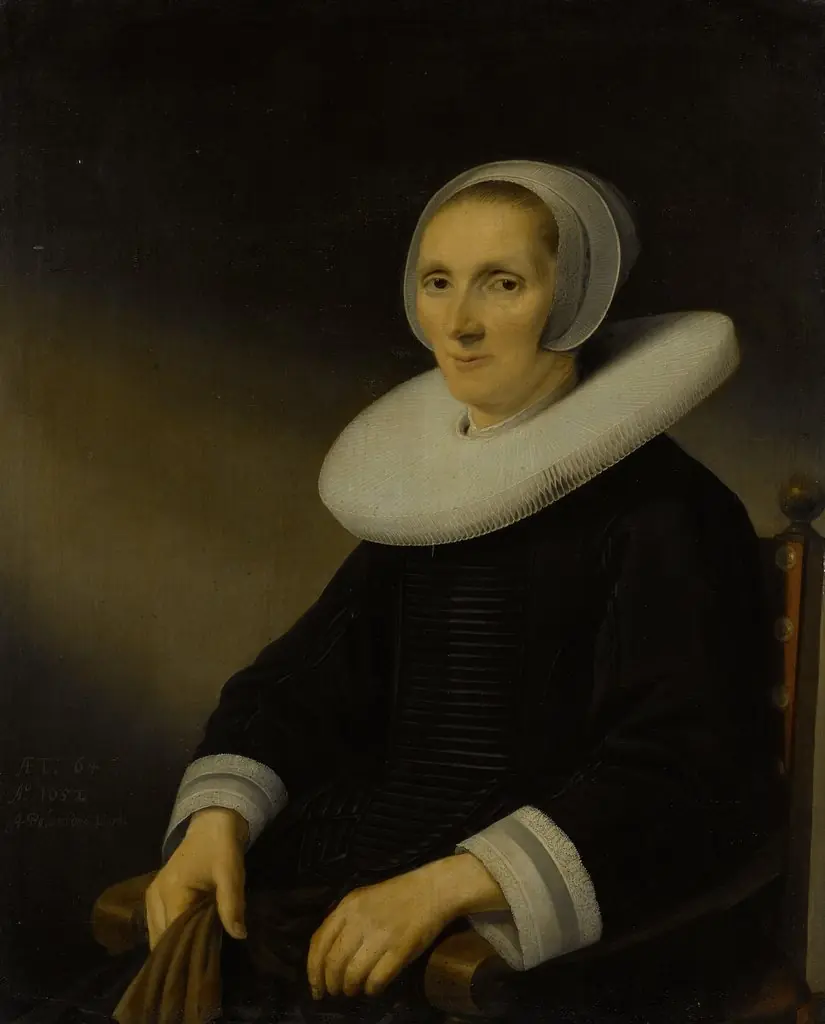
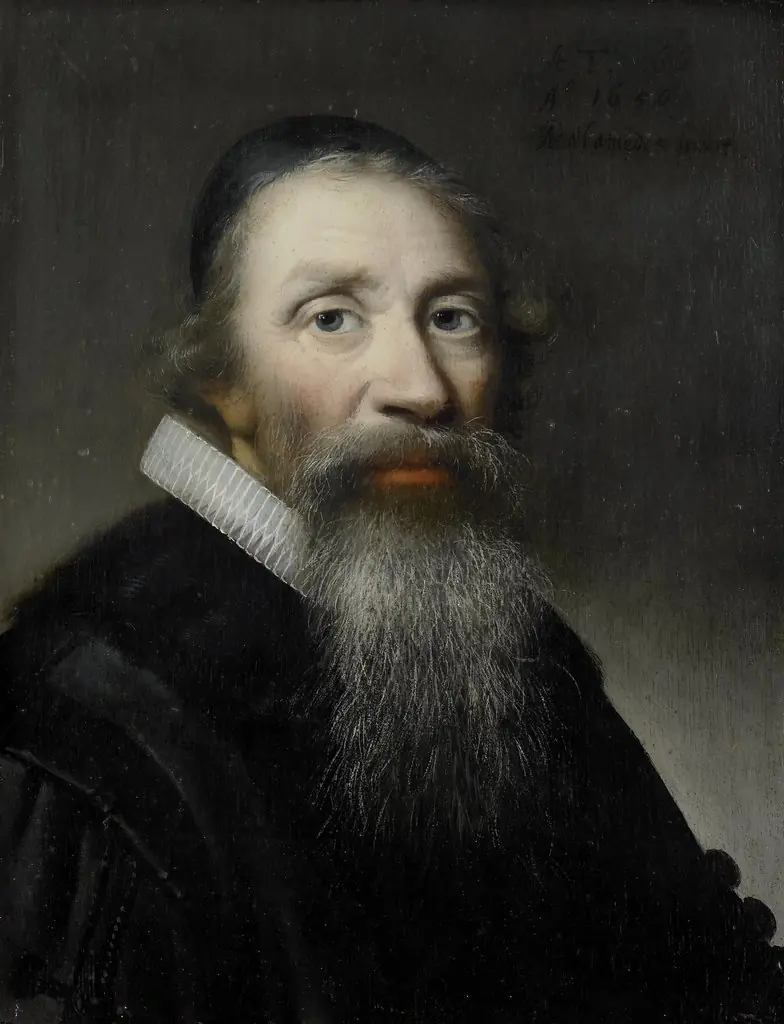
- Soldiers in a guardroom
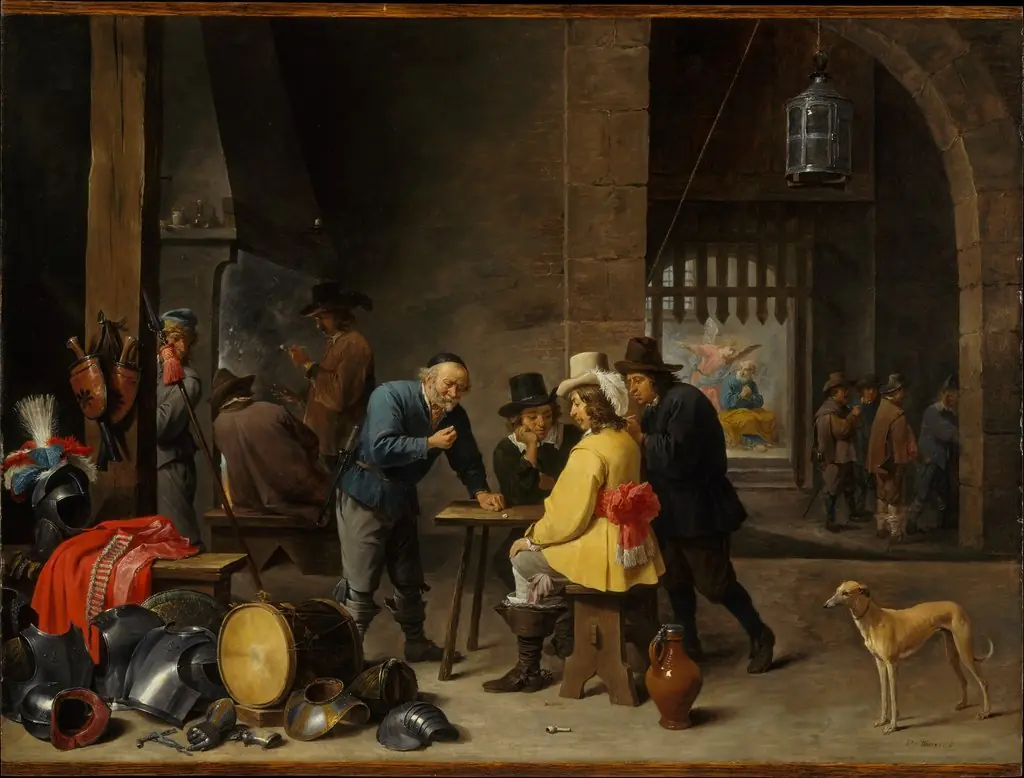 Guardroom with the Deliverance of Saint Peter
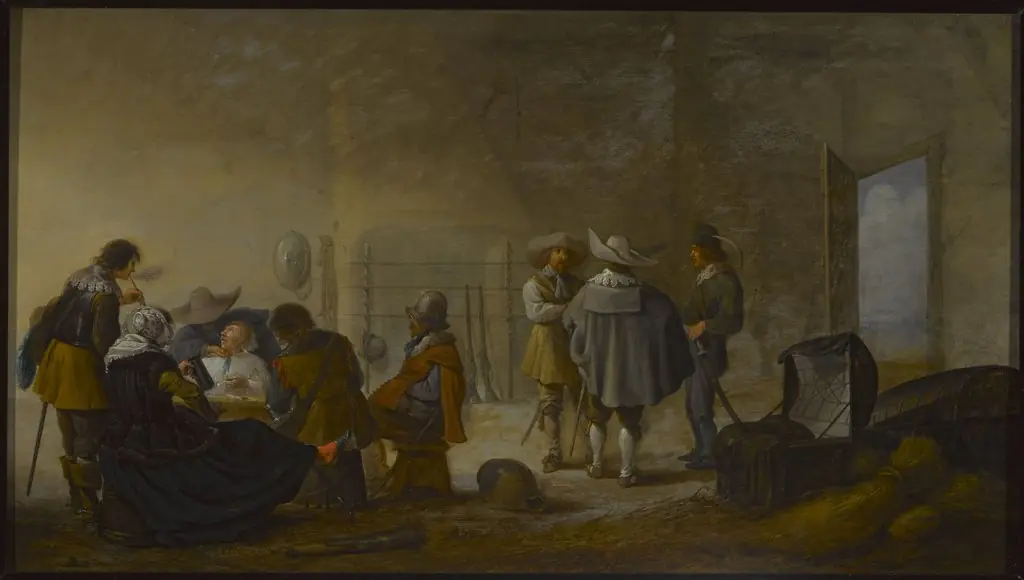 Guardhouse
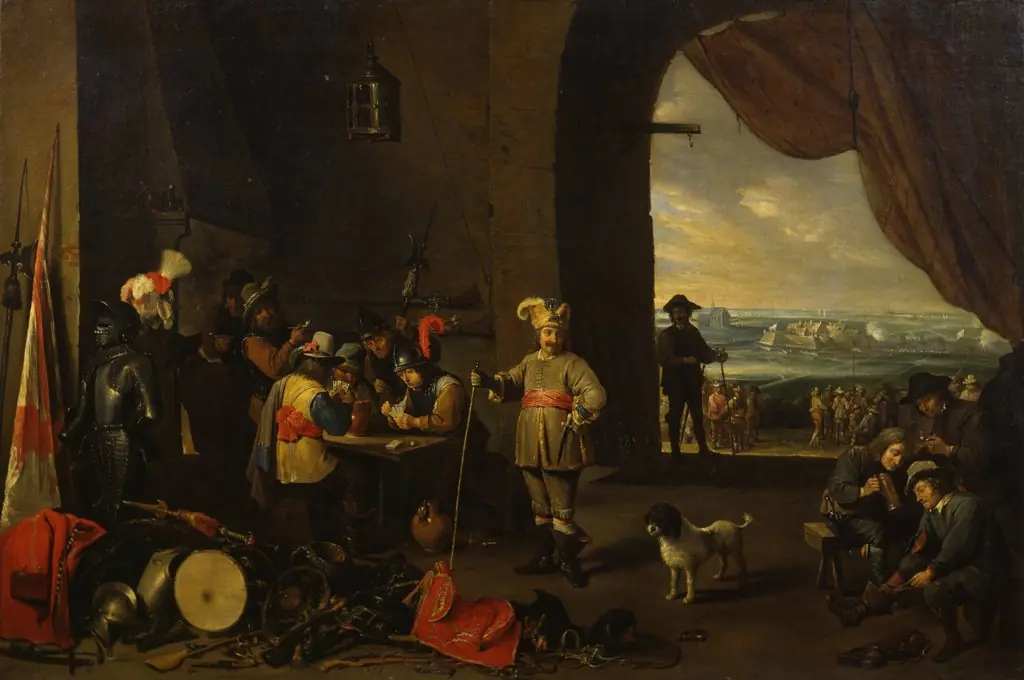 The Guard Room
 Drinking Bout in a Tavern
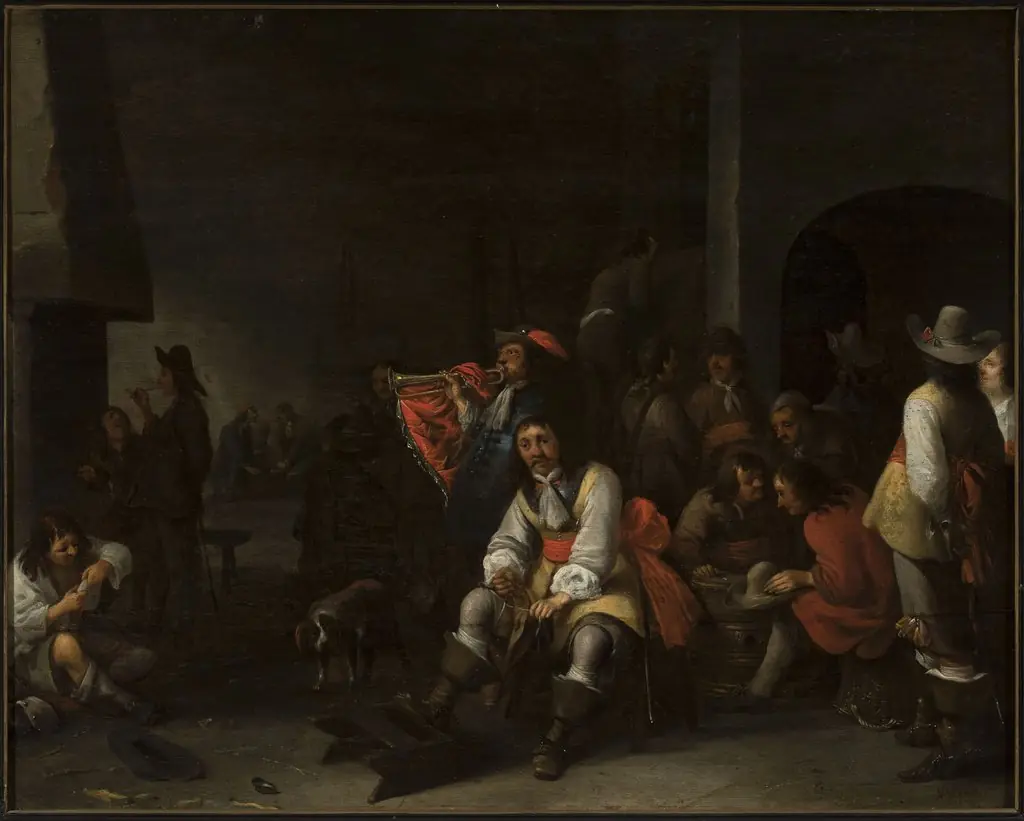 Guardhouse
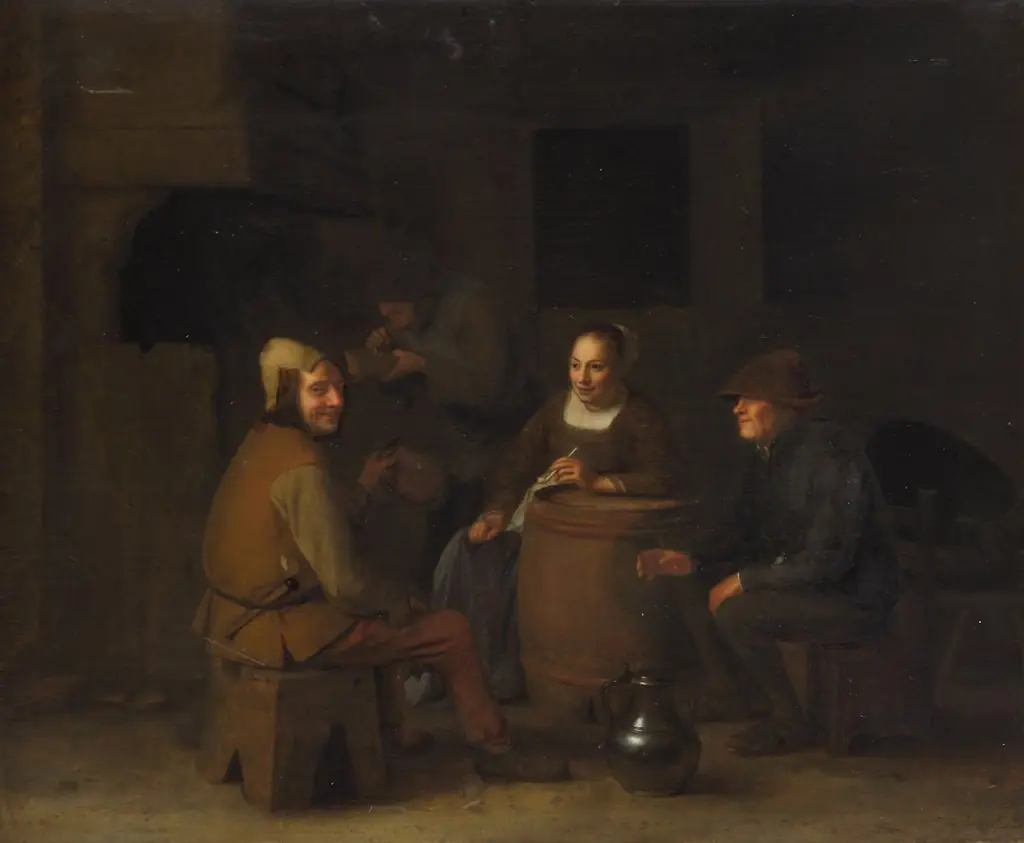 Rauchende Bauern
 The Master Drinker
 Soldiers Breaking into a Peasant's Cottage
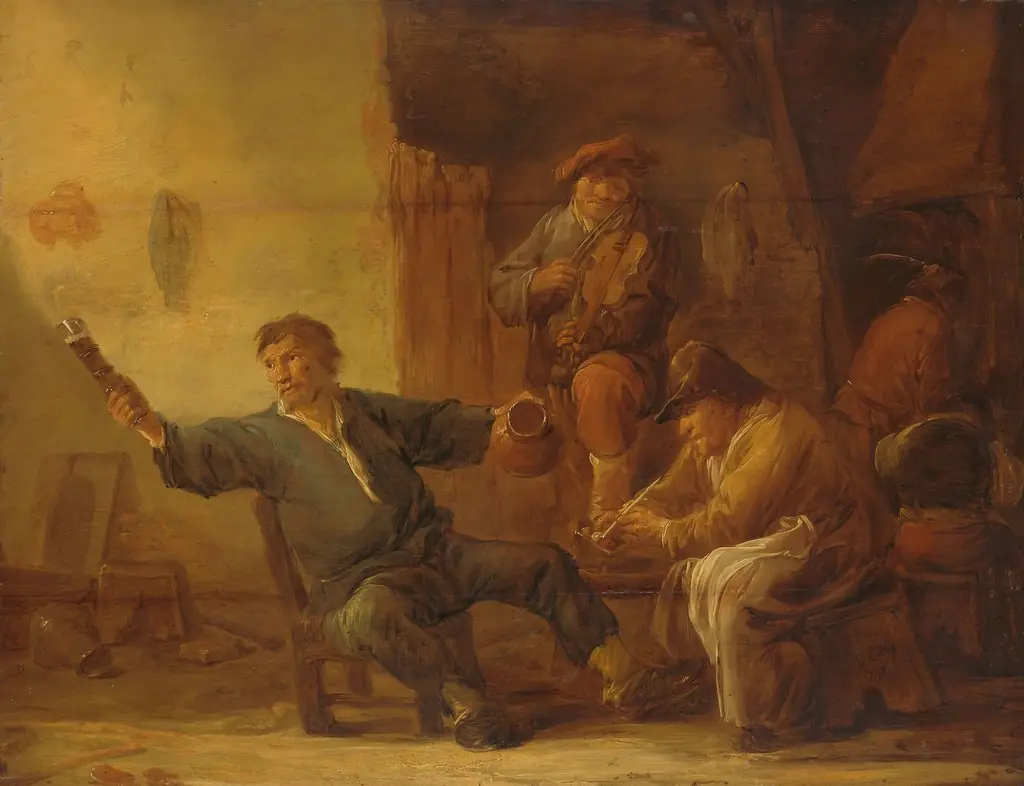 Interior of a peasant hut
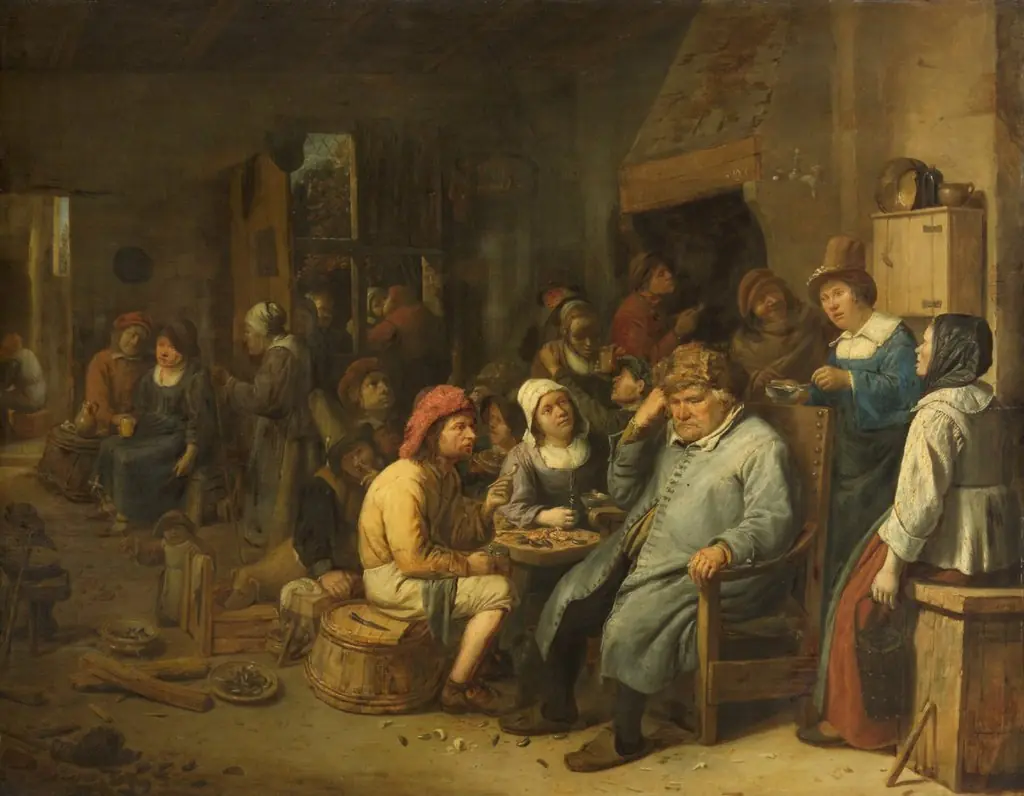 Farming in the Inn
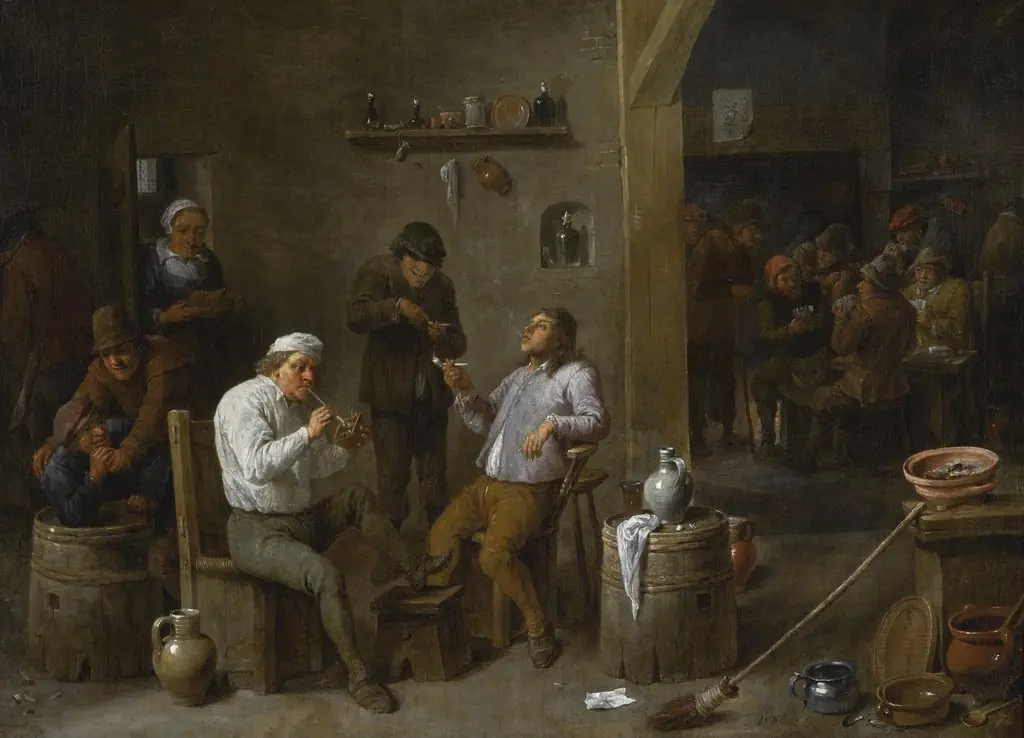 Interior tavern scene with peasants drinking and smoking