Artwork
Giovanni Grosso of the Swiss Guards Standing before a View of Rome
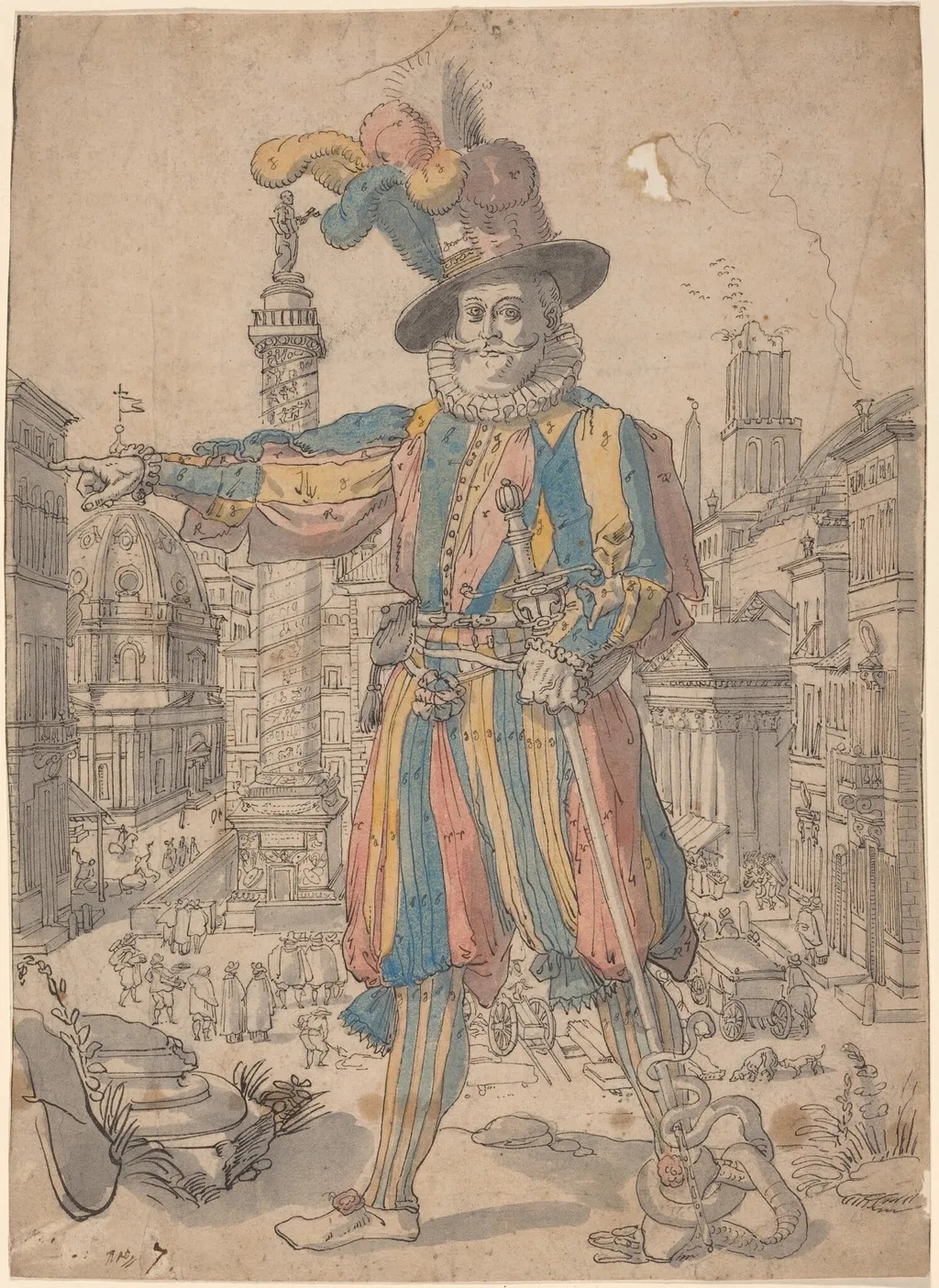
Giovanni Grosso of the Swiss Guards Standing before a View of Rome is an ink drawing by the Baroque artist Swiss 17th Century. It dates from 1650 and is held in the collection of the National Gallery of Art. This work on laid paper depicts a member of the Swiss Guards positioned before a panoramic view of Rome.
- Inscription
- Inscribed:by later hand, lower right verso of mount: Jost Amman; lower left (stamp): ACCN / 4807 Inv. 569
About this work
Overview
1 centimeters, is rendered in watercolor over black ink on laid paper and is classified as a drawing in the cityscape genre.
Giovanni Grosso of the Swiss Guards Standing before a View of Rome is a watercolor drawing by an anonymous Swiss artist of the seventeenth century, executed after Francesco Villamena. The work, measuring 32.4 by 23.1 centimeters, is rendered in watercolor over black ink on laid paper and is classified as a drawing in the cityscape genre. It is held in the collection of the National Gallery of Art in Washington, D.C., under accession number NGA 118724, having been gifted to the museum in 2001 by Arturo and Corinne Cuéllar of Zurich. The drawing occupies a significant place in the study of early modern Roman visual culture, not for its autonomous artistic invention, but for its value as material evidence of the networks through which images of celebrated local figures circulated, were copied, and were adapted for tourist consumption in the early 1600s.
Subject & Meaning
The drawing depicts Giovanni Grosso, the Italianized name of Hans Rudolph Heinrich Hoch, born in 1577 in Lucerne and deceased in 1660 in Rome. Grosso served in the Pontifical Swiss Guard from approximately 1605 and attained wider renown as a cicerone, or tour guide, for foreign visitors from German-speaking lands and beyond. His social prestige is attested by a four-volume guest book preserved in the Vatican Library, containing roughly 1,100 entries spanning 1616 to 1659. The figure stands in the elaborate striped costume of the Swiss Guard, with vertical bands of pink, blue, and yellow on hose and sleeves, a large ruffled collar, and a wide-brimmed hat adorned with multicolored plumes. His right arm extends with index finger pointing, while his left hand rests on his sword hilt, a pose that conveys authority and the practiced gesture of the guide directing attention. Behind him unfolds a detailed cityscape of classical and Renaissance Rome, including a tall spiral column with statue, domed buildings, a columned temple, towers, and smoking chimneys, with tiny figures, horses, and vehicles animating the streets below. A helmet with a crest occupies the lower left corner. The composition thus fuses portraiture with topographical view, presenting Grosso as the indispensable mediator between the visitor and the urban fabric of Rome.
Technique & Style
The medium is watercolor over black ink on laid paper, applied with relatively flat color washes in blue, pink, yellow, and gray atop precise ink outlines. Shading is achieved through fine linear hatching and cross-hatching, while shadows are indicated by gray washes and parallel lines without a strong directional light source. Technical examination has revealed that the ink lines were traced from a 1613 engraving after a design by Francesco Villamena, with graphite and black ink lines present as part of the transfer process. The watercolor application includes color notes and staining that suggest the drawing served a practical, possibly commercial purpose rather than functioning as a finished autonomous work. The paper shows age-related discoloration and a visible hole in the upper right area. The overall handling is characteristic of reproductive workshop practice in early seventeenth-century Rome, where prints were routinely copied and adapted for diverse markets.
History & Provenance
The drawing derives from a 1613 engraving by Francesco Vill03 Villamena, which carried a dedication to Grosso and the publisher Andrea Vachario. A handwritten inscription in black ink on the verso of the National Gallery drawing repeats this dedication verbatim, though the drawing is mounted to thick laid paper that partially obscures the hand. The sheet bears the collector's mark of the Kupferstichkabinett Stuttgart (Lugt 2323) before passing to Arturo and Corinne Cuéllar in Zurich, who gifted it to the National Gallery of Art in 2001. The work has been the subject of intensive technical study at the National Gallery, with findings published in the 2024 issue of Facture, the museum's biennial conservation journal, in an essay exploring material evidence and the network of makers.
Context
The drawing emerges from a vibrant early seventeenth-century Roman milieu in which images of antiquarians and ciceroni circulated as part of a burgeoning tourist economy. Francesco Villamena, a member of the Accademia di San Luca, played a central role in producing and disseminating printed portraits of such figures. The National Gallery sheet exemplifies how a single engraved design could be traced, copied, and colored for varied purposes, blurring boundaries between original, reproduction, and commercial promotion. Scholarly confusion has long attended Grosso's identity: variant spellings proliferate in catalog records, and the 1623 Villamena engraving of Cassiano dal Pozzo has sometimes been mistakenly conflated with Grosso when dedicatory inscriptions were trimmed. Some scholars have even posited two separate ciceroni from Lucerne, one named Alto and one named Grosso, both in the Swiss Guard and both dying in 1660. The drawing thus serves as a case study in the challenges of identity, attribution, and the mobility of images in the print market.
Legacy
The drawing's significance lies less in conventional artistic achievement than in its documentary value for understanding the material practices and social networks of early modern image production. As research by the National Gallery of Art has demonstrated, the sheet illuminates how portraits of figures like Grosso were recycled and adapted to serve the expanding market for antiquities tourism. Grosso himself published a guidebook in 1641, Splendore dell'antica e moderna Roma, under the name Giovanni Ridolfo Alto, consolidating his authority as an interpreter of the city. The drawing, alongside the related prints and the Vatican guest books, contributes to a composite portrait of Grosso as a self-fashioned brand, a guard-turned-guide whose visual image was as carefully managed as his social network. For art historians, the work remains a touchstone for discussions of copying, tracing, and the secondary markets that sustained Baroque visual culture.
Artist & collection
Artist
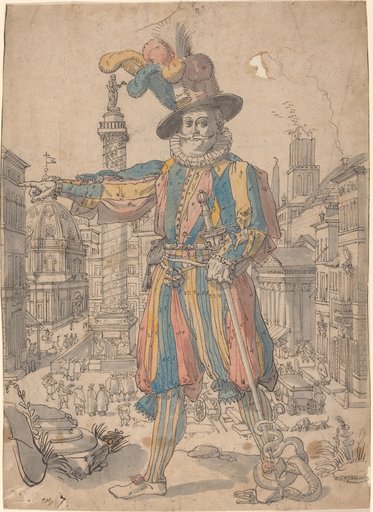
This artist made a single striking watercolor of a towering Swiss Guard in full armor, shown against Rome’s skyline in the background.

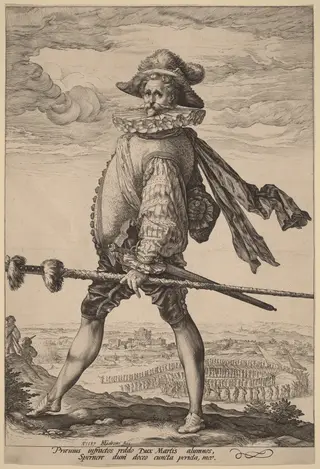
- The Captain of the Infantry
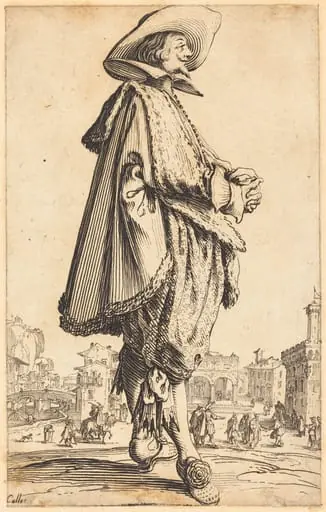 Noble Man with Folded Hands
 Lepeintre Ainé in the Role of Paillasse
 Noble Man with Mantle Trimmed in Fur, Holding his Hands Behind his Back
 Noble Man with Folded Hands
 La Noblesse: Gentleman Standing in Profile with Clasped Hands
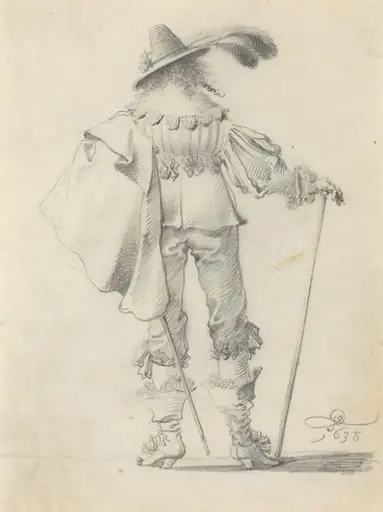 Gentleman Seen from Behind
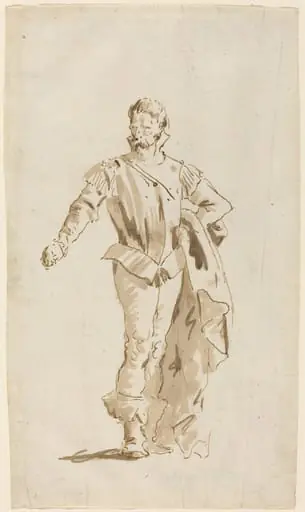 Standing Man in Sixteenth-Century Costume
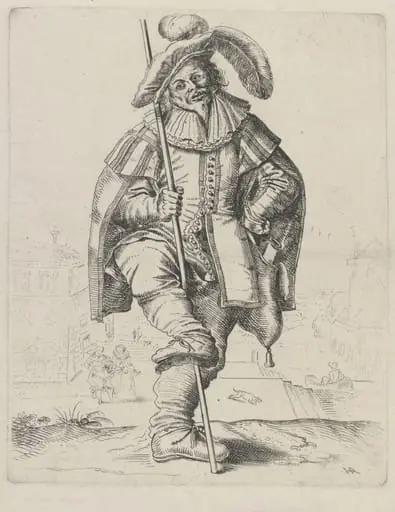 H Beard Print Collection
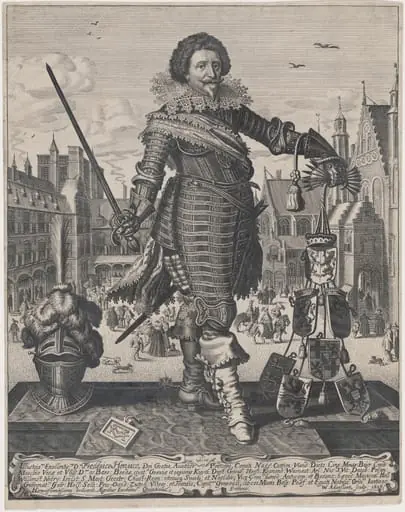 Frederick Henry, Prince of Orange
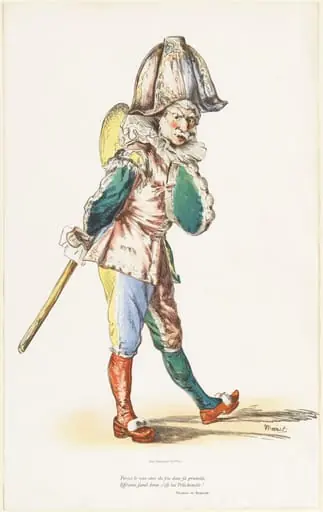 Polichinelle
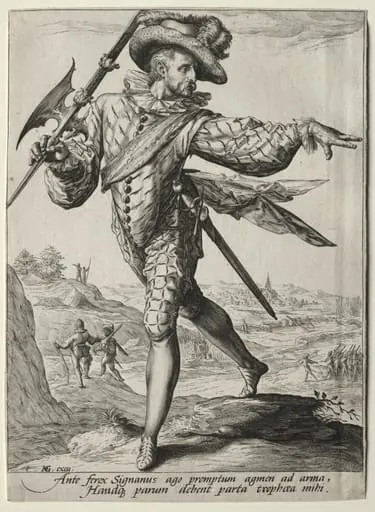 Officers and Soldiers of the Bodyguard of Emperor Rudolf II: Sergeant