Artwork
Untitled
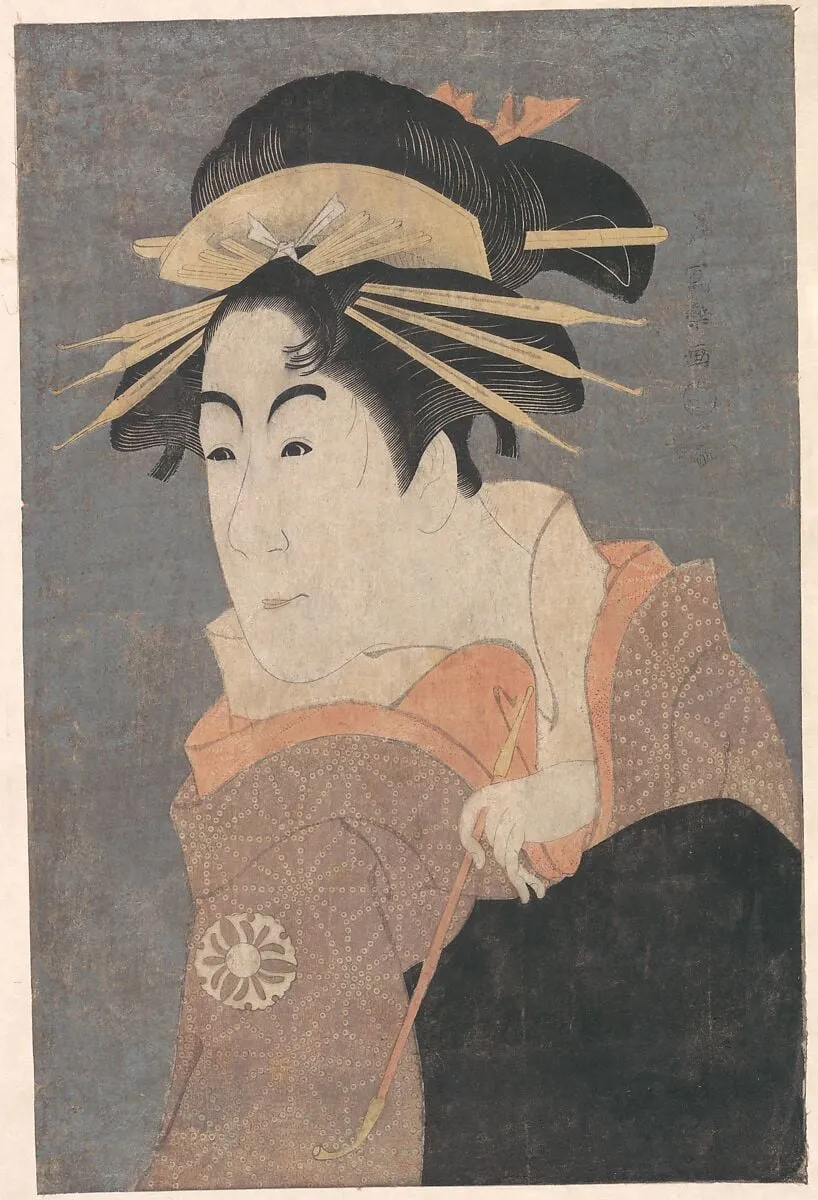
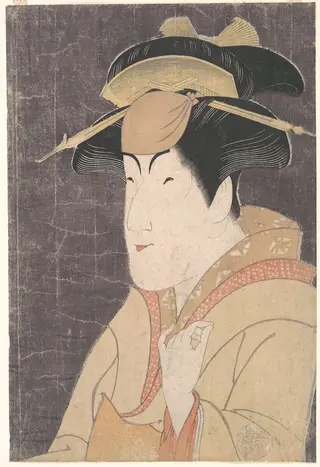
Untitled is an ink print by the Romanticist artist Tōshūsai Sharaku. It dates from 1794 and is held in the collection of the Metropolitan Museum of Art.
- Accession no.
- JP197
- Credit line
- Rogers Fund, 1914
About this work
Subject & Meaning
This dual presentation reflects the actor’s versatility within the Edo-period theater, where male performers frequently enacted women’s parts.
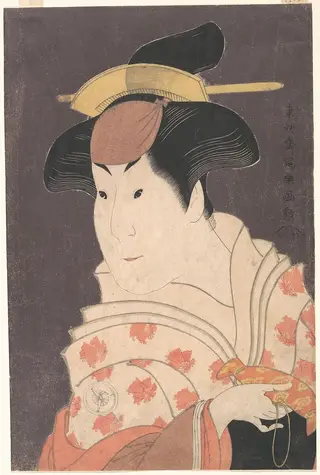
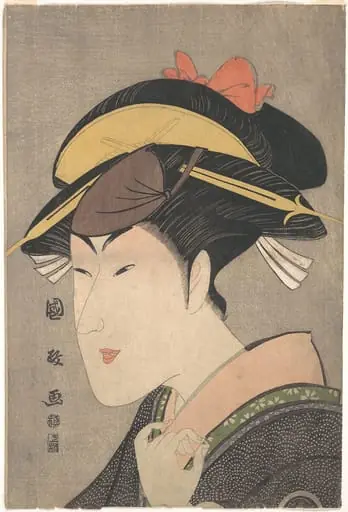
The print portrays the kabuki actor Matsumoto Yonesaburoō I. Sharaku presents the figure with traits identified as both male and female, indicating a role that blends masculine and feminine qualities. This dual presentation reflects the actor’s versatility within the Edo-period theater, where male performers frequently enacted women’s parts. By emphasizing the actor’s identity as a performer rather than a fixed gender, the work comments on the fluidity of persona in kabuki and the artifice of theatrical representation.
Technique & Style
The work is a woodblock print executed in ink and color on paper, a medium characteristic of Japanese ukiyo-e production. Sharaku's handling falls within the nishiki-e tradition of polychrome printing, and the image is classified as an ōkubi-e, a format featuring a tightly cropped, oversized portrait of the subject's head and shoulders. Stylistically, it belongs to the yakusha-e genre of actor prints, presenting the kabuki performer Matsumoto Yonesaburō I with sharply defined facial features and a dramatic, confrontational gaze typical of Sharaku's brief but intense output of 1794.
History & Provenance
The woodblock print titled Untitled was created in 1794 by the artist Tōshūsai Sharaku. This work belongs to the ukiyo-e tradition and is classified as a yakusha-e, or actor portrait, specifically in the ōkubi-e format. It depicts the actor Matsumoto Yonesaburoō I alongside a woman.
The piece was executed as a nishiki-e print using ink and color on paper. Current holdings of the work include the Metropolitan Museum of Art and the Honolulu Museum of Art.
The work is held by the Metropolitan Museum of Art and the Honolulu Museum of Art, where it is accessioned as 1947.4-1 and 21795 respectively.
It was shown in 2017 at the Honolulu Museum of Art in the exhibition Sharaku’s Portraits of Actors, where it was displayed as part of a focused presentation of Sharaku’s ōkubi-e prints.
Overview
This woodblock print, created around 1794 by the enigmatic ukiyo‑e artist Tōshūsai Sharaku, presents a close‑up portrait of the kabuki performer Matsumoto Yonesaburō I. Executed with ink and color on paper, the work belongs to Sharaku’s brief but intense period of activity, during which he produced a series of striking actor images.
Context
During the Edo period, actor prints were a dominant genre, celebrating the fame of kabuki stars. Sharaku’s depictions diverge from the conventional flattering portraits, offering a more critical, humanising view of performers, thereby challenging prevailing aesthetic expectations of the time.
Artist & collection

 Untitled
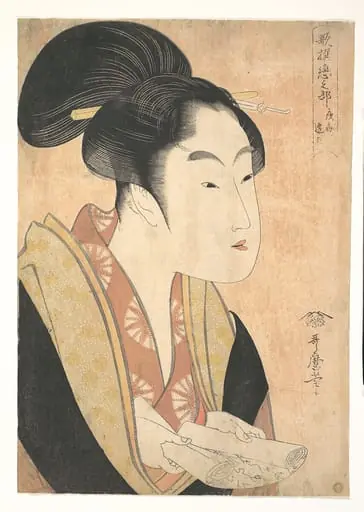 歌撰恋之部 夜毎に逢恋|A Young Woman Reading A Letter
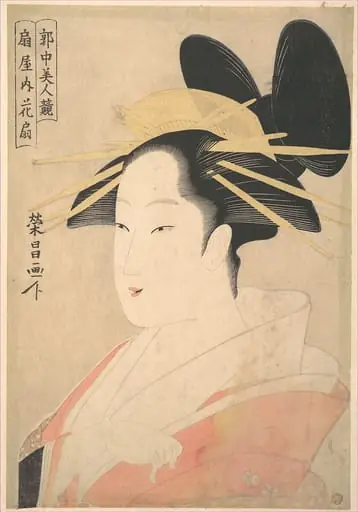 Untitled
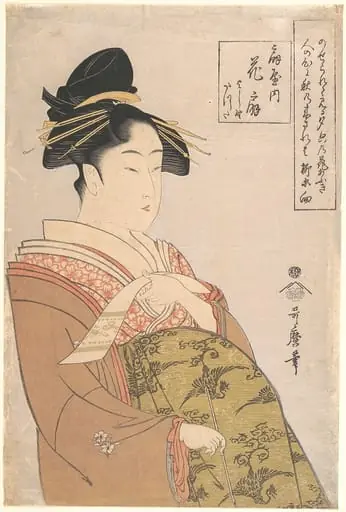 「扇屋内花扇図」|The Courtesan Hanaōgi of the Ōgiya Brothel in Yoshiwara (Ōgiya uchi Hanaōgi, Yoshino, Tatsuta)
 Untitled
 Untitled
 Untitled
 Untitled
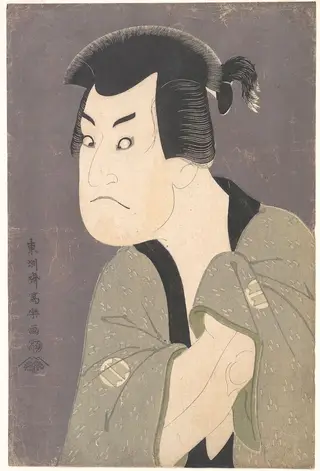 東洲斎写楽画 三世坂田半五郎の藤川水右衛門 『花菖蒲文禄曽我』|Sakata Hangorō III as Fujikawa Mizuemon in the Play "Hana Ayame Bunroku Soga"
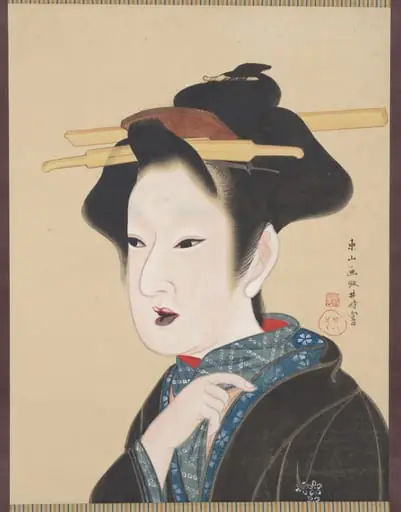 A Beauty
- Untitled