Artwork
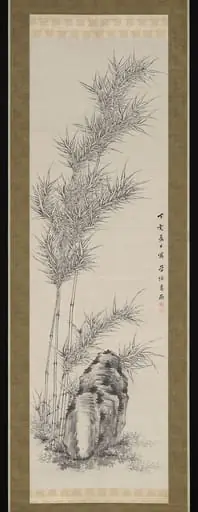
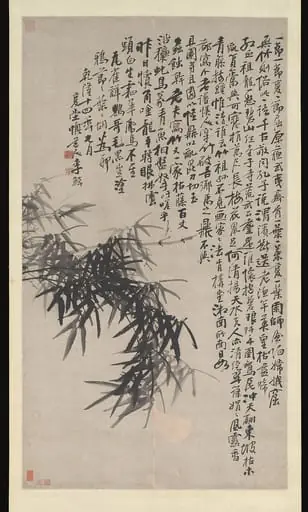
清 石濤 (朱若極) 風雨竹圖 軸|Bamboo in wind and rain
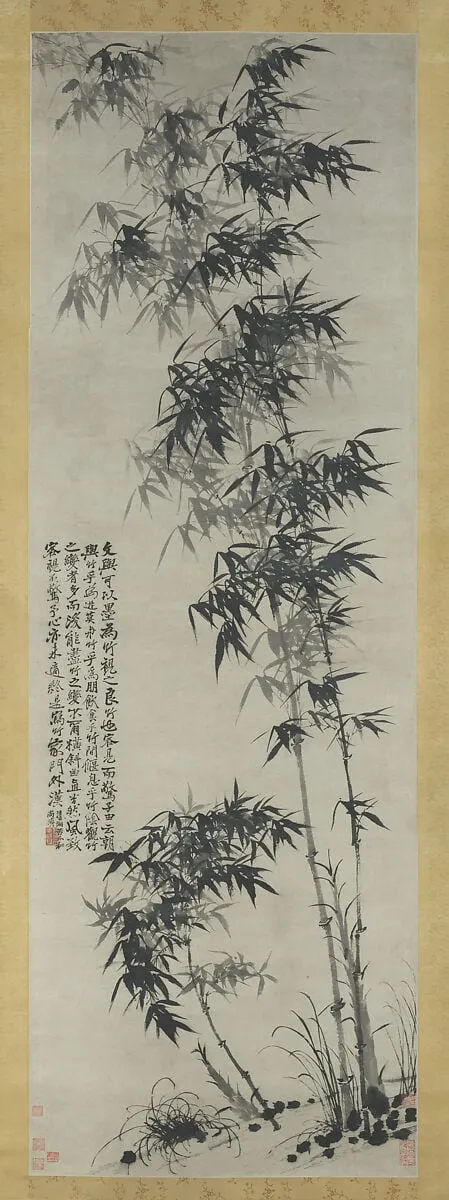
清 石濤 (朱若極) 風雨竹圖 軸|Bamboo in wind and rain is an ink painting by the Baroque artist Shitao. It dates from 1694 and is held in the collection of the Metropolitan Museum of Art.
About this work
Subject & Meaning
Created in 1694 by the Qing dynasty artist Shitao (Zhu Ruoji), this hanging scroll executed in ink on paper depicts Bambusoideae, commonly known as bamboo.
Created in 1694 by the Qing dynasty artist Shitao (Zhu Ruoji), this hanging scroll executed in ink on paper depicts Bambusoideae, commonly known as bamboo. The work's title, Bamboo in Wind and Rain, explicitly identifies the environmental conditions surrounding the subject, portraying the plants enduring turbulent weather. Within the genre of landscape painting, the imagery focuses specifically on the resilience of bamboo stalks and leaves amidst these natural forces.
While the provided records confirm the depiction of bamboo in a stormy setting, they do not elaborate on specific symbolic interpretations or deeper allegorical meanings traditionally associated with this motif in Chinese art history.
Technique & Style
Executed in 1694, this hanging scroll utilizes ink applied directly onto paper as its sole medium. The work focuses on the depiction of bamboo, specifically the Bambusoideae subfamily, rendered through monochromatic washes and brushwork characteristic of the artist's landscape genre. As a vertical format, the piece is designed for suspension, allowing the composition to emphasize the verticality and movement of the bamboo stalks subjected to wind and rain.
The handling of the ink on the paper support creates the atmospheric effects implied by the title, relying on the fluidity of the medium to suggest weather conditions without the use of color. The work is currently held in the collection of the Metropolitan Museum of Art.
History & Provenance
Shitao (Zhu Ruoji) created Bamboo in wind and rain in 1694, producing the work in China. The piece is executed as a hanging scroll utilizing ink on paper. While the specific circumstances of its commission or early ownership chain are not documented in the provided sources, its inception is firmly dated to 1694. Currently, the painting is held in the collection of the Metropolitan Museum of Art.
Overview
Shitao's "Bamboo in Wind and Rain" (風雨竹圖), created around 1694, is an ink painting on paper presented as a hanging scroll. This work by the artist, also known as Zhu Ruoji, captures a solitary bamboo stalk as it bends under the force of a tempest. The monochrome composition reflects a moment of natural resilience, rendered with a distinctive approach to traditional Chinese landscape painting.
Artist & collection