Artwork
Four Motifs from the Eight Views of Xiao-Xiang
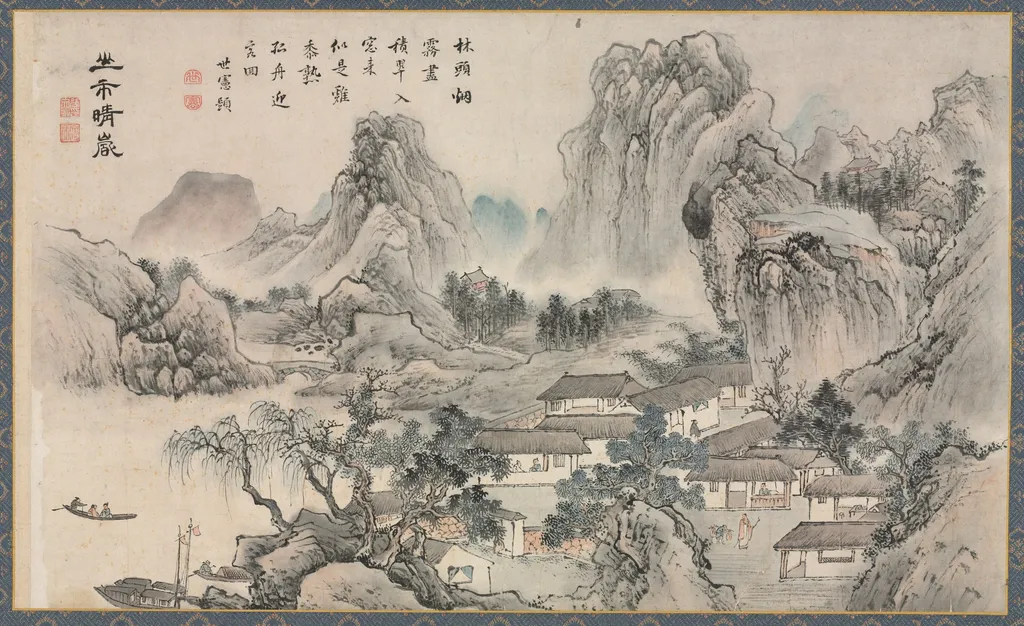
Four Motifs from the Eight Views of Xiao-Xiang is an unspecified painting by the Nanga artist Tani Bunchō. It dates from 1794 and is held in the collection of the Cleveland Museum of Art.
About this work
History & Provenance
The work originated in Japan and is held within the collection of the Cleveland Museum of Art, where it is cataloged under the accession number 1980.
Four Motifs from the Eight Views of Xiao-Xiang is a painting created by the Japanese artist Tani Bunchō in 1794. The work originated in Japan and is held within the collection of the Cleveland Museum of Art, where it is cataloged under the accession number 1980.188. While the specific circumstances of its initial commission or original patron remain unrecorded, the piece dates to the late eighteenth century.
The artwork depicts traditional landscape elements, specifically mountains and trees, reflecting the artist's engagement with the thematic series of the Eight Views of Xiao-Xiang. No exhibition history is documented in the available sources.
Overview
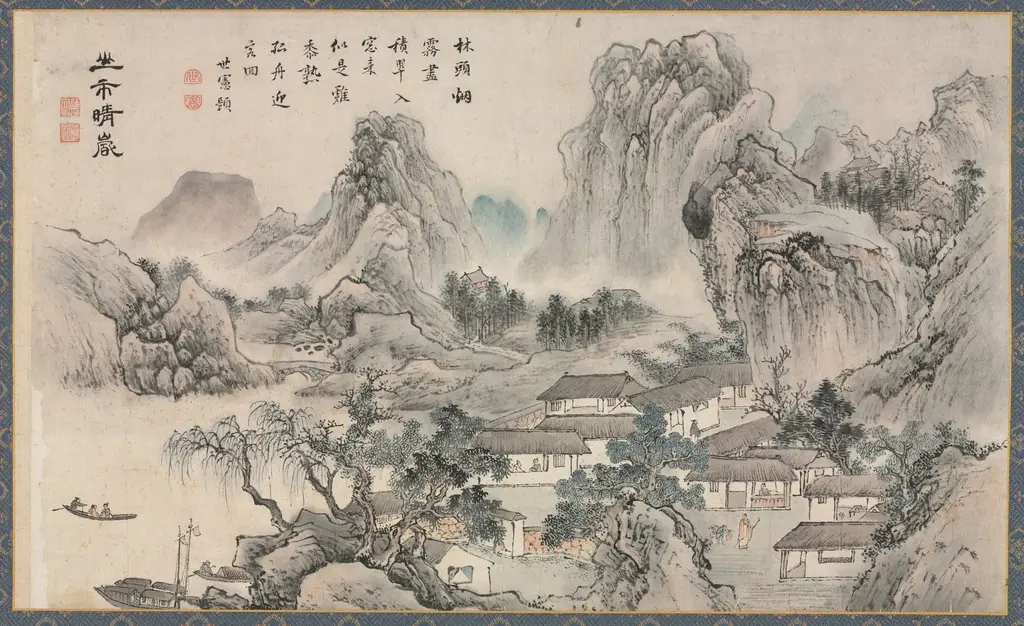
Created by Tani Bunchō in 1794, Four Motifs from the Eight Views of Xiao-Xiang presents a serene landscape. This painting, now part of The Cleveland Museum of Art's collection, captures a segment of a larger traditional theme. It features a mountainous terrain, a winding river, and a small human presence, rendered with a subdued palette.
Subject & Meaning
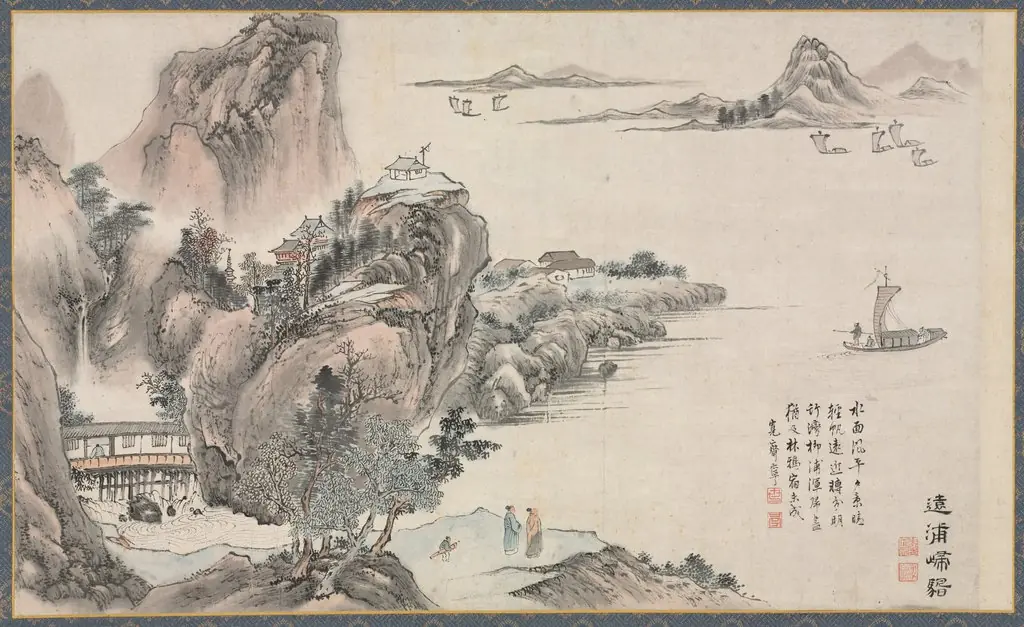
The composition centers on a tranquil mountain village nestled between imposing cliffs. A winding path leads to modest houses with characteristic sloped roofs, while trees root firmly into the rocky terrain. Small human figures, such as a person carrying a bundle or another standing by a bridge, introduce subtle narratives into the expansive natural setting. A boat rests on a calm river, suggesting a quiet existence within the dramatic landscape.
Technique & Style
Tani Bunchō employed a restricted palette, predominantly utilizing soft grays and blues to evoke a sense of mist and atmosphere. The artist's use of ink-like lines defines the rugged contours of the rocks and the expansive, often hazy sky. This approach emphasizes the grandeur of the natural world, with the human elements rendered in a delicate scale that integrates them into the dominant landscape rather than asserting their presence.
Artist & collection


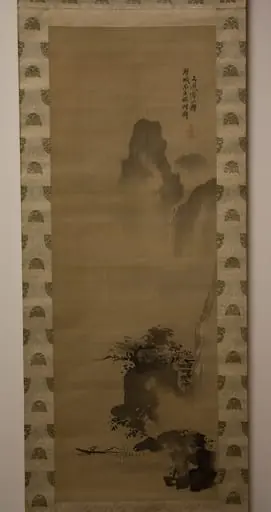
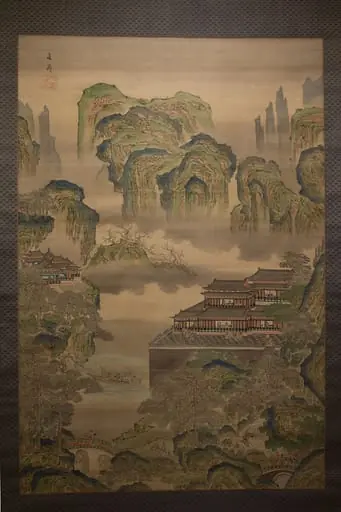
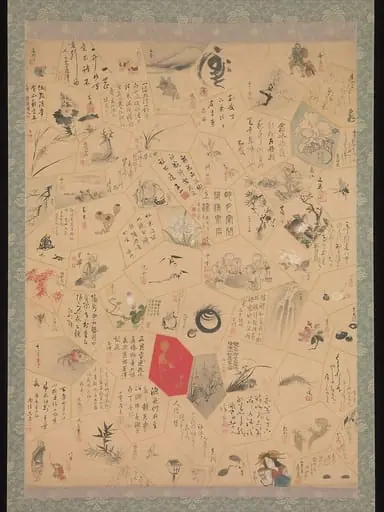
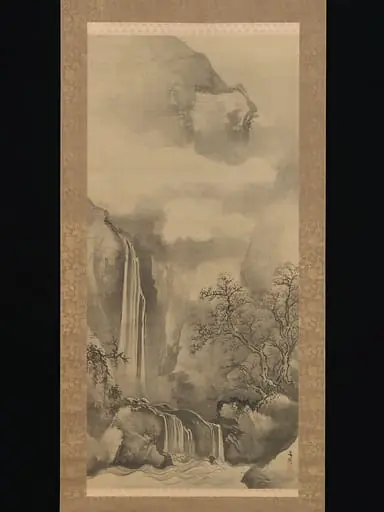
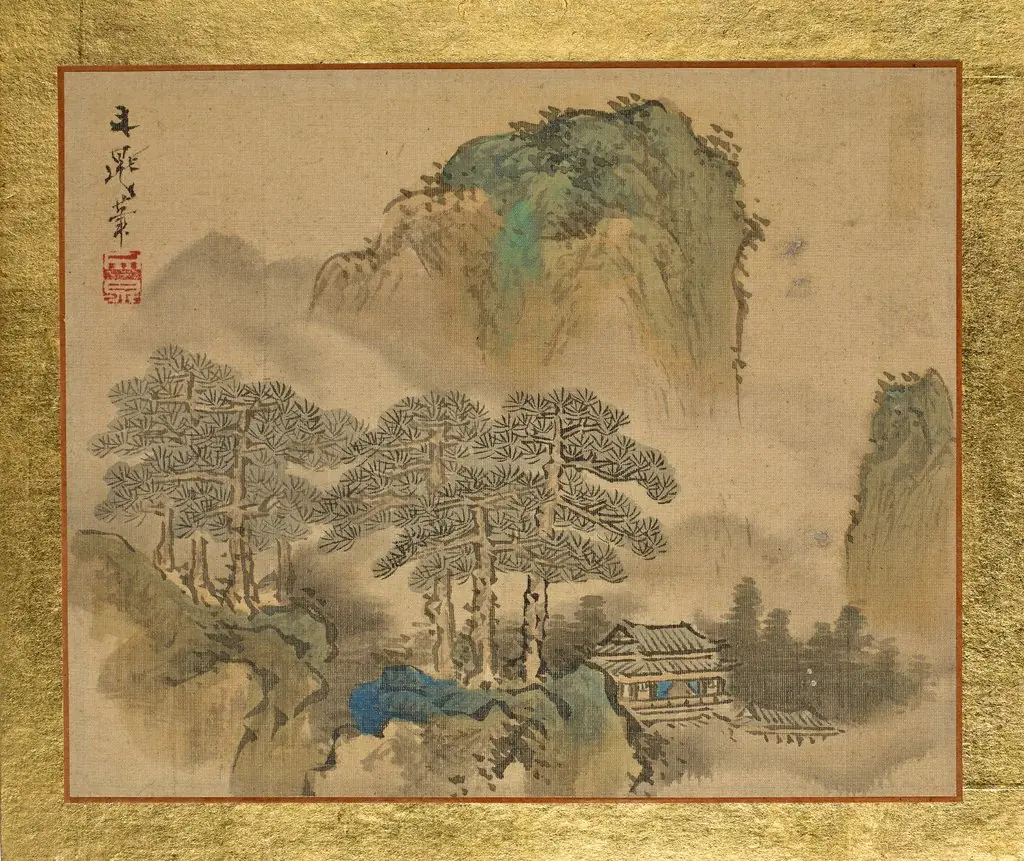 A House next to Pine Trees, in front of Mountains
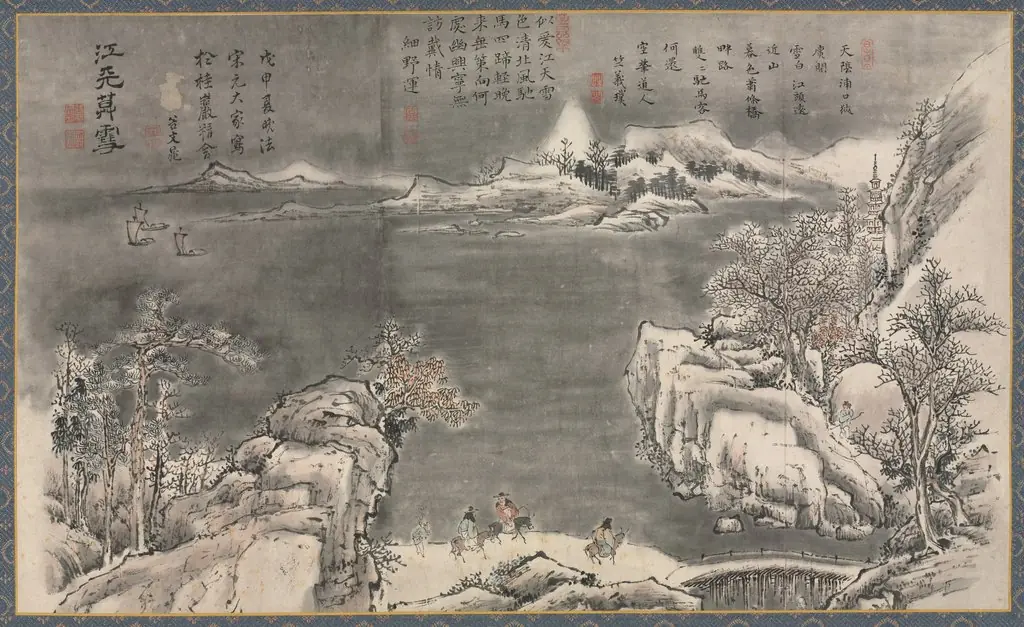 Evening Snow Blending River and Sky, from Eight Views of Xiao-Xiang
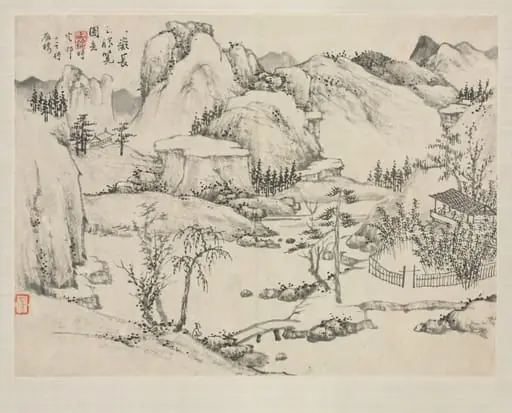 Landscape Album in Various Styles: Scenery of Mt. Changbai after Huang Gongwang
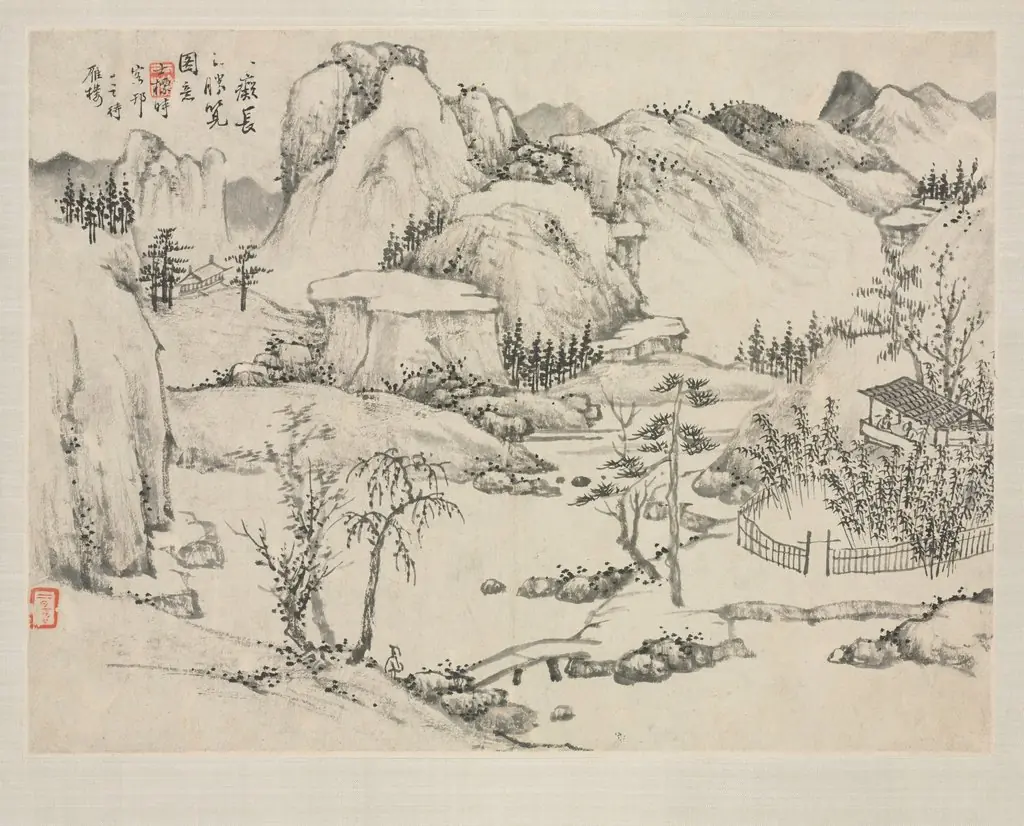 Landscape Album in Various Styles: Scenery of Mt. Changbai after Huang Gongwang
 Spring Landscape
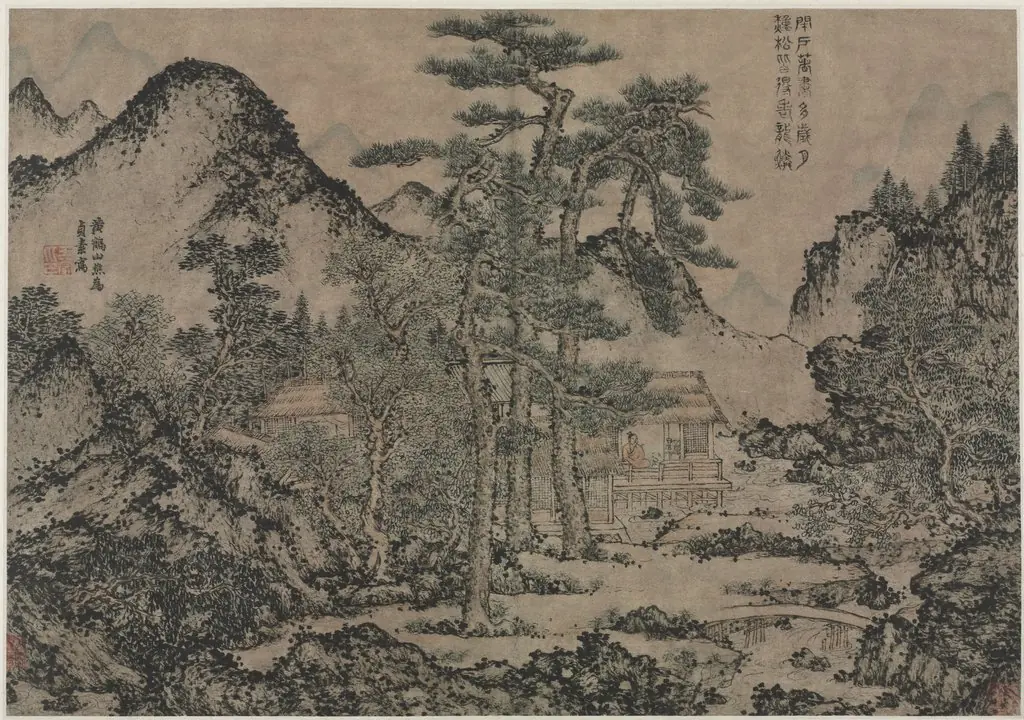 Writing Books under the Pine Trees
 Writing Books under the Pine Trees
 元/明 佚名 舊傳 燕文貴 秋山蕭寺圖 軸|Buddhist Temples amid Autumn Mountains
 Landscape Album in Various Styles: Boating in Spring Water