Artwork
Peasants in a Tavern
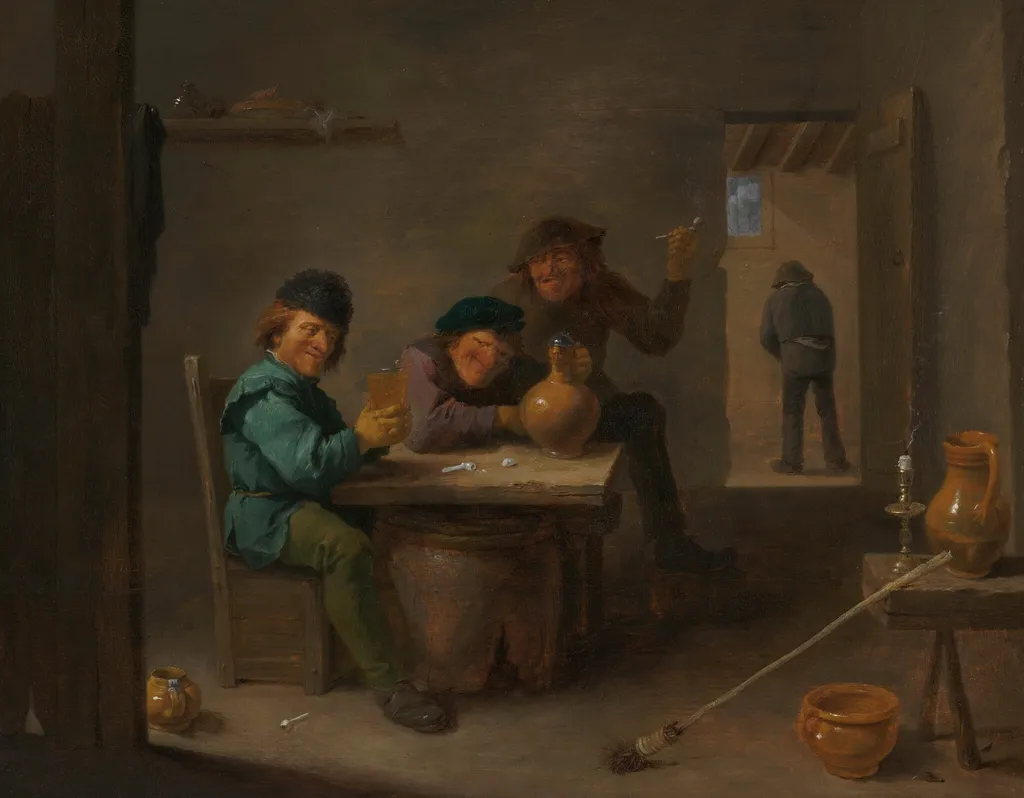
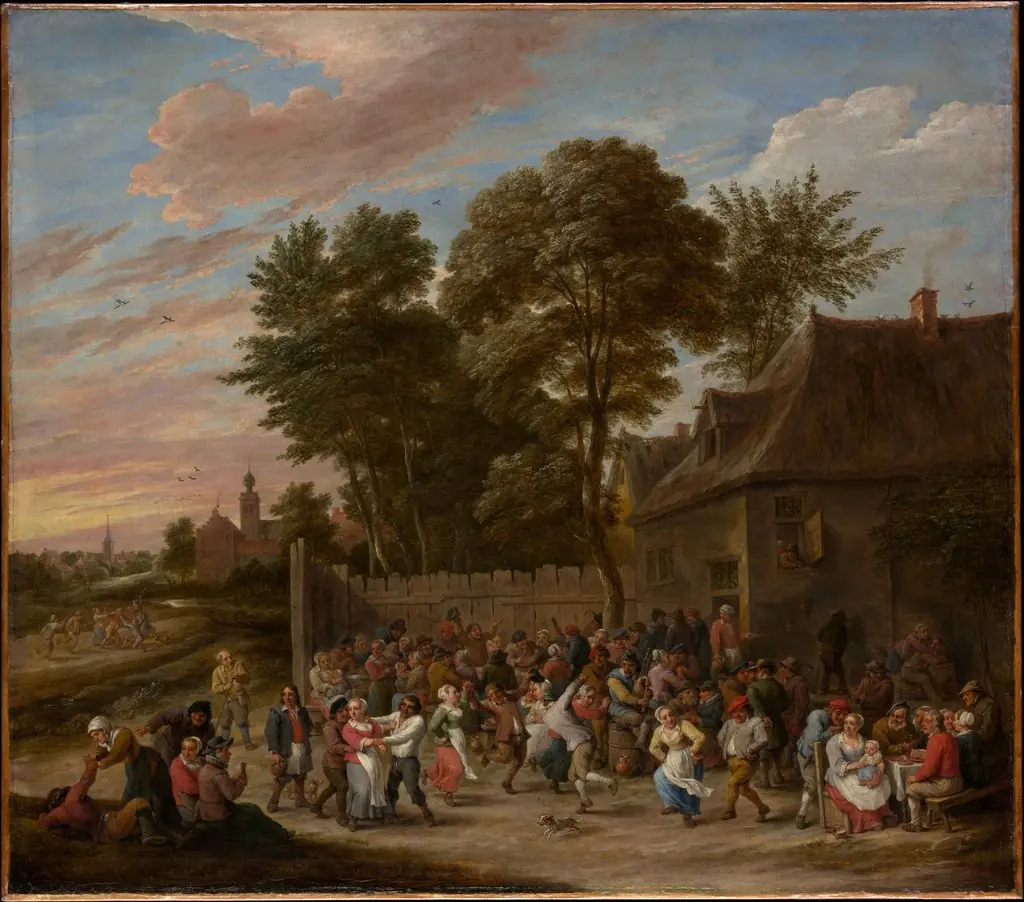
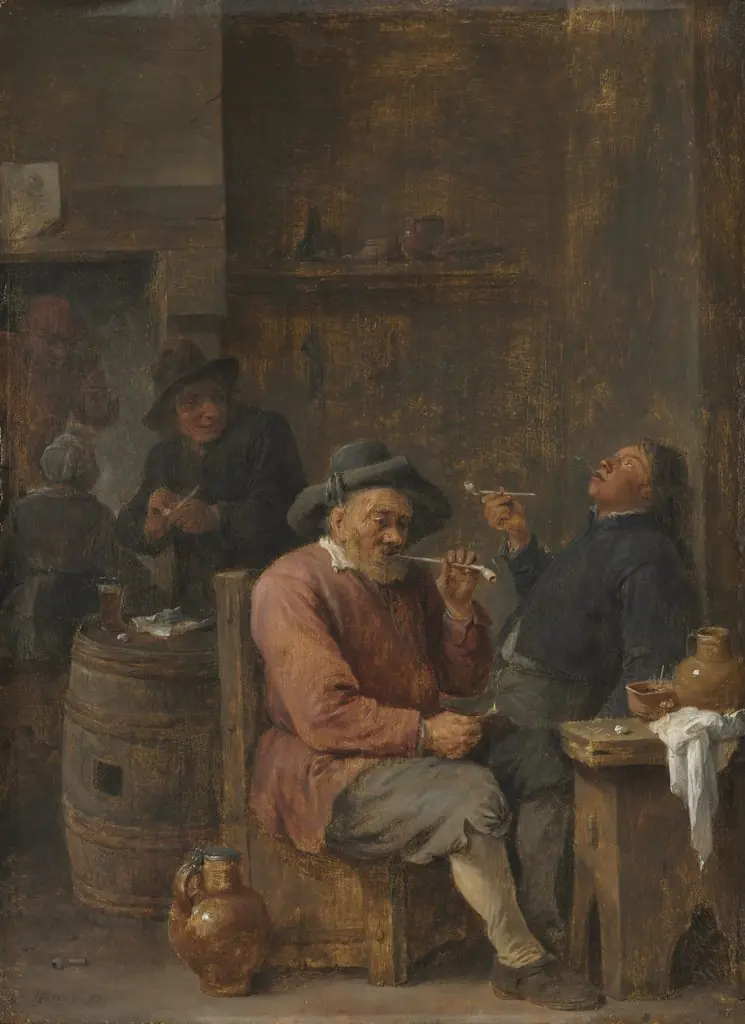
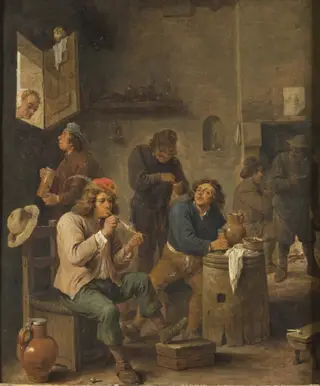
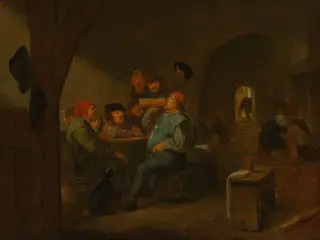
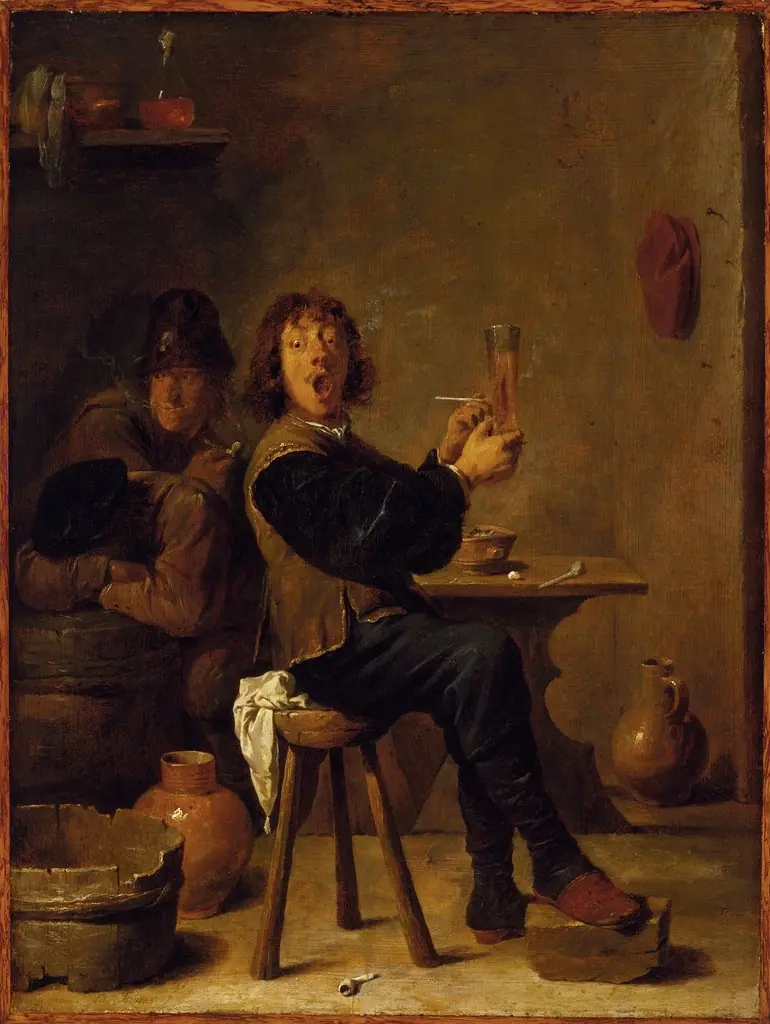
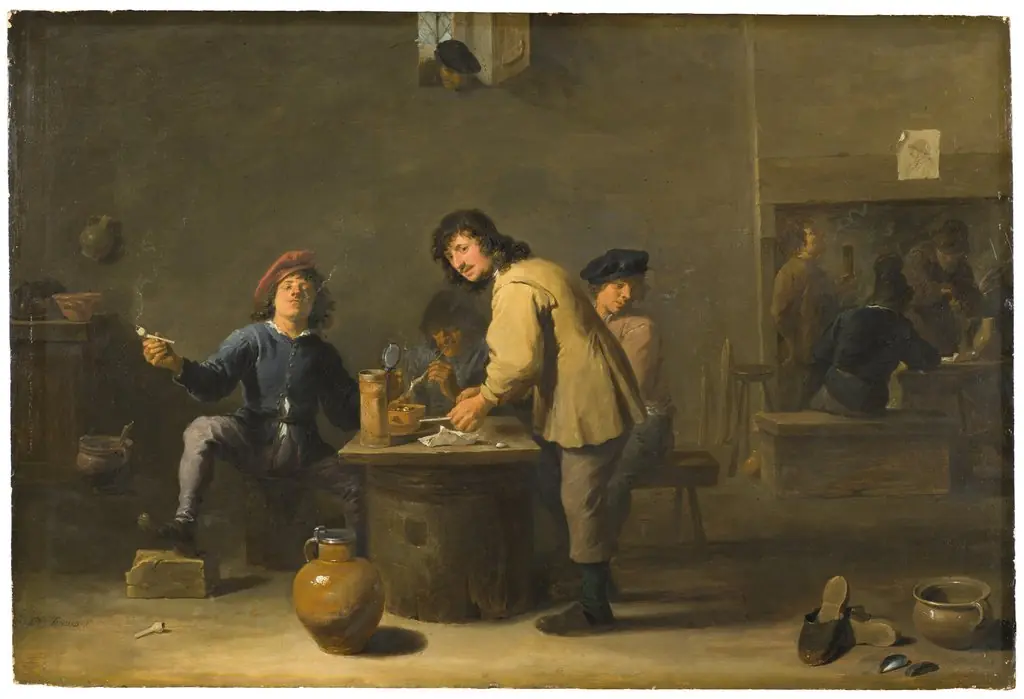
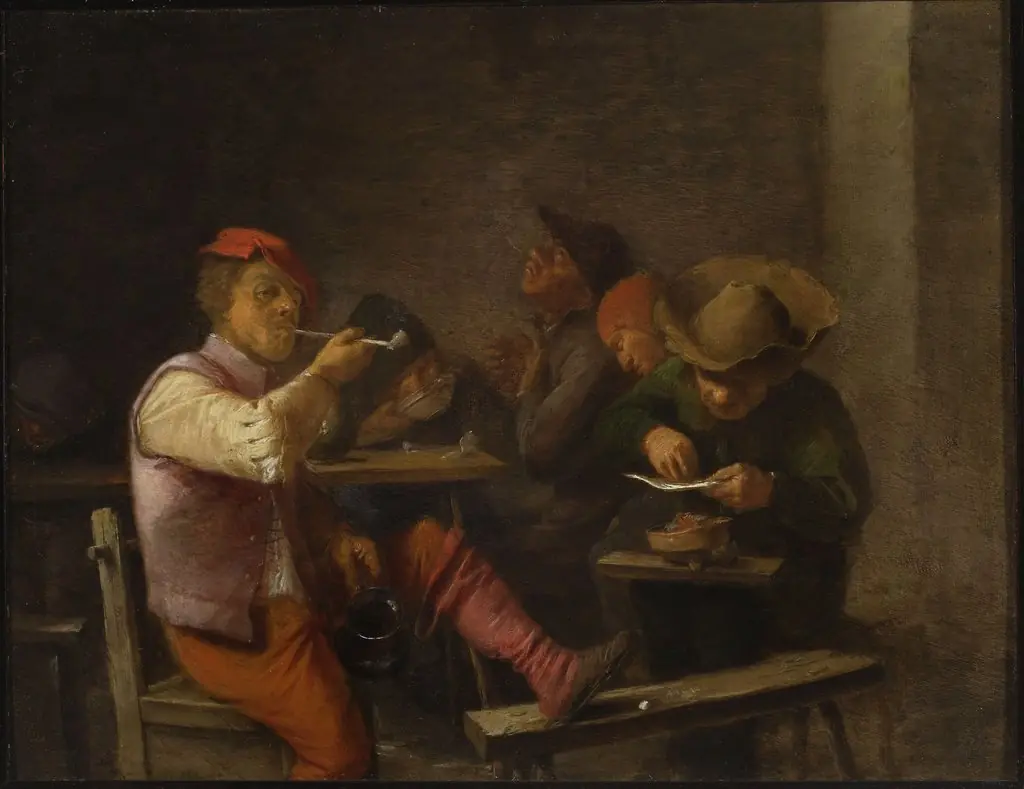
Peasants in a Tavern is an oil painting by the Baroque artist David Teniers the Younger. It dates from 1633 and is held in the collection of the National Gallery of Art.
- Inscription
- Inscribed:lower left: D Teniers f 16[44]; by unknown hand, across top reverse: N.3 [Anti?] Dining Room; by unknown hand, center reverse: No3 Anti / Dining Room / Lord George / Cavendish
About this work
Technique & Style
The work is executed in oil paint on a wooden panel, a medium typical of 17th-century Flemish genre scenes.
The work is executed in oil paint on a wooden panel, a medium typical of 17th-century Flemish genre scenes. The brushwork demonstrates a smooth handling of light and shadow, while the composition is organized around a bustling tavern interior populated by figures rendered in a naturalistic yet slightly idealized manner. Color is applied in thin, translucent layers that preserve the luminous quality of the scene, and the overall style reflects the influence of earlier genre masters such as Adriaen van Ostade, though the artist's own approach to detail and narrative remains distinctive. The painting measures 31.8 cm in height and 40.5 cm in width, confirming its modest scale.
History & Provenance
Peasants in a Tavern was created by David Teniers the Younger in 1633, executed in oil on panel. Its earliest documented owner was George Augustus Henry Cavendish (1754–1834) of Cambridge, England, known as Lord George Cavendish until 1831, when he became 1st Earl of Burlington.
The work subsequently passed to Robert Pflieger and then to his nephew, John Ely Pflieger (1931–2018) of Washington, D.C. In October 1991, John Ely Pflieger and his wife, Donna Carlson Pflieger, gave the painting to the National Gallery of Art as a partial and promised gift, with the gift completed in December 1991. The painting remains in the collection of the National Gallery of Art in Washington, D.C.
Overview
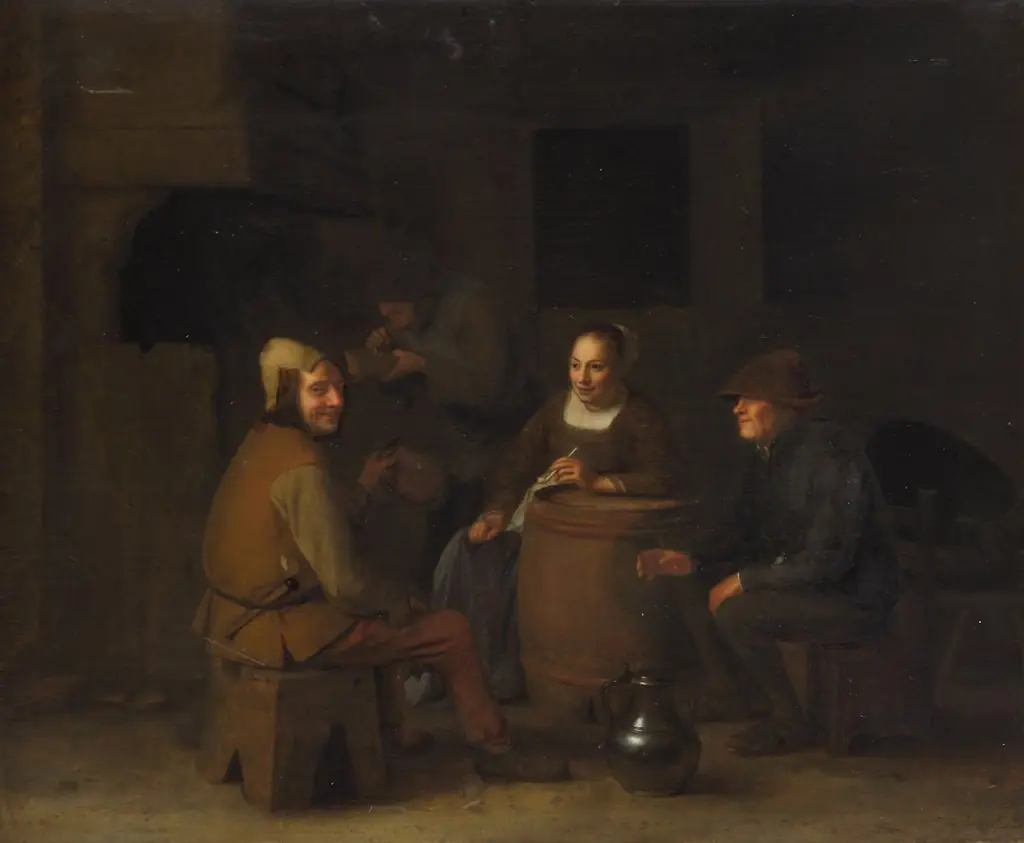
David Teniers the Younger painted Peasants in a Tavern around 1633 using oil on panel. The work captures a modest interior scene where three figures are gathered around a wooden table, illuminated by a single light source that creates a contrast between bright and shadowed areas.
Subject & Meaning
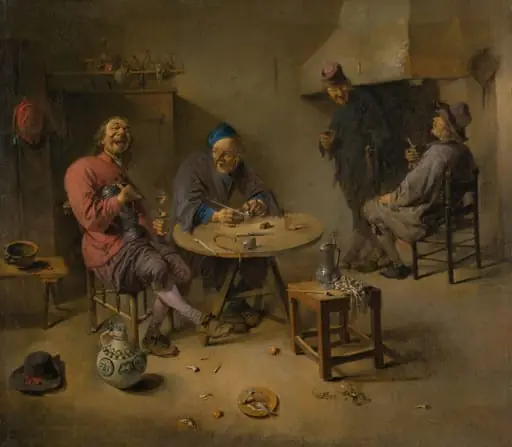
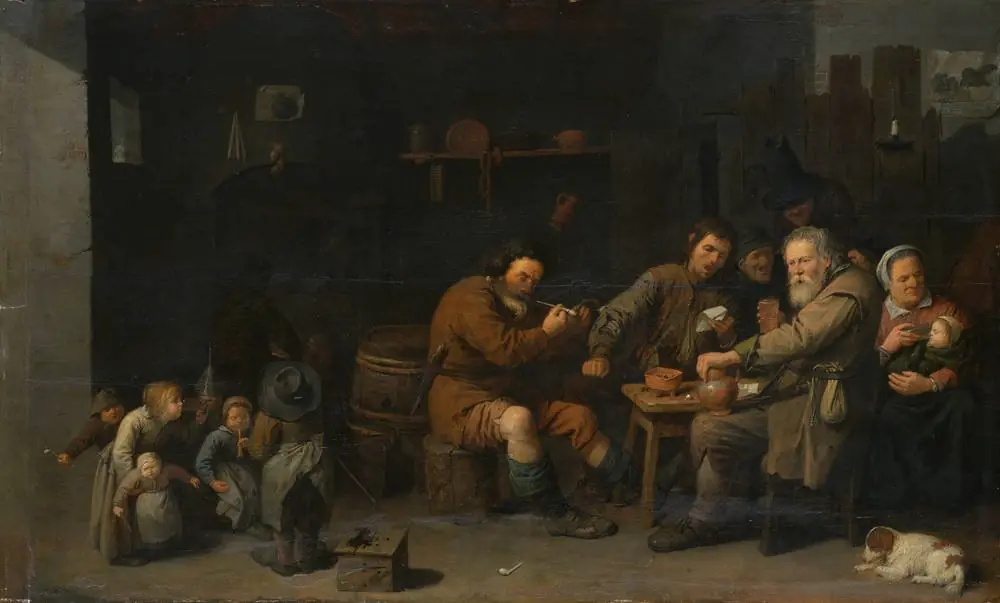
The composition presents a casual gathering of rural folk: one man lifts a drink with a smile, another leans forward with a glass, while a third stands holding a pipe. A fourth figure is visible in the doorway, suggesting the tavern’s role as a communal space where everyday life and simple pleasures intersect.
Own this work as a print
Artist & collection
Artist
David Teniers the Younger or David Teniers II was a Flemish Baroque painter, printmaker, and artist.