Artwork
伝天章周文筆 山水図屏風|Mountain Landscape
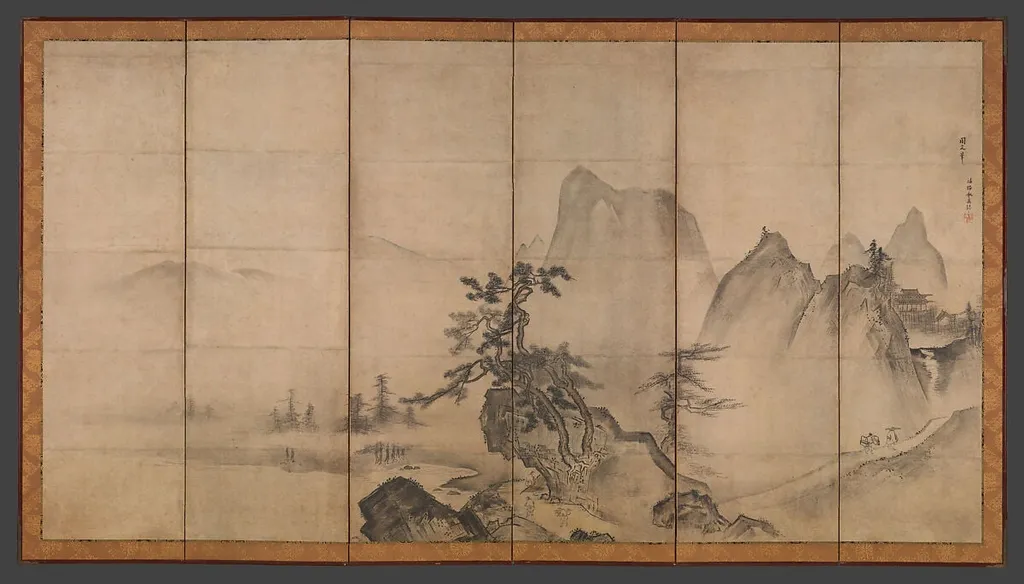
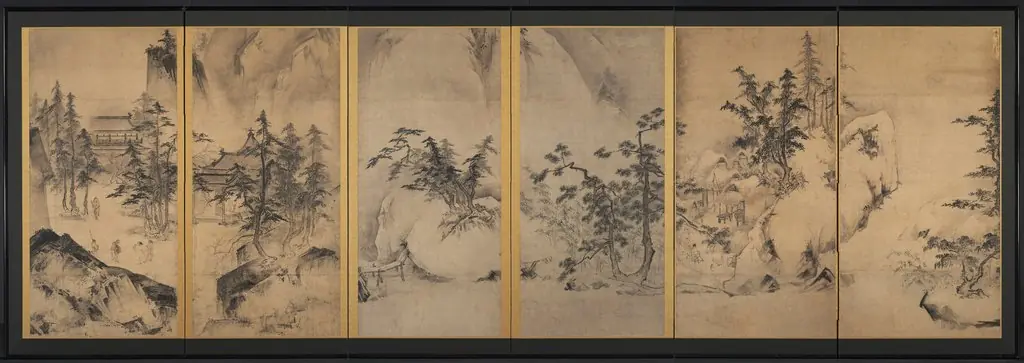
伝天章周文筆 山水図屏風|Mountain Landscape is an ink painting by the Renaissance artist Tenshō Shūbun. It dates from 1438 and is held in the collection of the Metropolitan Museum of Art.
About this work
Overview
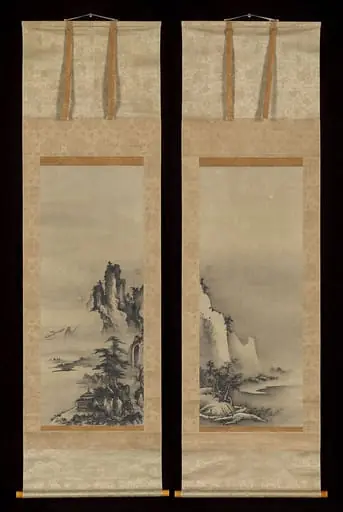
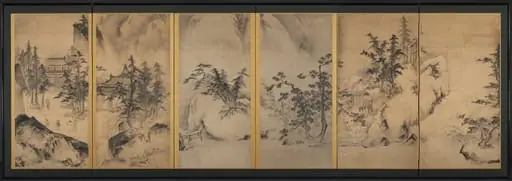
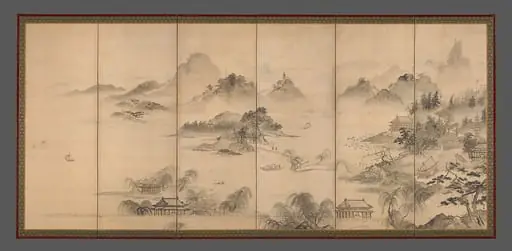
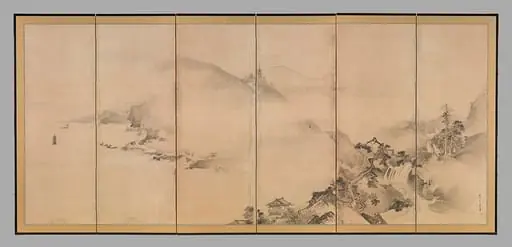
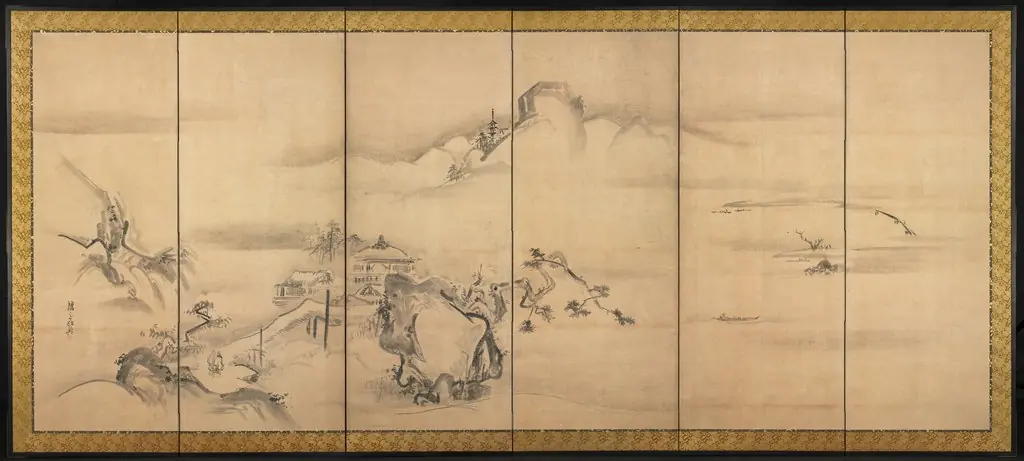
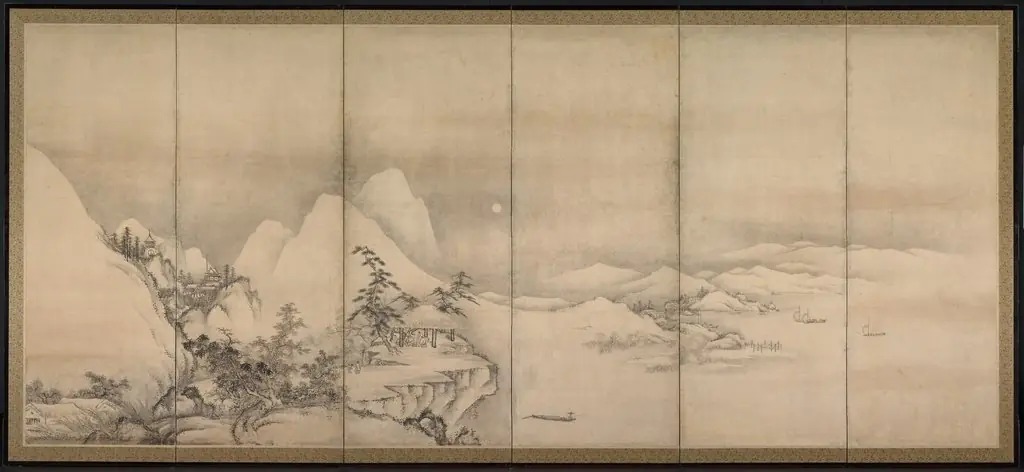
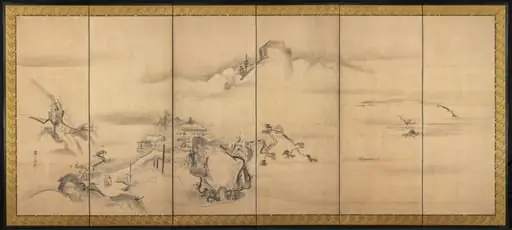
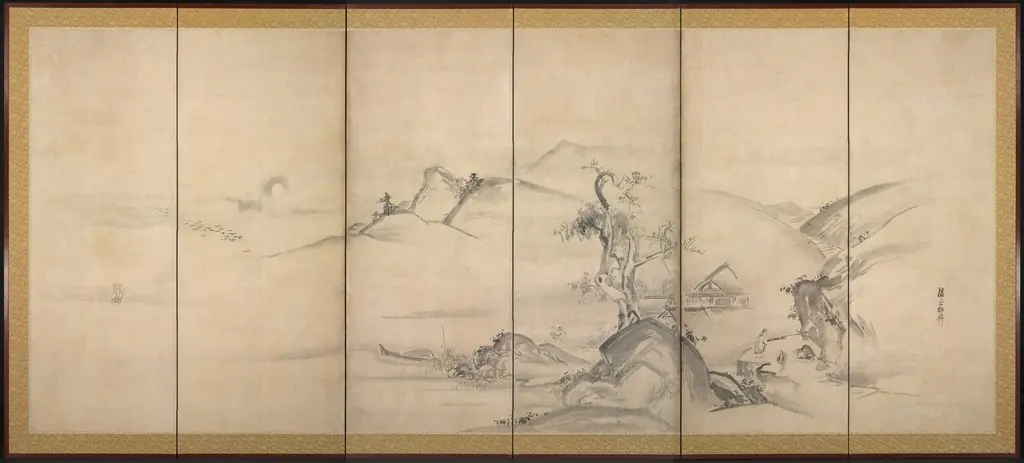
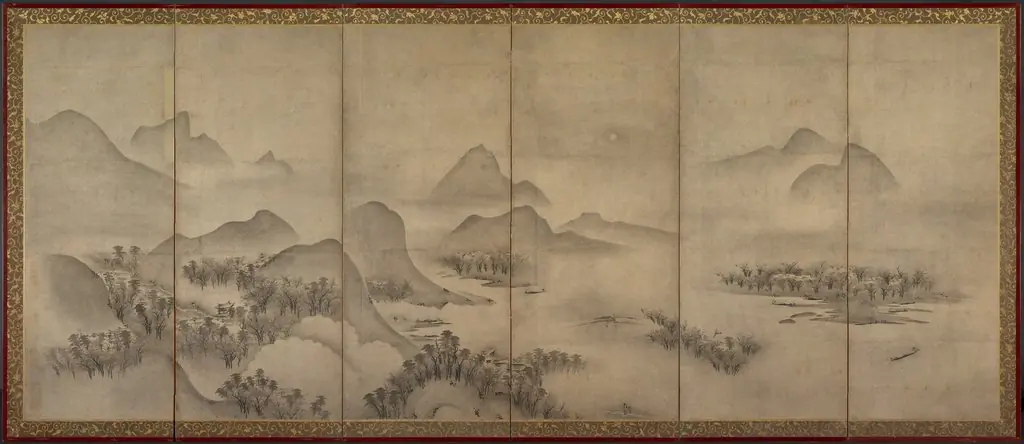
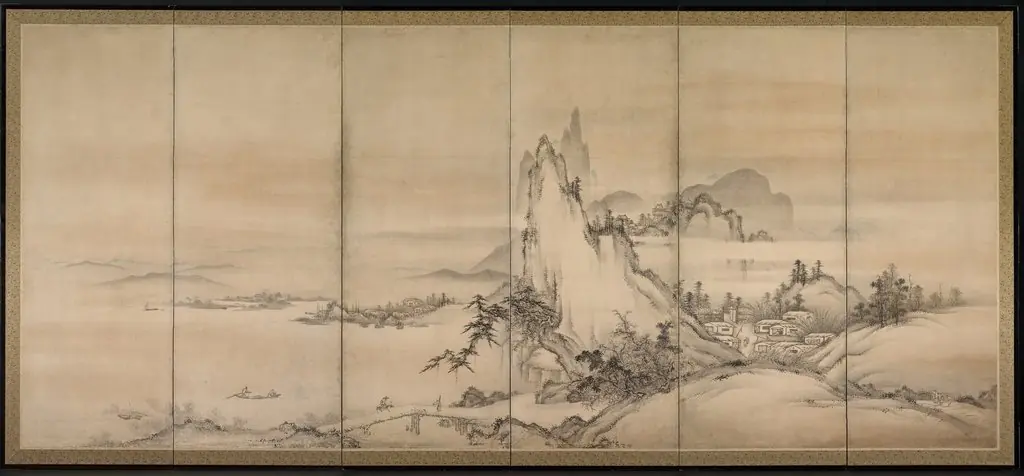
Created in 1438 by the Japanese painter Tenshō Shūbun, this work consists of two six‑panel folding screens painted with ink and subtle color on paper. The screens are part of the collection of the Metropolitan Museum of Art and present a tranquil mountainous landscape that unfolds across the panels.
Subject & Meaning
The composition depicts a serene mountain scene divided between mist‑shrouded peaks on the left and rugged cliffs on the right. A solitary pine clings to a steep slope, while a modest wooden structure rests near water, accompanied by diminutive figures strolling along a path, suggesting a contemplative interaction between humanity and nature.
Technique & Style
Shūbun employs ink washes and restrained pigments to model depth, using gradations of light and shadow that dissolve into atmospheric haze. Fine, sketch‑like strokes outline trees and rocks, while cross‑hatching builds tonal variation, giving the surface a textured, almost tactile quality despite the delicate medium.
History & Provenance
The screens were produced during the Muromachi period, a time when Chinese-inspired ink landscape painting was flourishing in Japan. After changing hands among private collectors, they entered the Metropolitan Museum of Art’s holdings, where they remain accessible for study and public viewing.
Artist & collection