Artwork
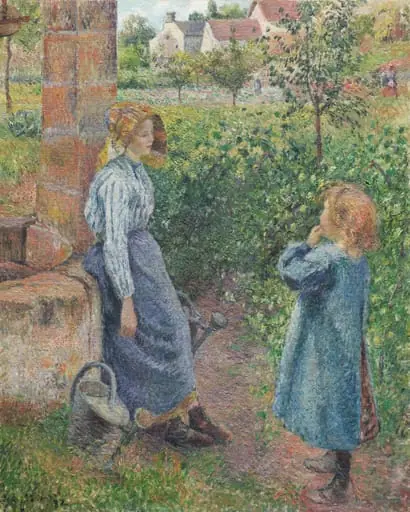
Woman reading with a young girl (Mia Van Rysselberghe with her daughter Elisabeth ?)
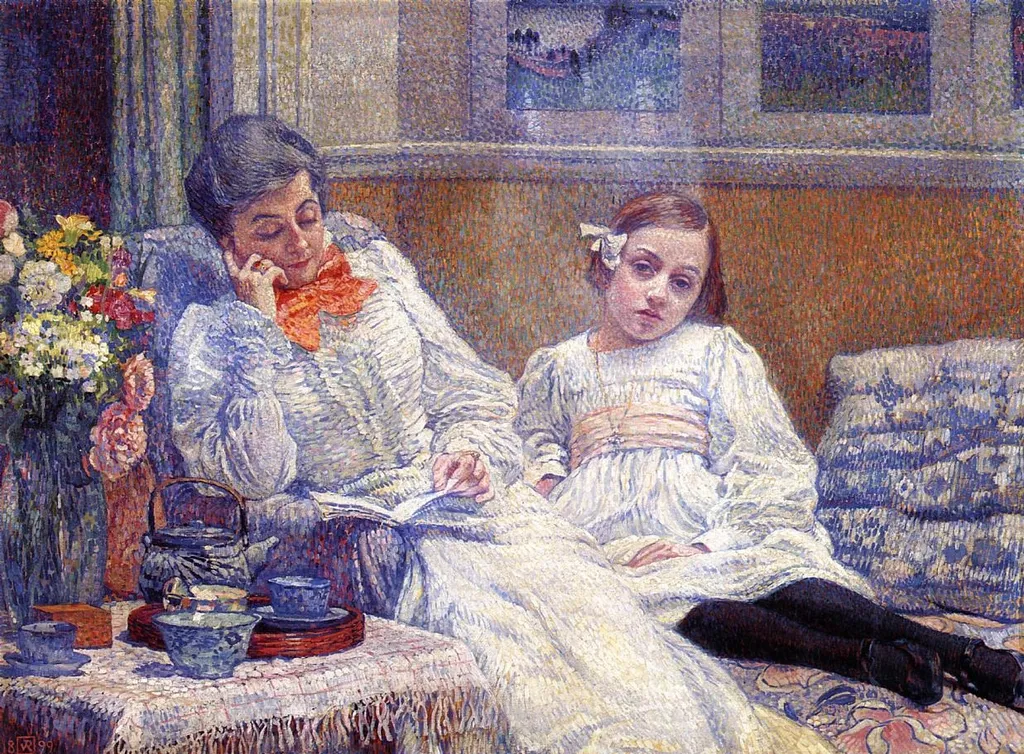
Woman reading with a young girl (Mia Van Rysselberghe with her daughter Elisabeth ?) is an oil painting by Théo van Rysselberghe. It dates from 1900 and is held in the collection of the Royal Museums of Fine Arts of Belgium.
About this work
Overview
Painted in 1900 by Théo van Rysselberghe, this oil work depicts a quiet domestic moment between a woman and a young girl. The scene unfolds in a softly lit interior, with natural light filtering through a window. The composition centers on two figures engaged in a shared, contemplative activity, rendered with deliberate brushwork and a restrained palette of blues, yellows, and muted reds.
Subject & Meaning
The figures are believed to be the artist’s wife, Mia, and their daughter Elisabeth, though identification remains tentative. The act of reading together suggests intimacy and the transmission of quiet knowledge. The absence of overt narrative or gesture emphasizes stillness and domestic harmony, reflecting a personal, rather than theatrical, vision of family life.
Technique & Style
Van Rysselberghe employed loose, visible brushstrokes characteristic of his Neo-Impressionist phase, applying paint in textured dabs that suggest form without sharp definition. The color scheme is subdued, favoring soft harmonies over bold contrasts. Light is handled with sensitivity, casting gentle shadows and illuminating fabrics and surfaces with a diffused, atmospheric quality.
History & Provenance
The painting has remained within the collection of the Royal Museums of Fine Arts of Belgium since its creation. It was likely acquired directly from the artist or through his circle, preserving its original context. No significant alterations or documented transfers are recorded, suggesting continuous institutional stewardship since the early 20th century.
Context
Created during a period when van Rysselberghe was refining his pointillist technique, this work reflects a shift toward more intimate, domestic subjects. While influenced by broader European trends in light and color, the painting diverges from public or symbolic themes, instead focusing on private, everyday moments, aligning with the artist’s personal aesthetic priorities at the time.
Legacy
The painting stands as a quiet example of early 20th-century Belgian domestic portraiture, illustrating how Neo-Impressionist methods could be adapted to convey emotional subtlety. It contributes to the understanding of van Rysselberghe’s evolution beyond pure pointillism, revealing his interest in the psychological resonance of ordinary scenes.
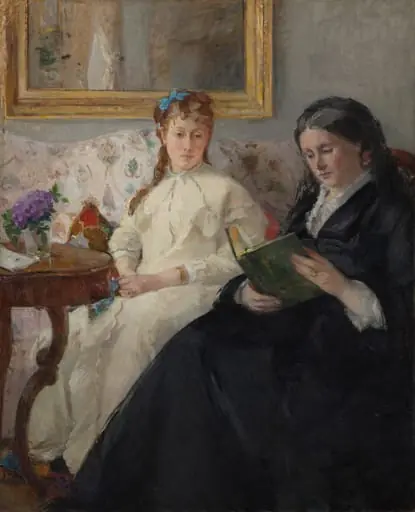
Artist & collection

Artist
Théophile "Théo" van Rysselberghe was a Belgian neo-impressionist painter, who played a pivotal role in the European art scene at the turn of the twentieth century.

Museum
Royal Museums of Fine Arts of Belgium
Continue through works from the same source collection.
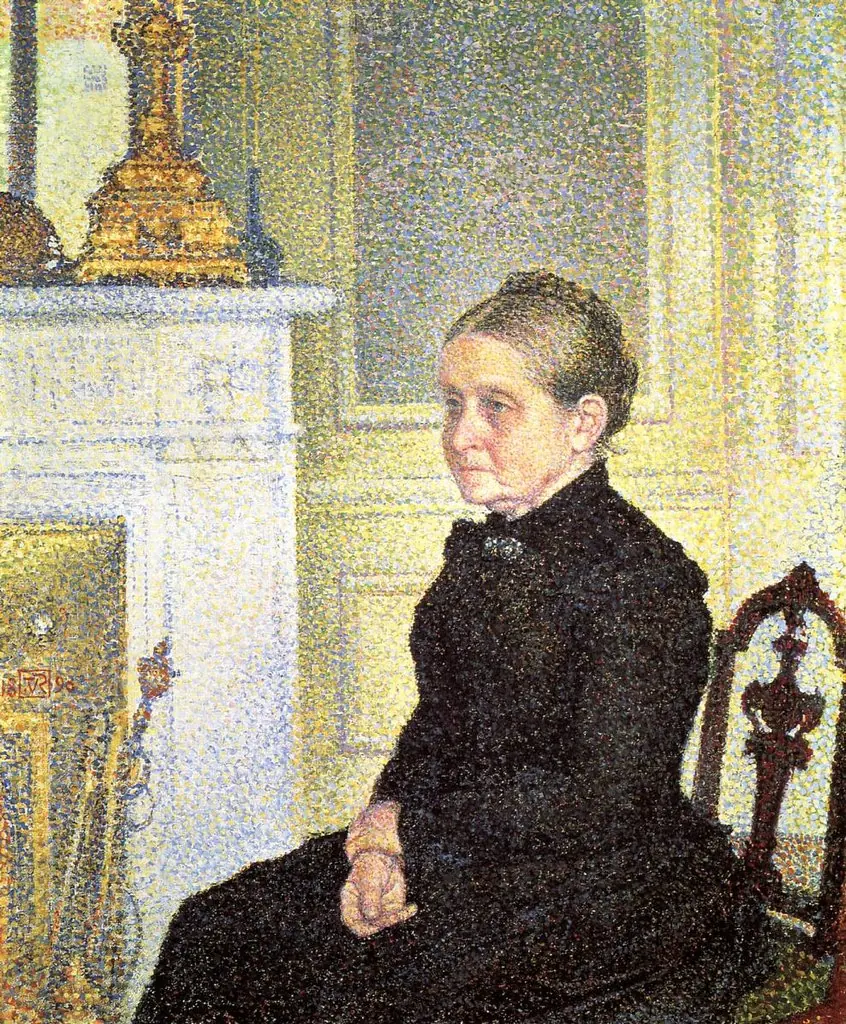
- The Mother and Sister of the Artist
 Femeie tricotând la Arradon
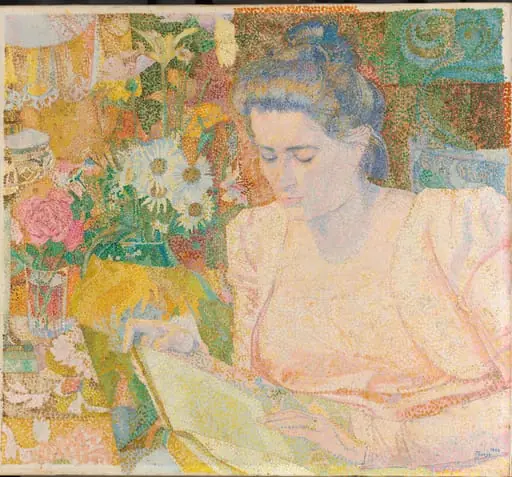 Portrait of Marie Jeanette de Lange
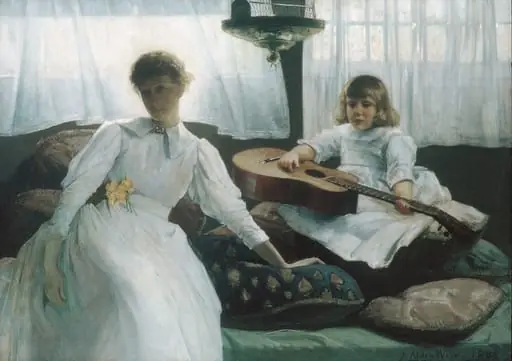 Idle Hours
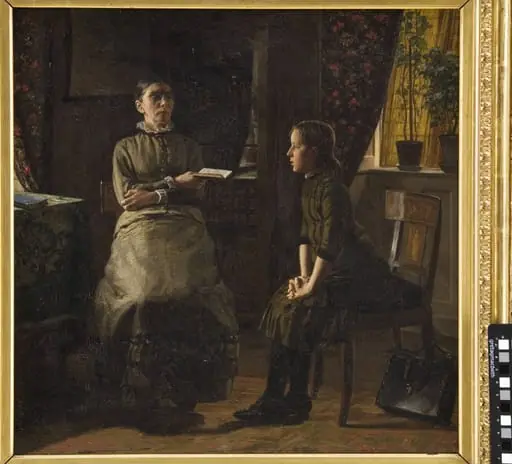 Lærerinde og elev
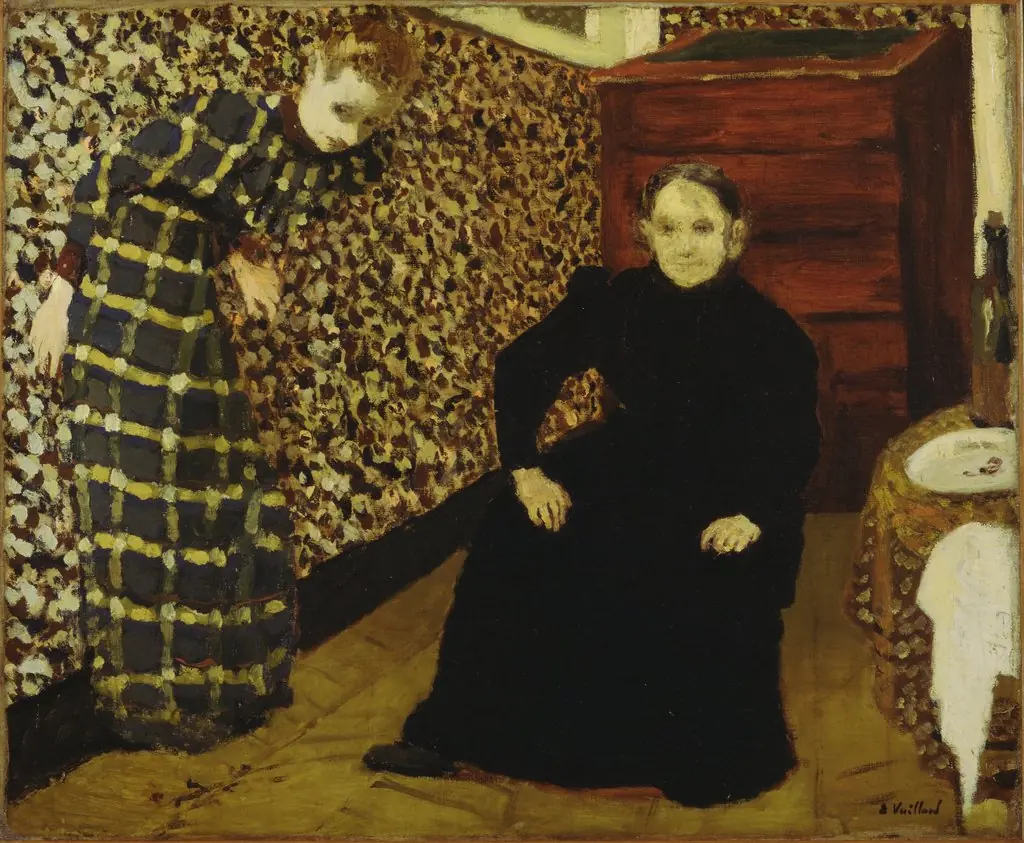 Interior Mother and Sister of the Artist
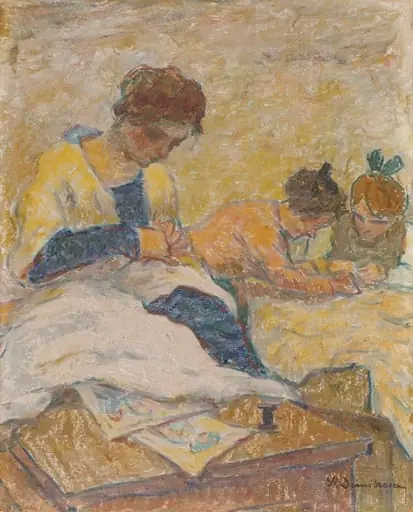 Interior cu personaje
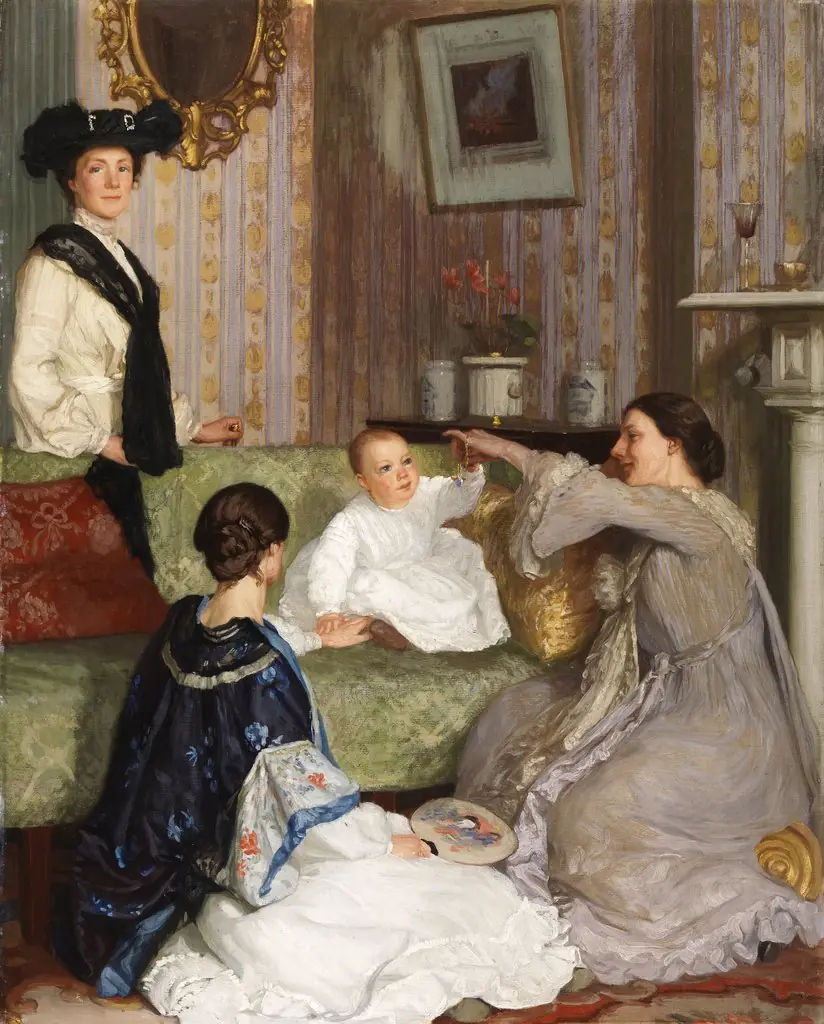 The Jewel
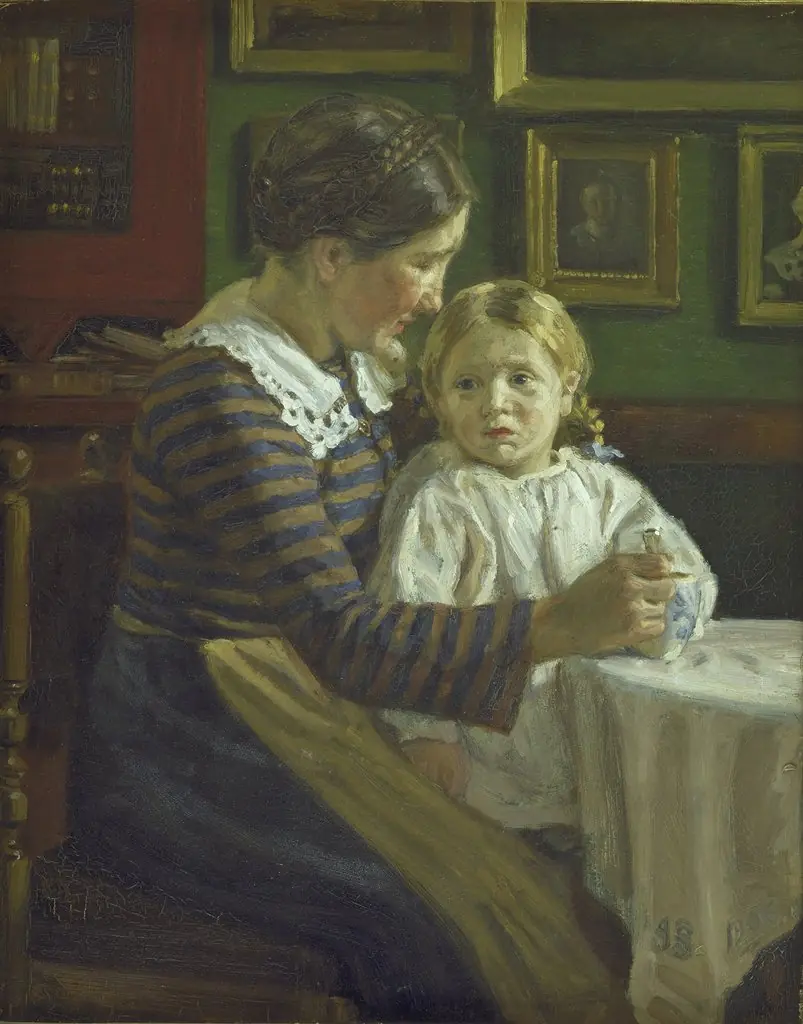 Marie gets some food.
 Marie får mad
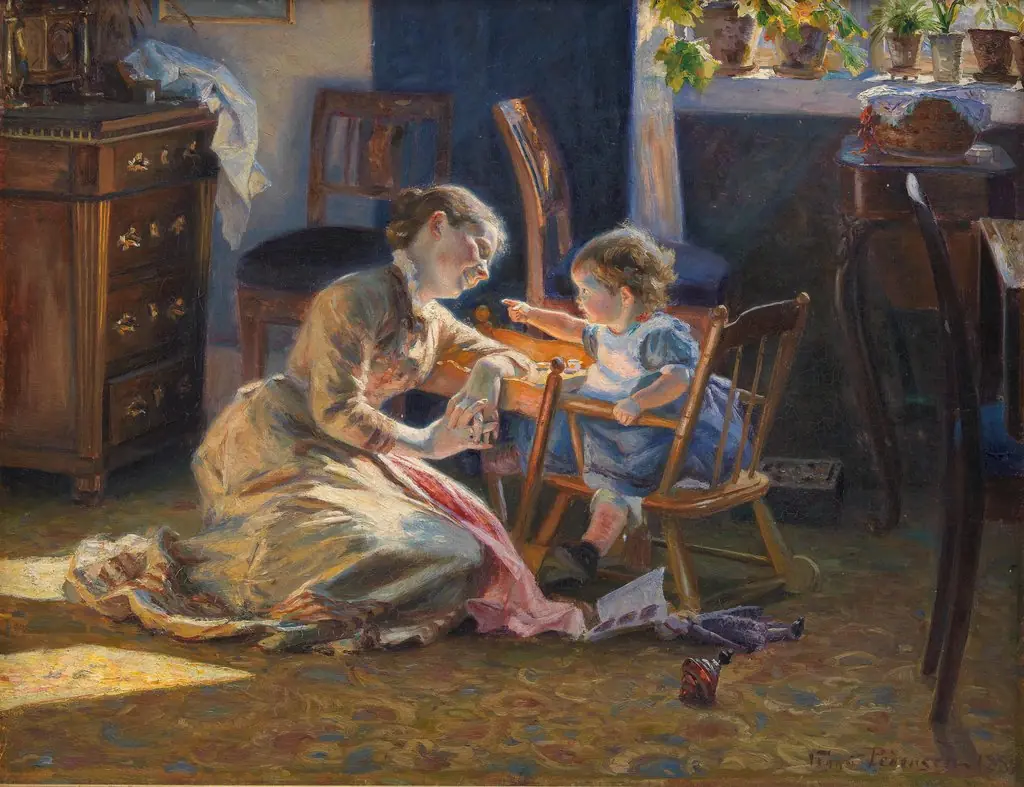 Sunshine in the Living Room. The Artist's Wife and Child
 Woman and Child at the Well