Artwork
Ruined Castle
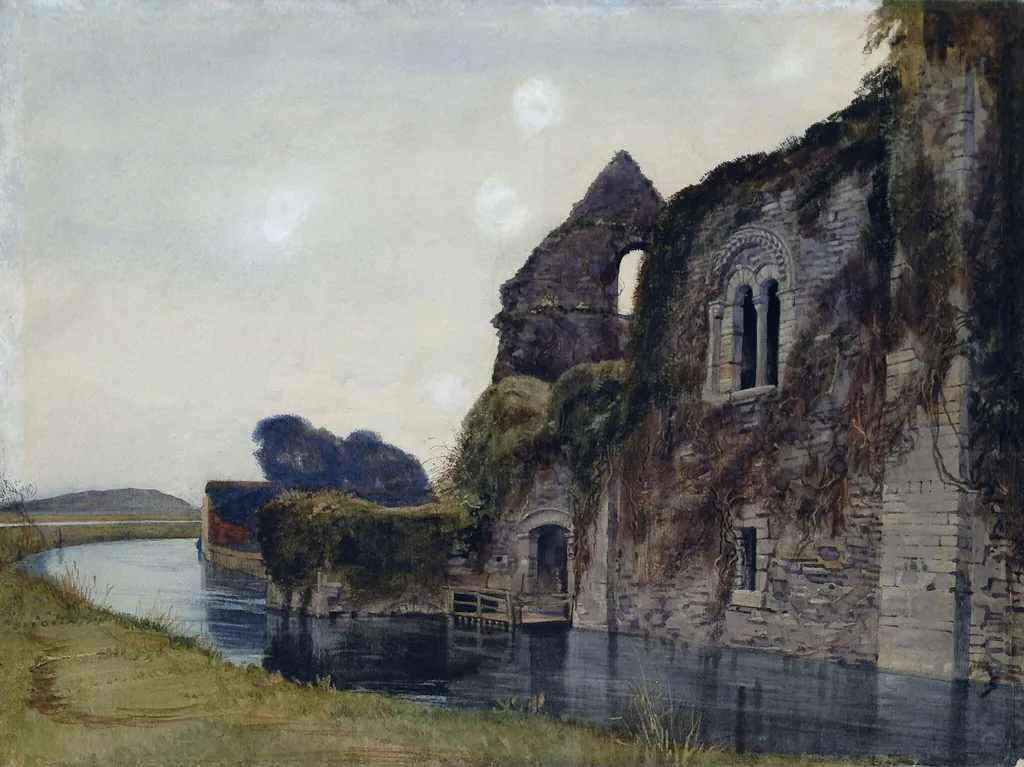
Ruined Castle is a watercolor work on paper by the Impressionist artist The 9th Earl of Carlisle George Howard. It dates from 1870 and is held in the collection of the Victoria and Albert Museum.
About this work
Overview
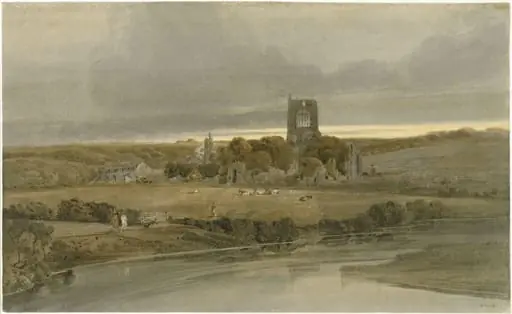
‘Ruined Castle’ is a watercolour executed around 1870 by George Howard, the ninth Earl of Carlisle. The work is part of the Victoria and Albert Museum’s collection and measures a modest size typical of 19th‑century British watercolours. It presents a solitary, decaying stone structure set within a tranquil landscape.
Subject & Meaning
The composition depicts a medieval castle whose walls are overtaken by ivy and moss, suggesting the passage of time and nature’s reclamation of human constructs. A narrow wooden bridge provides the only access across a still water surface that mirrors the muted stone and sky, creating a mood of quiet abandonment.
Technique & Style
Howard employs a restrained palette of greys, muted greens and soft earth tones, allowing the watercolour wash to convey the dampness of stone and foliage. Delicate, layered strokes render the reflective water and the subtle gradations of light, while the overall handling remains gentle rather than dramatic, emphasizing atmosphere over detail.
History & Provenance
Created circa 1870, the painting entered the Victoria and Albert Museum’s holdings through donation or acquisition in the early 20th century, reflecting the institution’s interest in British watercolour traditions. It remains attributed to the Earl, an amateur artist whose works provide insight into aristocratic leisure pursuits of the period.
Context
The work belongs to a broader Victorian fascination with ruins, which symbolised both romantic nostalgia and the impermanence of empire. While not an Impressionist piece, its attention to light and colour parallels contemporary experiments with atmospheric effects, situating it within the evolving landscape of 19th‑century British art.
Own this work as a print
Artist & collection
Artist
The 9th Earl of Carlisle George Howard
George Howard spent his life in drafty Yorkshire castles, sketching on rainy afternoons when duties dragged.

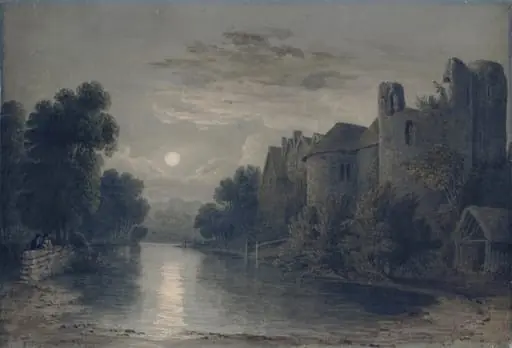 Allington Castle, near Maidstone, Kent. Moonlight
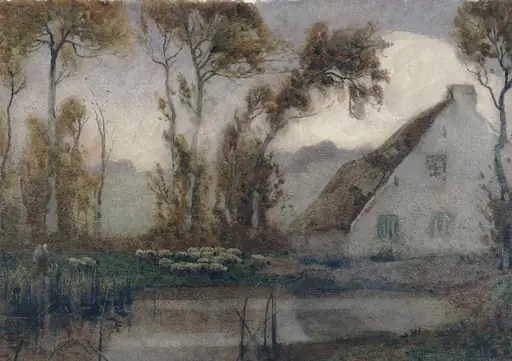 Ma Campagne
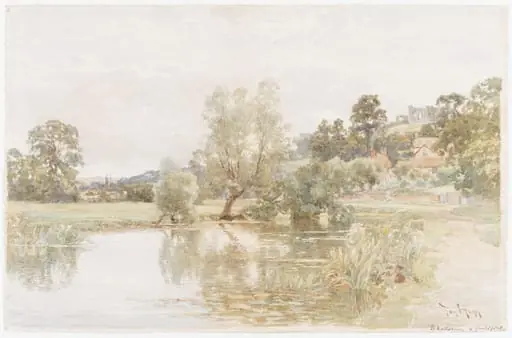 St. Catherine's Chapel, above Artington and the River Wey
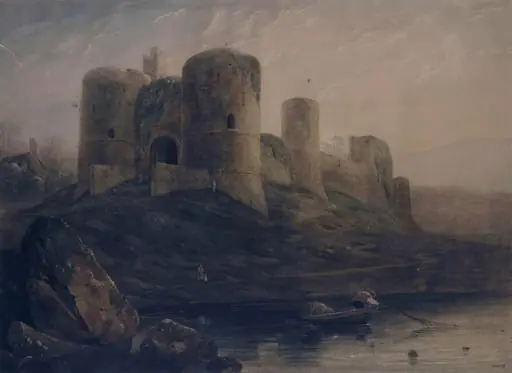 Manorbier Castle, near Tenby, Pembrokeshire: Sunset Effect
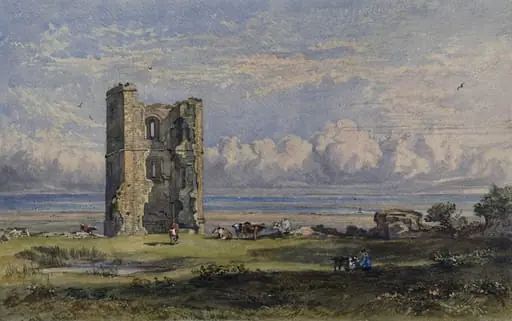 Coastal scene with tower and cows
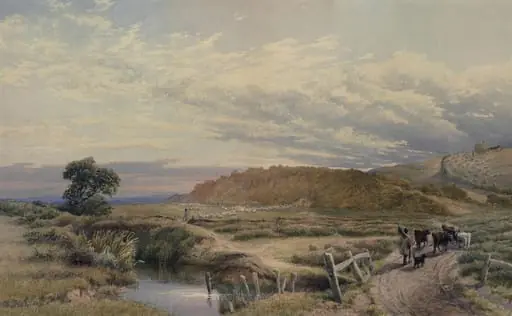 On the Hill at St. Leonards
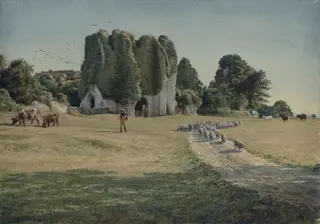 View of the Ruins of St. Radigund's Abbey, Nr Dover
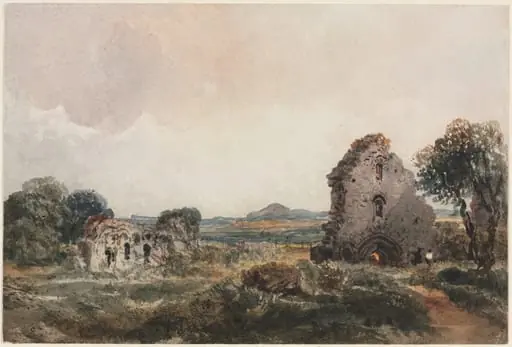 Neath Abbey
 Kirkstall Abbey, Yorkshire: Evening