Artwork
The Relation of the Individual to the State: Socrates and His Friends Discuss "The Republic," as in Plato's Account; Color Study for Mural, Supreme Court Room, Saint Paul, Minnesota State Capitol, Saint Paul
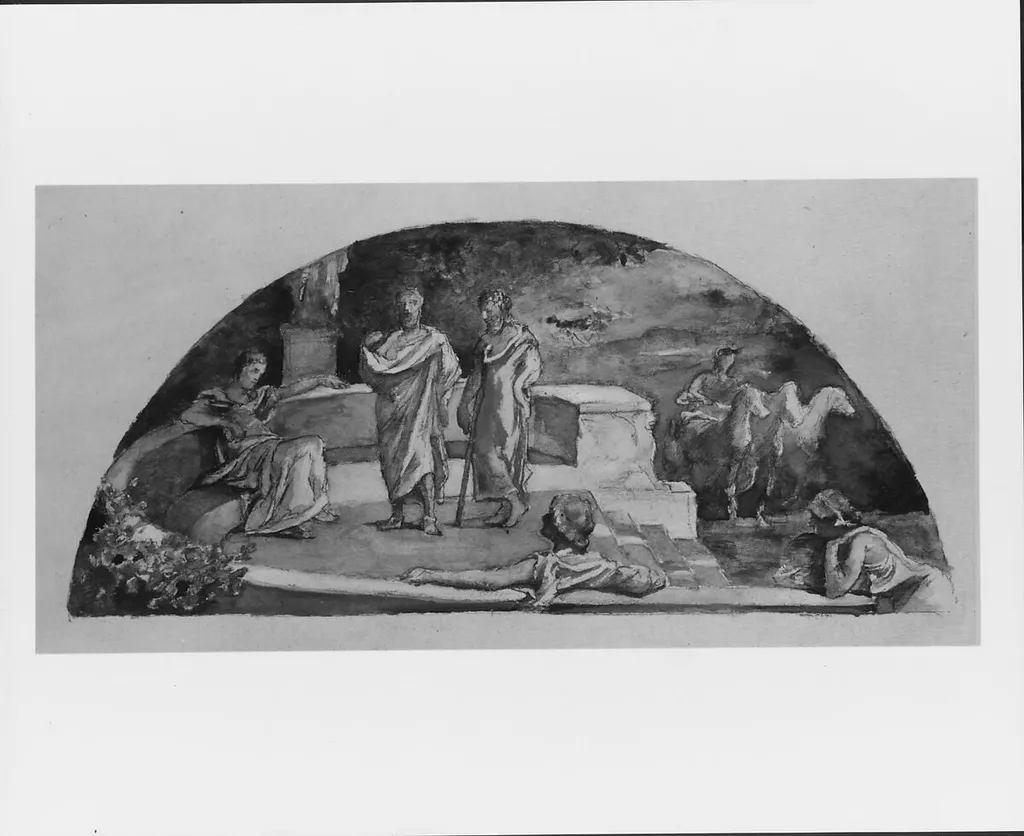
The Relation of the Individual to the State: Socrates and His Friends Discuss "The Republic," as in Plato's Account; Color Study for Mural, Supreme Court Room, Saint Paul, Minnesota State Capitol, Saint Paul is a watercolor work on paper by the American Impressionist artist John La Farge. It dates from 1903 and is held in the collection of the Metropolitan Museum of Art.
About this work
Subject & Meaning
The presence of human figures centered around Socrates establishes the iconography of intellectual discourse and civic duty relevant to the judicial setting.
This color study depicts Socrates engaged in discussion with his friends, illustrating the philosophical dialogue found in Plato's account of The Republic. The work serves as a preparatory design for a mural intended for the Supreme Court Room of the Minnesota State Capitol in Saint Paul. By focusing on this specific classical scene, the composition explores the thematic relationship between the individual and the state through the lens of ancient Greek political philosophy.
The presence of human figures centered around Socrates establishes the iconography of intellectual discourse and civic duty relevant to the judicial setting.
Technique & Style
Created in 1903, this color study for the Supreme Court Room mural in the Saint Paul, Minnesota State Capitol is executed in gouache, watercolor, and graphite. The artist applied these media onto light tan wove paper, a support that provides a warm, neutral ground for the composition. Measuring 24.4 cm in height and 27.6 cm in width, the work functions as a preparatory design rather than a finished fresco.
The handling of the mixed media suggests a focus on tonal variation and color relationships intended to guide the final execution of the large-scale wall painting.
History & Provenance
John La Farge created this color study in 1903 as a preparatory work for a mural intended for the Supreme Court Room of the Saint Paul, Minnesota State Capitol. The piece, titled "The Relation of the Individual to the State: Socrates and His Friends Discuss 'The Republic,' as in Plato's Account," serves as a visual exploration of the larger commission's thematic content. Executed in gouache, watercolor, and graphite on light tan wove paper, the study measures 24.4 by 27.6 centimeters.
The work is currently held in the collection of the Metropolitan Museum of Art, where it is classified within the American Wing.
The work is held in the collection of the Metropolitan Museum of Art in New York, where it is classified within The American Wing. The piece was created in 1903 as a color study for a mural intended for the Supreme Court Room of the Minnesota State Capitol in Saint Paul. The museum's records indicate the work is executed in gouache, watercolor, and graphite on light tan wove paper.
Its physical dimensions are recorded as 24.4 cm in height and 27.6 cm in width. No specific inventory or accession number is provided in the available records, nor is there documentation of a specific exhibition history for this study.
Overview
John La Farge’s 1903 study, rendered in gouache, watercolor, and graphite on light‑tan wove paper, serves as a preparatory sketch for a larger mural planned for the Supreme Court Chamber of the Minnesota State Capitol in Saint Paul. The composition centers on Socrates surrounded by his interlocutors, visually interpreting a dialogue from Plato’s Republic.
Context
At the turn of the twentieth century, American public art often drew on classical antiquity to convey democratic ideals. La Farge’s choice of a Platonic dialogue aligns with contemporary efforts to link ancient philosophical concepts to modern civic institutions, particularly within the architecture of state capitols.
Artist & collection

Artist
John La Farge (March 31, 1835 – November 14, 1910) was an American artist whose career spanned illustration, murals, interior design, painting, and popular books on his Asian travels and other art-related topics.

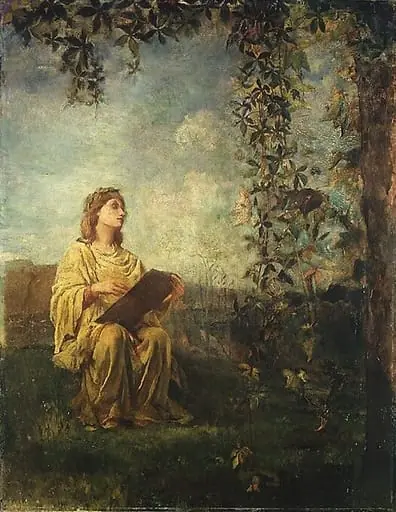 The Muse of Painting
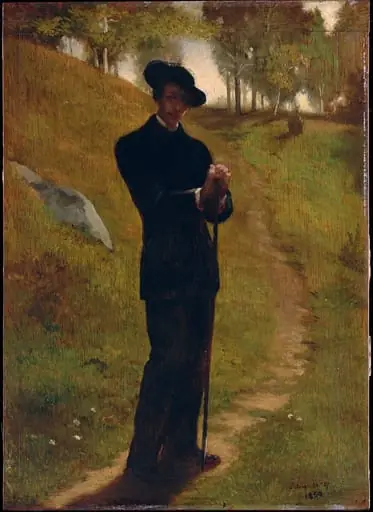 Portrait of the Painter
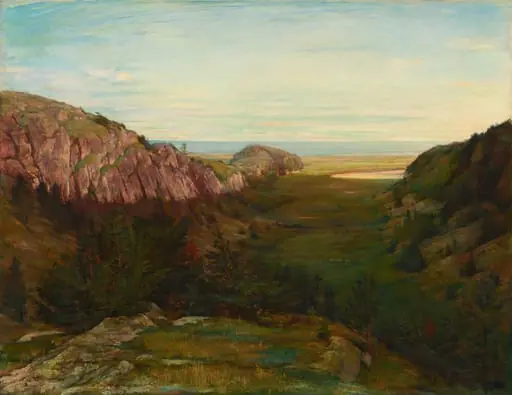 The Last Valley - Paradise Rocks
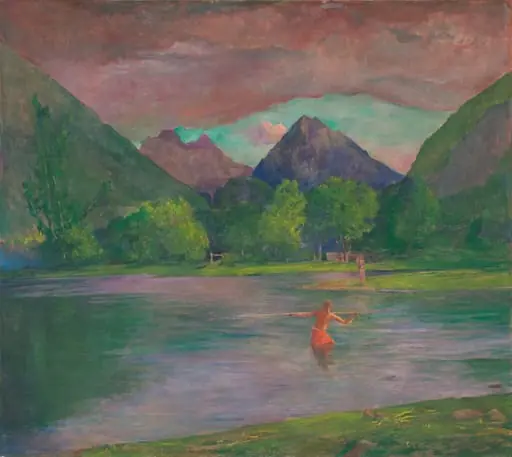 The Entrance to the Tautira River, Tahiti. Fisherman Spearing a Fish
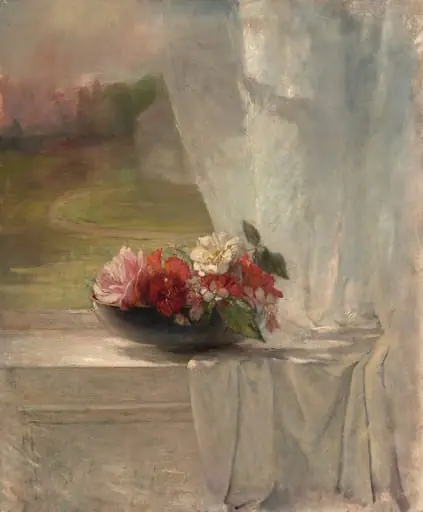 Flowers on a Window Ledge
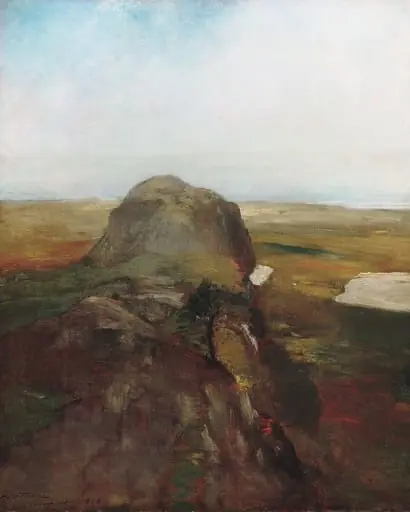 Autumn Study, View over Hanging Rock, Newport, R.I.
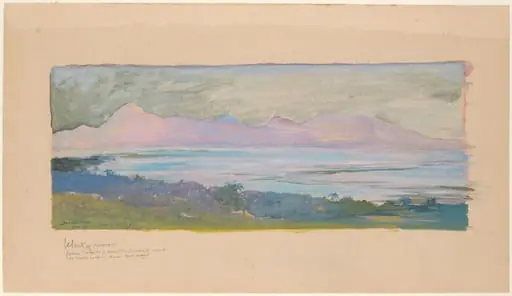 The Island of Moorea Looking across the Strait from Tahiti, January 1891
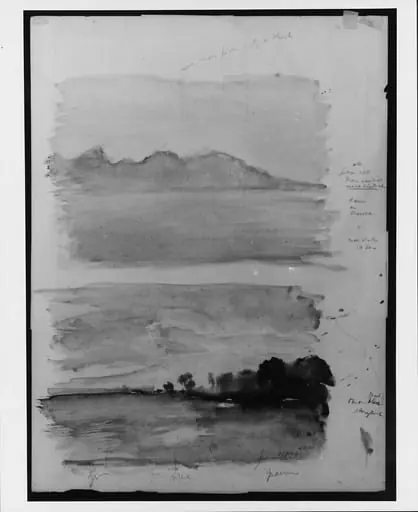 Double Study of Dawn, Moorea Seen across the Water, Tahiti
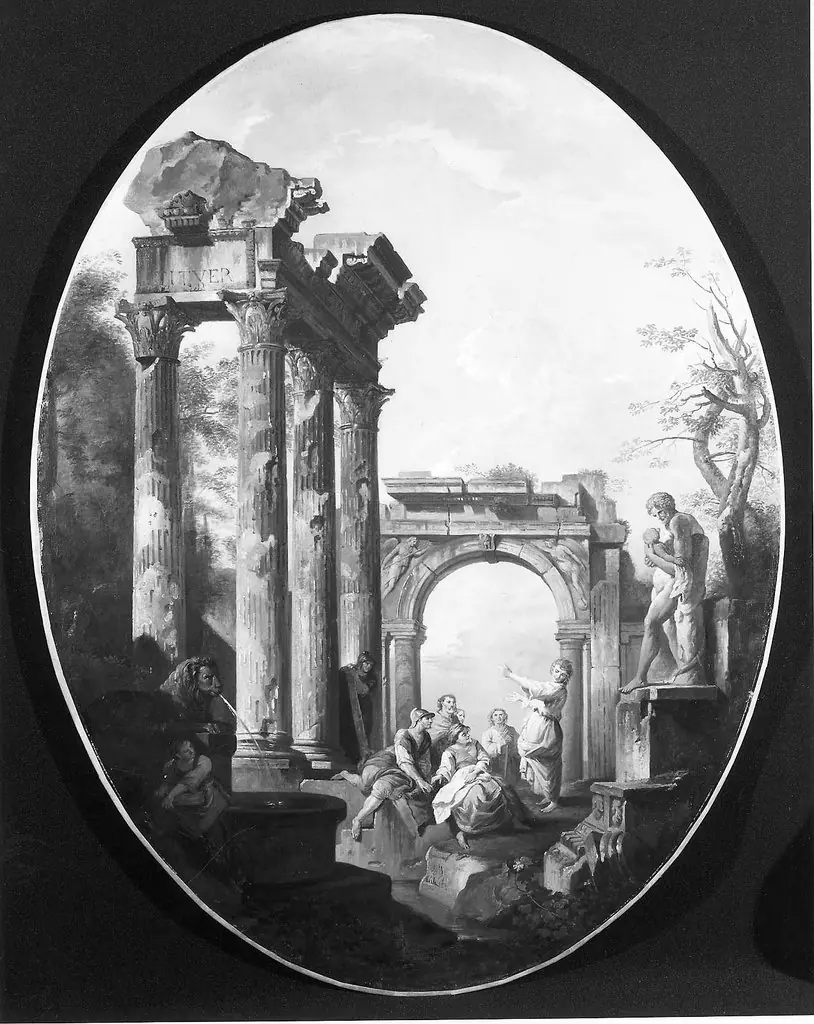
- Capriccio of Roman Ruins with a Statue of Silenus and Dionysus
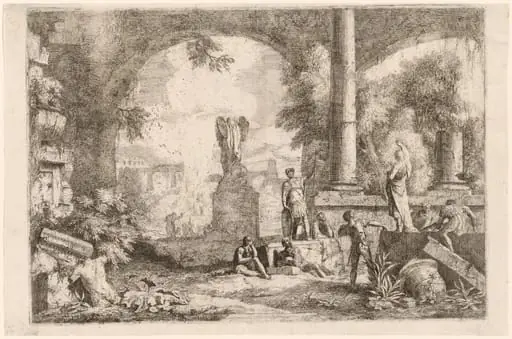 Capriccio of Antique Ruins with Men Gazing at a Classical Orator
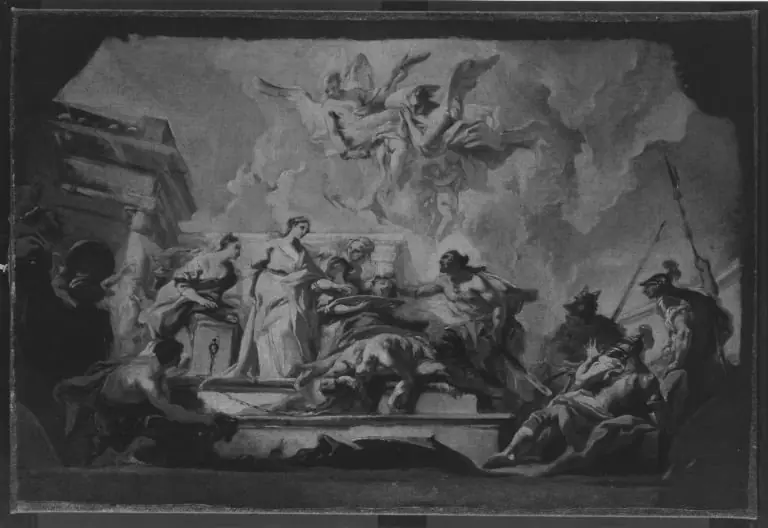 Enthauptung Johannes des Täufers
 Seven Nymphs in a Grotto
 Der Parnass
 Seven Nymphs in a Grotto
 Italienisch-klassische Landschaft
 Diogenes visited by Alexander the Great
 Design for decorative lunette: 'Model Drawing'
 Verherrlichung des Lammes
 Waldlandschaft
 Title Page