Artwork
The siege of Arbela in the era of Hulagu Khan, page from a Chingiz-nama (Book of Chingiz Khan) of the Jami al-tavarikh (Compendium of Chronicles) of Rashid al-Din (Persian,1247–1318)
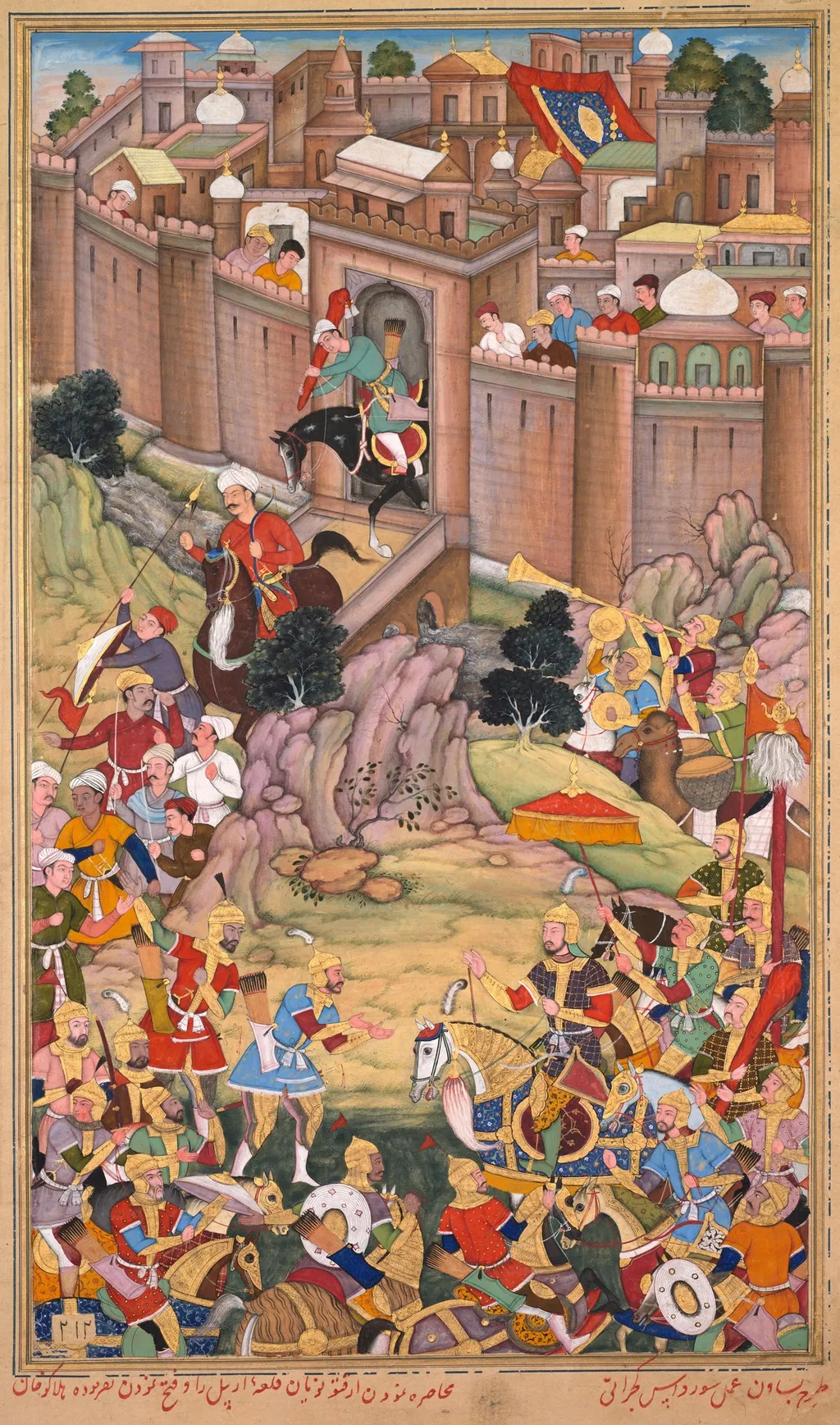
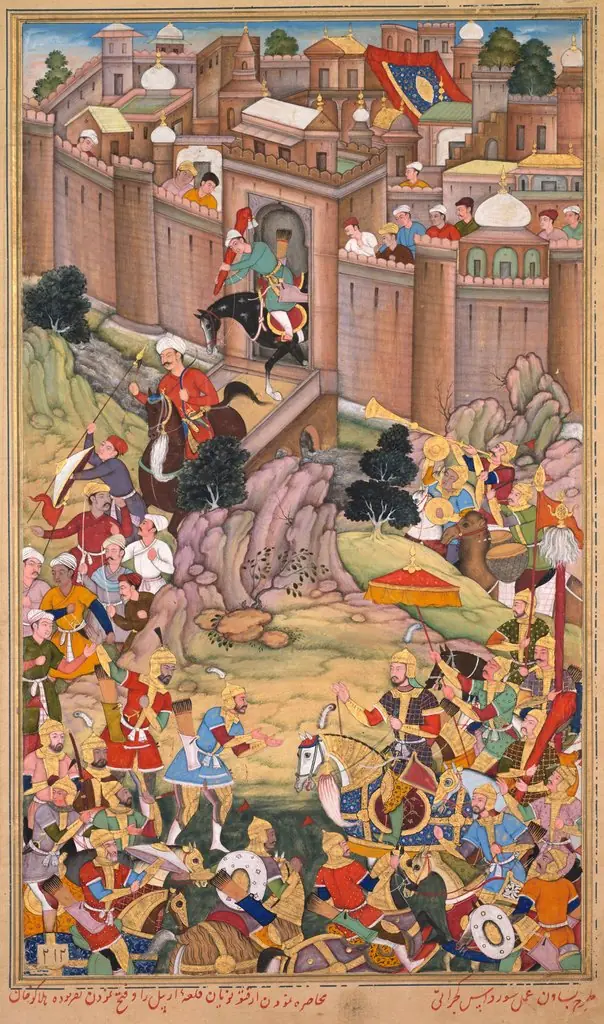
The siege of Arbela in the era of Hulagu Khan, page from a Chingiz-nama (Book of Chingiz Khan) of the Jami al-tavarikh (Compendium of Chronicles) of Rashid al-Din (Persian,1247–1318) is an unspecified painting. It dates from 1598 and is held in the collection of the Cleveland Museum of Art.
About this work
Subject & Meaning
The miniature illustrates the final assault on the fortified city of Arbela during the Mongol campaigns led by Hulagu Khan, a scene drawn from the Chingiz-nama, a Persian historical epic compiled by Rashid al-Din in the early 14th century. In this visual episode the Mongols employ siege engines and cavalry while defenders attempt to repel the attack, a narrative that underscores Hulagu’s reputation as a ruthless conqueror and the decisive power of his forces. The composition relies on traditional Persian book‑painting conventions: a flattened spatial perspective, richly patterned textiles, and a limited palette of mineral pigments that heighten the dramatic contrast between armored warriors and the burning architecture behind them.
Symbolically, the work connects the historic siege to the legendary lineage of Genghis Khan, reinforcing the Mongol imperial narrative within the Safavid cultural milieu of the late 16th century.
History & Provenance
The source material does not provide specific details regarding past exhibitions or the complete provenance trail prior to its arrival at the museum.
The painting dates to 1596 and was produced within the Mughal Empire, where it was created as a folio illustrating the siege of Arbela in the era of Hulagu Khan for a manuscript of the Chingiz-nama section of Rashid al-Din's Jami al-tavarikh. It is attributed to the artist Basavana, who was active in India around 1560–1600, and the folio is associated with a Sur Das attribution as well. The work is now held in the collection of the Cleveland Museum of Art, where it is catalogued under accession reference 1947.502.a.
The manuscript page depicting the siege of Arbela is held in the collection of the Cleveland Museum of Art in Cleveland, Ohio. The work is cataloged under the accession number 1947.502.a. Attributed to the Mughal artist Basavana and dated to 1596, the painting originated within the Mughal Empire before entering the museum's holdings.
The source material does not provide specific details regarding past exhibitions or the complete provenance trail prior to its arrival at the museum.
Context
The painting depicting the siege of Arbela within the Hulagu-era context of the Chingiz-nama was created in 1596 as part of the Jami al-tavarikh chronicle by Rashid al-Din. It belongs to the history painting genre and was produced during the Mughal period in India. The work is attributed to Basavana, an Indian artist active circa 1560–1600, and is housed in the Cleveland Museum of Art's collection.
Scholarly attention focuses on its role within the Chingiz-nama manuscript tradition and its significance in cross-cultural historical illustration. The piece reflects Mughal artistic engagement with Persian historical narratives, particularly through the lens of Mongol-era military events. Its creation date of 1596 situates it within the broader corpus of early modern Indian manuscript illumination.
Overview
The miniature illustrates the siege of Arbela during the campaigns of Hulagu Khan, as recorded in the Chingiz-nama section of Rashid al‑Din’s Jami al‑tavarikh. Executed in the Persian manuscript tradition of the late thirteenth century, the work combines narrative detail with a vivid palette to convey the intensity of the battle.
Technique & Style
Rendered in miniature format, the painting employs bright reds, blues and golds typical of Ilkhanid court art. Fine brushwork delineates individual faces, armor and weaponry, while linear architectural elements define the fortress’s towers and ramparts, creating a dense yet organized composition.
Artist & collection

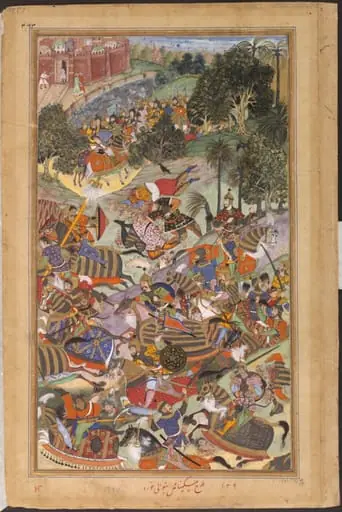
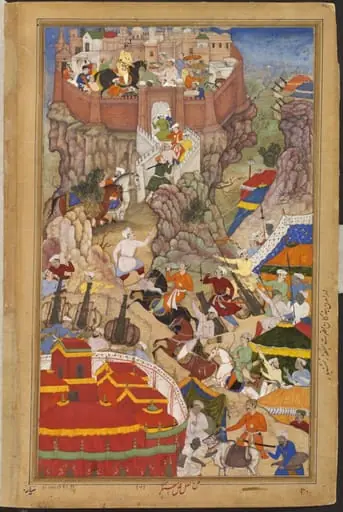
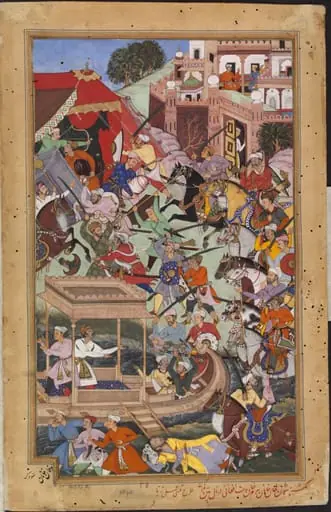
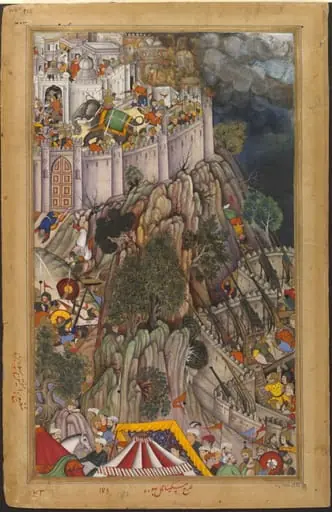
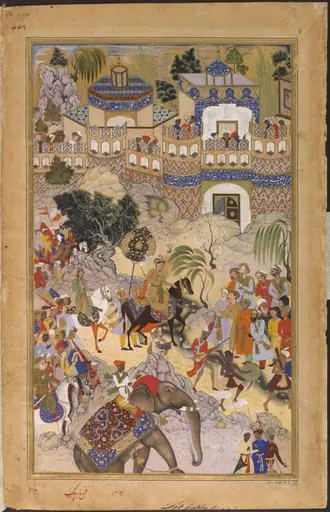
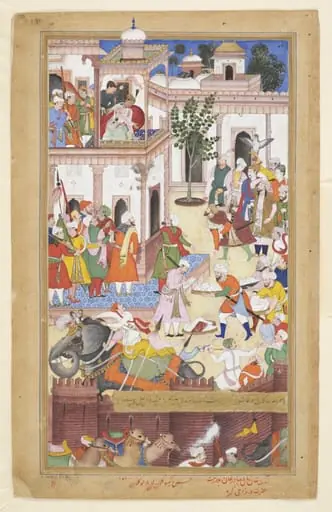
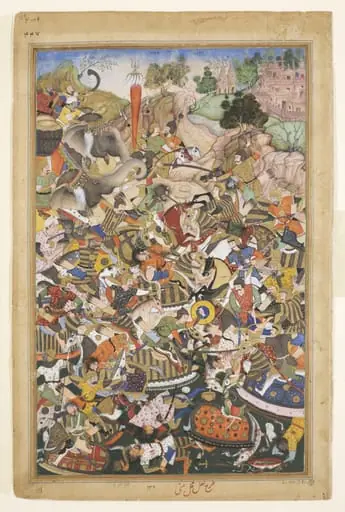
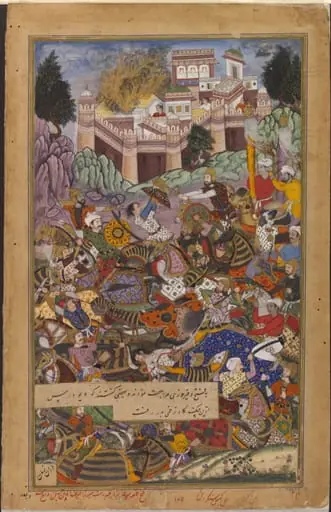
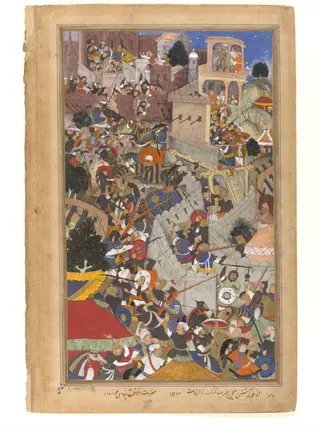
- The siege of Arbela in the era of Hulagu Khan, from a Chingiz-nama (Book of Chingiz Khan) of the Jami al-tavarikh (Compendium of Chronicles) of Rashid al-Din (Persian, 1247–1318)
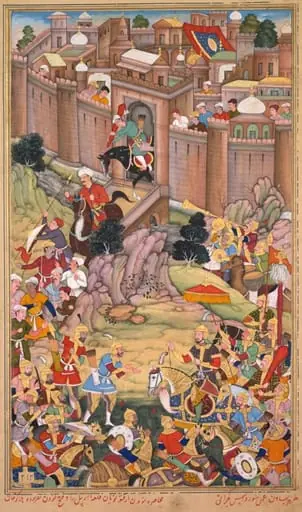 The siege of Arbela in the era of Hulagu Khan, from a Chingiz-nama (Book of Chingiz Khan) of the Jami al-tavarikh (Compendium of Chronicles) of Rashid al-Din (Persian, 1247–1318)
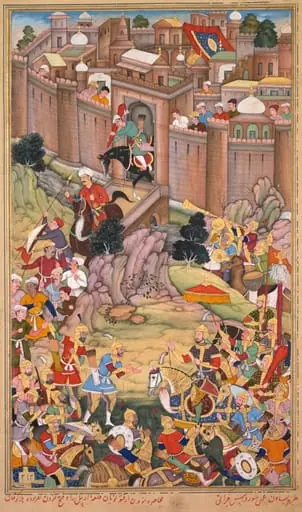 The siege of Arbela in the era of Hulagu Khan, page from a Chingiz-nama (Book of Chingiz Khan) of the Jami al-tavarikh (Compendium of Chronicles) of Rashid al-Din (Persian,1247–1318)