Artwork
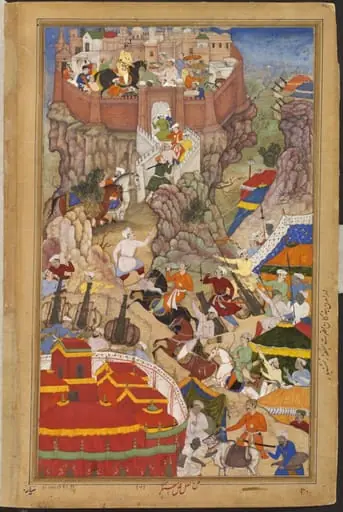
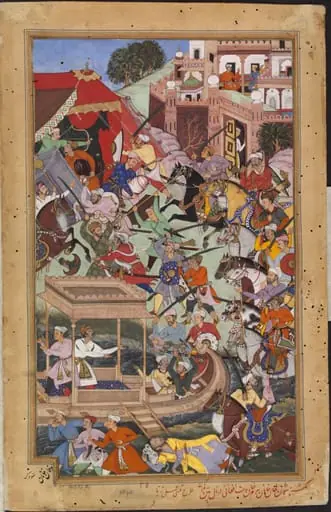
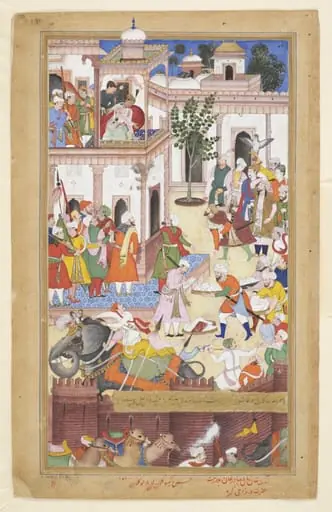
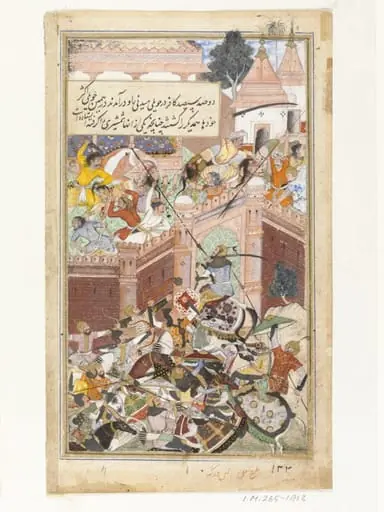
The siege of Arbela in the era of Hulagu Khan, from a Chingiz-nama (Book of Chingiz Khan) of the Jami al-tavarikh (Compendium of Chronicles) of Rashid al-Din (Persian, 1247–1318)
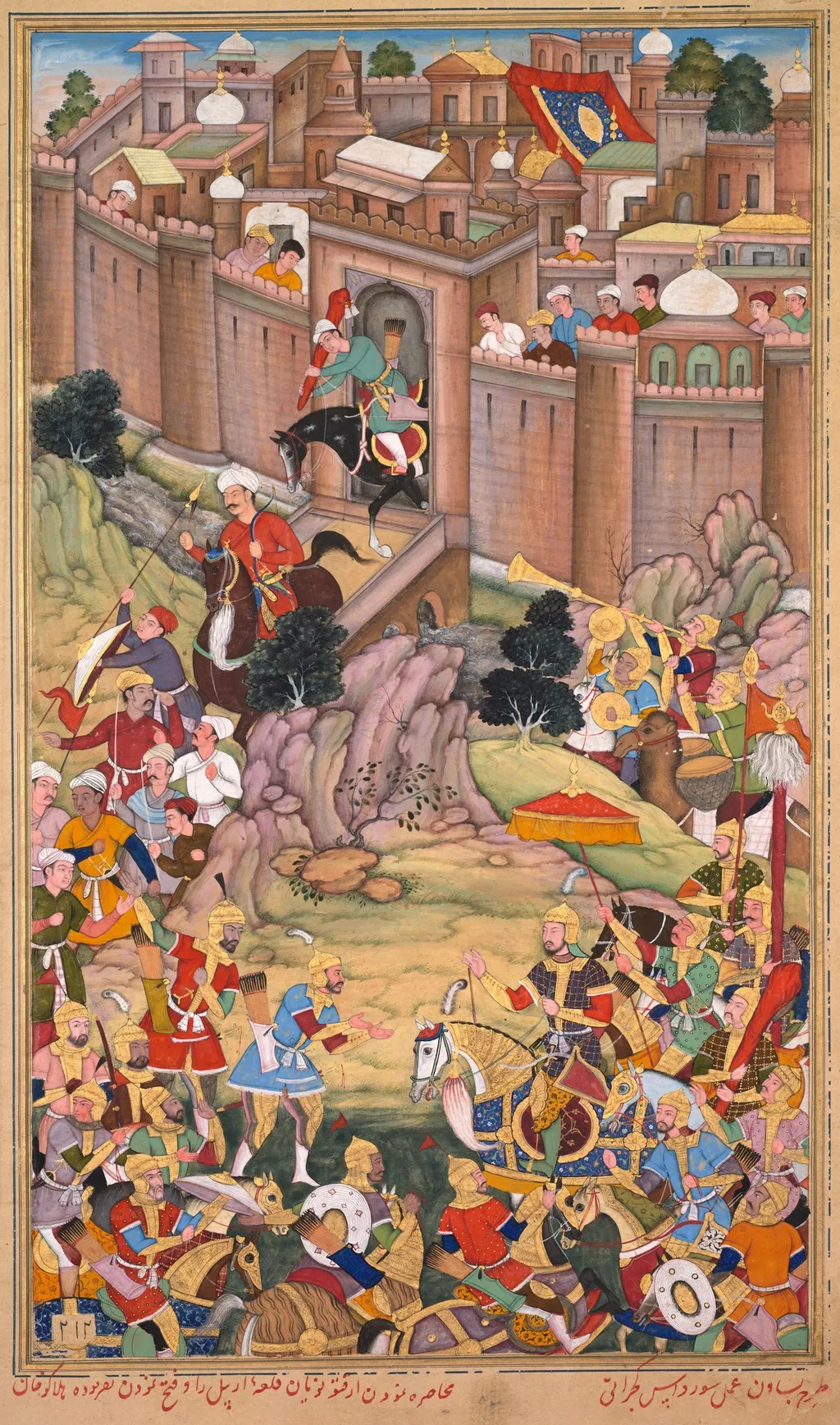
The siege of Arbela in the era of Hulagu Khan, from a Chingiz-nama (Book of Chingiz Khan) of the Jami al-tavarikh (Compendium of Chronicles) of Rashid al-Din (Persian, 1247–1318) is an unspecified painting by the Mughal Painting artist Basawan. It dates from 1598 and is held in the collection of the Cleveland Museum of Art.
About this work
History & Provenance
The painting depicting the siege of Arbela is held in the collection of the Cleveland Museum of Art in Cleveland.
The manuscript page depicting the siege of Arbela in the context of Hulagu Khan’s era was produced in 1596, as indicated by the Cleveland Museum of Art’s accession record and the internal cataloguing of the work within the Chingiz-nama section of the Jami al-tavarikh tradition.
The painting is attributed to Basawan, an Indian artist active circa 1560–1600, and in some accounts collaboratively produced with Sur Das Gujarati, a contemporary 16th-century artist. The Cleveland Museum of Art holds the work, where it is catalogued under accession number 1947.502.
The painting depicting the siege of Arbela is held in the collection of the Cleveland Museum of Art in Cleveland. The work entered the museum's holdings under the accession number 1947.502. Created in 1596 by the artists Basawan and Sur Das Gujarati, the manuscript illumination is part of a Chingiz-nama derived from Rashid al-Din's Jami al-tavarikh. No specific exhibition history is recorded in the provided sources.
Overview
Created in 1598 by the Mughal court painter Basawan, this large-scale history canvas depicts the siege of Arbela during the campaigns of Hulagu Khan. The work forms part of a illustrated copy of the Chingiz‑nama, a Persian chronicle compiled by Rashid al‑Din. It is presently in the collection of the Cleveland Museum of Art and exemplifies the narrative vigor of late‑sixteenth‑century imperial painting.
Subject & Meaning
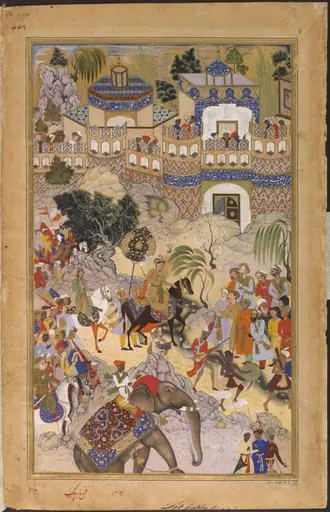
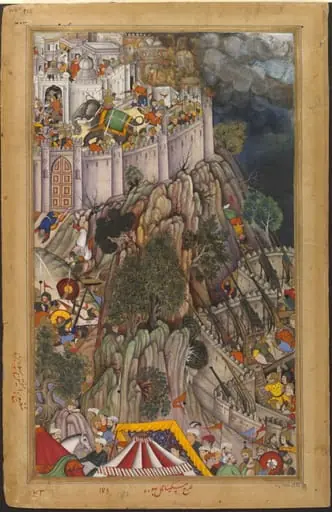
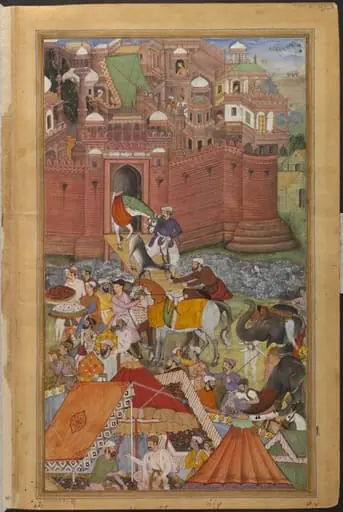
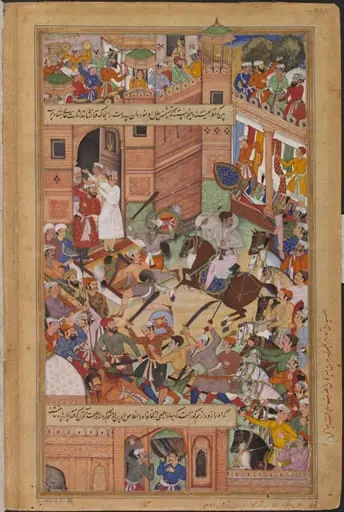
The composition narrates the violent assault on the fortified city of Arbela, showing a dense melee of infantry, cavalry, and war elephants beneath the city walls. Spectators crowd the ramparts, suggesting both the drama of conquest and the spectacle intended for a courtly audience. The inclusion of a tranquil tiger amid the chaos may symbolize the untamed power of the Mongol forces or serve as a visual counterpoint to human conflict.
Technique & Style
Basawan employs a vivid palette of reds, blues, and greens that contrast with the earthy tones of the battlefield, enhancing the scene’s dynamism. The painter builds up thick layers of pigment in key areas, using impasto to give texture to armor, horsehair, and the tiger’s fur. Fine brushwork renders individual costumes and weapons, allowing each figure to retain a distinct identity within the crowded tableau.
Context
The work reflects the Mughal court’s fascination with earlier Mongol conquests, linking the empire’s own lineage to the legendary exploits of Genghis Khan. Produced during the reign of Emperor Akbar, the painting aligns with a broader program of historical illustration that reinforced imperial legitimacy through visual storytelling.
Own this work as a print
Artist & collection
Artist
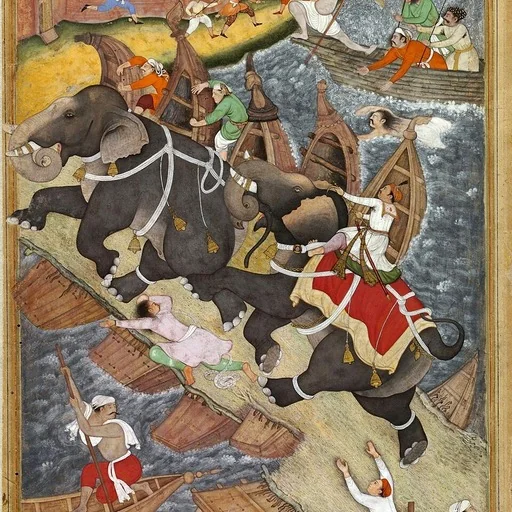
Basāwan, or Basāvan, was an Indian miniature painter in the Mughal style. He was known by his contemporaries as a skilled colorist and keen observer of human nature, and for his use of portraiture in the illustrations…

 Page from Tales of a Parrot (Tuti-nama): text page
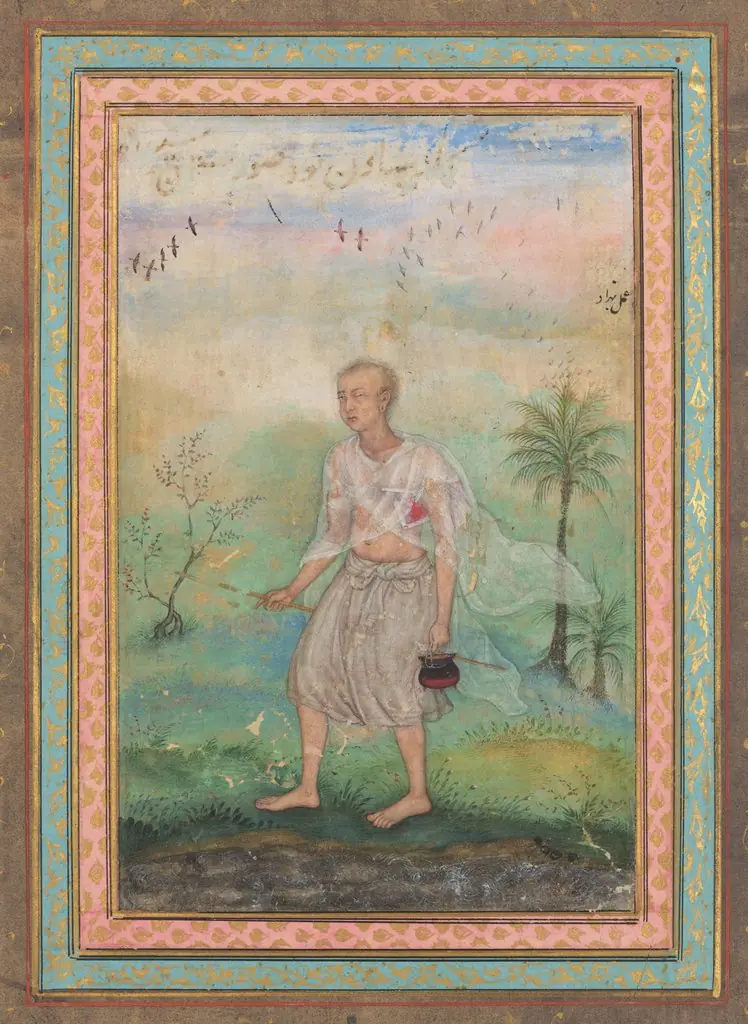 Jain Ascetic Walking Along a Riverbank
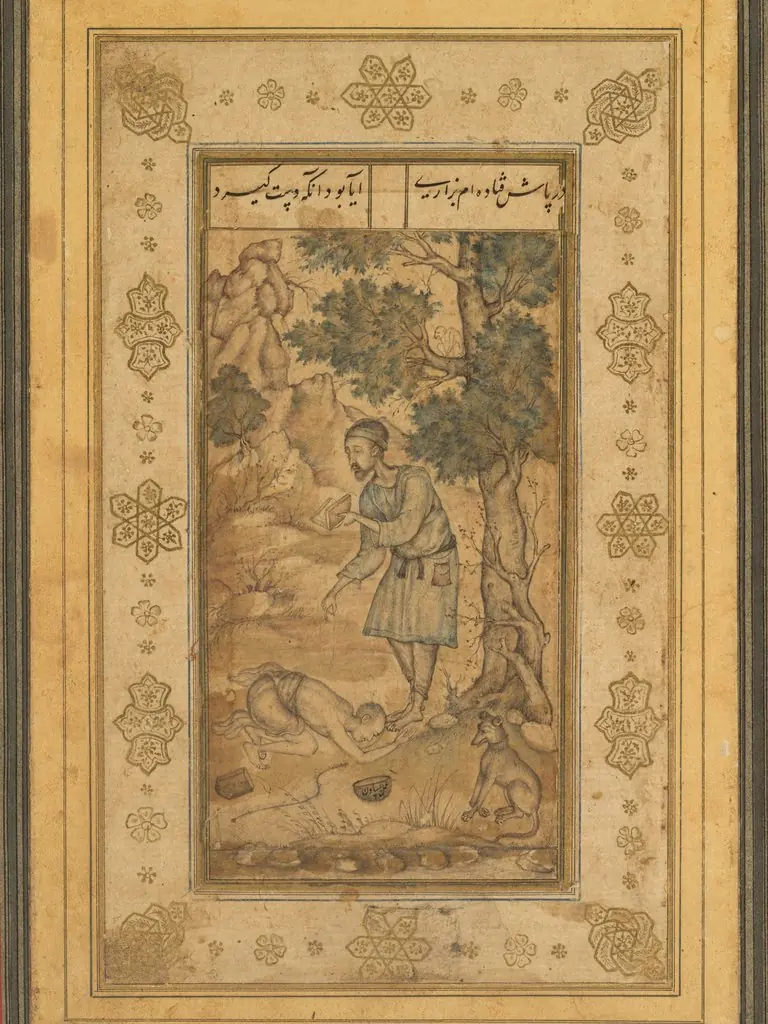 A mendicant bowing before a holy man, from the Prince Salim Album
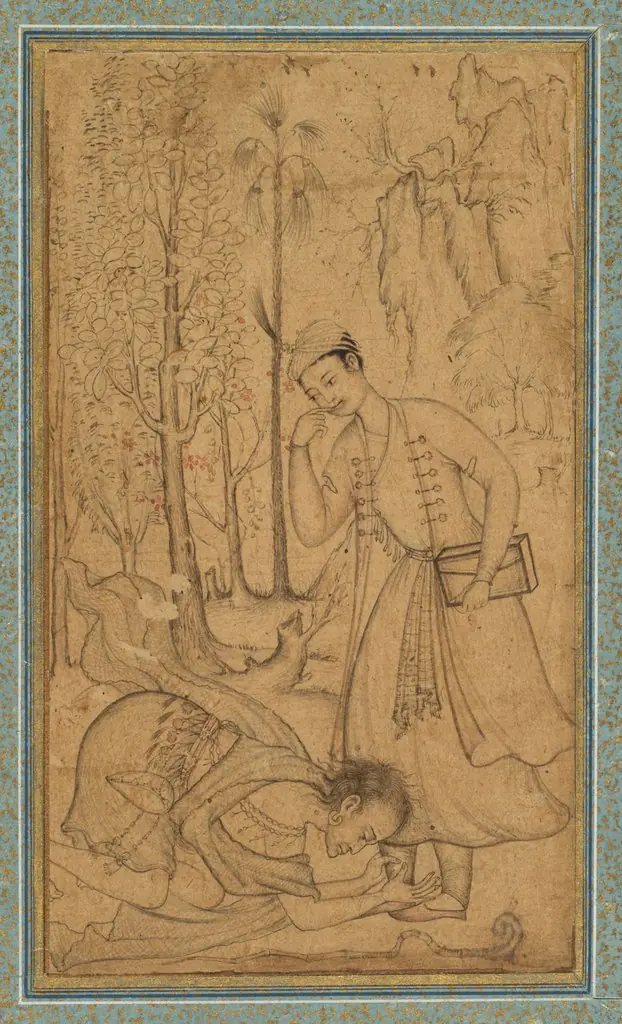 A holy man prostrating himself before a learned prince
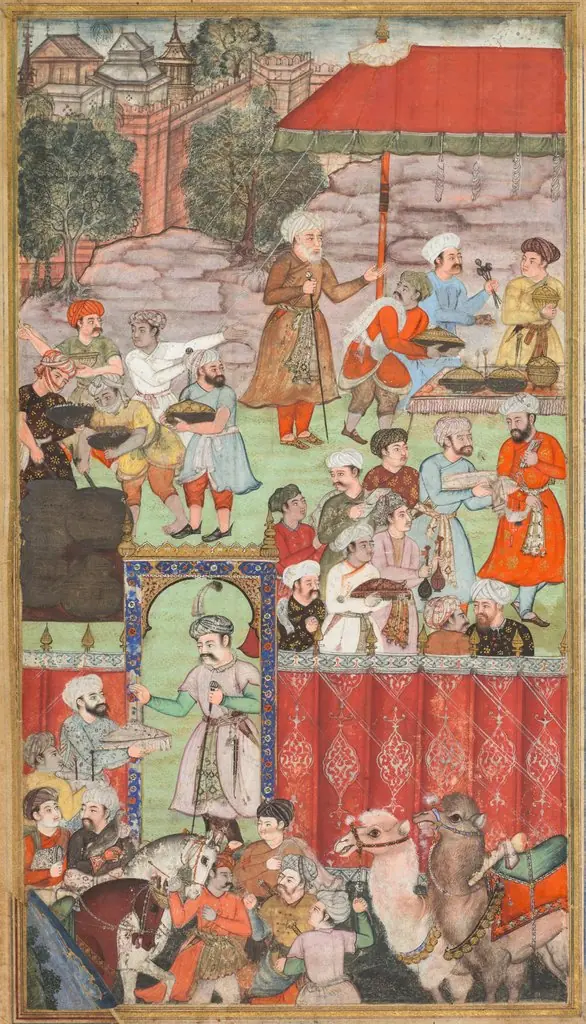 A feast for Babur hosted by his half-brother Jahangir Mirza in Ghazni in May 1505, from a Babur-nama (Memoirs of Babur)
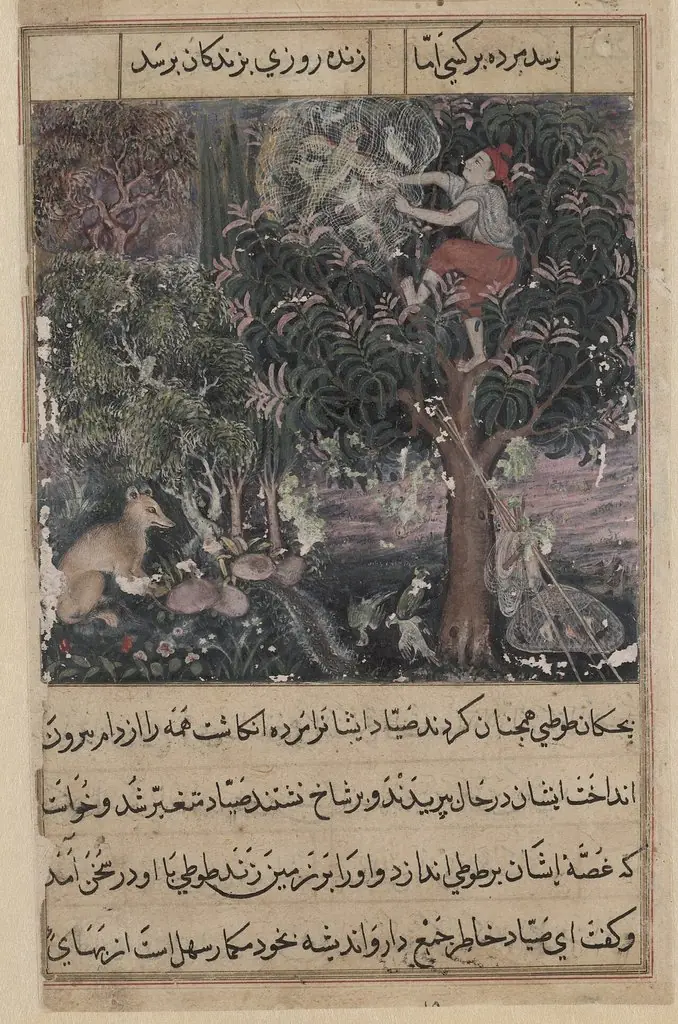 The hunter throws away the baby parrots, who pretend to be dead, and captures the mother, from a Tuti-nama (Tales of a Parrot): Fifth Night
 Page from Tales of a Parrot (Tuti-nama): text page
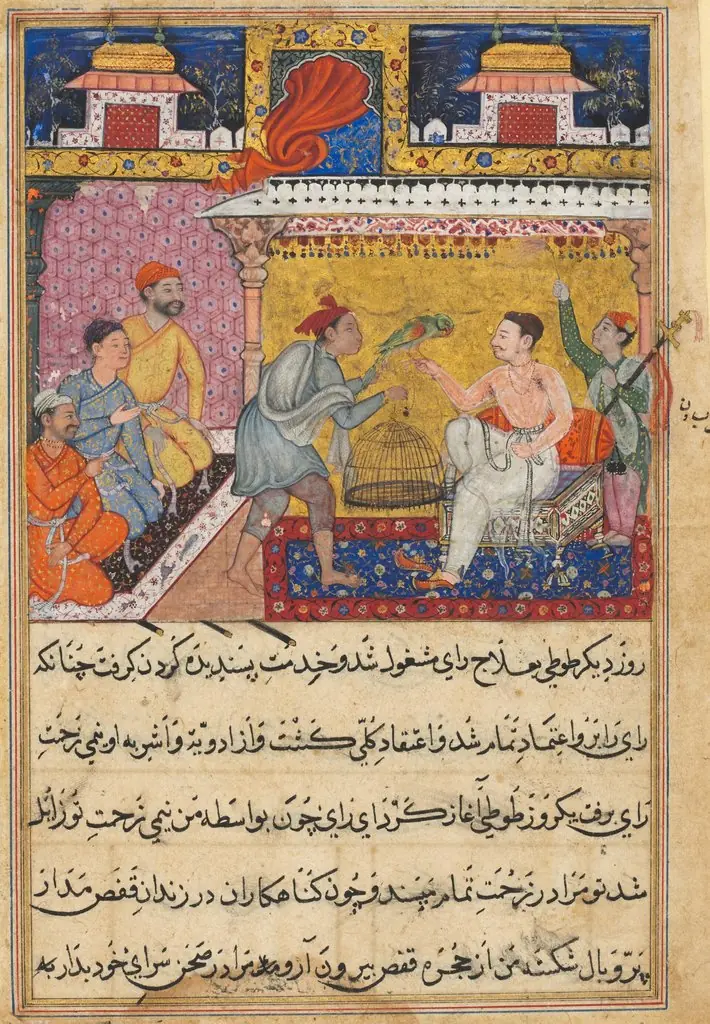 The hunter offers the mother parrot to the king of Kamarupa, from a Tuti-nama (Tales of a Parrot): Fifth Night