Artwork
The Newa river at St. Petersburg in Winter
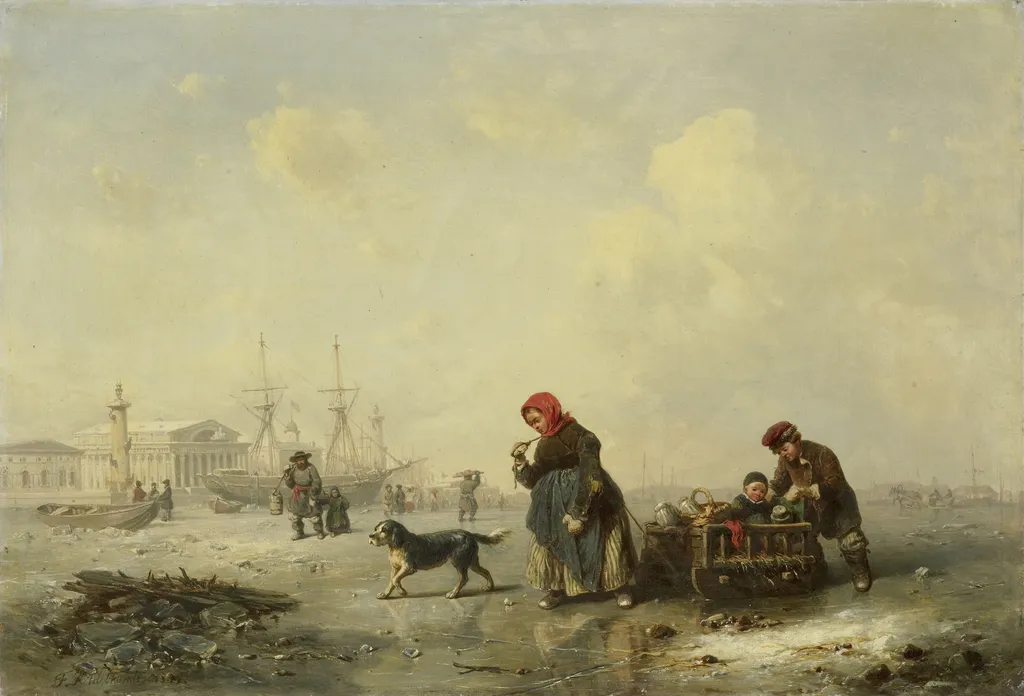
The Newa river at St. Petersburg in Winter is an oil painting by the German Romanticist artist Theodor Hildebrandt. It dates from 1844 and is held in the collection of the Rijksmuseum. The Newa river at St.
About this work
Subject & Meaning
The work captures a specific moment in time, highlighting the interplay between urban development and the natural world in 19th-century Russia.
The painting portrays the Neva River frozen near St. Petersburg during winter, reflecting the city's icy atmosphere and the surrounding urban landscape. It emphasizes the stark, crystalline qualities of the frozen river and the muted palette of the season, symbolizing both the natural beauty and the harshness of the Russian environment. The work captures a specific moment in time, highlighting the interplay between urban development and the natural world in 19th-century Russia.
Technique & Style
The work is an oil painting on canvas, measuring 40 by 58.5 cm. It depicts the Neva River in winter, and the artist’s handling emphasizes the cold, still atmosphere through a restrained palette and smooth, even brushwork. The composition is organized with a low horizon, allowing the wide, frozen river to dominate the foreground while buildings and a bridge recede into a hazy, pale sky. The formal qualities reflect a naturalistic observation of light and atmosphere, typical of mid-19th-century landscape painting, with careful attention to the subtle gradations of snow and ice.
History & Provenance
Theodor Hildebrandt created the landscape painting The Newa river at St. Petersburg in Winter in 1844. Executed in oil on canvas, the work depicts the Neva river and measures 40 cm in height by 58.5 cm in width. The piece was originally owned by Adriaan van der Hoop, a prominent Dutch collector.
Following his death, van der Hoop's entire collection, including this painting, was acquired by the city of Amsterdam. The work is currently held within the Rijksmuseum in Amsterdam as part of the former Adriaan van der Hoop collection.
The painting is held in the collection of the Rijksmuseum in Amsterdam. According to the source data, the work is associated with the Rijksmuseum as well as the Amsterdam Museum, and is recorded as part of the former collection of Adriaan van der Hoop. No specific inventory or accession number is provided in the available sources, and no exhibition history is documented.
Overview
The Newa river at St. Petersburg in Winter is an 1844 oil painting by Theodor Hildebrandt, a German artist linked to the Düsseldorf school. The work captures a winter scene along the Neva River, showcasing the artist's ability to depict everyday life within a Romantic landscape framework.
Context
The Newa river at St. Petersburg in Winter reflects the German Romanticism tradition, emphasizing mood, light, and the relationship between human activity and nature. Hildebrandt's dual interests in art and entomology, though not directly evident here, suggest a broader appreciation for detailed observation.

Own this work as a print
Artist & collection

Artist
Theodor Hildebrandt (2 July 1804, Stettin – 29 September 1874, Düsseldorf) was a German artist of the Düsseldorf school of painting who specialized in literary and historical subjects. He was also a noted entomologist.

- A Winter Scene
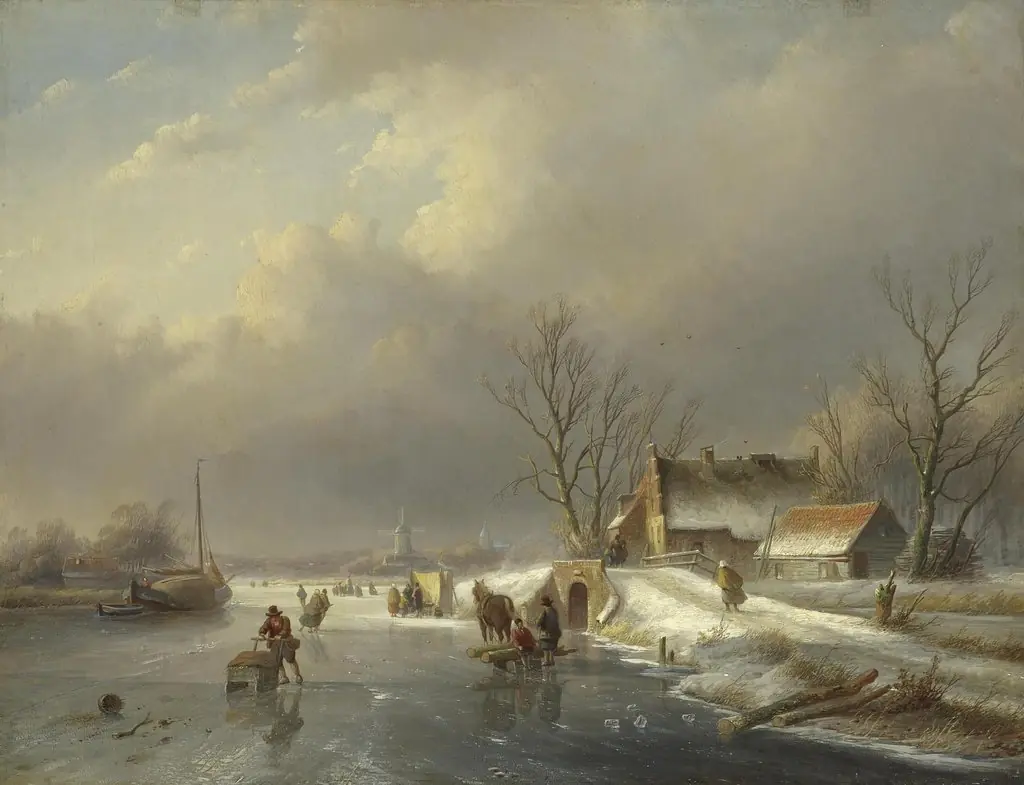 Winter Landscape
 Strandvejen ved Vedbæk. Vintereftermiddag
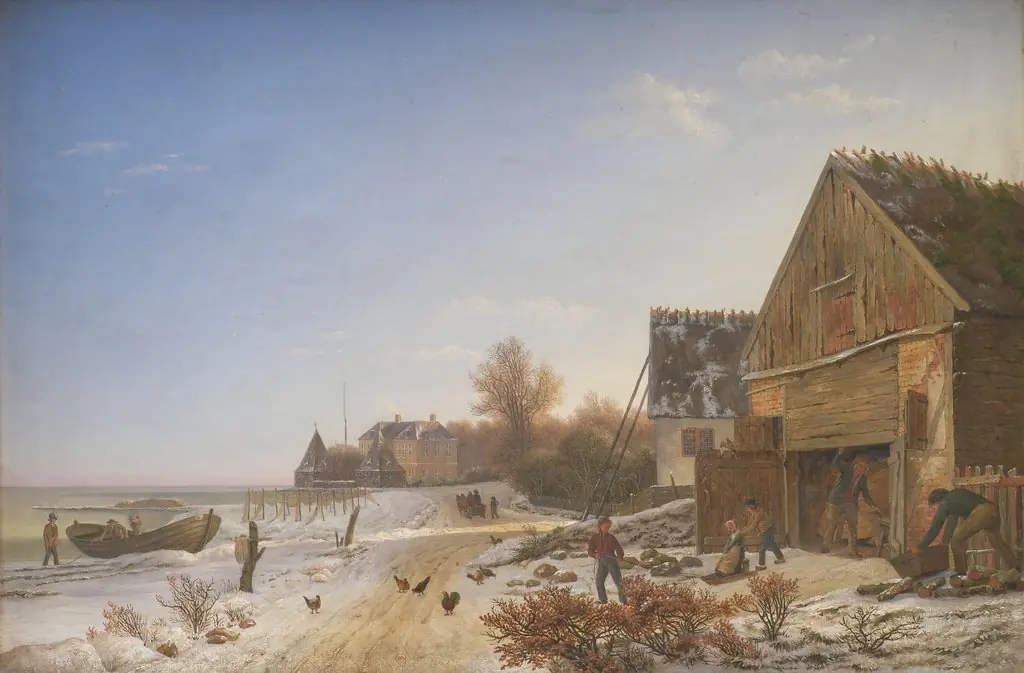 Strandvejen ved Vedbæk. Vintereftermiddag
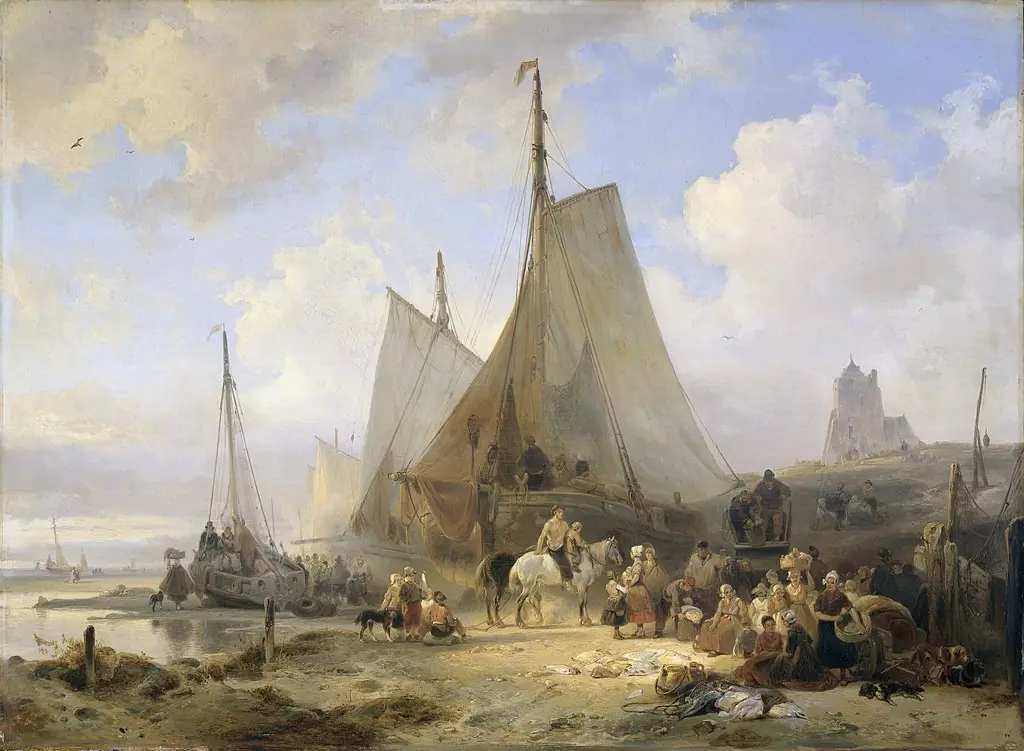 Fishing Boats on the Beach with Fishermen and Women Sorting the Catch
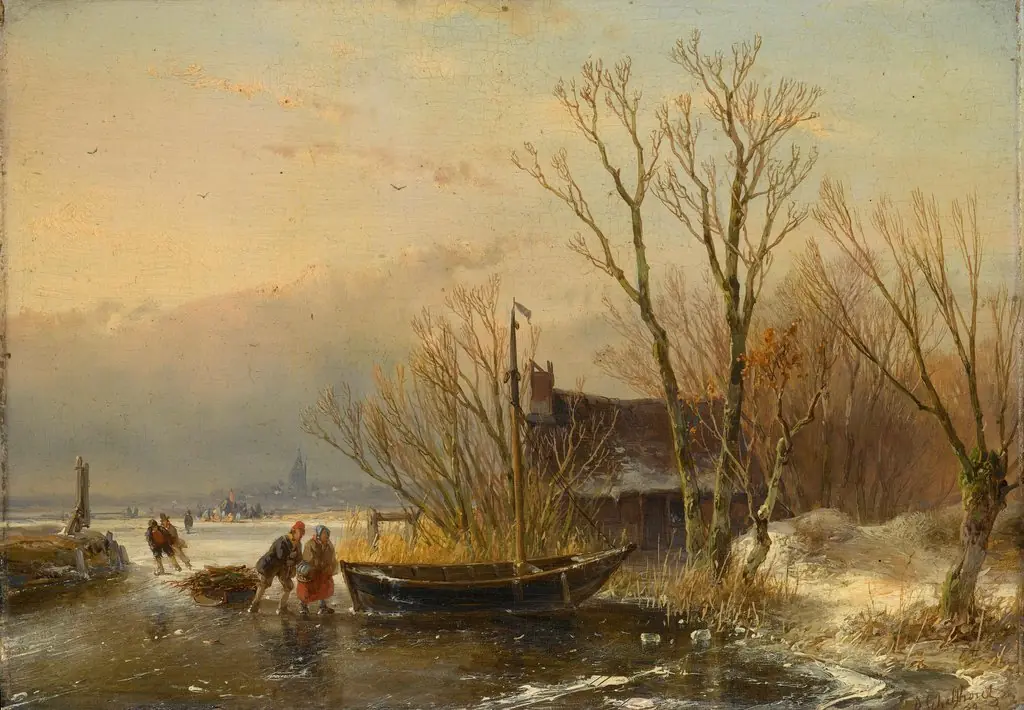 Winter Scene on the Ice with Wood Gatherers
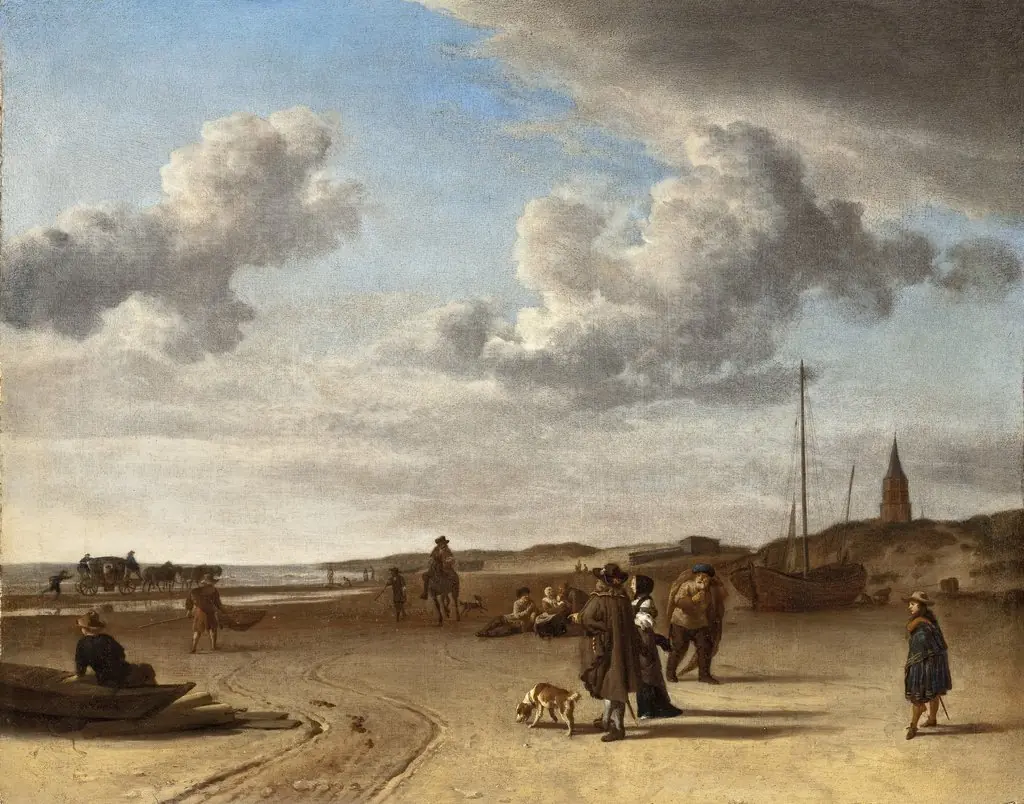 The Beach at Scheveningen
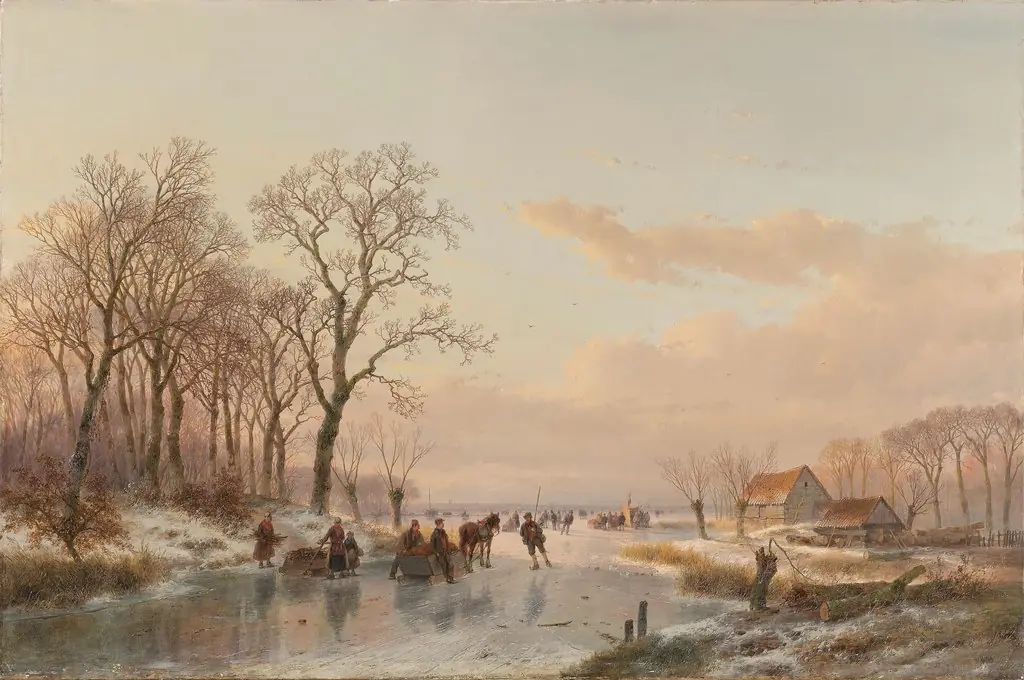 A Frozen Canal near the River Maas
 A Frozen Canal near the River Maas