Artwork
Smelting Works at Denver
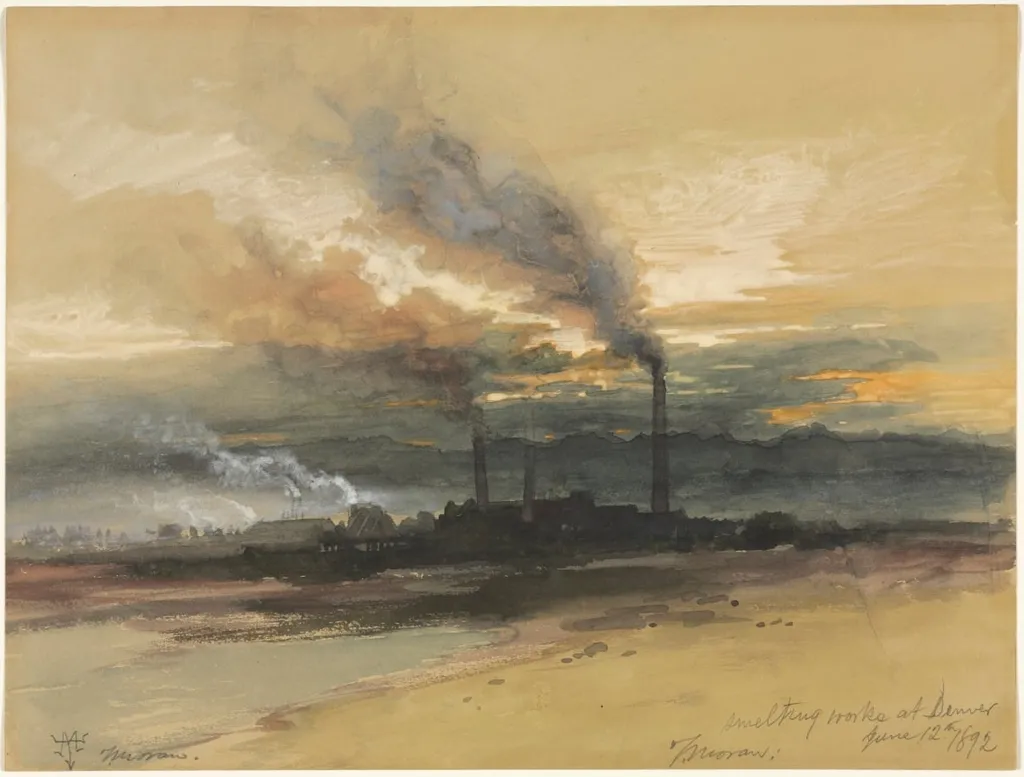
Smelting Works at Denver is a drawing by the Impressionist artist Thomas Moran. It dates from 1892 and is held in the collection of the Cleveland Museum of Art.
- Accession no.
- 1938.56
About this work
You see a factory glowing at dusk, its smokestacks puffing into a sky streaked with pink and gold.
You see a factory glowing at dusk, its smokestacks puffing into a sky streaked with pink and gold. The Rocky Mountains rise behind it, sharp and quiet.
Moran painted this in 1892, when Denver was booming. Factories meant jobs and money, but some already worried about the smoke. Moran liked what he saw, he called the city “lively” in a letter home.
Look up other paintings of america to see how artists showed the same land in different moods.
Overview
Smelting Works at Denver is a 1892 watercolor drawing by Thomas Moran, depicting a factory in Denver at dusk, with smokestacks emitting plumes into a pink and gold sky, set against the backdrop of the Rocky Mountains.
Subject & Meaning
The drawing captures the emerging industrial landscape of Denver, reflecting the city's growth and transformation into an industrial hub. Moran's work embodies the complex attitudes towards industrialization during America's western expansion, symbolizing both progress and potential environmental impact.
Technique & Style
Moran employed gray wash and white gouache to convey the ephemeral quality of smoke and clouds, blending industrial and natural elements as they dissipate into the atmosphere. The impressionistic style, reminiscent of J. M. W. Turner's work, highlights Moran's interest in the pictorial possibilities of industry.
History & Provenance
Moran created this drawing in 1892 while painting advertisements for the Santa Fe Railroad, during a return visit to Denver, a city he had first encountered in 1873 as part of a government survey. The work reflects his enthusiasm for the city's industrial development.
Context
The drawing is set against the backdrop of America's westward expansion and the myth of manifest destiny, illustrating the land's natural resources and the perceived inevitability of settler conquest.
Artist & collection
Artist
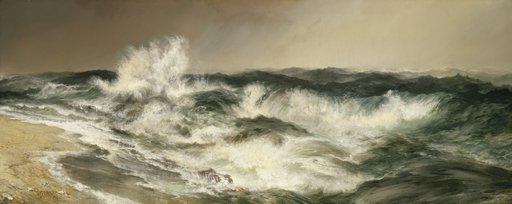
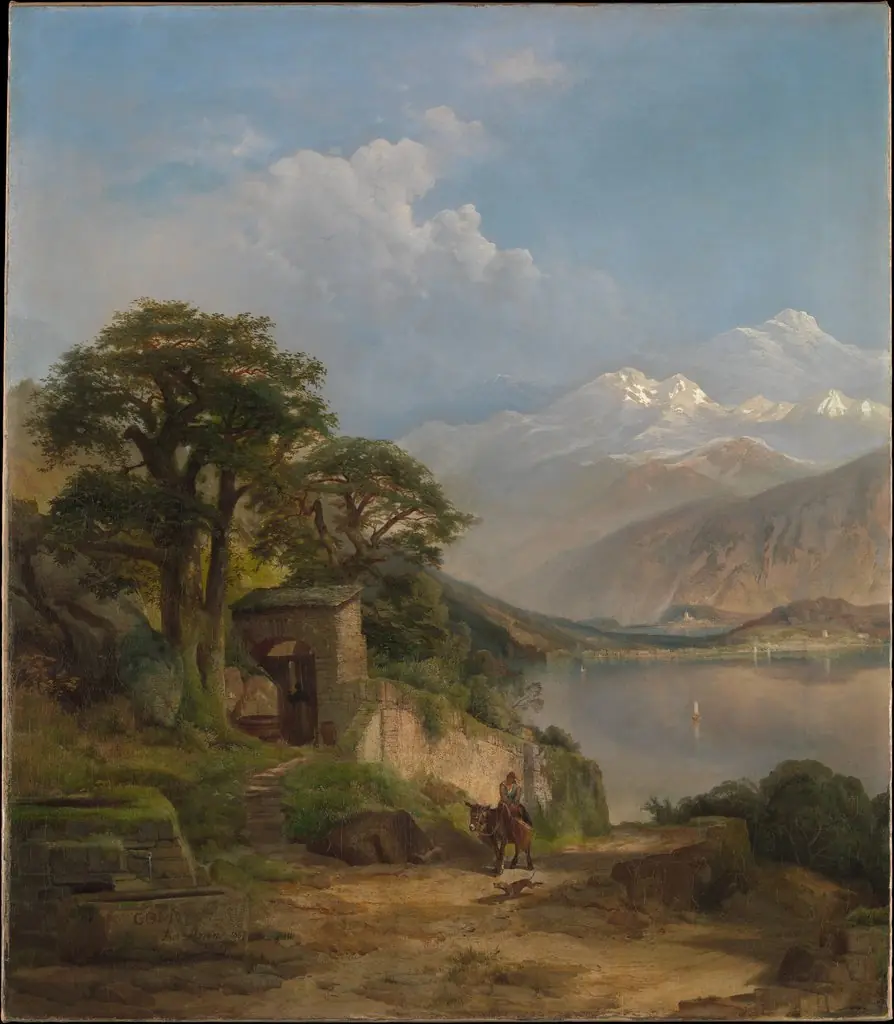
Thomas Moran (February 12, 1837 – August 25, 1926) was an American painter and printmaker of the Hudson River School in New York whose work often featured the Rocky Mountains.

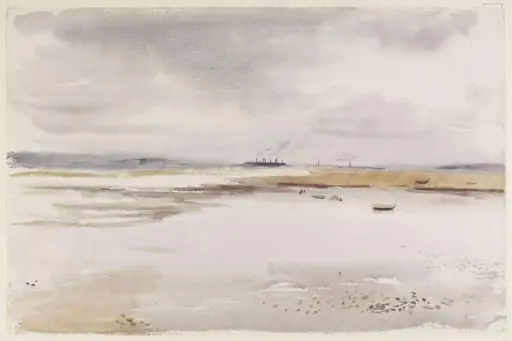
- Penclawdd, Gower, Glamorganshire (Recording Britain, Welsh Counties)
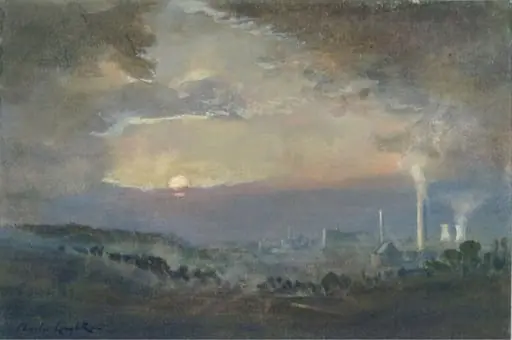 Sunset and Industry
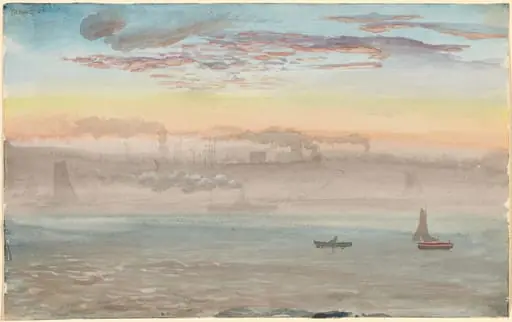 East River, Sunrise
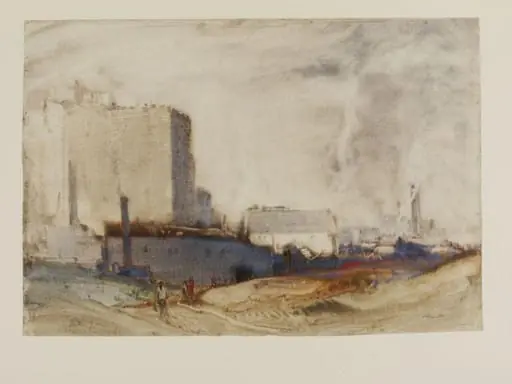 The White Factory
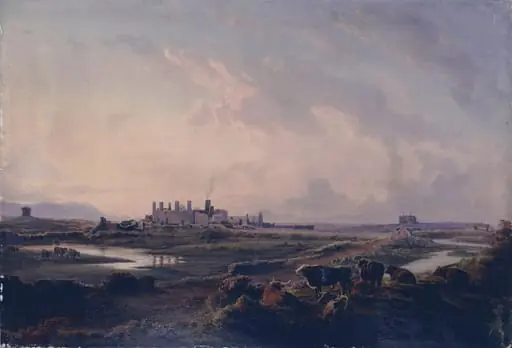 Ruins of Kerry Castle
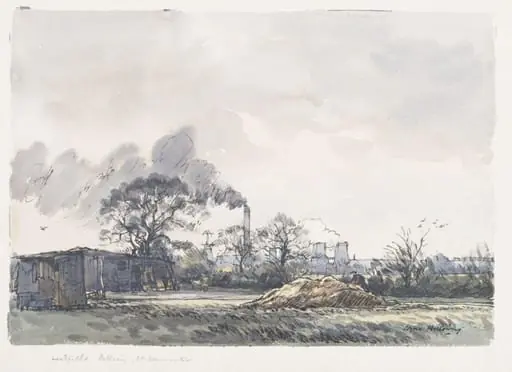 Thorne Colliery
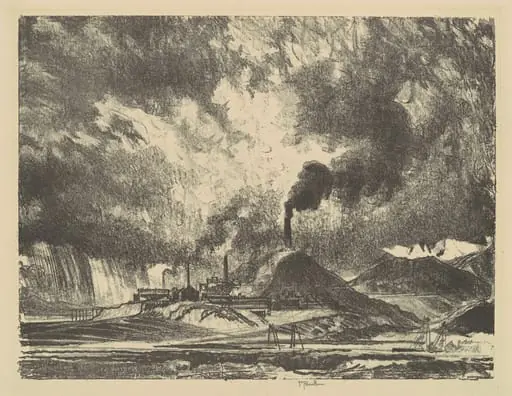 Anaconda, Montana
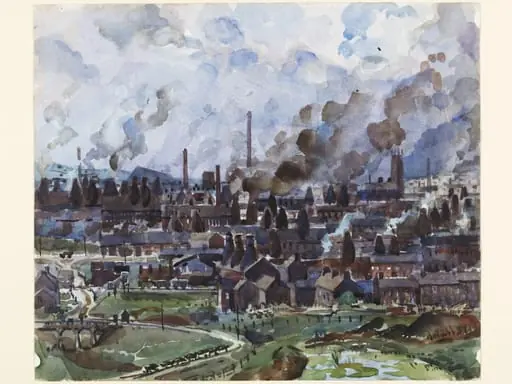 The Potteries, Stoke-on-Trent, Staffordshire
 Paper Mill, near Oxford
 Untitled
 The Brussels Canal, A Modern Hobbema
 The Big Mill, Gary, Indiana