Artwork
Paris and Helena Surprised by Menelaus
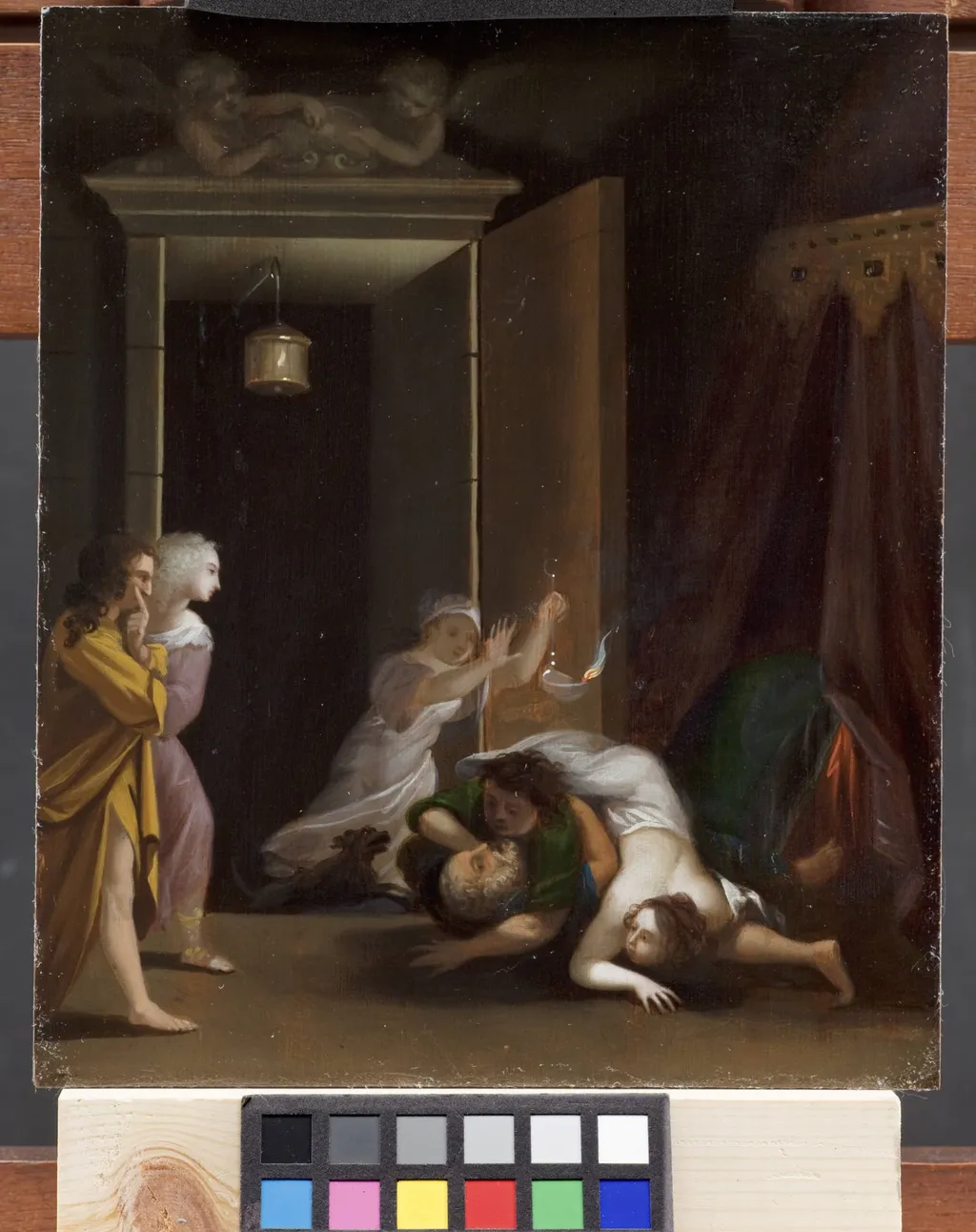
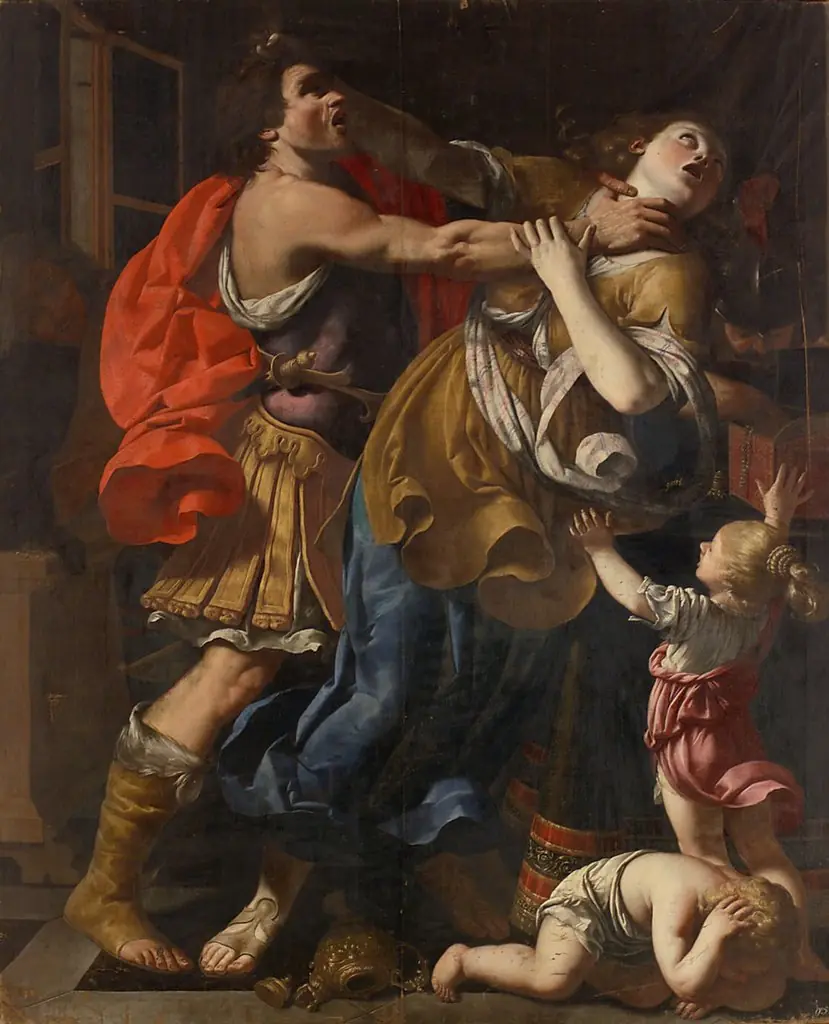
Paris and Helena Surprised by Menelaus is a photography by Unknown. It dates from 1662 and is held in the collection of the Statens Museum for Kunst. Painted around 1662, this work depicts a moment from Trojan War mythology: the confrontation between Paris, Helen, and Menelaus.
About this work
Overview
The painting is held in the collection of the Museum of Ethnography, though its subject draws from classical literature rather than ethnographic tradition.
Painted around 1662, this work depicts a moment from Trojan War mythology: the confrontation between Paris, Helen, and Menelaus. The scene unfolds in a confined interior, illuminated by stark contrasts of light and shadow. Six figures are arranged dynamically, with two celestial beings hovering above, suggesting divine observation.
The painting is held in the collection of the Museum of Ethnography, though its subject draws from classical literature rather than ethnographic tradition.
Subject & Meaning
The scene captures the instant Menelaus interrupts Paris and Helen in their private quarters. Paris lies wounded or unconscious at the center, while Helen reaches upward, possibly in supplication or alarm. Menelaus, clad in green, kneels beside him, poised to act.
The figure in yellow, likely a servant or attendant, reacts with tension. The floating cherubs imply the intervention of fate or the gods, underscoring the mythic weight of the moment beyond mere human conflict.
Technique & Style
The artist employs chiaroscuro to heighten emotional intensity, directing light toward key figures while leaving others in partial shadow. Drapery is rendered with attention to texture and fold, enhancing the sense of movement. The figures are stylized rather than naturalistic, with exaggerated gestures that emphasize narrative clarity.
The composition is tightly packed, forcing the viewer’s eye through the scene’s emotional core, from the prone Paris to the pleading Helen.
History & Provenance
The painting was created in the mid-17th century, likely in a European studio influenced by Baroque dramatization of classical themes. It entered the Museum of Ethnography’s collection in the late 19th or early 20th century, possibly as part of a broader acquisition of mythological imagery used in anthropological displays. Its original commission and early ownership remain undocumented, suggesting it may have been a private work later repurposed for institutional context.
Context
This image reflects a 17th-century European fascination with classical myths as vehicles for moral and emotional exploration. While mythological subjects were common in courtly and religious art, their presence in an ethnographic museum signals a shift in how such narratives were categorized, seen not only as art but as cultural artifacts of Western storytelling. The work aligns with broader trends of using ancient tales to illustrate universal human behaviors.
Legacy
Though not widely reproduced or studied in mainstream art history, the painting contributes to understanding how mythological themes were adapted in lesser-known collections. Its placement in an ethnographic museum invites questions about the boundaries between art, anthropology, and cultural representation. The work remains a quiet example of how Baroque visual language persisted beyond elite circles into institutional frameworks with divergent curatorial aims.
Artist & collection









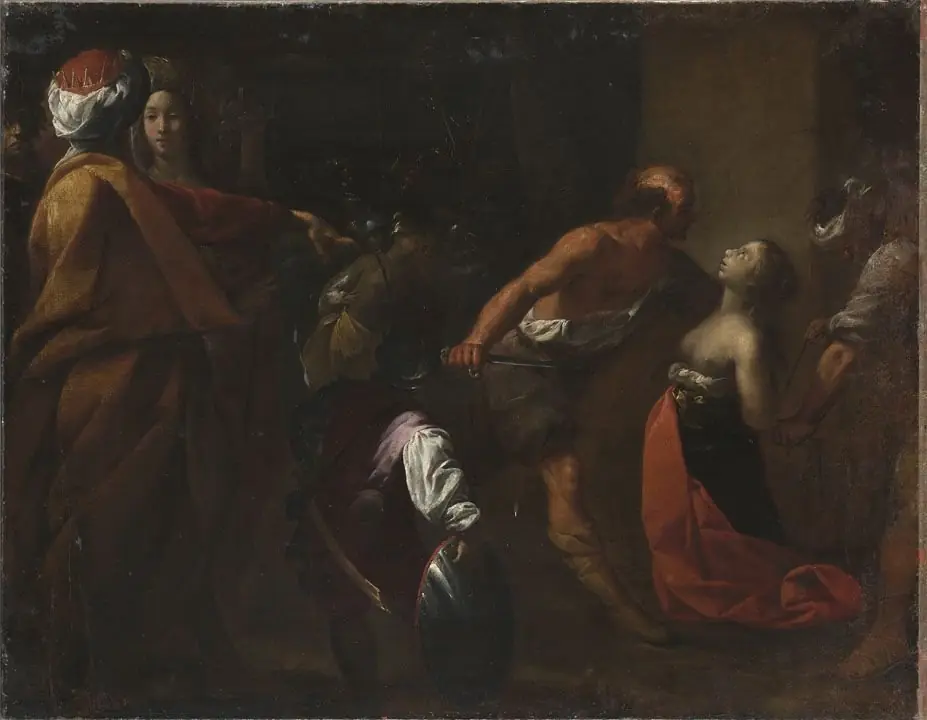 Martyrium der hl. Justina
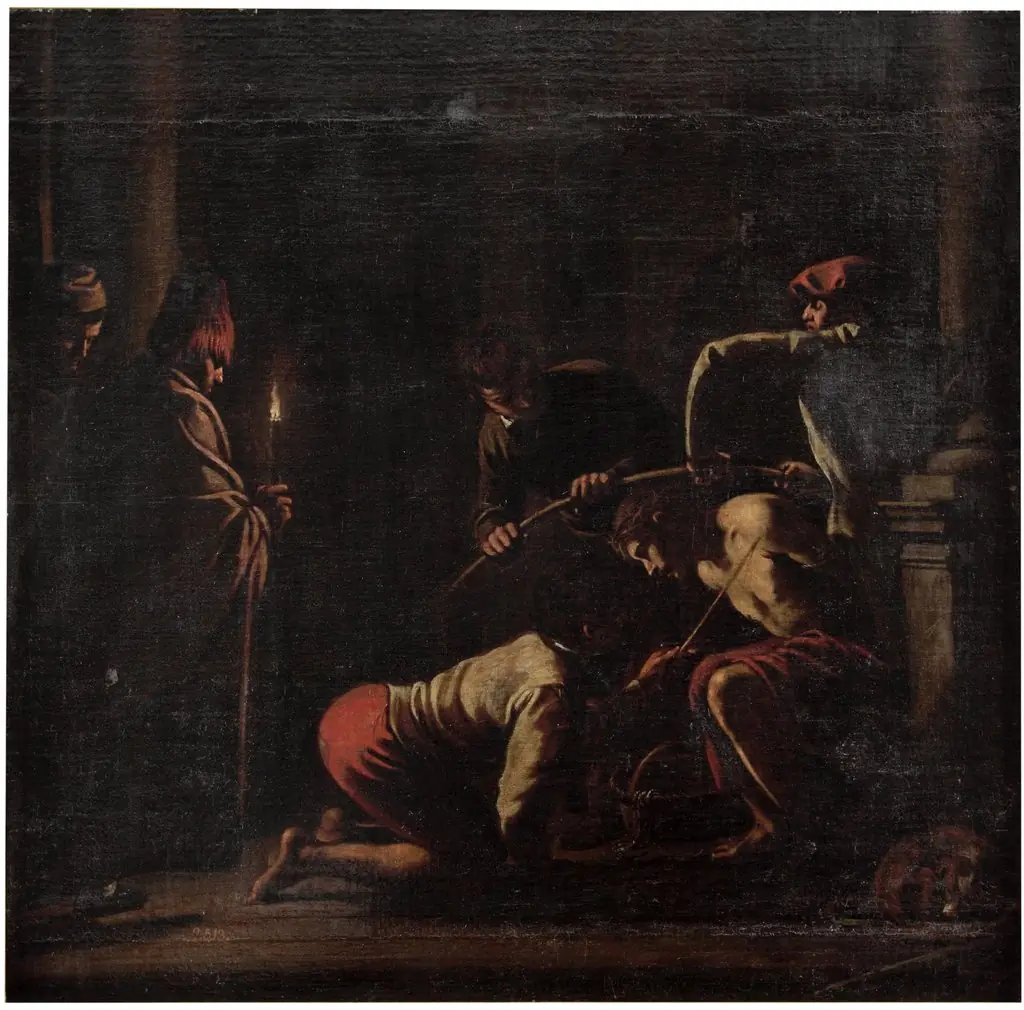 Jesús en el pretorio
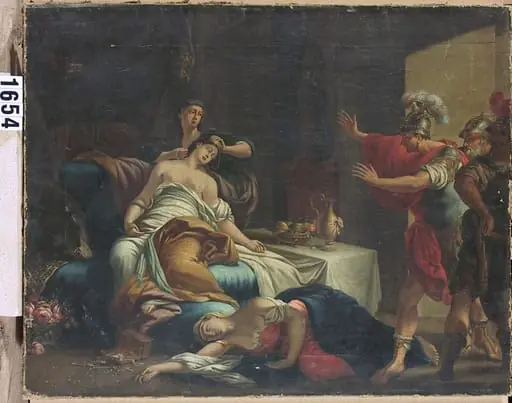 Moartea Cleopatrei
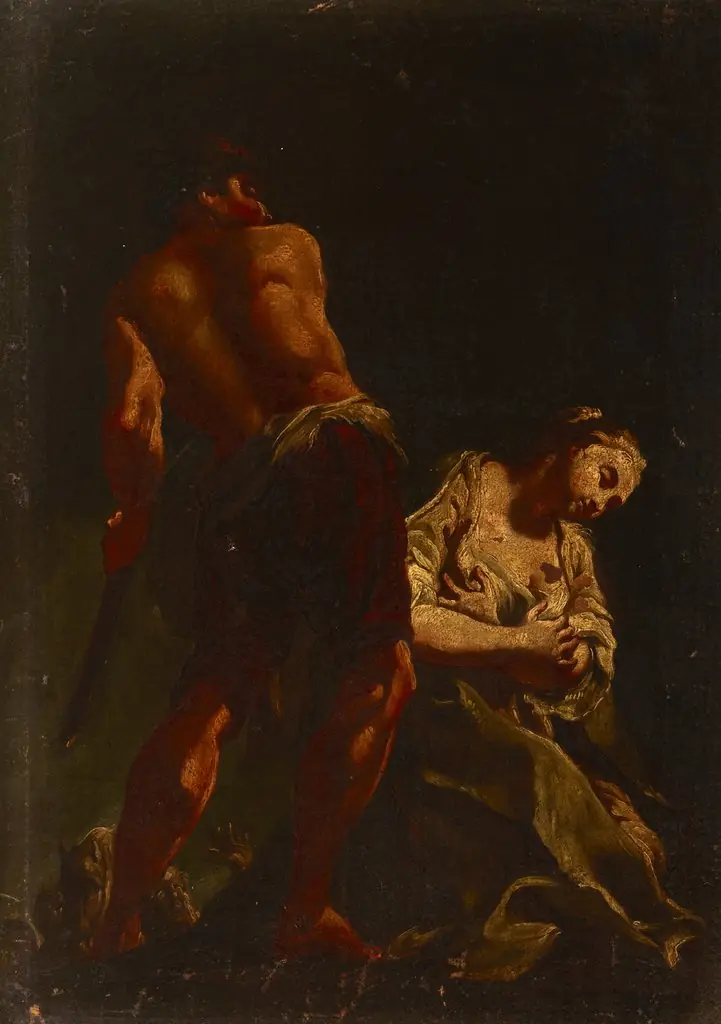 Martyrdom of the Saint Woman
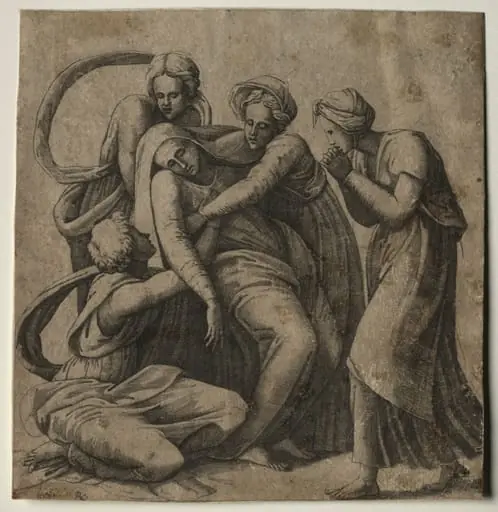 The Virgin Fainting in the Arms of Three Holy Women
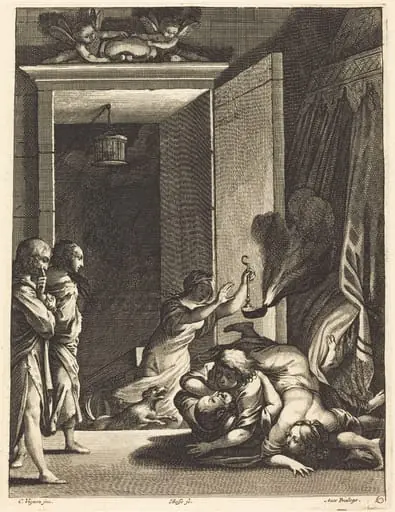 Illustration to Jean Desmarets' "L'Ariane"
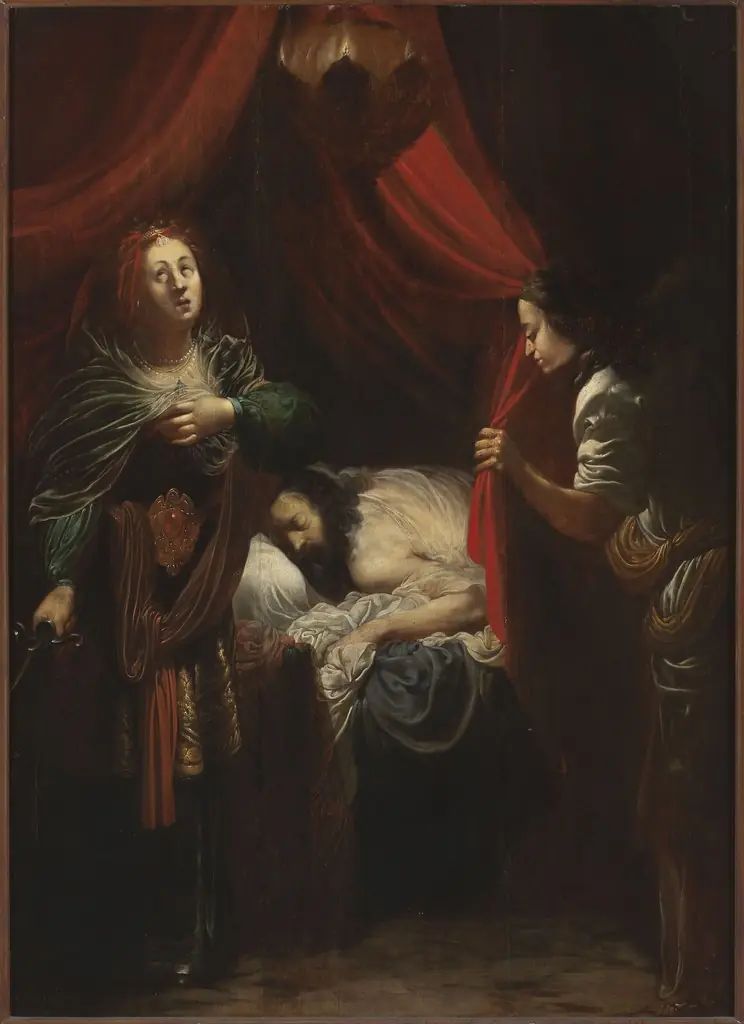 Judith in the tent of Holofernes (Judith 13:4-6)
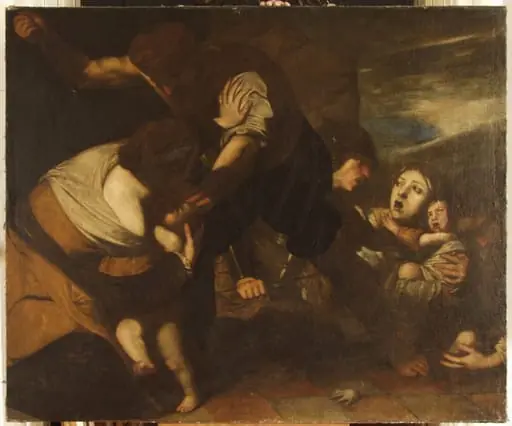 Uciderea pruncilor din Bethlehem (în Reg. inv.: Uciderea pruncilor din Bethleem)
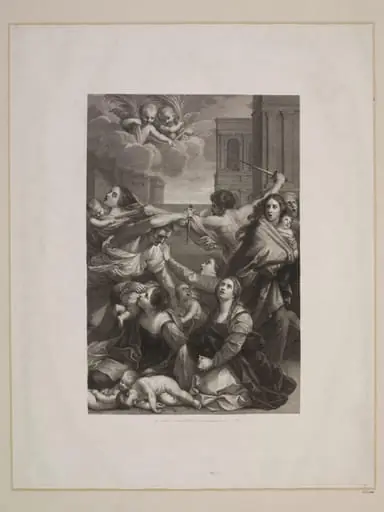 Murder of the Innocents
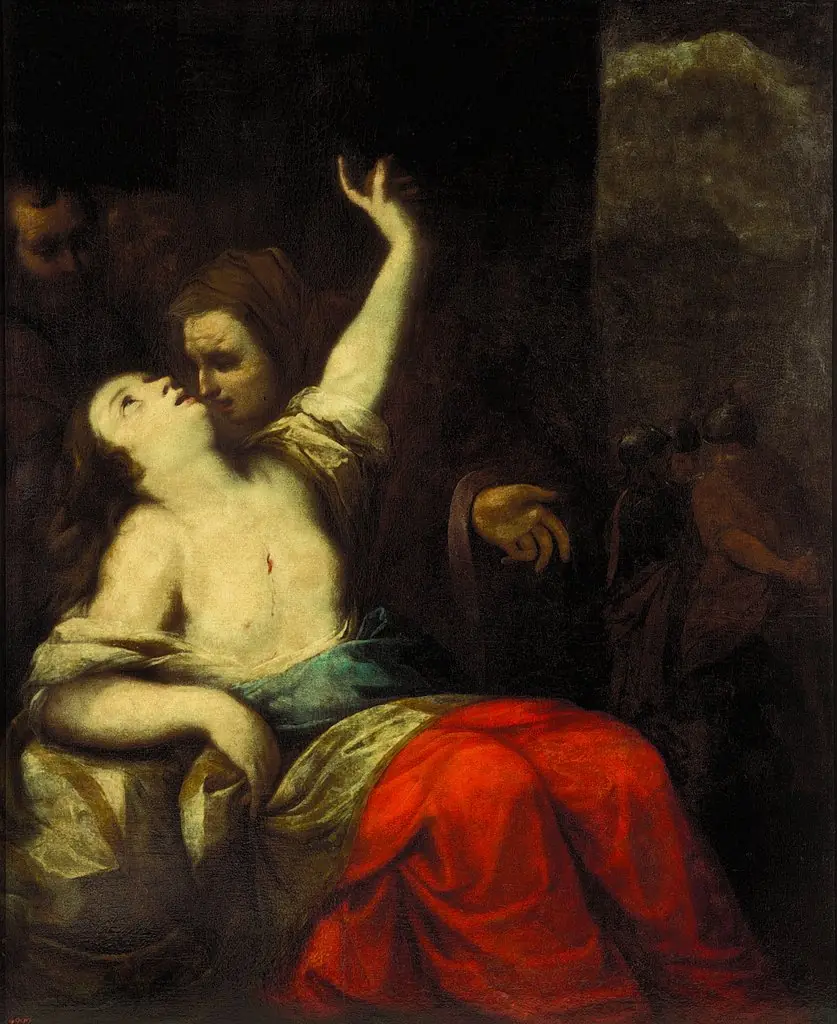 The Death of Camilla
 Predatory attack
- Paris and Helena Surprised by Menelaus