Artwork
The Abduction of Europa
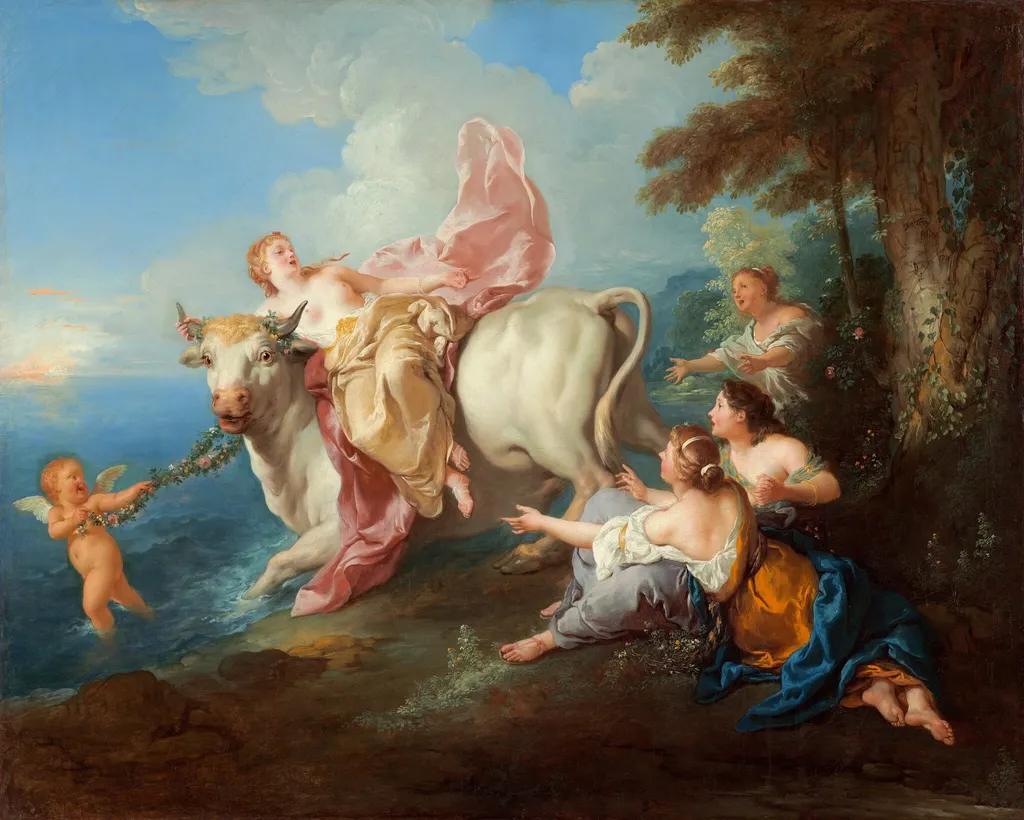
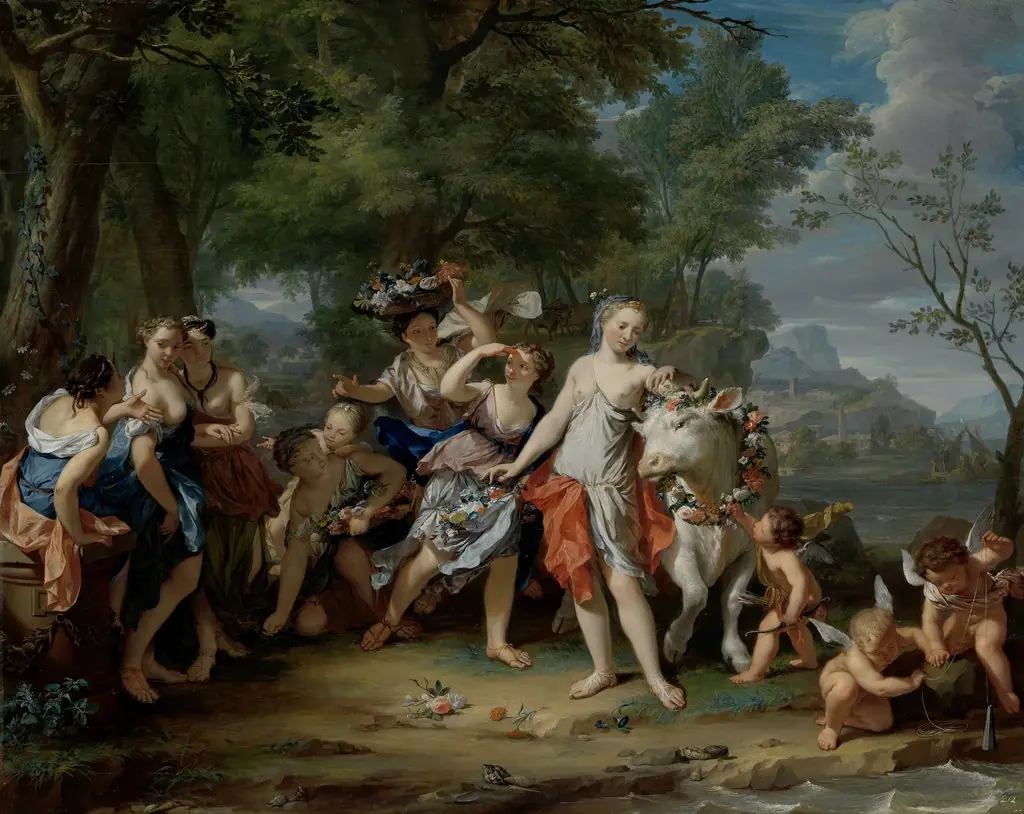
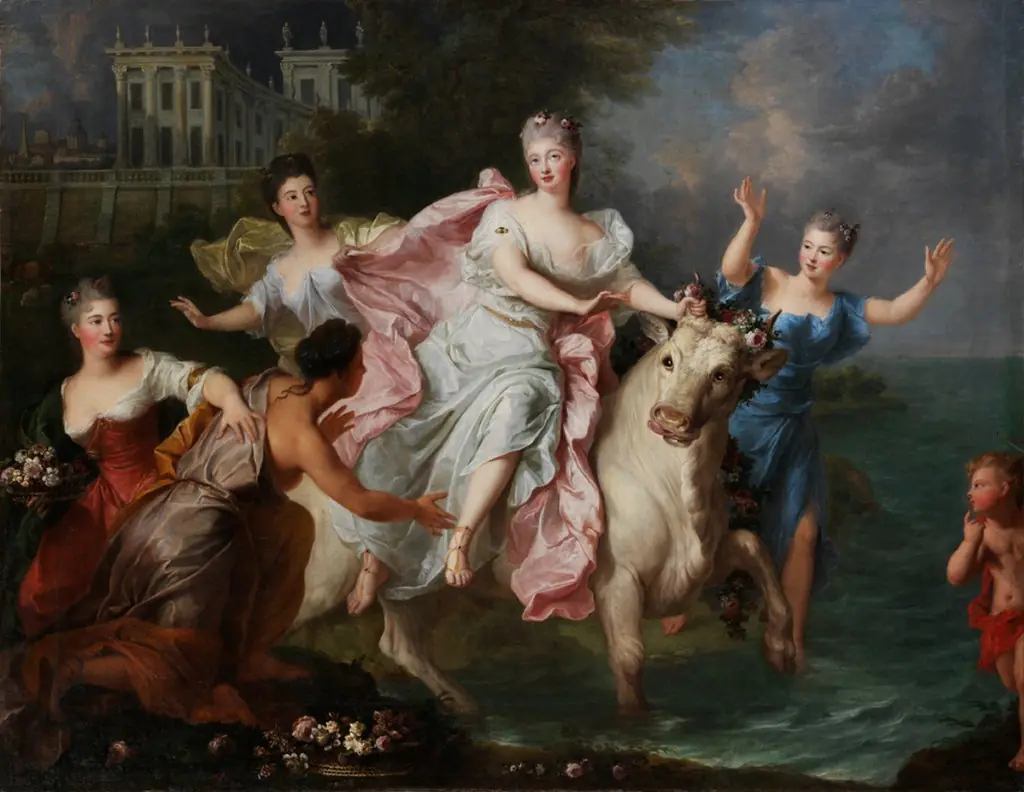
The Abduction of Europa is an oil painting by the Baroque artist Jean François de Troy. It dates from 1716 and is held in the collection of the National Gallery of Art.
- Inscription
- Inscribed:center right on the tree trunk: de Troy / filius / 1716
About this work
Subject & Meaning
" The composition emphasizes the bull’s dynamic movement and Europa’s startled reaction, highlighting the narrative of divine seduction.
The painting, titled The Abduction of Europa and executed by Jean‑François de Troy in 1716, portrays the mythological scene of Europa being carried away by a bull, identified as Zeus in disguise. According to the sources, the work is categorized as a mythological painting and its main subject is the "rape of Europa." The composition emphasizes the bull’s dynamic movement and Europa’s startled reaction, highlighting the narrative of divine seduction.
The artwork entered the Vivet collection, was sold in Paris in 2010, and was subsequently acquired by Saint‑Honoré Art Consulting before entering the National Gallery of Art in Washington, D.C.
Technique & Style
The Abduction of Europa is executed in oil on canvas, a standard support for early eighteenth-century French history painting. The work measures 65.7 by 82.2 centimeters, a modest horizontal format suited to an intimate mythological scene. Within the mythological genre tradition, de Troy handles the narrative with a refined Rococo sensibility, balancing the figures of Europa and the bull across the pictorial field.
The painting is held in the collection of the National Gallery of Art in Washington, D.C., where it is maintained as part of the museum's holdings.
History & Provenance
The Abduction of Europa, an oil on canvas painted in 1716 by Jean‑François de Troy, measures 65.7 × 82.2 cm and depicts the mythological scene of Europa’s abduction by the bull. The work entered the Vivet collection at Château de Bussy and remained there until its sale at Hôtel de ventes de Senlis SARL in Paris on 17 October 2010 (lot 21). It was subsequently acquired by Saint‑Honoré Art Consulting, Paris, which transferred ownership to the National Gallery of Art, Washington, D.C. No documentation of a specific commission is recorded; the dating derives from the artist’s known activity and the inscription “1716” on the canvas.
The painting The Abduction of Europa (1716) by Jean‑François de Troy is held by the National Gallery of Art in Washington, D.C., where it is listed in the museum’s collection. Its provenance traces from the Vivet collection at Château de Bussy to a 2010 sale at Hôtel de ventes de Senlis SARL, after which it was acquired by Saint‑Honoré Art Consulting and entered the National Gallery of Art’s holdings. The work is catalogued as an oil on canvas measuring 65.7 × 82.2 cm and is classified as a mythological painting depicting the Europa bull motif. No exhibition record is documented in the consulted references.
Context
Jean‑François de Troy’s 1716 oil on canvas, The Abduction of Europa, illustrates the French Rococo fascination with mythological narratives through its depiction of Europa’s transport by a bull. The work, classified as a mythological painting, measures 65.7 × 82.2 cm and is documented in the Vivet collection before appearing in a 2010 auction and subsequently entering the National Gallery of Art, Washington, D.C.. Its inclusion in the NGA collection and entry in Wikidata underscore its scholarly relevance as a representative example of early‑18th‑century French mythological art, situating de Troy within the broader trajectory of decorative painting that blended narrative content with ornamental composition.
Legacy
After remaining in private hands for centuries, The Abduction of Europa entered the public domain when it was acquired by the National Gallery of Art in Washington, D.C., in 2010 through Saint‑Honoré Art Consulting. Its inclusion in the NGA’s collection underscores the painting’s enduring scholarly and artistic reputation, ensuring continued accessibility for study and exhibition. As a notable example of early‑18th‑century mythological painting by Jean‑François de Troy, the work now contributes to the museum’s narrative of European Baroque art and maintains its legacy as a recognized masterpiece of the genre.
Overview
Jean François de Troy's oil on canvas, "The Abduction of Europa," illustrates a dramatic episode from Greek mythology. It portrays the princess Europa clinging to the horns of a white bull amidst stormy waters. This seemingly gentle animal is, in fact, the god Zeus in disguise, carrying Europa away to Crete. The painting captures the climactic moment of this divine deception and forced journey.
Own this work as a print
Artist & collection