Artwork
The Rape of Europa
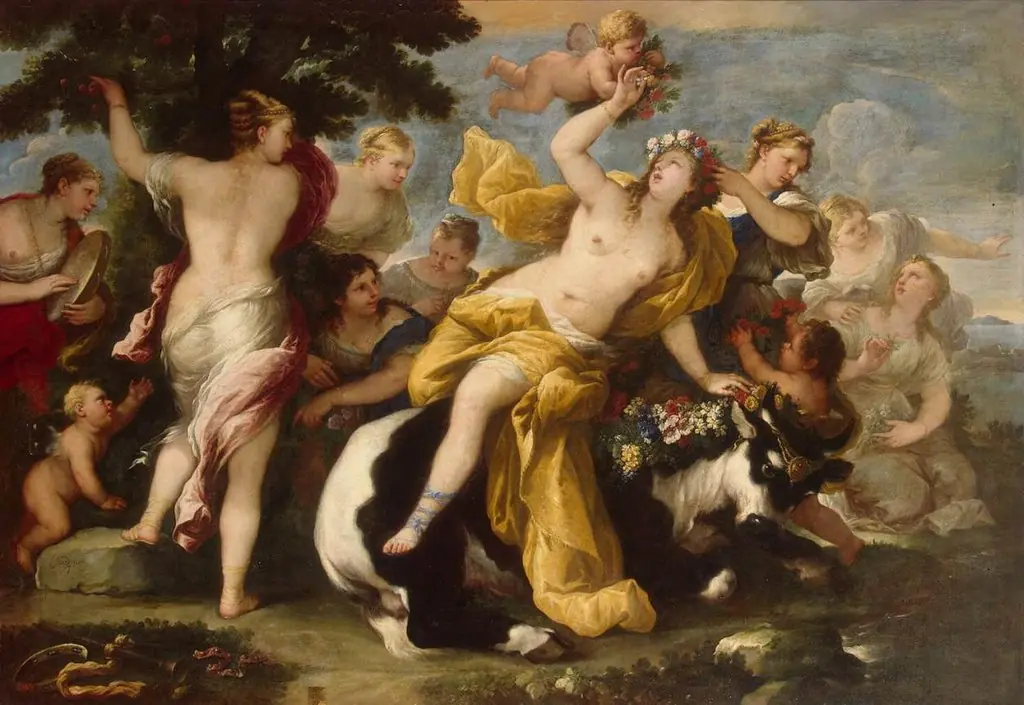
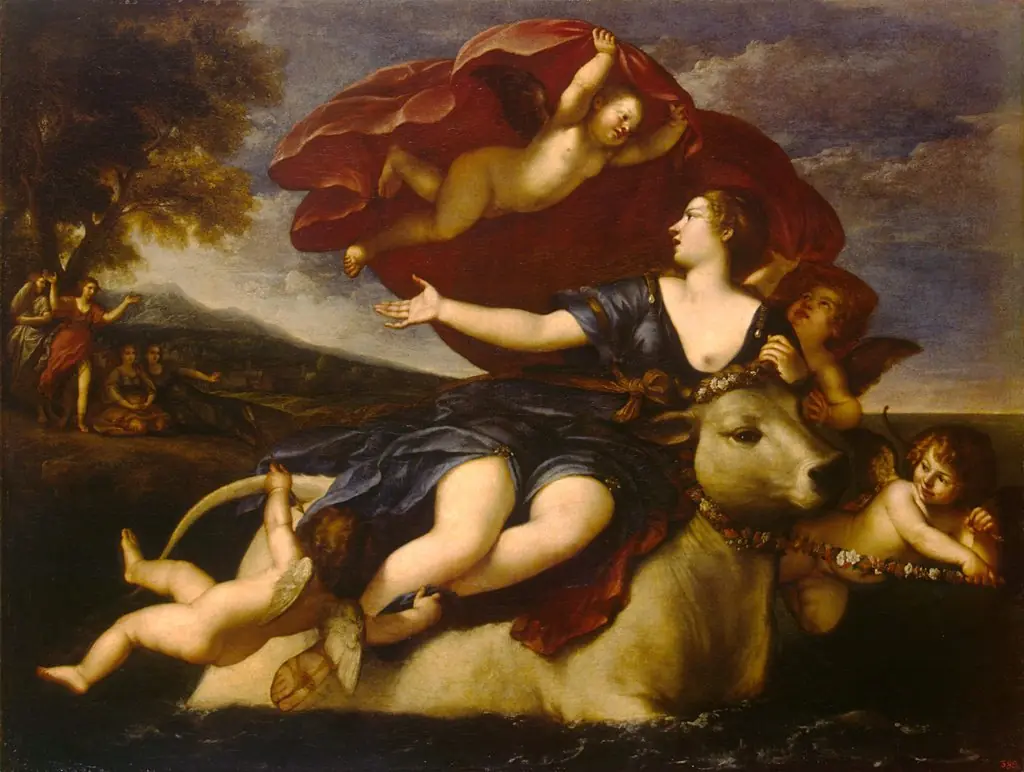
The Rape of Europa is an oil painting by the High Baroque Italian artist Carlo Maratta. It dates from 1692 and is held in the collection of the National Gallery of Ireland.
About this work
Overview
Carlo Maratta painted The Rape of Europa in 1692 using oil on canvas. A prominent figure in Roman art of the late Baroque period, Maratta was known for his refined, classical approach to mythological subjects. The work is part of the National Gallery of Ireland’s collection and reflects the enduring influence of Renaissance ideals within 17th-century Italian painting.
Subject & Meaning
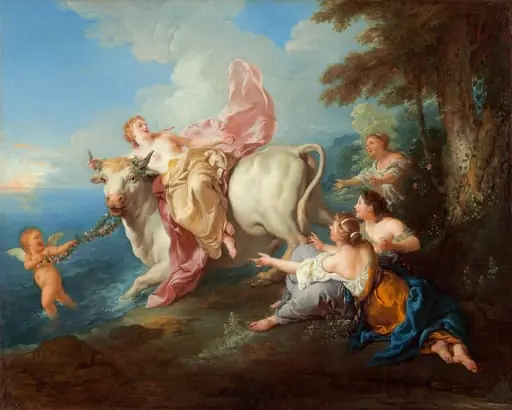
The painting illustrates the myth of Europa, a Phoenician princess abducted by Zeus, who had taken the form of a white bull.
The painting illustrates the myth of Europa, a Phoenician princess abducted by Zeus, who had taken the form of a white bull. Europa, depicted mid-transport, reaches outward as if caught between wonder and alarm. The cherub above, holding a draped cloth, suggests divine intervention, while the scene’s calm setting contrasts with the violence of the myth, softening its narrative through poetic grace.
Technique & Style
Maratta employed smooth brushwork and balanced composition to convey elegance over drama. The figures are rendered with restrained movement, their forms defined by soft contours and subtle modeling. The white bull, spotted in brown, contrasts with Europa’s flowing white gown, while the background’s pale sky and distant trees create depth without distraction, aligning with his classical sensibility.
History & Provenance
Commissioned during Maratta’s peak years in Rome, the painting likely originated in a private collection before entering the National Gallery of Ireland’s holdings. Its journey to Dublin remains undocumented, but its preservation reflects its status as a representative work of Roman Baroque classicism, valued for its technical polish rather than overt emotional intensity.
Context
In late 17th-century Rome, artists like Maratta responded to the Counter-Reformation’s demand for clarity and moral order by reviving classical themes with restraint. While contemporaries such as Pietro da Cortona favored dynamic motion, Maratta favored harmony and poise. This painting aligns with a broader trend among Roman painters to temper Baroque exuberance with antiquarian discipline.
Legacy
Though less celebrated today than his more theatrical peers, Maratta’s work influenced academic painting well into the 18th century. The Rape of Europa exemplifies his role in sustaining classical ideals amid evolving Baroque trends. Its presence in a major public collection underscores its enduring value as a study in controlled elegance within mythological narrative.
Artist & collection
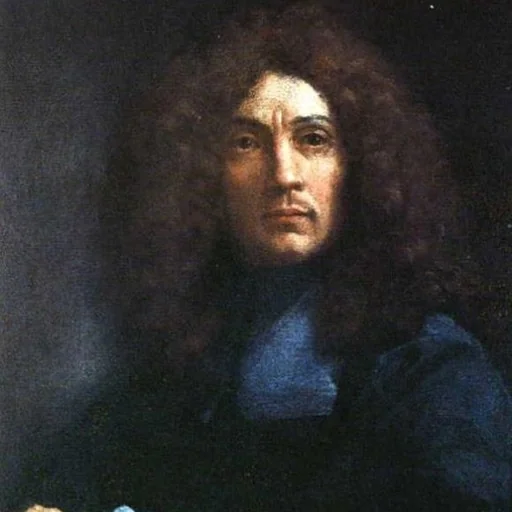
Artist
Carlo Maratta or Maratti (18 May 1625 – 15 December 1713) was an Italian Baroque painter and draughtsman, active principally in Rome where he was the leading painter in the second half of the 17th century.