Artwork
Untitled
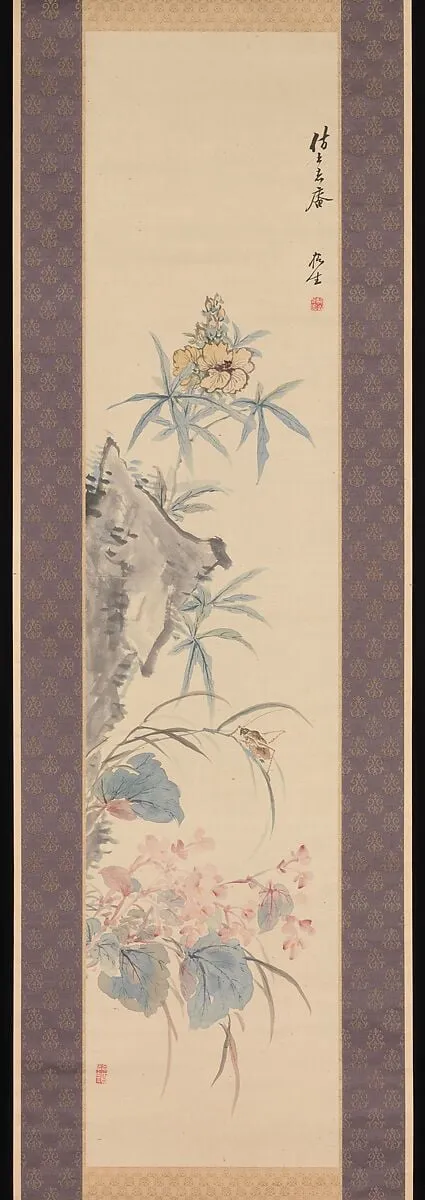
Untitled is an ink painting by the Impressionist artist Tsubaki Chinzan. It dates from 1854 and is held in the collection of the Metropolitan Museum of Art.
About this work
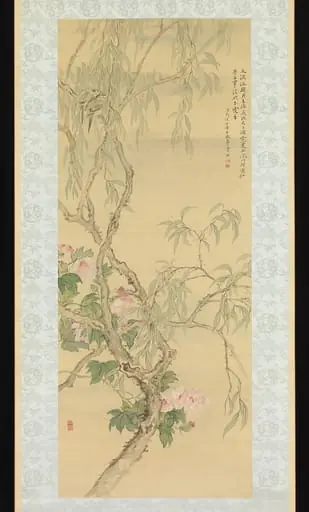
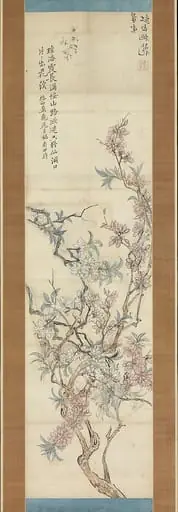
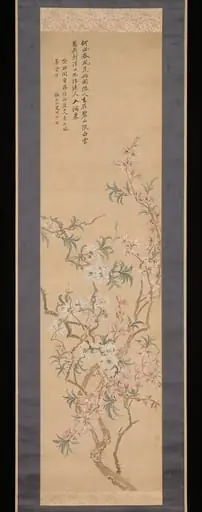
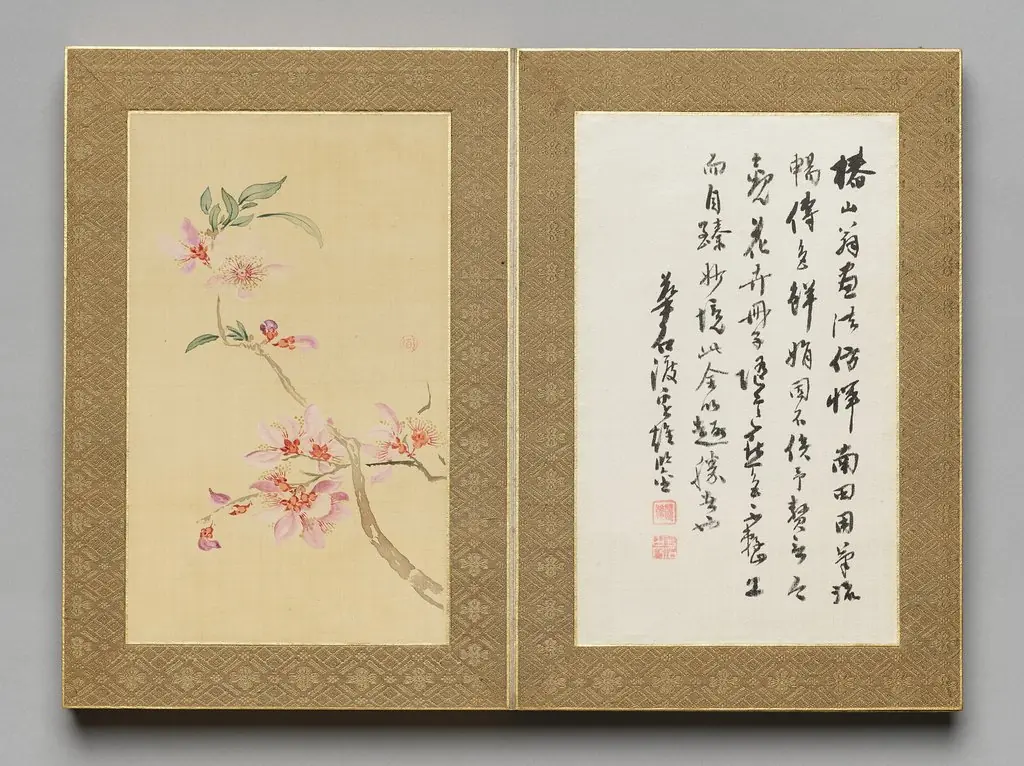
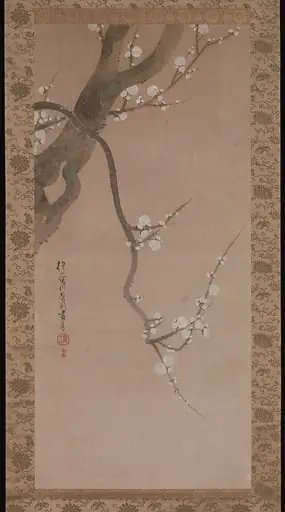
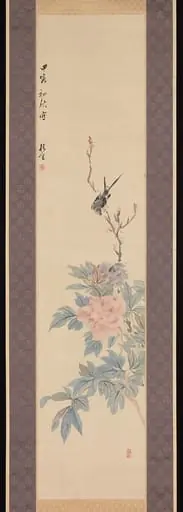
A branch of pink camellias leans across soft gray paper. Tiny buds and full blooms share the same stem. A few leaves curl at the edges.
Chinzan painted this in 1854, just as Japan was opening to the West. The flowers feel quiet, almost like a private sketch, but the ink is precise, every petal has its own weight.
To see how other Japanese artists painted flowers, look up flowers.
Subject & Meaning
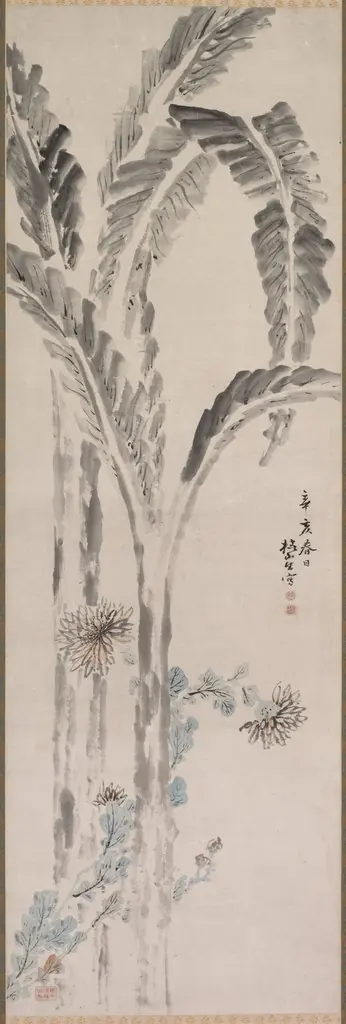
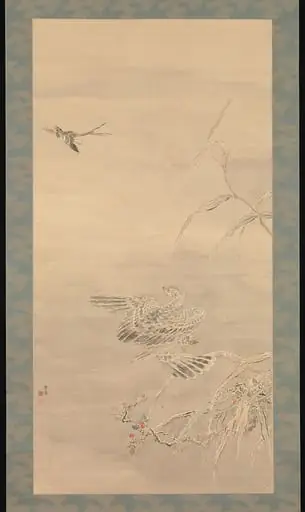
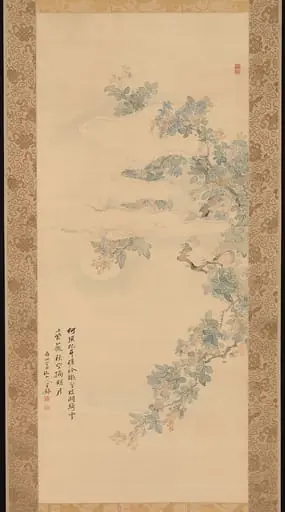
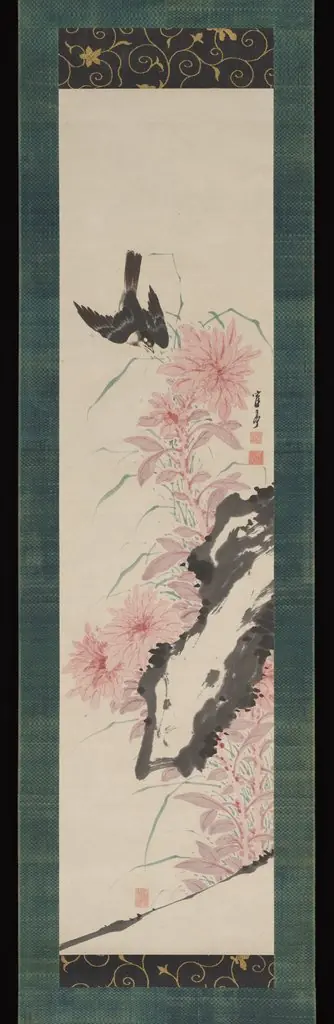
The scroll presents a still-life arrangement of flowers rendered in ink and color on paper.
The scroll presents a still-life arrangement of flowers rendered in ink and color on paper. The work belongs to a longstanding East Asian pictorial tradition of flower painting, in which botanical subjects are observed closely and rendered with attention to seasonal character and natural form. By isolating blossoms as the sole focus against the neutral ground of a hanging scroll, the composition invites contemplation of the plant itself rather than narrative or figural context.
The narrow vertical format, measuring 129.5 by 28.8 centimeters, suits the depiction of a single floral specimen rising along the length of the paper, a format long associated with the appreciation of individual blooms.
Created in 1854, the painting reflects Tsubaki Chinzan's specialization in floral subjects during the late Edo period, when literati and amateur painters frequently elevated the painted flower into a vehicle for refined aesthetic and contemplative expression.
Technique & Style
The work is executed in ink and color on paper, formatted as a hanging scroll, a traditional East Asian mounting suited to vertical display. Its narrow format, measuring 129.5 cm in height by 28.8 cm in width, is characteristic of the kakemono format used for hanging individual flower subjects. Stylistically, the painting belongs to the still-life genre, depicting a flower in monochrome ink accented with color, a combination associated with literati and Nanga painting practices in mid-nineteenth-century Japan.
No information regarding the current condition of the work, handling notes, or specific pigment materials is provided in the available sources.
History & Provenance
Untitled by Tsubaki Chinzan was created in 1854, the final year of the artist's life, as a hanging scroll executed in ink and color on paper depicting a floral still life. The work was produced in Japan and measures 129.5 by 28.8 centimeters. It belongs to the Metropolitan Museum of Art's collection, where it is classified among the institution's paintings.
No information is available regarding the circumstances of its commission, the chain of ownership prior to entering the museum's holdings, or its acquisition history. No accession number is recorded in the available sources, and no exhibition history is documented.
Overview
This hanging scroll, executed in ink and color on paper, is a still‑life work by the Japanese painter Tsubaki Chinzan, dated 1854. The composition presents a single branch of pink camellias set against a muted gray background, rendered in a compact format typical of scroll paintings.
Context
Created in 1854, the scroll emerges at a pivotal moment when Japan was beginning to open to Western influence. While the subject remains rooted in traditional Japanese flower painting, the meticulous rendering reflects a broader engagement with new artistic ideas circulating during this transitional period.
Artist & collection

Artist
Tsubaki Chinzan, originally Tasuku was a Japanese painter in the nanga style. His other art names include Hekiin Sambō, Kyūan (休庵), Shikyūan (四休庵) and Takukadō (琢華堂).