Artwork
Portrait of Shaoyu in the guise of Liu Ling
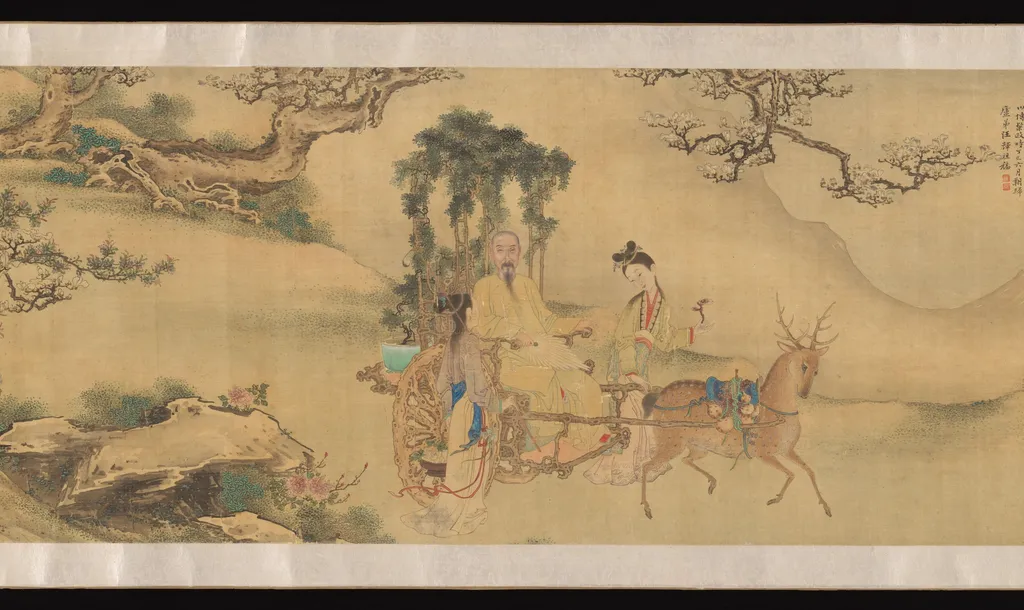
Portrait of Shaoyu in the guise of Liu Ling is an unspecified painting. It dates from 1798 and is held in the collection of the Metropolitan Museum of Art. The work depicts a bearded elder seated on a rock, clutching a scroll, accompanied by a woman in vivid attire and a harnessed deer.
About this work
History & Provenance
The painting Portrait of Shaoyu in the guise of Liu Ling, created in 1795, is held in the collection of the Metropolitan Museum of Art in New York.
The painting was created in 1795 in China by an anonymous artist. It entered the collection of the Metropolitan Museum of Art, where it remains on view in the Asian art galleries.
The work was commissioned as a portrait of Shaoyu, depicted as the legendary scholar Liu Ling, reflecting Qing dynasty artistic conventions. Its provenance is documented through acquisition by the museum, establishing a clear ownership chain from creation to present custodianship.
The painting Portrait of Shaoyu in the guise of Liu Ling, created in 1795, is held in the collection of the Metropolitan Museum of Art in New York. The work is attributed to an anonymous Chinese painter and is classified as a portrait. While the museum holds the piece, the provided sources do not list a specific inventory or accession number for the artwork. Additionally, the available documentation contains no record of the painting's exhibition history.
Overview
The work depicts a bearded elder seated on a rock, clutching a scroll, accompanied by a woman in vivid attire and a harnessed deer. A tranquil landscape of forested hills and distant wildlife forms the backdrop, creating a serene, natural setting.
Subject & Meaning
The central figure, rendered as a scholarly man with a long white beard, is traditionally identified as Shaoyu adopting the persona of Liu Ling, a famed Taoist hermit. The presence of the woman and the deer may allude to themes of companionship and harmony with nature, reflecting Taoist ideals of simplicity and unity with the natural world.
Technique & Style
The painting employs delicate brushwork to render intricate patterns on the man’s yellow robe and the deer's harness, while the surrounding foliage is suggested with softer, broader strokes. The contrast between the detailed foreground figures and the loosely rendered background creates depth and emphasizes the peaceful atmosphere.
Context
During the period when scholar-painters celebrated reclusive figures like Liu Ling, artworks often combined portraiture with idyllic landscapes to convey moral and philosophical messages. This composition follows that convention, integrating portraiture, genre scene, and natural scenery into a single narrative tableau.
Artist & collection

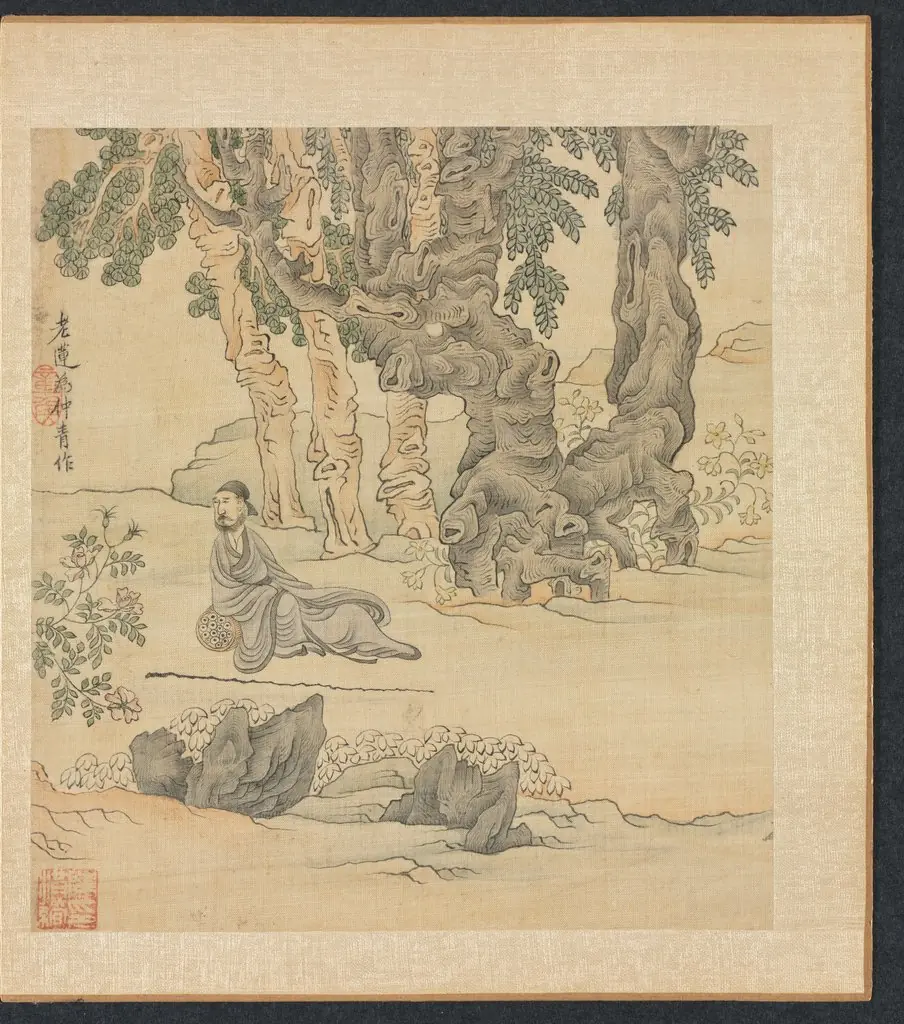
- Paintings after Ancient Masters: Portrait of Zhongqing in a Landscape
 明/清 佚名 舊傳王振鵬 養正圖 卷|Family Training
 南宋 佚名 明皇幸蜀圖 軸|Emperor Xuanzong's Flight to Shu
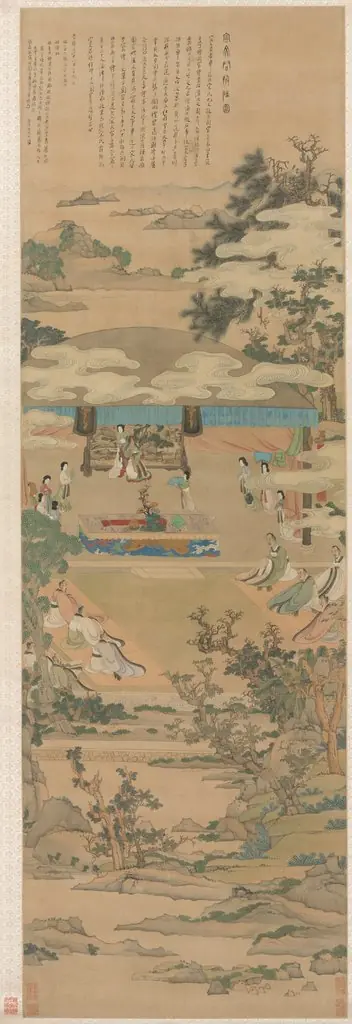 Lady Xuanwen Giving Instruction on the Rites of Zhou
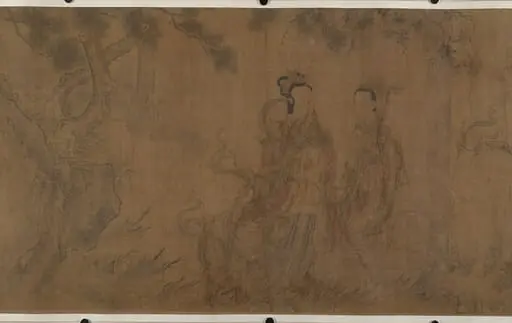 元? 佚名 仿李公麟 屈原九歌圖 卷|The Nine Songs: Illustrations to the poems of Qu Yuan (343–277 B.C.)
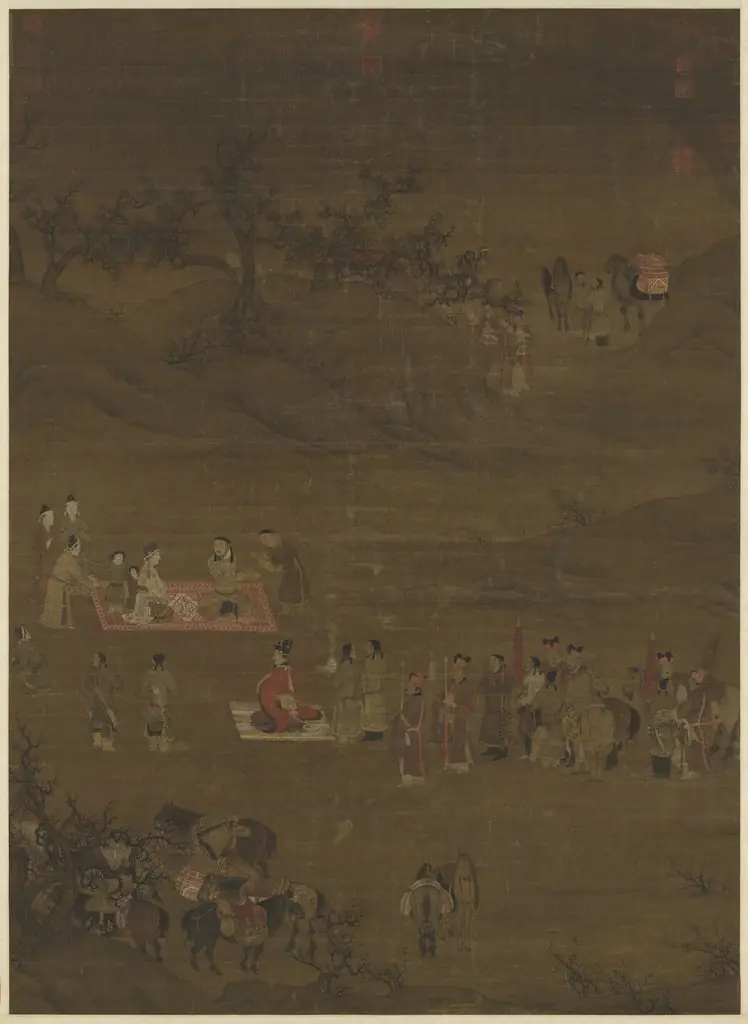 宋陳居中文姬歸漢圖軸
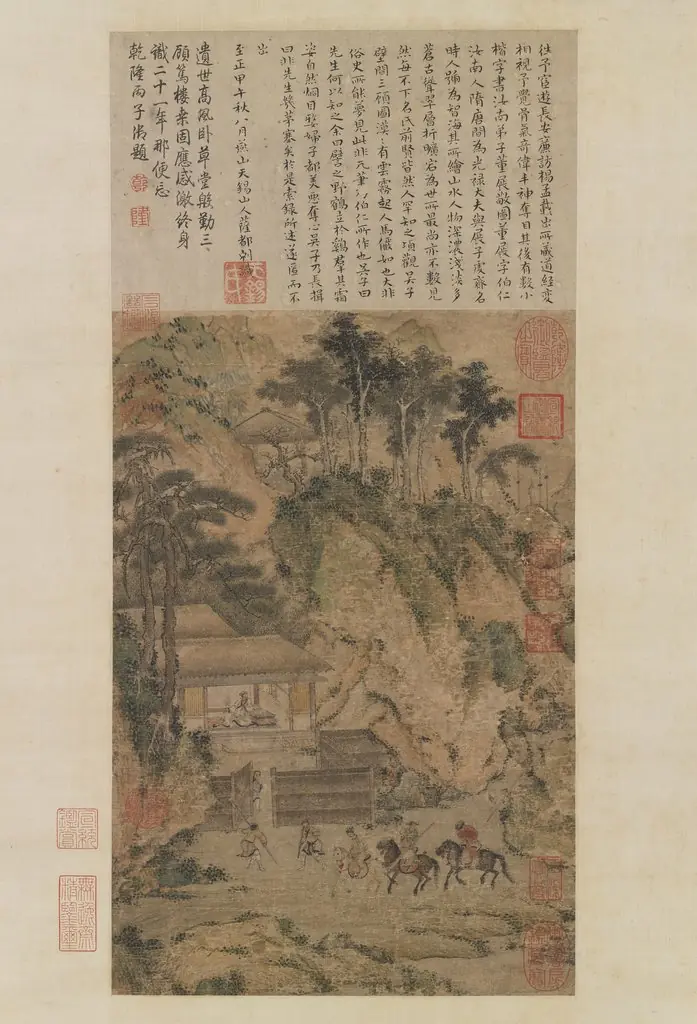 Three Visits to a Thatched Cottage
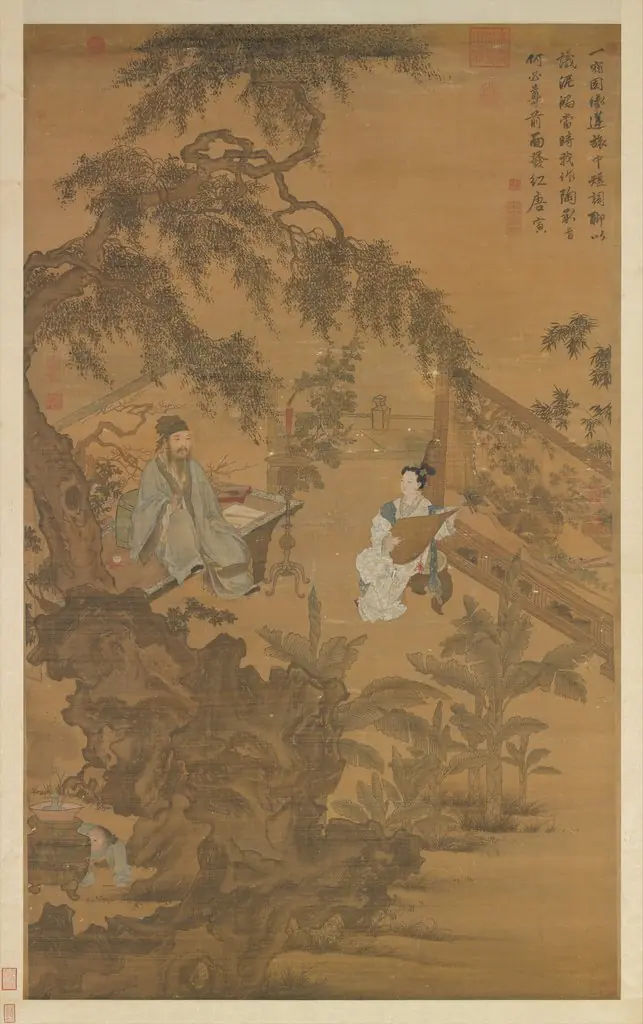 Tao Gu Presenting a Lyric
 Untitled
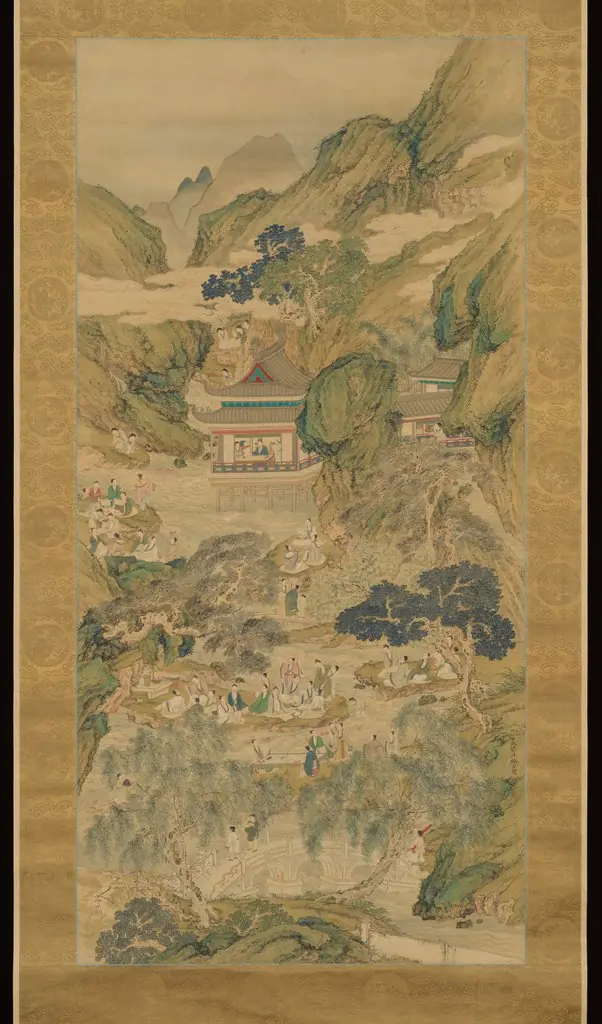 Lanting Gathering in Blue and Green 青緑蘭亭脩禊図 (Seiryoku rantei shūkei zu)
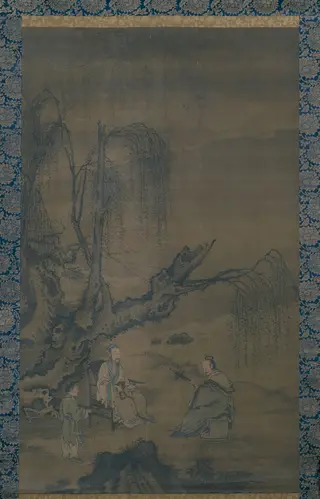 Two Scholar-Musicians in a Landscape
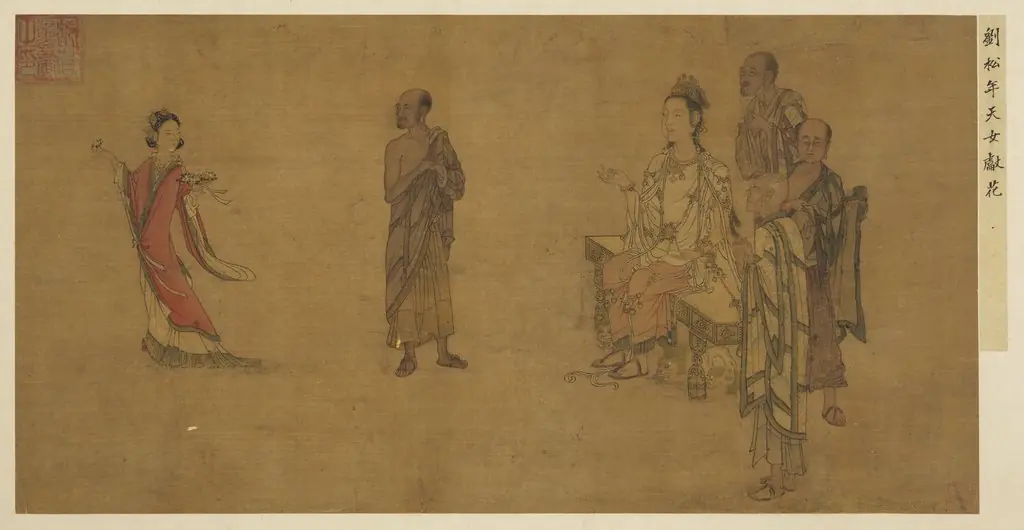 名繪集珍 冊 宋劉松年天女獻花