Artwork
清 佚名 趙雍(僞款) 馬術圖 卷|Horsemanship demonstration
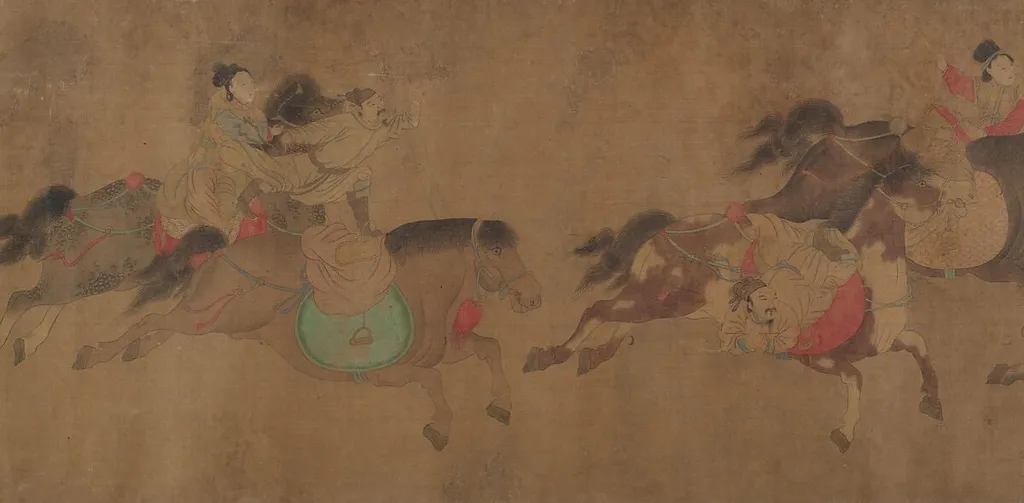
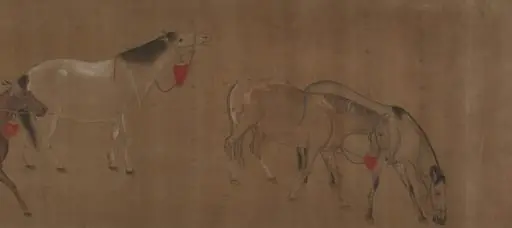
清 佚名 趙雍(僞款) 馬術圖 卷|Horsemanship demonstration is an ink painting by the Ming dynasty painting artist Zhao Yong. It is held in the collection of the Metropolitan Museum of Art. This handscroll, titled Horsemanship Demonstration, is an ink and color painting on silk from the Qing dynasty, dated 1849.
About this work
Subject & Meaning
Classified as a genre scene, the work focuses on the realistic portrayal of these figures and their activities rather than allegorical or religious themes.
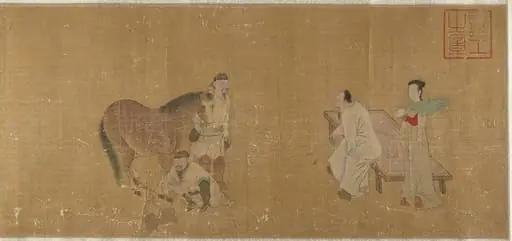
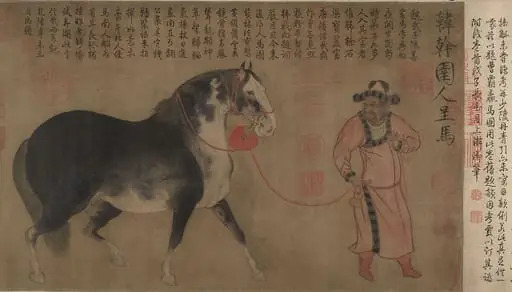
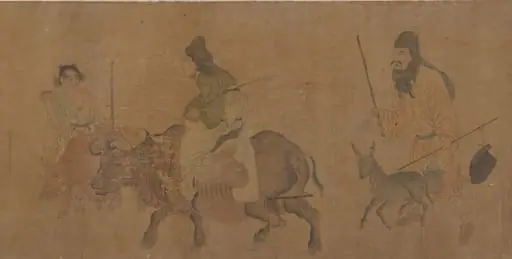
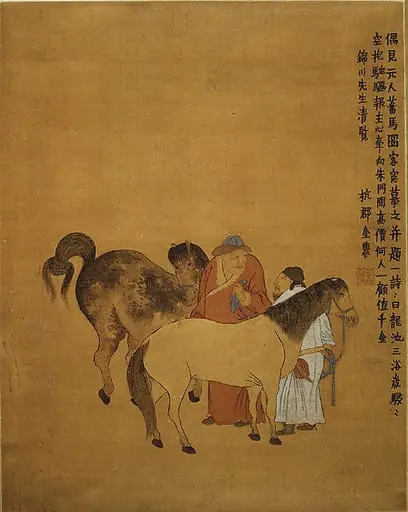
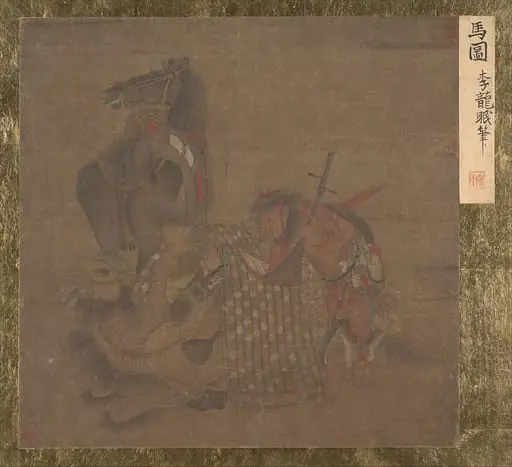
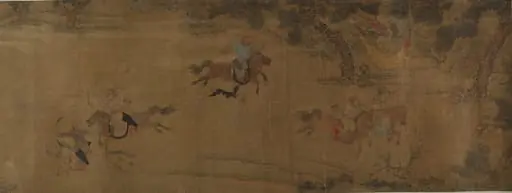
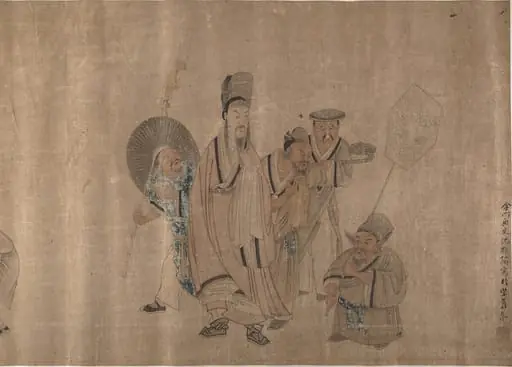
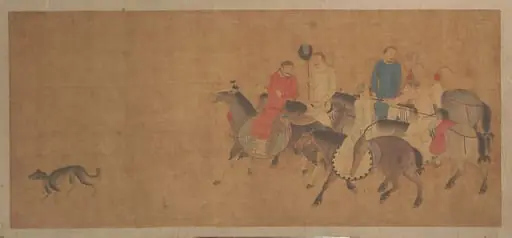
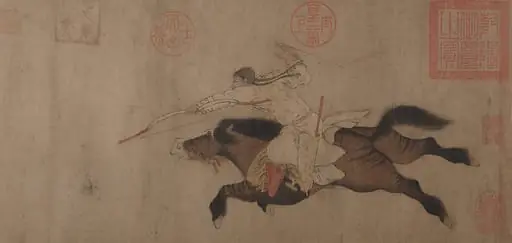
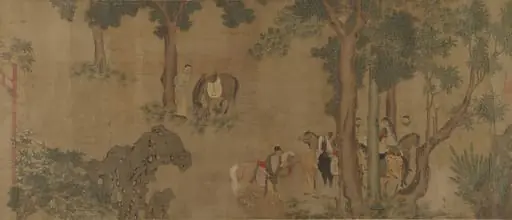
The handscroll depicts a scene of equestrianism, featuring men and horses engaged in what is described as a horsemanship demonstration. Classified as a genre scene, the work focuses on the realistic portrayal of these figures and their activities rather than allegorical or religious themes. The iconography centers entirely on the interaction between the riders and their mounts, highlighting skills associated with horse riding.
While the painting bears a spurious attribution to the Yuan dynasty artist Zhao Yong, the subject matter represents a continued interest in equestrian themes within later Chinese painting traditions, specifically during the mid-19th century. The composition utilizes ink and color on silk to render the details of the animals and human figures involved in this display of equine mastery.
Technique & Style
The work is executed as a handscroll utilizing ink and color on a silk support. It measures 26.7 centimeters in height and 172.7 centimeters in width. Stylistically, the painting belongs to the genre painting tradition, focusing on the dynamic depiction of equestrianism.
Its formal composition centers on the interaction between men and horses, capturing the physicality of a horsemanship demonstration. Despite bearing a false signature attributing the work to Zhao Yong, the painting's technique and execution are consistent with a Chinese origin and a creation date of 1849.
History & Provenance
The handscroll Horsemanship demonstration, attributed to Zhao Yong but bearing a forged signature, was created in 1849. Executed in ink and color on silk, it was produced in China and entered the collection of the Metropolitan Museum of Art, where it is currently held. No information is available regarding an earlier ownership chain, commissioning party, or intermediate provenance prior to its acquisition by the museum.
The handscroll titled Horsemanship demonstration, attributed to Zhao Yong with a spurious signature, is held in the collection of the Metropolitan Museum of Art in New York. Created in 1849, this ink and color painting on silk depicts an equestrian scene featuring a man and a horse. While the work is cataloged within the museum's holdings as a piece from China measuring approximately 26.7 by 172.7 centimeters, the provided records do not list a specific accession number or detail any past exhibitions where the scroll has been displayed.
Overview
This handscroll, titled Horsemanship Demonstration, is an ink and color painting on silk from the Qing dynasty, dated 1849. It portrays a vibrant scene of equestrianism. Although it bears a spurious signature of the Yuan dynasty artist Zhao Yong, the work is attributed to an unknown painter from the Qing period, reflecting a common practice of the time.
Context
The practice of adding a famous artist's signature to a later work was prevalent in Chinese art history, often complicating attribution. While this scroll is not by Zhao Yong, it engages with a long tradition of depicting horses in Chinese painting. Comparing it with authentic works by masters like Zhao Yong can illuminate the stylistic evolution and enduring themes within this artistic genre.
Artist & collection