Artwork
明 佚名 秋林讀易圖 軸|Mountain Scenery
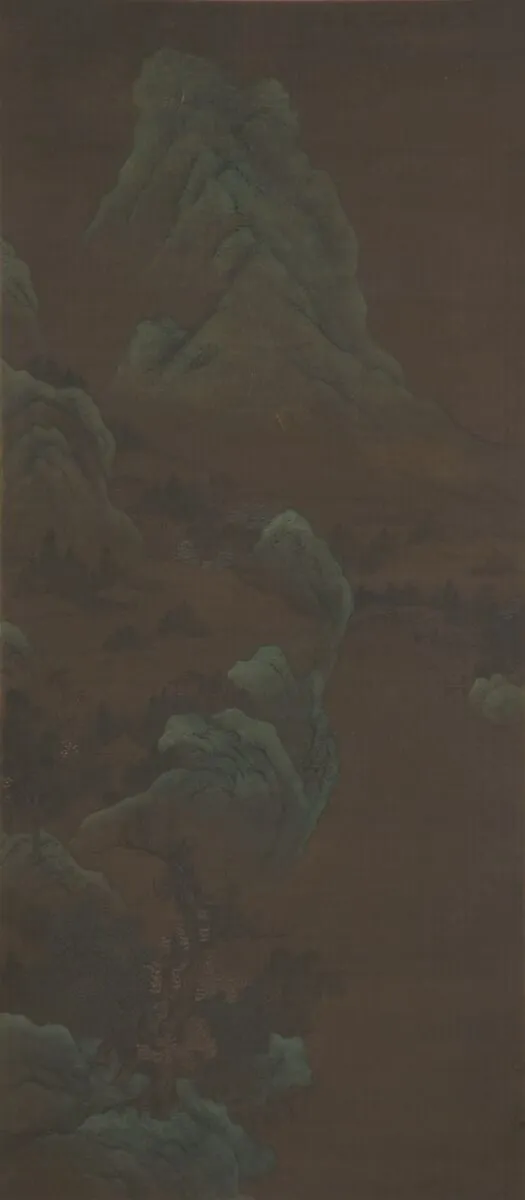
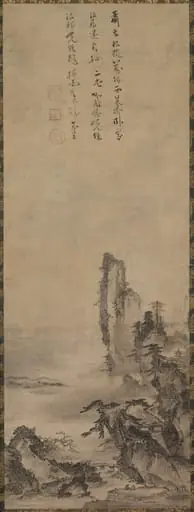
明 佚名 秋林讀易圖 軸|Mountain Scenery is an ink painting. It dates from 1777 and is held in the collection of the Metropolitan Museum of Art. This untitled Ming dynasty painting, also known as Mountain Scenery, is rendered with ink and color on silk as a hanging scroll.
About this work
Subject & Meaning
Executed in ink and color on silk, it belongs to the landscape painting genre and portrays a solitary mountain rendered in traditional Chinese style.
The work is a hanging scroll titled 'Autumn Forest Reading the Classic of Changes' by an anonymous Chinese painter, dated 1777. Executed in ink and color on silk, it belongs to the landscape painting genre and portrays a solitary mountain rendered in traditional Chinese style. As a landscape, the composition emphasizes the natural grandeur of a mountain vista, a motif that recurrently appears in Chinese art to convey the enduring presence of nature.
The scroll is housed in the Metropolitan Museum of Art, reflecting its significance within the museum's collection of Asian paintings.
History & Provenance
The hanging scroll Mountain Scenery (秋林讀易圖 軸) is dated 1777 and attributed to an unknown Chinese artist. The work is executed in ink and color on silk, reflecting traditional Chinese landscape painting conventions of the period.
Its earliest documented ownership places it in the collection of the Metropolitan Museum of Art, where it remains part of the museum's holdings. No specific commissioning details or prior ownership history are recorded in available sources.
Overview
This untitled Ming dynasty painting, also known as Mountain Scenery, is rendered with ink and color on silk as a hanging scroll. It depicts a tranquil mountain landscape, characterized by its natural elements of trees and hills. The artwork is part of a broader tradition of Chinese landscape painting, reflecting the aesthetic sensibilities of its period.
Technique & Style
Executed as a hanging scroll using ink and color on silk, the painting employs a straightforward approach to brushwork. The artist utilized simple strokes to delineate the forms of the mountains and trees, contributing to the artwork's peaceful quality. This stylistic choice aligns with common practices found in other landscape paintings from the same historical period.
Context
The artistic approach evident in this work resonates with other landscape paintings created during the Ming dynasty. Its understated brushwork and emphasis on natural tranquility reflect prevailing aesthetic trends of the era. This painting contributes to understanding the broader visual culture and artistic conventions of Chinese art from that historical period.
Artist & collection

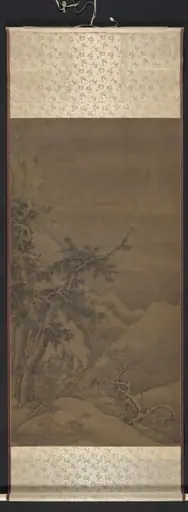 Birds in a Grove in a Mountainous Winter Landscape
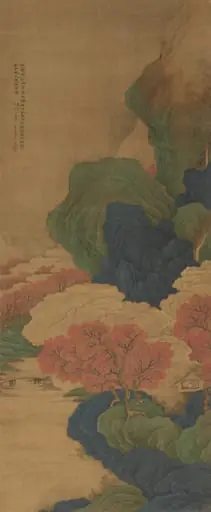 White Clouds and Red Trees
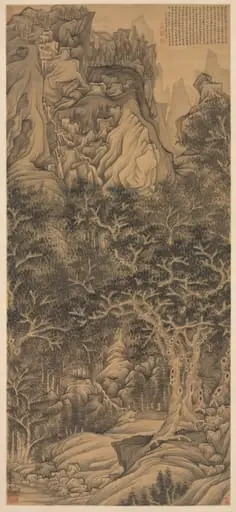 The Mountain of Five Cataracts
 Lonely Temple and Towering Cliff
 Summer Landscape
 Layered Peaks and Dense Forests
 明 鍾禮 觀瀑圖 軸|Li Bai gazing at the waterfall on Mount Lu
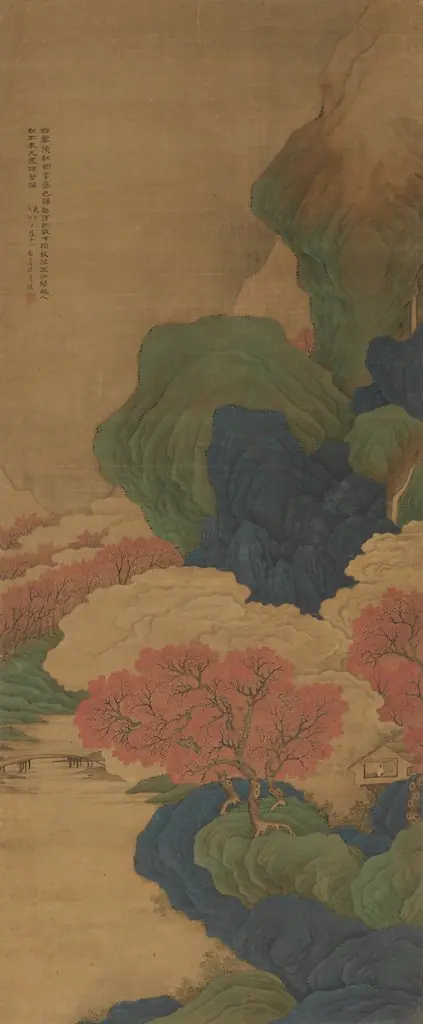 White Clouds and Red Trees
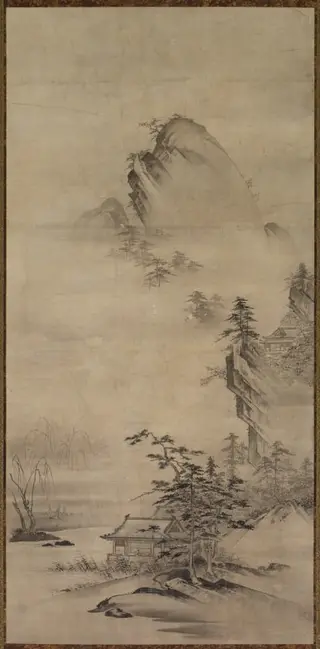 Landscape with a Pavilion
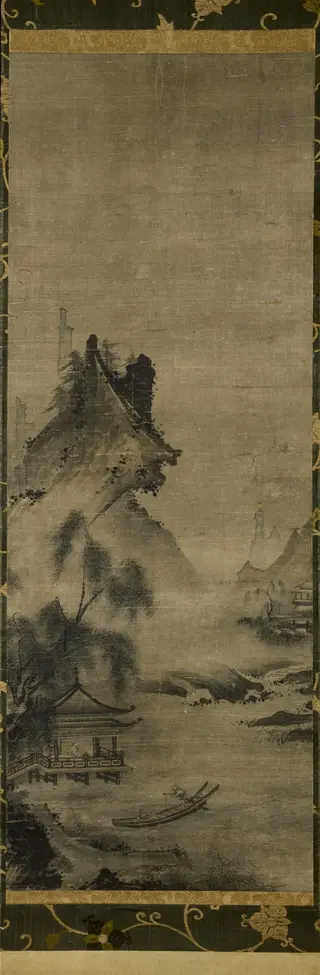 Lakeside Retreat